


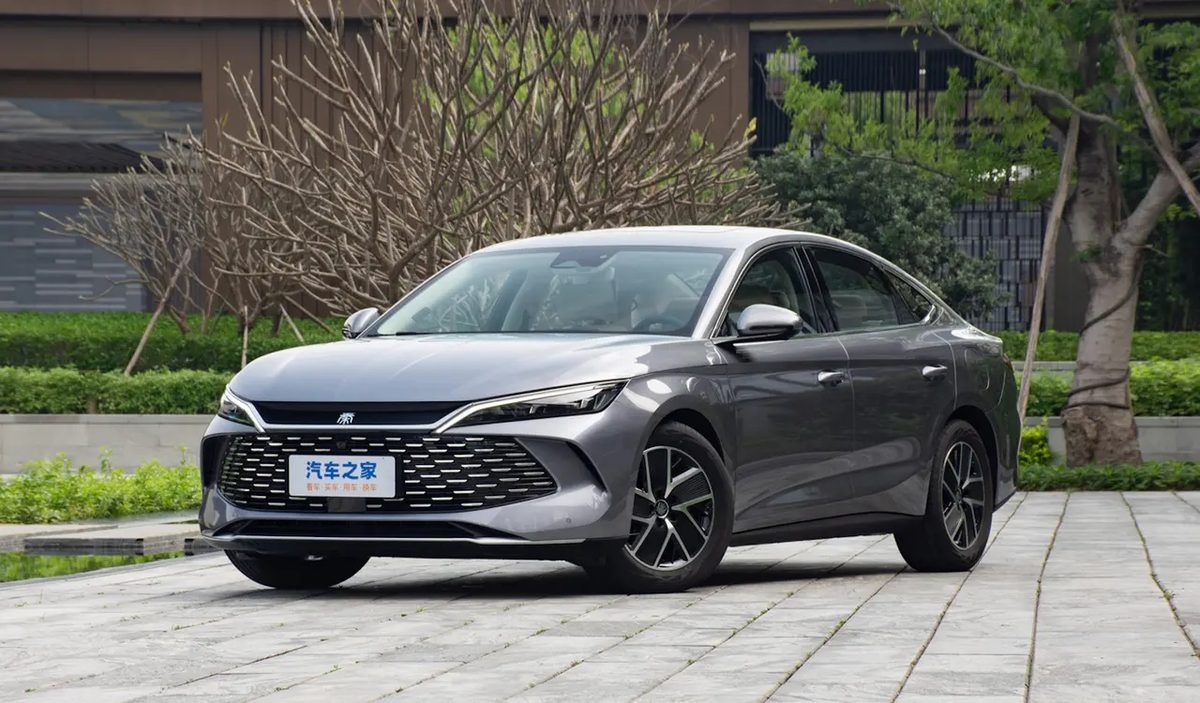
Two thousand kilometers. That is the headline number. Before you even think about the pump, BYD wants you to drive two full laps of that distance. Well, roughly. The new Qin L DM-i and Seal 06 DM-i are claiming an official range of 1000 kilometers. It sounds like marketing fluff until you look at the fuel tank. Then you realize this isn’t just a long-range EV. It is a hybrid that barely eats gas.
BYD is no longer just the world’s largest electric vehicle seller. They are the king of the plug-in hybrid space right now. And they are bringing two sedans to the table that combine a gas engine with an electric motor to sip fuel at a rate that feels impossible. We are talking about 2.9 liters per 100 kilometers. In pure electric mode, the smaller battery gets you 79 kilometers. The bigger one stretches that to 119 kilometers.
How BYD Achieves Insane Fuel Economy With The DM-i System
Let’s be real. Those numbers come from Chinese testing protocols. They are more generous than WLTP or EPA standards. If you apply a reality check, the range drops. But it still stays spectacular. The hardware is straightforward. Both cars use the same 1.5-liter four-cylinder turbo engine. It makes 99 horsepower. Not much on its own. But the electric motor adds 161 horsepower. You get a choice of two battery sizes: 10 kWh or 15.8 kWh.
The secret sauce isn’t just the hardware. It is the brain. BYD uses an AI-driven energy management system. This is how BYD Qin L achieves 1000km range efficiency. The AI decides when to switch between the gas engine and the electric motor. It knows when to combine them for power and when to coast. It manages the energy flow better than a human driver ever could.
The system decides at what moment it is best to switch or between the different motorizations or when to associate them.
You stop thinking about what kind of fuel to put in the tank. You just drive. The car handles the rest.
Why The Price Tag Changes Everything
Here is the part that hurts competitors. These cars cost less than 13,000 euros. That is the starting price. For a hybrid with that kind of range and tech? It is aggressive. It is almost insulting to the status quo.
The big question is whether they come to Europe. And if they do, will the price stay low? Probably not. Tariffs, taxes, and certification costs will add up. But the benchmark is set. BYD has shown that you can have massive range, low fuel consumption, and a cheap price tag. All at once.
The Qin L and Seal 06 are not just cars. They are a warning shot. The AI management of the hybrid system is the differentiator. It is smarter, smoother, and more efficient than traditional hybrids. You just have to wait and see if it crosses the Channel.


