



We’ve all been there. That moment of panic when the shopping bag tears or the milk bottle decides it’s better on the floor than in the trunk. You are trying too hard to move too much stuff with little help. Your arms ache. Your back twinges. It’s inefficient and frankly a bit dangerous if you’re not careful.
Cars don’t have arms. But they have their limits.
Overloading your car doesn’t just mess up the driveway. This puts stress on the engine, transmission, suspension and brakes. Stopping distance increases. You put others at risk. Understanding payload is more than just avoiding axle breakage. It’s about survival.
Payload is the total weight that the vehicle can carry. This includes everything inside the cabin and in the bed or trunk. Passengers count. Pets also count. Coolers count. Roof racks count. If it’s in a car, it’s payload.
Knowing this number takes the guesswork out of it. This saves you having to make three trips instead of one. Prevents tire punctures on the road.
But how do you know the limits of your particular truck or SUV? The answer is not found in the manual. And it starts with the math. It starts with a sticker on your door.


Calculations behind cargo limits
It’s not easy to guess what you can actually carry. It comes down to two clear numbers. Gross curb weight (GVWR) and curb weight. If these are correct, you’ll know exactly how much payload it can handle without damaging the suspension or voiding your warranty.
Total curb weight class is the upper limit. This is the maximum permissible weight of the vehicle when fully loaded. It’s not just a metal box. This includes the vehicle itself, all necessary fluids (petrol, diesel, oil, coolant) and any passengers, tools and luggage you load in the back. Manufacturers calculate this limit. It is usually located in the owner’s manual or on a sticker near the driver’s side door lock. Some online databases also list this information, but the door sticker is the gold standard.
Curb weight is the starting point. This means the curb weight of the vehicle when it is not loaded with people or cargo. The important thing is that it contains a full tank of gas and all operating fluids. This is the weight of the car when it is fully gassed up and ready to leave the factory.
Carrying capacity is just a deduction.
The load capacity is calculated by subtracting the vehicle’s weight from the total curb weight.
Let’s look at the numbers. Assume a gross curb weight of 3,500 lb (1,588 kg). Curb weight is 3,000 pounds (1,361 kilograms). Subtract curb weight from GVWR.
3,500 lbs (GVWR) – 3,000 lbs (curb weight) = 500 lbs (227 kg) payload.
that’s it. You have 500 pounds to play with. This includes the driver, passengers, fuel and anything you carry. Does this calculation need to be adapted for different vehicle types? The physical principles have not changed, but the practical implications do.
Truck Payload
Picking up a truck changes the game. 不是因为数学不同,而是因为误差范围缩小了。

The cargo capacity of a pickup truck differs from the criteria used to determine what is suitable for a car or an SUV. You can’t haul 3″ x 10″ lumber in a compact station wagon for a home improvement project. In fact, carrying several bags of groceries in a heavy-duty work truck is overwhelming.
Trucks tend to handle denser and heavier loads. In the US, the classification is determined by Gross Vehicle Weight Rating (GVWR). The system is divided into government-defined weight classes that correspond directly to DOT classes.
The federal weight class distribution is as follows:
- Class 1: Up to 6,000 lb (2,722 kg)
- Class 2: Up to 10,000 lbs (4,536 kg)
- Class 3: Up to 14,000 lbs (6,350 kg)
- Class 4: Up to 16,000 lbs (7,258 kg)
- Class 5: Up to 19,500 lbs (8,845 kg)
- Class 6: Up to 26,000 lbs (11,793 kg)
- Class 7: Up to 33,000 lbs (14,969 kg)
- Class 8: Over 33,000 lbs.
The Department of Transportation has made the process even more efficient. Classes 1 and 2 belong to the light-duty truck category. Classes three through five are medium. Anything above class six is heavy. Knowing where your rig fits in this hierarchy will help you know exactly how much payload you can safely carry without messing with your suspension or breaking the rules.
Car payload
Calculating the load limits for passenger cars is even simpler. The rules are simple. Calculate the curb weight of the vehicle (its own mass filled with all standard fluids and fuel) and add the weight of the driver and passengers. This gross weight must be less than the maximum GVWR listed on the vehicle’s placard.
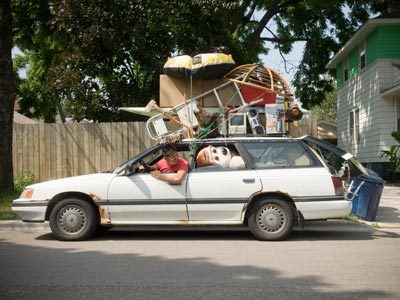
Most of us don’t think about cargo capacity when driving a sedan. Why would we? Dad doesn’t stop and ask, “Do we have the necessary payload packed up?” When you’ve packed your family and luggage into the cargo area and set off on a trip. Cars typically have a much smaller payload than pick-up trucks. Yes, some loads are heavy, but anything so heavy that it actually exceeds the load limit and becomes dangerous rarely fits into a passenger car. You can’t pack a grand piano into a Honda Civic.
However, there are some important luggage to consider when loading a car that can affect the ease of your trip. Please note that passengers are counted as payload. Most manufacturers assume a weight of 150 lbs (68 kg) per person per seat. This means that each empty seat in the car effectively adds 150 pounds to the available cargo weight. With the three-passenger rear seat empty, you’ve got 450 pounds (204 kg) of room to spare before luggage go haywire.
SUVs can carry a lot more cargo than sedans, right? The answer is not always as simple as you think.
SUV Payload Capacity Explained
The structure of SUVs is different. They are designed to tow, haul and handle more difficult terrain, resulting in a higher gross vehicle weight rating (GVWR). But that doesn’t mean they should be treated like freight trains. The same rules apply. This means that the passenger takes up approximately as much space on the scale as a duffel bags.
When planning the cargo capacity of your SUV, you should consider more than just the cargo area. The starting point is the weight of the vehicle itself. Add the maximum weights of all passengers (including the driver) and subtract that weight from the GVWR to get the total payload. This number is a hard cap. Exceed it, and you’re looking at reduced braking power, poor drivability and accelerated wear of suspension components.
Consider a midsize SUV with a GVWR of 6,000 pounds. It has a curb weight of 4,500 pounds and a payload of 1,500 pounds. That’s a lot, but it disappears fast. The average weight of five adults is 800 pounds. That leaves just 700 pounds for gear, fuel (which can add up quickly on long journeys) and aftermarket options. If the roof rack is full of bikes, you might be over your limit.
The difficult part is distribution. Too much weight in the rear causes the rear axle to sag, which affects steering response and makes the front end light. It’s not just about punching in numbers. it’s about how that weight sits on the road. The decisive factor is how the weight behaves on the road. Loaded properly, the SUV handles predictably. Overload creates unpredictable liabilities.
Check the owner’s manual for the sticker on the driver’s door frame. The maximum weight of persons and luggage is listed. Ignore it at your peril. Tires, brakes and frames are designed for a reason. Exceeding this limit does not make the vehicle stronger; it just makes it more likely You’re more likely to fail when you need it most.
So before you load up on extra boxes of camping gear or let the cousins pile in, do the math. Your safety depends on it.
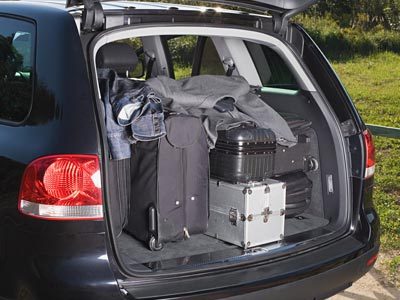
When most people think of SUVs, they think of hybrids. It has the appeal of a pickup truck and maintains the passenger comfort of a sedan. This view is only half correct. You need to understand where your SUV’s cargo capacity falls on the spectrum.
It’s somewhere between a car and a truck. In general, it is more than just driving cars. The rear seats can be turned forward, which gives more space. This creates one large storage space. You can transport heavy equipment that cannot fit in a standard hatchback.
However, there are serious limitations. Unlike a truck, an SUV has a roof. Items cannot be stacked infinitely high. In addition, the payload of an SUV should not be treated the same as a truck. Safety is the main limitation.
SUVs are generally considered durable cargo vehicles. It also has a reputation for being dangerous. This isn’t arbitrary. The center of gravity is much higher than in a car. Load it up, and that rollover risk spikes.
The manufacturer listened to complaints. They added an electronic stability control system to stabilize the vehicle. Members of Congress also intervened. Since September 2004, the National Highway Traffic Safety Administration (NHTSA) has required the use of labels. These stickers must indicate the combined weight of passengers and luggage. Mounted on the door frame on vehicles with a GVWR of less than 10,000 lbs.
So, what happens when the gear won’t fit? Can this limit be raised? Let’s see how we can increase payload capacity without compromising safety.
Can I increase the loading capacity?
The short answer is usually “no”. It’s not what you think. You cannot increase the Gross Vehicle Weight (GVWR) simply by installing “heavy” packages. The manufacturer determines this number based on the strength of the chassis and the structure of the suspension.
However, you can optimize what you carry. This includes understanding the difference between towing and payload. Payload is the weight of passengers, cargo and liquids inside the vehicle. Towing is what you pull behind it.
Many drivers confuse the two. They estimate that if an SUV can tow 8,000 pounds, it can carry 8,000 pounds in a car. This is a dangerous misconception. Midsize models often have much lower payloads, sometimes less than 1,500 pounds.
To maximize the amount to be transported:
- Check the sticker on the driver’s door frame. It lists the specific limit for your VIN.
- Weigh yourself and your passengers. Includes weight of pet and fuel.
- Subtract this amount from the maximum payload. Whatever remains is your cargo allowance.
- Distributes the weight evenly. Heavy items low and centered.
Some aftermarket companies sell “load equalizing” air springs. These help prevent rear end sagging. These improve handling, but do not increase statutory or structural load limits. Failure to observe this limit can result in frame damage, broken brakes and the aforementioned crash.
If you often have to transport heavy loads, an SUV may not be the right vehicle for you. Specially designed for pick-up trucks and has a higher loading capacity for pick-up trucks. The bed is open. The suspension is stiff. The frame is built for compression.
SUVs are a compromise. It offers versatility, not brute force. respect
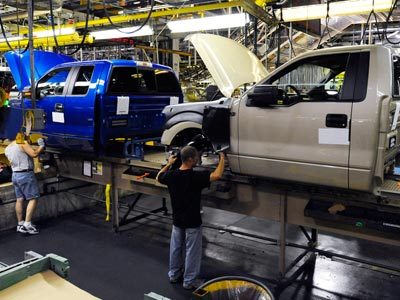
Pushing Past the Limits
Knowing your vehicle’s payload capacity is a good baseline. It tells you what the manufacturer considers safe. But what happens when the base numbers don’t cut it? What if you need to haul more?
It’s a common scenario. You see a truck you love. You check the specs. The payload capacity falls short of your actual needs. Can you just add more stuff? No. Overloading a vehicle is dangerous. It harms you, your passengers, and everyone else on the road. You risk a ticket for unsafe loading. You risk losing control.
The solution isn’t to ignore the limits. It’s to upgrade the vehicle itself.
Truck manufacturers almost always offer optional towing packages. These aren’t just marketing gimmicks. They are functional upgrades designed to increase the performance of the tow vehicle. They include extra tools for better towing. A truck with a towing package might come with a trailer wiring harness. It might include a heavy-duty hitch and safety chains.
But the real changes happen underneath. The manufacturer might install a bigger engine. They might fit stronger brakes. They might upgrade the cooling system. This improves overall performance. It allows the vehicle to handle heavier loads more safely.
If you need to carry more, look for these packages. Don’t try to exceed the gross vehicle weight rating (GVWR). It’s not worth the risk.
Finding the Right Specs
Payload capacity varies wildly. It depends on the make, model, and year of your car or truck. A 2006 Acura TL has different numbers than a 2009 BMW X5. You need to know the specific max payload for your vehicle.
Here is the data for several major brands. Use these figures to determine how much you can actually carry. Remember, payload includes everything inside the vehicle. Passengers. Cargo. Fuel. Everything.
Acura Payload Data
Acura models from this era show a wide range in capacity. The SUVs generally handle more than the sedans.
2006
– MDX: –
– RL: –
– RSX: –
– TL: –
– TSX: –
2007
– MDX: 1158 lbs
– RL: –
– RDX: 870 lbs
– TL: –
– TSX: 850 lbs
2008
– MDX: 1158 lbs
– RL: –
– RSX: 870 lbs
– TL: –
– TSX: 850 lbs
2009
– MDX: 1158 lbs
– RL: –
– RSX: 870 lbs
– TSX: 850 lbs
For deeper technical details, check the Acura GVWR, Acura GAWR, and Acura Curb Weight.
Audi Payload Data
Audi’s numbers are tighter. The luxury sedans carry less than the larger SUVs. The R8 is an outlier, likely due to its lightweight construction.
2006
– A3: –
– A4: –
– A6: –
– A8: 1213 lbs
– S4: –
– TT: 728 lbs
2007
– A3: –
– A4: –
– A6: –
– A8: –
– Q7: –
– RS4: –
– S4: –
– S6: –
– S8: 1213 lbs
2008
– A3: –
– A4: –
– A5: –
– A6: –
– A8: –
– Q7: –
– R8: –
– RS4: –
– S4: –
– S5: –
– S6: –
– S8: –
– TT: –
2009
– A3: –
– A4: –
– A5: –
– A8: –
– Q7: –
– R8: –
– S4: –
– S5: –
– S8: –
– TT: –
Check Audi GVWR and Audi Towing Capacity for full load limits.
BMW Payload Data
BMW offers some of the highest payload numbers in this dataset. The X5 and X6 SUVs are built to carry significant weight. The M-series sedans are also surprisingly capable.
2006
– 325: 1058 lbs
– 330: 1058 lbs
– 525: 1102 lbs
– 530: 1102 lbs
– 550: 1102 lbs
– 650: 838 lbs
– 750: 1058 lbs
– 760: –
– M3: –
– M5: 1058 lbs
– M6: 941 lbs
– X3: 1025 lbs
– X5: –
– Z4: 551 lbs
– Z4M: 584 lbs
2007
– 328: 926 lbs
– 335: 1058 lbs
– 525: 1102 lbs
– 530: 1102 lbs
– 550: 1102 lbs
– 650: 838 lbs
– 750: 1058 lbs
– 760: 1058 lbs
– Alpina B7: –
– M5: –
– M6: –
– X3: –
– X5: 1113 lbs
– Z4: 551 lbs
– Z4M: 584 lbs
2008
– 128: 882 lbs
– 135: 882 lbs
– 328: 926 lbs
– 335: 1058 lbs
– 528: 1102 lbs
– 535: 1102 lbs
– 550: 1102 lbs
– 650: 838 lbs
– 750: 1058 lbs
– 760: 1058 lbs
– Alpina B7: 1213 lbs
– M3: 1014 lbs
– M5: 1058 lbs
– X3: 1036 lbs
–
Capacity according to Chevrolet model and year
When it comes to gear, numbers matter. Chevrolet doesn’t just put a badge on every truck. They adjusted the frame. Look at those heavyweights. 2009 Chevrolet Silverado 3500 HD is up to the task. literally. It can handle a payload of 3,873 lbs. It’s the power to take things seriously.
For those looking for a 2006 Chevrolet Silverado 1500 HD Payload, that number is a solid 3,129 lbs. The 2006 Chevrolet Silverado 2500 HD is even higher at 3,606 pounds. But if you go for the 2006 Chevrolet Silverado 3500 HD it will cost you 5,169 lbs. It is about 2.5 tons. You can move a small house with that truck.
For less important tasks, a different story is told. The 2006 Chevrolet Silverado 1500 has a weight capacity of 1,913 lbs. By 2007 it had dropped to 1,658 lbs. Why? Maybe they added hybrid components or tweaked the suspension. The 2006 Chevrolet Silverado 1500 Hybrid has a claimed weight of 1,162 lbs. This is a big negative in terms of efficiency. The 2006 Chevrolet Silverado 1500 SS weighs 1,253 lbs. Performance trucks often sacrifice payload for horsepower.
Vans and SUVs have their own limitations. 2006 Chevrolet Express Maximum Weight 2,306 lbs. Consistent through 2009. If you need more room, the 2009 Chevrolet Express 2500 can handle 3,262 lbs. The 2009 Chevrolet Express 3500 weighs 4,147 lbs.
Suburban and Tahoe are an interesting combination. The 2006 Chevrolet Suburban 2500 has a weight capacity of 2,828 lbs. The 2006 Chevrolet Tahoe has a weight capacity of 1,522 lbs. For 2007 the Tahoe has increased to 1,835 lbs. 2007 Chevrolet Suburban 1500 drops to 1,593 lbs. The 2007 Chevrolet Suburban 2500 weighs 2,561 lbs.
Compact trucks and crossovers are light. The 2006 Chevrolet Colorado weighs 1,532 lbs. 2007 and 2008 were stable at 1,316 pounds. By 2009 it had dropped to 1,250 lbs. The 2006 Chevrolet Avalanche 1500 is starts at 1,387 lbs. 2007 dropped to 1,258 lbs. In 2008 it was again 1,444 lbs. It then dropped to 1,333 lbs in 2009**.
HHR is the hauler of urban life. It handles 900 lbs in 2006, 2007 and 2008. The weight of the HHR panel version is 900 lbs.
Some models do not have information listed. 2006 Chevrolet Aveo, Cobalt, Corvette , Equinox, Impala, Malibu, Monte Carlo, SSR, TrailBlazer, TrailBlazer EXT, Uplander. show dashes. That means that no specific payload numbers have been provided in this dataset. The same is true for most passenger sedans, including the 2007-2009 Impala and Malibu**.
Chrysler Payload Data Overview
Chrysler’s selection is small. The 2007 Chrysler Aspen can handle 1,600 lbs. 2008 and 2009 remained at 1,600 pounds. The 2009 Chrysler Aspen Hybrid drops slightly to 1,500 lbs. Hybrid systems add weight and thus consume the payload.
There’s a reason people love the PT Cruiser. The 2007 Chrysler PT Cruiser has a weight capacity of 1,907 lbs. That’s impressive for a retro compact. In 2008 it dropped to 889 lbs. Why such large fluctuations? Different equipment levels? 2009 Chrysler PT Cruiser shows dashes and data is lost.
The 2007 Chrysler Pacifica carries 889 lbs. The 2008 Chrysler Pacifica is light at 865 lbs. 2007 Chrysler Town & Country Minivan holds 1,200 lbs. It holds £1,200 in 2008. 2009 Town & Country Show dash.
2006 Chrysler 300, 300C, Crossfire, Pacifica, PT Cruiser, Sebring, Town & Country all display the dash. Cargo capacity figures are not available for that year’s sedan and coupe models. 2007 and 2008 300 and 300C also no data.
Dodge Payload Capabilities
Dodge trucks are built to last. The 2006 Dodge Ram 1500 has a weight capacity of 1,750 lbs. 2006 Dodge Ram 2500 holds 3,020 lbs. The 2006 Dodge Ram 3500 weighs up to 4,660 lbs. These are the mainstays.
As of 2007, the Dodge Ram 1500 remained at 1,750 lbs. The Dodge Ram 2500 goes up to 3,130 lbs. The Dodge Ram 3500 weighs 4,780 lbs. 2008 Dodge Ram 1500 climbs to 1,810 lbs. The 2008 Dodge Ram 2500 weighs 3,210 lbs. The 2008 Dodge Ram 3500 has a peaks at of 4,870 lbs.
But look at 2009. 2009 Dodge Ram 1500 drops to 1,490 lbs. This is a significant reduction. The 2009 Dodge Ram 2500 weighs 3,260 lbs. The 2009 Dodge Ram 3500 drops to 3,560 lbs. What has changed? Emissions equipment? A new security structure? It’s a mystery without further context.
Different numbers are available for SUVs and minivans. The 2006 Dodge Grand Caravan carries 1,682 lbs. The 2006 Dodge Grand Caravan weighs 1,700 lbs. The 2006 Dodge Dakota truck can carry 1,750 lbs. The 2006 Dodge Durango SUV also weighs in at 1,750 lbs.
2007, Dodge Dakota dropped to 1,710 lbs. The Dodge Durango can carry 1,750 lbs. The 2007 Dodge Nitro can handle 1,150 lbs. The 2007 Dodge Magnum has a weight capacity of 1,270 lbs. The 2007 Dodge Charger also weighs in at 1,270 lbs.
The 2008 Dodge Dakota is down to 1,630 lbs. The 2008 Dodge Durango grows to 1,780 lbs. The 2008 Dodge Nitro stays at 1,150 lbs. The 2008 Dodge Magnum and 2008 Dodge Charger are still 1,270 lbs.
Introduced in 2009, the Dodge Durango Hybrid weighs 1,500 lbs. The 2009 Dodge Dakota can carry 1,630 lbs. The 2009 Dodge Durango has a payload capacity of 1,780 lbs. The 2009 Dodge Nitro, Magnum and Charger are rated at 1,150lbs, 1,270lbs and 1,270lbs**.
Mercedes vans with Dodge Sprinter badges are very unique. 2006 Dodge Sprinter Van 2500 can handle 3,950 lbs. The 2006 Dodge Sprinter Van 3500 also weighs 3,950 lbs. The 2006 Dodge Sprinter Wagon 2500 has a weight capacity of 4,824 lbs.
2007, Sprinter Van 2500 reduced to 3,766 lbs. Sprinter Van 3500 up to 4,350 lbs. Sprinter Wagon 2500 falls
Distribution of Honda’s loading capacity
When considering a used Honda, payload is often the hidden metric that defines practicality. The figures here are for the 2006-2009 Honda Maximum Payload rating. Here’s what you need to know before you start loading your gear.
In 2006, the Ridgeline led the way at 1549 pounds. The Odyssey rides comfortably at 1349 lbs. Insight’s hard limit is only 400lbs. Most other models such as the Accord, Civic, CR-V, Pilot and S2000 do not show certain data points in this data set, indicating configuration changes or missing specifications.
By 2007, the Civic’s cargo capacity was 385 pounds. The weight of the element is 675 lbs. The Pilot offers 1322 lbs, while the Ridgeline settles for 1549 lbs. The numbers of the new Fit are not listed here.
The 2008 Civic and Element weighed 385 lbs and 675 lbs respectively. The Odyssey, Pilot and Ridgeline retain last year’s strong towing capacity.
In 2009, the Civic and Fit dropped certain value points, while the Odyssey and Pilot maintained the 1349 and 1322 limits.
You can also get a more detailed technical breakdown by looking at the relevant Honda technical data, such as Honda GVWR, Honda GAWR, Honda GCWR, Honda Cargo Capacity, Honda curb weight, Honda towing capacity. These numbers explain “why” payload limits exist.
HUMMER Payload Limits
Hummer trucks and SUVs must respect weight. When estimating the 2006-2009 Hummer’s maximum payload capacity, these numbers reflect the massive steel frame.
In 2006, the H1 Alpha handle 3087 lbs. This is a serious number. No specific H2 evaluation is given here. The H3 is rated at 1150 lbs.
In 2007, the H2 was included in the data, but exact numbers were not given, while the H3 retained the 1150 lbs status.
2008 was a year of change. The H2 jumps to 2200lbs. The H3 stays at 1150lbs.
In 2009, the H2 had a weight capacity of 2200 lbs. The H3 is slightly improved to 1312lbs. The new H3T truck offers 1090 lbs.
The full weight story is cross-referenced to HUMMER GVWR, HUMMER GAWR, HUMMER GCWR, HUMMER Cargo Carrying Capacity, HUMMER curb weight, HUMMER towing capacity.
Hyundai Payload Data
During this time, Hyundai’s range has primarily focused on expanding its options. 2006-2009 Hyundai max payload capacity shows that the brand is changing.
2006-2008 models (Accent, Azera, Elantra, Entourage, Santa Fe, Sonata, Tiburon, Tucson, Veracruz) do not have specific payload information listed in this dataset. The 2009 Genesis doesn’t have a specific review here either.
Just because there isn’t information on this list doesn’t mean the car can’t handle the weight. This simply means that this summary does not contain a specific max payload figures. It must be calculated by subtracting the weight of the vehicle from the gross vehicle weight (GVWR).
For full specifications see Hyundai GVWR, Hyundai GAWR, Hyundai GCWR, Hyundai Cargo Capacity, Hyundai Curb Weight, Hyundai Towing Capacity.
Infiniti Payload Specifications
Infiniti offers a mix of luxury sedans and high-performance SUVs. 2006-2009 Infiniti max payload capacity A lot depends on whether you’re carrying cargo or people.
In 2006, the QX56 SUV topped the market at 1440 lbs. The FX35 offers 1183 lbs. The FX45 is rated at 1091 lbs. The Q45 Sedan managed 979 lbs. The G35 has an rated for 886 lbs. No specific ratings are given for the M35 and M45.
In 2007, the FX35 and FX45 were stable at 1183 lbs and 1091 lbs. The G35 and QX56 lost their specific ratings in this data set.
The G37 was introduced in 2008, 1040 lbs. The M35 returns for 996 lbs. The M45 offers 1010 lbs. The QX56 jumps to 1553 lbs. EX35 rating is not listed.
In 2009, the FX 35 rise to 1213 lbs. The FX 50 (replacing the FX45) offered 1185 lbs. The QX56 maintains a strong 1553 lb payload capacity.
For a complete understanding, compare Infiniti GVWR, Infiniti GAWR, Infiniti GCWR, Infiniti Cargo Capacity, Infiniti Curb Weight and Infiniti Towing Capacity.
Isuzu Payload Capacity
Isuzu focuses on trucks and crossovers. 2006-2009 Isuzu max payload capacity reflects the company’s business tradition.
In 2006, the i-280 pickup can carry 1532 lbs. The Ascender crossover offers 1133 lbs. The i-350 can handle 1190 lbs.
In 2007, the i-290 maintain 1532 lbs. The Ascender stayed at 1133 lbs. The i-370 grows slightly to 1516 lbs.
2008 adjusted the numbers. The i-290 is down to 1512 lbs. The Ascender stayed at 1133 lbs. The i-370 fell to 1260 lbs.
Isuzu 2009 numbers are not listed in this section.
See Isuzu GVWR, Isuzu GAWR, Isuzu GCWR, Isuzu Cargo Capacity, Isuzu Curb Weight, Isuzu Towing Capacity for technical information.
Jaguar Payload Figures
Jaguar’s range focuses on luxury sedans and coupes. As expected, 2006-2009 Jaguar max payload capacity are generally lower than SUVs.
For 2006, the X-Type offers 1058 lbs. The S-Type, XJ8, XK8 and XKR models do not have specific ratings.
The 2007 X-Type is kept the X-Type at 1058 lbs. There are appeared without specific numbers of the XK and XKR.
The 2008 X-Type is kept the X-Type at 1058 lbs. The XK Coupe offered 815 lbs. The XKR offers 772 lbs.
The XF was introduced in 2009, but there were without a rating. The XKR weighs 772 lbs. The XK coupe is still £815.
See Jaguar GVWR, Jaguar GAWR, Jaguar GCWR, Jaguar Cargo Capacity, Jaguar Vehicle Weight, Jaguar Vehicle Capacity for details.
Jeep payload rating
Jeeps are designed with off-road capabilities in mind, which affects the payload. Maximum load capacity for 2006-2009 Jeeps varies considerably depending on trim and number of doors.
In 2006 the Commander led the way at 1620 lbs. Liberty offers 1150 lbs. Grand Cherokee steers 1100 lbs. The Wrangler weighs 800 lbs.
In 2007 the Commander’s weight was dropped to 1310 lbs. The Grand Cherokee drops to 1050 lbs. The Wrangler has been upgraded to 1000lbs. Liberty is still 1150lbs. Compass offers 925 lbs. There is no rating listed for the Patriots.
Many numbers stabilized in 2008. Commander remains at 1300 lbs. The Grand Cherokee weighs up to 1180 lbs. Both the Wrangler and Wrangler Unlimited weigh 1000 lbs. Liberty is still 1150lbs. Both the Compass and Patriot weigh 925 lbs.
Most of the numbers remained stable in 2009. The Commander, Compass, Grand Cherokee, Liberty, Patriot and Wrangler maintained their 2008 numbers. Wrangler Unlimited is improved to 1150 lbs.
Check Jeep GVWR, Jeep GAWR, Jeep GCWR, Jeep Cargo Capacity, Jeep Vehicle Weight, Jeep Towing Capacity
Payload is more than just a number on a sticker. That’s a hard limit on how much you can cram into a vehicle before the suspension bottoms out or the brakes fail. In the mid-2000s, that figure varies greatly depending on whether you’re driving a compact hatchback or a luxury SUV.
Most people confuse towing capacity with payload capacity. You shouldn’t. Towing is what you pull behind you. Payload refers to what is inside the vehicle. passenger. Goods. A pile of dog food in the back seat. If you make a mistake, you risk a puncture or loss of control around the corner.
Let’s look at data from 2006 to 2009. This information includes characters that have been lost or barely survived. This is a snapshot of a particular era of automotive technology.
Mazda payload
Mazda was playing in a different league at the time. The B series trucks were named Ford. This explains why the payload numbers look familiar. The B3000 was the heavy hitter, carrying up to 1,680 lbs. B2300 and B4000? They sat at 1,260 lbs. In practice, if you’re in a Mazda3 or newer CX-7, the answer is basically zero. Mazda has not released payload numbers for these crossovers or sedans at this time.
The MAZDA5 minivan is incredibly versatile, weighing in at £1,239 in 2006 and 2007 and dropping slightly to £1,191 in 2008 and 2009. The Mazda6 was similar, starting at £1,300 and before dipping to 1,080–1,087 lbs.
Don’t buy a used MazdaSpeed6 to haul gear. Performance adjustments have reduced the maximum payload to 963 lbs. MX-5 Miata? What you are looking at is 637 lbs. That’s two adults and a small cooler. Maybe. The RX-8 is slightly better at 765-779 pounds, but rotary engines are oil-hungry and shouldn’t be maxed out.
The Tribute shares its platform with the Ford Escape. The 2008 Tribute Hybrid actually offers more cargo capacity (1,083 pounds) than the regular gas model (1,057 pounds). By 2009, the Tribute had disappeared from the US market, but the B-series trucks remained, and the B2300 now weighs 1,200 pounds.
Payload is the person’s weight and luggage. If you go over it, you’re not just breaking the guidelines; Structural integrity is compromised.
Mercedes-Benz payload
Mercedes doesn’t do “lightness”. But it has its limits. The R Series is the undisputed king of this list, with a payload of up to 2,000 pounds in 2006. In 2007, that figure dropped to 1,635 pounds and in 2009 to 1,365 pounds. Why? Probably because they realized that people actually used it to tow boats.
The ML class (later GLE) was very solid. From 2007 to 2009, the ML350’s weight remained stable at around 1,635 lbs. The ML500 and ML550 are £1,620. The heavier model ML63 AMG has a lower payload of 1,257 to 1,300 pounds. Heavy brakes and sports suspension squeeze weight capacity.
SLR McLaren? In 2007, his weight reached a whopping 626 kilograms, but in 2008 it dropped to 342 kilograms. you read that right. Most likely, the driver and passenger can stay overnight without much luggage. The G Series G500 started at £1,289 in 2007, jumped to £1,764 in 2008 and then dropped to £1,433 in the G55.
Sedans like the E-Class have a weight limit of 1,157 pounds. The GL450 and GL550 SUVs are comparable to the R-Class at £1,620. The SLK-Class and CLK-Class had no data here which usually means they weren’t intended for heavy hauling.
Mercury payload
Mercury is Ford’s luxury sibling. Of course, these numbers are closely related to the Ford Escape and Mountaineer. The Mountaineer was the workhorse here. It started at £1,549 in 2006 and leveled off at £1,443 between 2007 and 2009.
In 2006 and 2007, the Mariner crossover was priced at £1,075. By 2008 and 2009, it dropped to 1,059 lbs. The hybrid version has a lighter payload and has an annual weight capacity of 920 pounds.
The Monterey minivan can carry 1,320 pounds. Grand Marquis, Milan, Montego and Sable do not publish specific payload data for this range. In the case of the Grand Marquis, that’s because it’s a body-on-frame sedan built on the Panther platform. Its payload was likely comparable to the Town Car, but there are no data points, so let’s stick with what’s verified.
MINI Payload
MINI kept it simple. The 2006, 2007 and 2008 Cooper hardtops are rated at £816, and even the 2009 John Cooper Works version is rated at £816. The convertible weighs even less, stopping at 771 lbs.
Introduced in 2008, the Clubman is also priced at £816. John Cooper Works Clubman in 2009? Same 816 lbs. MINI does not play with changes. If you put more than £800 on a Mini, it will probably try to destroy it. or smuggling of illegal goods.
Mitsubishi payload
Mitsubishi has a versatile product range. The Raider pickup is the payload king, weighing in at 1,590 pounds in 2006 and 1,580 pounds in 2007-2008. It disappeared after 2008.
The Outlander weighed 904 pounds in 2006, jumped to 1,538 pounds in 2007, and leveled off at 1,169 pounds in 2008. The Lancer sedan topped out at 981 pounds in 2006, dropped to 937 pounds in 2007, and jumped 5 pounds in 2007. 2008. 2009.
Eclipse Coupe weight remains steady at 794 pounds, rising to 827 pounds for 2009. The Galant ranges from 937 to 981 pounds. The weight of the Endeavor SUV has remained stable at 1055 kilograms for three consecutive years.
Nissan payload
Nissan has big trucks. Titan pickups are beasts. In 2006 it handled £1,549. In 2008 and 2009, that number rose to 2,063 pounds. Its carrying capacity is more than 1 ton.
The Armada SUV cost 1,693 pounds in 2006-2007, dropping to 1,453 pounds in 2008 and 2009. Frontier pickup trucks weighed 1,464 pounds in 2006-2009.
The Altima sedan started at 1,199 pounds in 2006 and increased to 1,240 pounds in 2007, but dropped to 1,053 pounds in 2008 with the hybrid model and 1,065 pounds in 2009. Hybrid models always have a lower payload than gasoline models.
Prices for the Pathfinder SUV start at £1,424 and rise to £1,554 in 2008 and 2009. The Rogue crossover costs £953. The 350Z has a curb weight of 553 pounds. GT-R No information here. Perhaps due to low production volumes or special testing protocols.
庞蒂亚克有效负载
庞蒂亚克当时在
Saturn Payload
Saturn struggled to make a name for itself in the final years of its production, but the numbers don’t lie. If you’re hauling cargo, the Saturn payload limits were surprisingly varied depending on the model and year. The Relay minivan was the workhorse here. In 2006, it handled 1,350 lbs. That figure held steady in 2007, ticking up slightly to 1,354 lbs before disappearing from the lineup. The VUE crossover was a close second, offering 1,331 lbs in both 2006 and 2007. The 2008 VUE saw a drop, settling at 1,000 lbs, while the VUE Hybrid fared better at 1,111 lbs.
The Saturn Aura and its hybrid counterpart were midsize sedans with modest utility. The Aura maxed out at 1,009 lbs for both 2007 and 2008. The Aura Hybrid didn’t have a listed payload capacity in the data, likely due to battery weight or trim specifics. The Outlook SUV was Saturn’s biggest hauler. It offered 1,678 lbs in 2007 and 2008, then bumped up to 1,709 lbs in 2009. The Sky roadster? No payload data available. The Astra had 893 lbs in 2008.
Scion Payload
Scion’s strategy was volume and youth, not hauling power. The data for Scion payload capacities is sparse, which speaks volumes. The tC coupe, xB boxy hatchback, and xD subcompact were all listed for various years between 2006 and 2009, but the payload column is empty. Why? Probably because these lightweight cars weren’t marketed for cargo, or the specific trim levels with the necessary equipment weren’t the focus of the data collection. It’s a reminder that not every car is built to carry weight.
smart Payload
The smart fortwo is a city car. Period. It’s designed for two people and a few grocery bags, not furniture. In 2008, the smart payload limit was just 463 lbs. That’s tight. You factor in the driver, passenger, and fuel, and you’re left with very little room for cargo. It’s efficient, sure. It’s not practical for moving.
Subaru Payload
Subaru stuck to its all-wheel-drive guns. The Subaru payload numbers show a brand that prioritized ruggedness in some models and efficiency in others. The B9 Tribeca was a standout in 2006 and 2007 with 1,560 lbs. That dropped significantly to 660 lbs for the Tribeca in 2008 and 2009, likely due to weight increases from safety updates or engine changes. The Outback and Legacy were the bread and butter. The 2006 Legacy Wagon carried 1,300 lbs, while the Outback managed 1,245 lbs. By 2007, the Outback dropped to 995 lbs, a sharp decline. The Forester hovered around 1,010-1,060 lbs, but jumped to 1,230 lbs in 2009. The Impreza WRX STI, with its heavy turbocharged engine and performance parts, was surprisingly light on payload capacity, ranging from 794 to 1,080 lbs. The Baja, that car-truck hybrid, offered 1,070 lbs in 2006.
Suzuki Payload
Suzuki’s lineup was eclectic. The Suzuki payload data reflects a brand trying to fit into multiple segments. The XL7 was the heavy hitter, offering 1,168 lbs in 2006 and jumping to 1,626 lbs in 2007 and 2008. The Grand Vitara was consistent around 1,175-1,178 lbs from 2006 to 2008, then dropped off. The Forenza sedan managed 926-981 lbs. The SX4 compact SUV offered 893 lbs in 2008 and 2009. The Equator, a mid-size SUV sold in 2009, had no listed payload. The Aerio, Forenza, and Reno sedans were mid-range at around 941-955 lbs.
Toyota Payload
Toyota is the reliable standard. The Toyota payload numbers are dense, reflecting a massive lineup. The Tundra pickup was a beast, ranging from 1,470 to 1,835 lbs depending on the year and configuration. The Tacoma truck hovered around 1,415-1,540 lbs. The 4Runner SUV was steady at 1,280-1,325 lbs. The Highlander SUV was a payload king, offering 1,821-1,844 lbs. The Highlander Hybrid was slightly lower at 1,427-1,605 lbs. The Land Cruiser offered 1,500-1,585 lbs. The Sienna minivan ranged from 1,420-1,570 lbs. The Camry sedan was consistent around 1,055-1,075 lbs, with the Corolla close behind. The RAV4 was steady at 1,130 lbs. The Prius was notably low, around 863 lbs, reflecting its lightweight hybrid construction. The FJ Cruiser offered 1,280-1,325 lbs. The Sequoia SUV ranged from 1,280-1,510 lbs. The Matrix was steady at 1,166 lbs. The Avalon sedan was around 1,070-1,075 lbs. The Yaris and Matrix had empty payload listings in some years, likely due to trim variations or data gaps. The Venza, introduced in 2009, had no listed payload.
Volkswagen Payload
Volkswagen’s offerings range from small hatchbacks to large SUVs. The Volkswagen payload data shows this spread clearly. The Touareg SUV was the strongest, offering 1,325-1,407 lbs. The Routan minivan offered 1,199 lbs in 2009. The Tiguan, a smaller SUV, offered 1,562 lbs in 2009, which is surprisingly high for its class. The Passat sedan and wagon ranged from 997-1,272 lbs. The Jetta sedan was steady at 1,094 lbs, with the Sport Wagon at 981 lbs. The Beetle Coupe and Convertible were consistent at 772 lbs. The Golf and GTI were around 947-1,024 lbs. The Eos convertible offered 893 lbs. The Rabbit (Golf) was around 972-994 lbs. The Phaeton luxury sedan offered 1,002 lbs. The R32 had no listed payload.
Volvo Payload
Volvo’s data is notably sparse. The Volvo payload listings for C70, S40, S60, S80, V50, V70, XC70, and XC90 are all blank for 2006 through 2009. This doesn’t mean these cars couldn’t carry weight. It means the specific payload figures weren’t included in the source data for this period. Volvo often emphasizes safety and weight distribution over raw payload numbers in marketing. The lack of data is a gap, not a feature. It leaves you wondering what these heavy, safe cars can actually haul.
Lots More Information
For those who want to dig deeper into weight ratings, the following resources provide context for how these numbers are calculated and why they matter.
Related HowStuffWorks Articles
- How Gross Trailer Weight Works
- How Oversize Loads Work
- How Overweight Loads Work
- How Tongue Weight Works
- How Cargo Carrying Capacity Works
- How Curb Weight Works
- How Gross Axle Weight Rating Works
- How Gross Combination Weight Rating Works
More Great Links
- etrailer.com
Sources
- Encyclopedia Britannica. “Gross vehicle weight rating.” 2008. Encyclopedia Britannica Online. (Nov. 3, 2008) http://www.britannica.com/EBchecked/topic/246680/gross-vehicle-weight-rating
- Kurczewski, Nick. “Cargo weight and rollovers: know the limits of your SUV.” Edmunds.com. Oct. 7, 2007.


