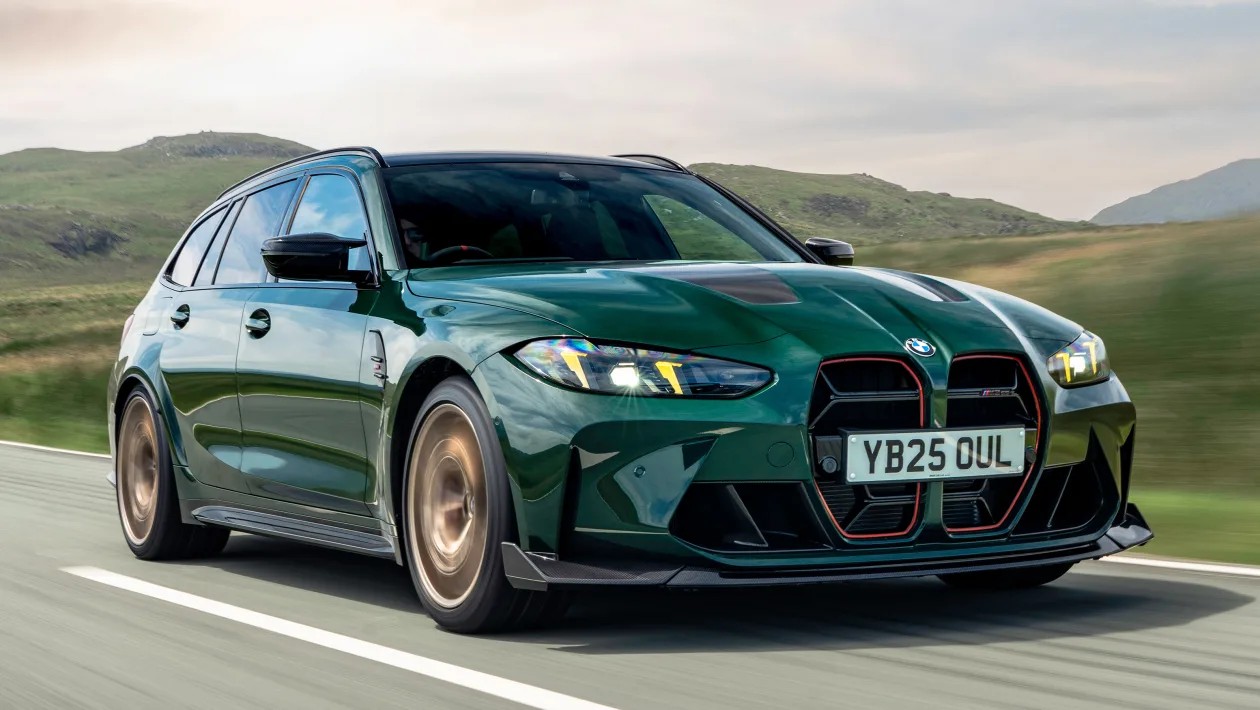
As the automotive industry accelerates toward electrification, BMW is proving that high-performance petrol engines are not yet ready to retire. In a strategic move to keep its iconic M3, M4, and M2 models compliant with impending environmental regulations, the German automaker has introduced a significant upgrade to its turbocharged straight-six engine. This intervention ensures that these performance machines can thrive in the EV era without sacrificing the power or character that enthusiasts demand.
The S58 Engine Gets a Technological Lifeline
The core of this update is the S58 engine, which powers the BMW M2, M3, M4, and several Alpina models. To meet the stringent Euro 7 emissions standards set to take effect in November 2026, BMW has equipped the S58 with a new technology branded as ‘BMW M Ignite.’
Production of the M3 and M4 with this revised engine is scheduled to begin in July, followed by the M2 in August. This timeline is critical, allowing BMW to launch fully compliant vehicles just ahead of the regulatory deadline.
What is ‘BMW M Ignite’?
‘BMW M Ignite’ is BMW’s marketing term for pre-chamber combustion technology. In simple terms, this system utilizes two spark plugs per cylinder:
* One spark plug ignites a small, highly volatile mixture in a pre-chamber.
* This creates a jet of flame that enters the main combustion chamber, igniting the primary fuel-air mixture more completely and efficiently.
This innovation is supported by variable turbine geometry (VTG) for the turbochargers and a higher compression ratio. The result is a more complete combustion process, which BMW claims leads to a significant reduction in fuel consumption and lower emissions.
Performance Remains Untouched
For performance car buyers, the primary concern with efficiency upgrades is often a loss of power. BMW has addressed this head-on: there is no drop-off in performance.
The efficiency gains are achieved without compromising the engine’s output. The lineup maintains its current power figures:
* BMW M2: 473 bhp
* M3 CS / M4 CS: 542 bhp
Furthermore, BMW asserts that the auditory experience—a crucial element of the driving enjoyment for M car owners—has been enhanced. Alexander Karajlovic, Head of Development at BMW M, notes that the sound has become “more throaty and emotive,” particularly at higher revs and under heavy load. At lower revs, the sound remains virtually identical to the familiar S58, preserving the brand’s signature acoustic identity.
A Scalable Solution for the Future
The ‘M Ignite’ system is a patented technology currently limited to the S58 engine. However, BMW views it as a modular solution with broader applications. Karajlovic indicates that the concept is “scalable,” suggesting it could be adapted for other engines in the future. This approach allows BMW to navigate an increasingly dynamic market where regulatory requirements are becoming stricter, extending the life of internal combustion engines (ICE) in their high-performance portfolio.
Industry Context: Keeping ICE Alive
BMW is not alone in this effort. Competitors like Mercedes-Benz are also investing heavily to keep their internal combustion engines compliant. Mercedes has declared its entire ICE portfolio—including four-cylinder, six-cylinder, V8, and V12 engines—ready for Euro 7 standards.
This trend highlights a broader industry shift: rather than abandoning petrol engines entirely, manufacturers are using advanced engineering to make them cleaner and more efficient, thereby extending their relevance in a hybrid and electric future.
What This Means for Buyers
While the technological upgrade is clear, its financial impact remains uncertain. It is currently unclear if the new ‘M Ignite’ technology will result in price increases for models equipped with the S58 engine. As of now, pricing stands at:
* BMW M2: Starting from £70,095
* BMW M3: Starting from £91,315
Conclusion: BMW’s ‘M Ignite’ technology represents a sophisticated compromise between performance and regulation. By enhancing efficiency without sacrificing power or sound, BMW ensures its M cars remain competitive and compliant, offering enthusiasts a viable petrol-powered option even as the industry pivots toward electrification.