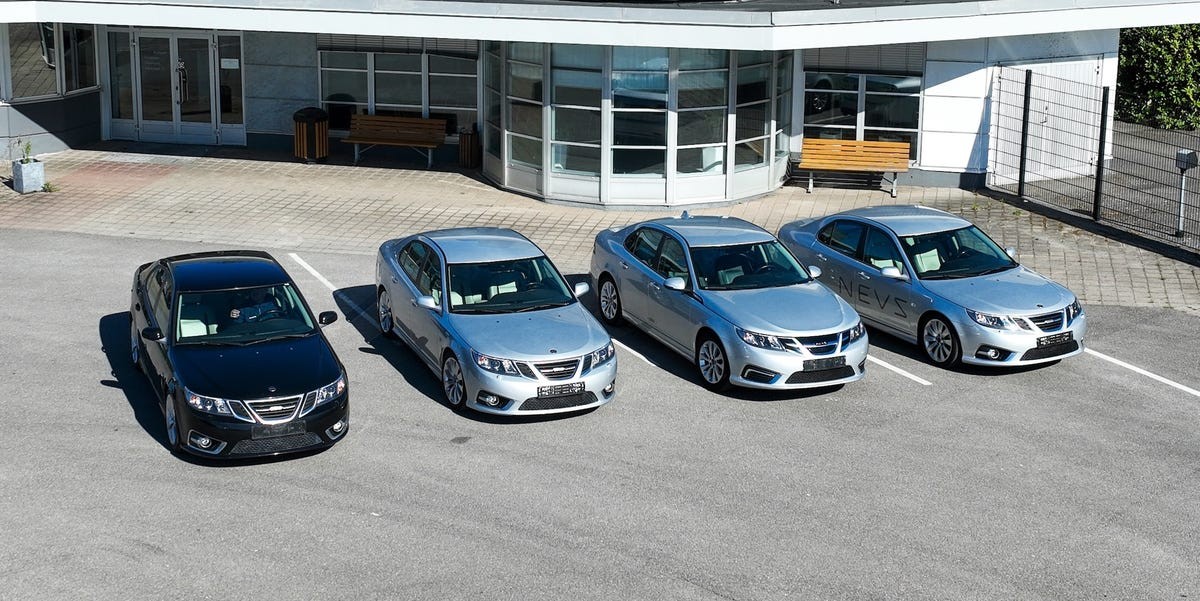
The automotive world is preparing for a poignant farewell as the historic Trollhättan factory in Sweden hosts its final major event. This week, an auction will take place featuring seven unique vehicles that represent the very end of the Saab legacy. These aren’t just any cars; they are the last physical remnants of a brand known for its quirky engineering and distinct Swedish character.
A Curated Collection of History and Innovation
The auction lot consists of two distinct groups of vehicles, each telling a different part of the Saab story:
- Three Saab 9-3 Pre-Production Models: These gasoline-powered sedans were built specifically for crash testing ahead of a planned 2014 production run. Although they have accumulated significant mileage from testing protocols, they were never subjected to actual crash tests. As the final cars to leave the assembly line, they hold immense historical value.
- Four NEVS Electric Prototypes: After Saab’s bankruptcy, its assets were acquired by the National Electric Vehicle Sweden (NEVS) consortium. These four vehicles represent the brand’s attempted pivot toward electrification and autonomous driving. The collection includes:
- One prototype driven extensively around Trollhättan.
- One test-bed featuring four in-wheel electric motors.
- One equipped for autonomous driving capabilities.
- One utilizing a range-extender plug-in hybrid powertrain.
Why This Matters: The End of an Era
This auction is more than a sale of used vehicles; it is the curtain call for the Trollhättan facility, which has been operational since 1947. For decades, this factory was the heart of Saab production, building everything from the iconic 900 coupe to the modern 9-3.
Saab occupied a unique niche in the automotive landscape. While its sister brand Volvo became synonymous with sensible, safety-focused engineering, Saab was the avant-garde architect of the car world—quirky, turbocharged, and distinctly Swedish. In an industry increasingly dominated by homogenized global designs, Saab represented a time when national character influenced automotive design. The loss of this brand marks a shift toward a more uniform global auto market, where distinct regional identities are fading.
A Final Opportunity for Enthusiasts
For collectors and enthusiasts, this event offers a rare chance to own a piece of automotive history. The auction includes a guided tour of the idle facility on May 30, allowing attendees to say goodbye to the site that produced Saab’s mass-market cars from 1949 until the company’s bankruptcy over a decade ago.
While these specific pre-production models are heading to auction, the spirit of Saab lives on through its loyal owner base. Unlike disposable commuter cars, Saabs were often cherished by their owners, meaning many vintage models remain well-preserved on roads today. For those unable to bid on the final prototypes, the classified ads remain a viable option for finding a classic 9-3 Viggen or other vintage Swedish automobiles.
These vehicles are not merely mechanical artifacts; they are the final tangible connection to a brand that prioritized personality over conformity. As they leave the factory, they carry with them the hopes, innovations, and unique identity of Swedish automotive engineering.