Japan’s thriving market for kei jidosha – or “light vehicles” – offers a compelling case study in how economic necessity and strategic government intervention can reshape an entire automotive industry. Today, the European Union is considering similar small, low-cost car classes, inspired by Japan’s success, as manufacturers struggle with electrification costs. But the story behind Japan’s tiny titans is rooted in the post-war reconstruction of a nation rebuilding from near-total industrial collapse.
From Ox-Carts to Motorcycles: Japan’s Pre-War Automotive Landscape
Before World War II, Japan lagged significantly behind Western nations in vehicle ownership. The dominant forms of transport were bicycles for individuals and ox-drawn carts for commerce. The few Japanese-built cars were prohibitively expensive, and production barely exceeded 15,000 units annually—mostly motorbikes and three-wheeled trucks. The country simply lacked the industrial capacity and materials to compete.
The Allied occupation following WWII further hampered progress, with outright prohibitions on car manufacturing due to Japan’s devastated industrial base. However, this situation began to shift with the outbreak of the Korean War in 1948. The conflict triggered increased Allied imports of heavy oil and iron ore, making essential vehicle materials more available.
Government Intervention and the Birth of the ‘Kei’ Class
In October 1949, Japan’s Ministry of Commerce and Industry announced a new policy aimed at revitalizing the automotive sector. This included ending material rationing and encouraging corporate consolidation. The need for government support was clear : as one reader of Autocar from Yokohama wrote in 1949, Japan was “last amongst the war-torn countries to make a comeback,” citing a lack of innovation, experience, and quality raw materials.
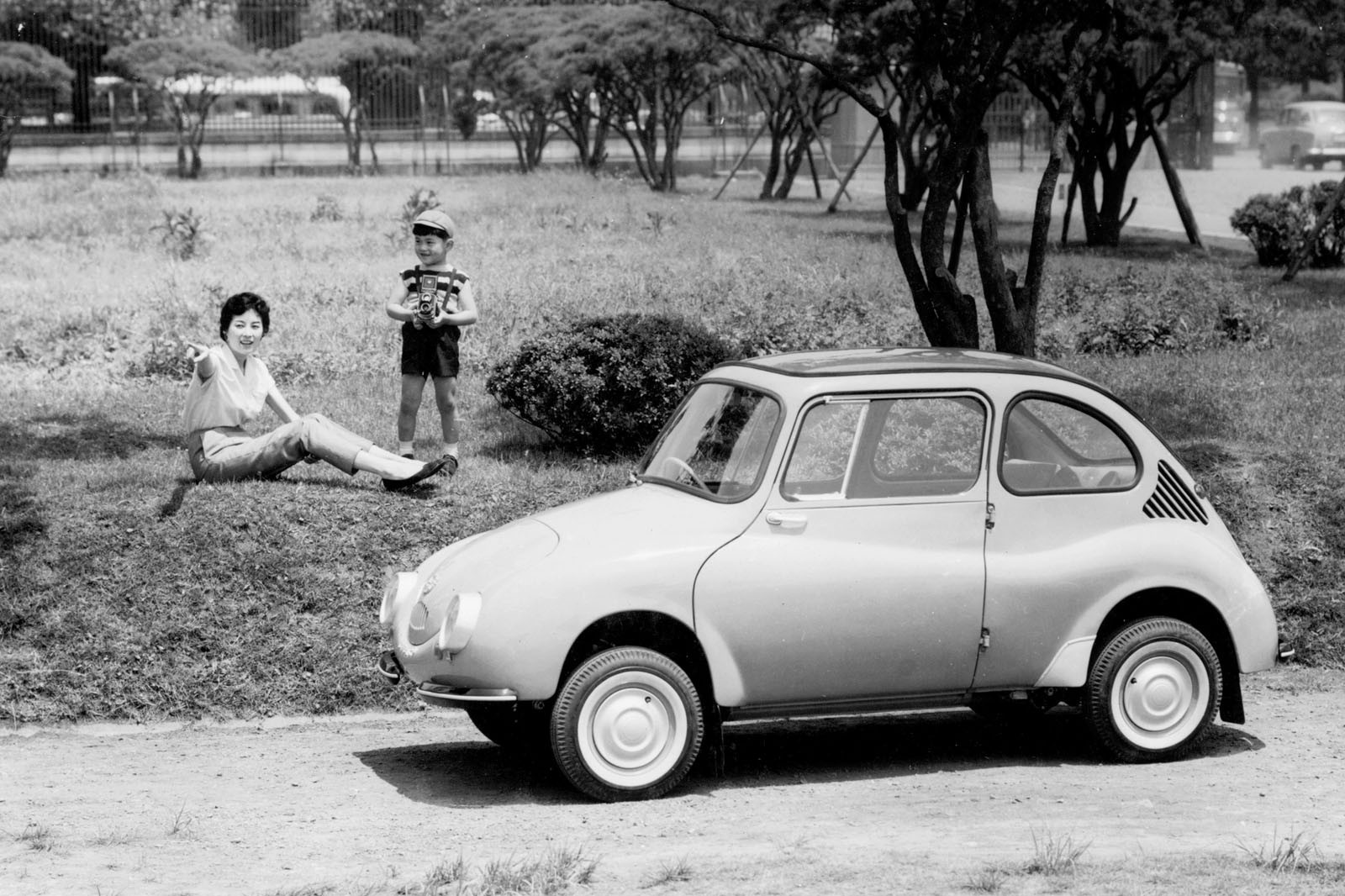
Responding to this crisis, the government amended vehicle regulations in 1949, creating a new category for cheap, lightweight vehicles. Further adjustments in 1950 and 1951 expanded maximum dimensions to 3m long, 1.3m wide, 2.0m high, with an engine cap of 360cc. The first official kei car, the Auto Sandal, emerged in 1952—a two-seater built by Nakano, using a Mitsubishi engine.
From Niche to Necessity: The People’s Car Development Plan
Early sales were minimal (just 200 Sandals and 48 Flying Feathers over two years). Real momentum arrived in May 1955 with the People’s Car Development Network Plan. This ambitious project outlined stringent requirements for a new national vehicle: two or four seats, 100kg+ luggage capacity, 62mph+ speed, 85mpg economy, 350-500cc engine, 400kg kerb weight, daily production of 2,000 units, and a production cost below ¥150,000 (roughly £4,800 today).
This wasn’t just about cars : it was about rebuilding an economy. The kei car class filled a vital niche, providing affordable personal transportation in a nation where many still relied on bicycles. The initiative worked, establishing a thriving market that persists to this day.
Today, the success of Japan’s kei cars is a testament to how targeted policy and industrial adaptation can overcome even the most severe economic challenges. The EU’s current consideration of similar vehicle classes highlights the enduring relevance of this model in a rapidly changing automotive landscape.