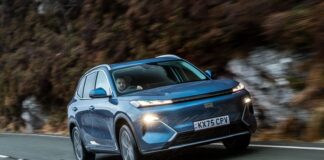
The Jeep Avenger, a compact SUV deliberately excluded from the American market, has become a surprise hit in Europe, particularly in Italy. By mid-2025, over 200,000 orders were confirmed, and in February of that year, the Avenger secured the second-best-selling new car spot in Italy – trailing only the iconic Fiat Panda.
Dominating the Italian Market
February sales figures reveal the Avenger’s popularity: 5,893 units sold, giving it a 3.7% market share. While still behind the Panda’s 12,612 sales (8% share), the Avenger decisively outperformed other contenders like the Fiat Grande Panda (5,500 sales) and the Leapmotor T03 (4,776 sales). Notably, four of Italy’s top-selling cars in February came from Stellantis, the parent company of Jeep, further highlighting the group’s dominance.
The Avenger’s success isn’t a one-off phenomenon. It was the best-selling SUV in Italy for both 2024 and 2025, capturing over 5.5% of the total SUV market and a substantial 11% of the B-SUV segment.
Why Italy Loves the Avenger
The Avenger’s appeal lies in its unique blend of rugged Jeep DNA and European practicality. Its small footprint makes it ideal for narrow, historic city streets, while its design retains the brand’s signature toughness.
What sets it apart is the versatility of its powertrain options :
– A basic 1.2-liter gasoline engine with a manual transmission
– A 48-volt mild-hybrid system
– A plug-in hybrid (4xe) with all-wheel drive
– A fully electric version
This range caters to diverse preferences, making the Avenger accessible to a wide audience.
The Avenger’s success raises a question: why isn’t this vehicle available in the US? The American market, dominated by larger SUVs, may not yet be ready for such a compact offering. However, the Jeep Avenger proves that a small, versatile SUV can thrive if positioned correctly.
The Avenger’s unexpected triumph demonstrates that European tastes are diverging from American preferences, and that automakers who adapt to these shifts can reap significant rewards.