Mazda stands apart in automotive history. While Toyota, Honda, and Nissan dominated sales charts, Mazda pursued a different path: building cars for the act of driving itself. This philosophy culminated in the RX-7, a vehicle that defied industry trends and now commands a cult following. Its story isn’t just about performance; it’s about a decades-long commitment to an engine technology everyone else abandoned.
Japan’s Performance Car Revolution
The late 1970s and early 1980s saw Japanese automakers racing to define the country’s performance landscape. While many pursued larger engines and turbocharging, Mazda took a contrarian approach. They recognized that raw power wasn’t their strength; efficiency and agility were. Their answer: the Wankel rotary engine.
Why the Rotary? A Bet Against the Grain
Automakers like GM and Mercedes once held Wankel licenses but shelved them due to fuel economy, emissions, and the notorious apex seal wear. Mazda didn’t ignore these issues; instead, they doubled down. The rotary engine’s compact size, high power-to-weight ratio, and packaging efficiency were undeniable advantages. For a company without the resources for a traditional V8 arms race, it was the logical choice.
This was not about being different for difference’s sake; it was about making the best of what they had. Other manufacturers saw the rotary’s potential but lacked the long-term vision to develop it. Mazda treated its supposed liabilities as strengths.
The Legacy of Commitment
Mazda’s dedication began in 1965 with the 10A rotary engine. Over the next three decades, they refined the technology through each generation, culminating in the FD RX-7. Each iteration wasn’t just an improvement; it was a deliberate step towards a more capable, refined machine. This wasn’t accidental: it was the result of institutional commitment to a technology everyone else dismissed.
The FD RX-7: A Driver’s Car First
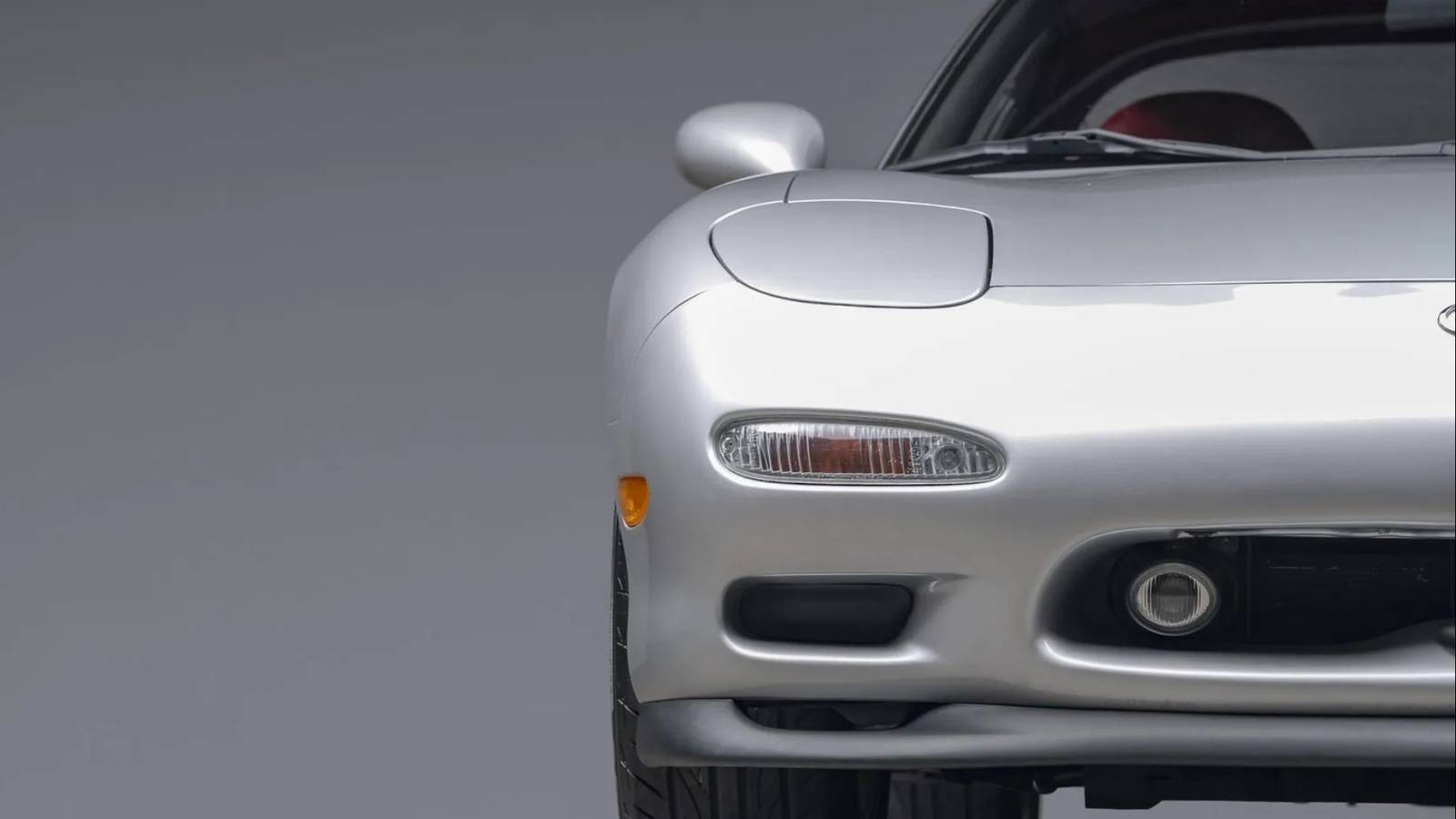
The third-generation FD RX-7 embodied Mazda’s philosophy. Weighing around 2,300 pounds, with a twin-rotor engine mounted low and behind the front axle, it was a lightweight, balanced machine. No comparable piston engine could match its power-to-weight ratio or packaging efficiency.
Chief engineer Takaharu “Koby” Kobayakawa approached the FD as an artist rather than an engineer. He wanted to build a car that delivered “emotional fulfillment,” a concept rarely heard in automotive development. The FD wasn’t about top speed; it was about feeling.
Despite having the lowest horsepower (255 hp) and torque (217 lb-ft) of the Japanese “Holy Trinity” (Supra, GT-R, NSX), the FD’s lightweight chassis and perfectly tuned suspension made it feel alive in corners where its rivals struggled. Mazda’s promotional material described the FD as feeling like “moving a muscle,” and it delivered on that promise.
Scarcity, Cost, and the Modern Appeal
The FD RX-7 was only sold in the U.S. for three years (1993-1995), with a mere 13,879 units sold. By 1995, only 500 were sold in the US. This scarcity drives prices sky-high today, with clean examples commanding well over their original $32,500-$33,925 MSRP.
Ownership demands diligence. Rotary engines require compression tests, apex seal maintenance, and occasional full rebuilds. This isn’t a casual purchase; it’s a commitment.
The RX-7’s Enduring Legacy
The FD RX-7 is more than just nostalgia. Toyota revived the Supra, Nissan the GT-R, and Honda the NSX, but Mazda never built a successor. The closest attempt, the RX-8, also faded away. The rotary engine now exists as a range extender in the MX-30, but it lacks the visceral experience of the FD.
The FD’s formula—RWD, rotary-powered, sub-3,000-pound sports coupe—no longer exists. This market gap fuels its appeal beyond sentimentality. The FD RX-7 is a pure driving experience in a world of increasingly sanitized cars.
Owning an FD is not just a hobby; it’s a lifestyle. If you’re willing to accept the quirks alongside the thrills, you’ll unlock a driving feeling few will ever experience. Mazda built this sports coupe to prove a point, and thirty years later, its argument has only grown more compelling.