


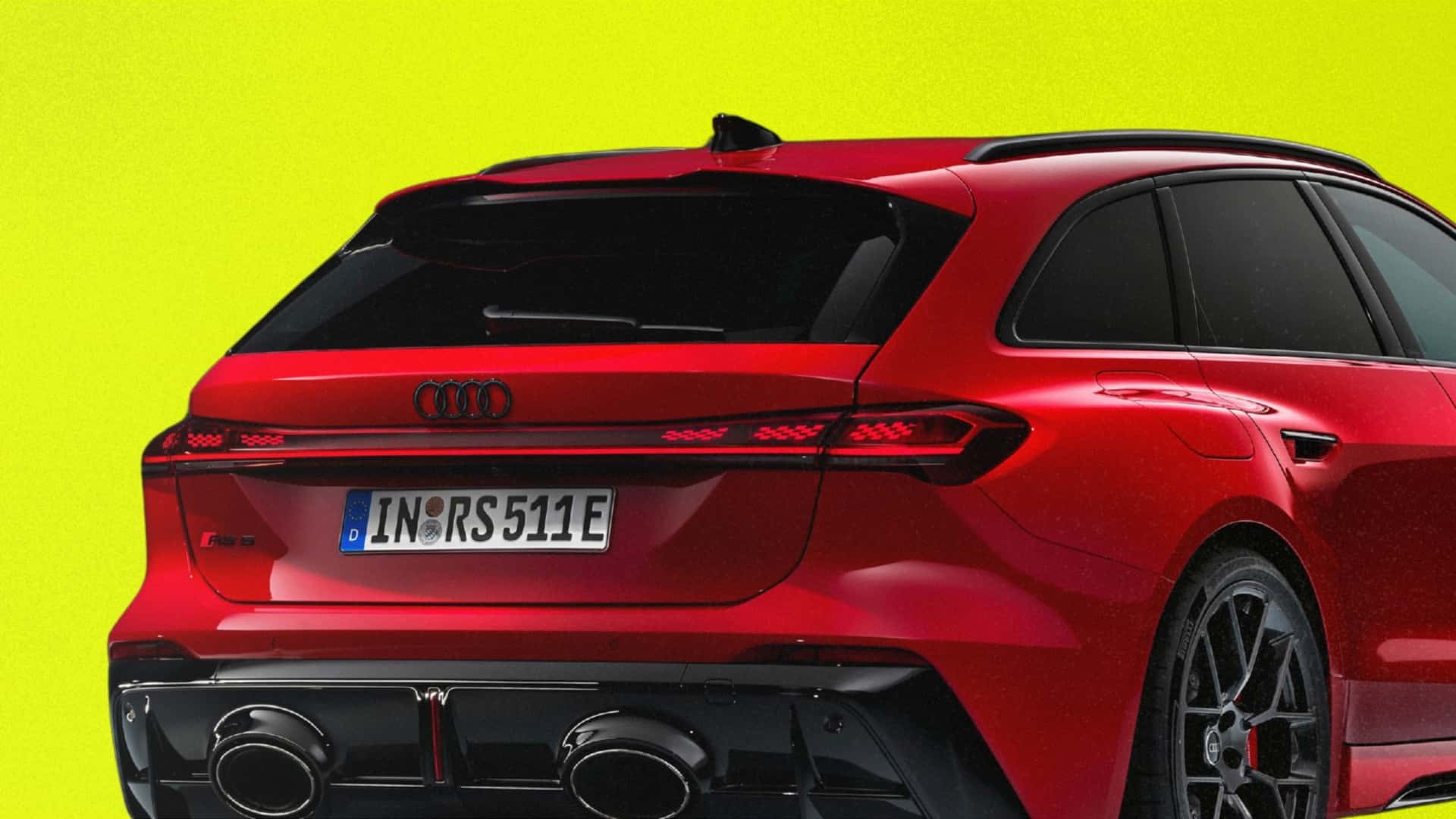
Modern performance cars are getting fatter, and it’s not a matter of poor engineering—it’s a direct consequence of increasingly strict emissions regulations. The recent Audi RS5 Avant, weighing in at a substantial 5,225 pounds (2,370 kg), exemplifies this trend. The car has gained over 1,378 pounds (625 kg) compared to its predecessor, roughly the weight of an entire small car. This isn’t accidental; it’s a necessary compromise for automakers to meet tightening environmental standards.
The Pressure to Electrify
The shift towards plug-in hybrid (PHEV) powertrains is the primary driver behind this weight gain. While manufacturers would prefer to refine existing combustion engines, the EU’s emissions targets—a 55% reduction by 2030 and a 90% drop by mid-decade—leave little room for maneuver. The upcoming Euro 7 standards, set to take effect in late 2026, will further complicate matters, including testing for tire and brake particulate pollution.
This means cars like the RS5 must embrace electrification to remain viable. The alternative is losing cylinder counts or outright discontinuation, as seen with Mercedes-AMG’s recent cancellation of the four-cylinder C63.
Why Bloat is Now a Feature, Not a Bug
The RS5 Avant’s PHEV setup, while heavier, significantly reduces CO2 emissions to as low as 88 g/km—a 60% improvement over the old gas-only model. Fuel consumption has also seen a dramatic boost, with estimated figures reaching 60.3 mpg (3.9 L/100 km) versus the previous 24.2 mpg (9.7 L/100 km).
However, this efficiency comes at a cost: weight. Automakers are constrained by economic realities. Extensive use of lightweight materials like carbon fiber would drive up prices further, making these high-performance wagons even more niche products. It’s cheaper to add batteries and electric motors than to completely redesign for extreme weight reduction.
The Future of Performance
The trend is clear: future performance models, including the next Audi RS6 Avant, will likely follow suit with larger, electrified powertrains. Even the iconic Audi inline-five is facing the ax, as upgrading it to meet Euro 7 standards isn’t financially justifiable for the relatively low sales volume.
The RS5 Avant’s weight (595 pounds heavier than the previous RS6 Avant) is a sign of things to come. The industry is converging on a single global model approach, avoiding the cost of separate combustion-only versions for certain markets.
Ultimately, the “bloat” is a strategic calculation. Automakers are forced to prioritize regulatory compliance over traditional performance metrics. The RS5 Avant’s hefty curb weight isn’t a design flaw; it’s the price of survival in an era of tightening environmental constraints.


