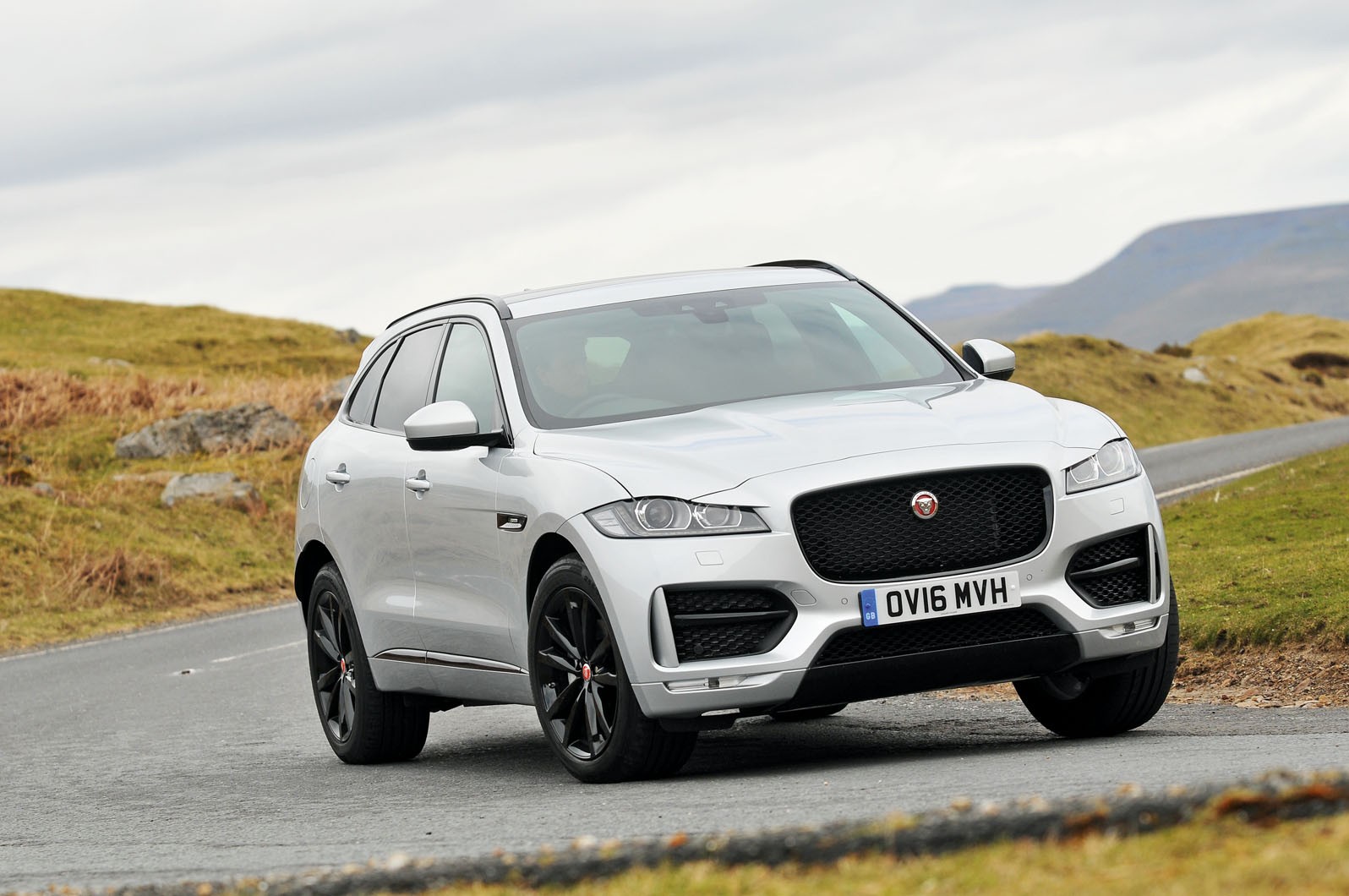
While most German luxury manufacturers build SUVs on shared platforms to save costs, Jaguar has taken a different path. The F-Pace is not a rebranded Land Rover; instead, it is built on the same architecture as the Jaguar XE and XF saloons. This decision was deliberate: Jaguar wanted to ensure the F-Pace retained the “dynamism” and driving spirit that defines the brand, rather than becoming just another utility vehicle.
Engineering for Agility
The F-Pace is a masterclass in lightweight construction. Approximately 80% of the body is aluminum, supplemented by magnesium in the cross-chassis rail. This use of magnesium is particularly clever—by placing it high in the chassis, Jaguar has lowered the vehicle’s center of gravity, helping to counteract the natural top-heaviness of an SUV.
To achieve a near 50/50 weight distribution, engineers utilized a steel boot floor to shift weight toward the rear. The mechanical setup—featuring double wishbones at the front and an integral link rear suspension—complements a rear-biased four-wheel-drive system. In normal driving, the car remains rear-wheel drive, only engaging the front wheels when slip is detected. This gives the F-Pace a “sporty” character that many of its more utilitarian rivals lack.
The Driving Experience: Precision vs. Comfort
The F-Pace is arguably the most poised and precise vehicle in its class. When cornering, it turns more immediately and grips harder than its competitors, offering a neutral balance that feels more like a sports sedan than a crossover.
However, this focus on handling comes with a trade-off: ride comfort.
– The Upside: Exceptional handling, sharp steering response, and a sense of connection to the road.
– The Downside: The suspension can feel firm, occasionally becoming jittery or “clunky” over broken surfaces, especially when equipped with large 20-inch wheels.
The Verdict on Performance: While it handles beautifully, the base 2.0-litre diesel engine struggles to keep pace with the “sporty” branding. It lacks the punch of rivals like the Mercedes-Benz GLC 250 d, feeling somewhat noisy and eager to shift through gears too quickly under heavy load.
Interior and Practicality: A Familiar Luxury
Inside, the F-Pace feels like a Jaguar through and through. The dashboard design follows the sweeping, organic lines found in the XE and XF, creating a premium—if not quite “outstanding”—environment.
Key Interior Findings:
* Layout: The driving position is low and stretched out, more akin to a sports car than a high-riding SUV.
* Space: It offers excellent rear legroom, surpassing the Mercedes-Benz GLC, and features highly versatile 40/20/40 split-folding rear seats.
* Utility: The boot is well-designed with a reversible, wipe-clean floor and dedicated storage for the load bay cover.
* Technology: The standard 8.0-inch InControl system can feel sluggish. For a truly modern experience, the InControl Pro 10.2-inch upgrade is highly recommended, as it offers much better responsiveness and navigation.
Trim Levels and Value
The F-Pace is divided into two main categories: Luxury and Sport.
- Luxury (Prestige & Portfolio): Focuses on elegance, featuring leather upholstery, ambient lighting, and optional panoramic roofs.
- Sport (R-Sport & S): Focuses on aesthetics and performance, offering body kits, gloss black accents, and larger wheels. The top-tier S model includes adaptive suspension and upgraded braking systems.
A Note on Pricing: The F-Pace sits at a premium price point. It is notably more expensive than equivalent models from BMW, Audi, or Volvo. You are paying a premium for the unique Jaguar driving dynamics and brand identity.
Final Recommendations
If you are looking for a soft, cloud-like ride, the F-Pace may disappoint you. However, if you want an SUV that actually feels like a driver’s car, it is a standout choice.
Expert Advice for Buyers:
* Target Trim: The R-Sport offers the best balance of value and character.
* Essential Add-ons: If you opt for larger alloy wheels, the Adaptive Dynamics Pack is essential to smooth out the ride.
* Tech Tip: Do not skip the InControl Pro upgrade; the standard infotainment system feels dated by comparison.
Conclusion: The Jaguar F-Pace is a unique breed of SUV that sacrifices some comfort and fuel efficiency to deliver superior handling and driving engagement. It is a vehicle designed for those who want the utility of an SUV without losing the soul of a sports sedan.