


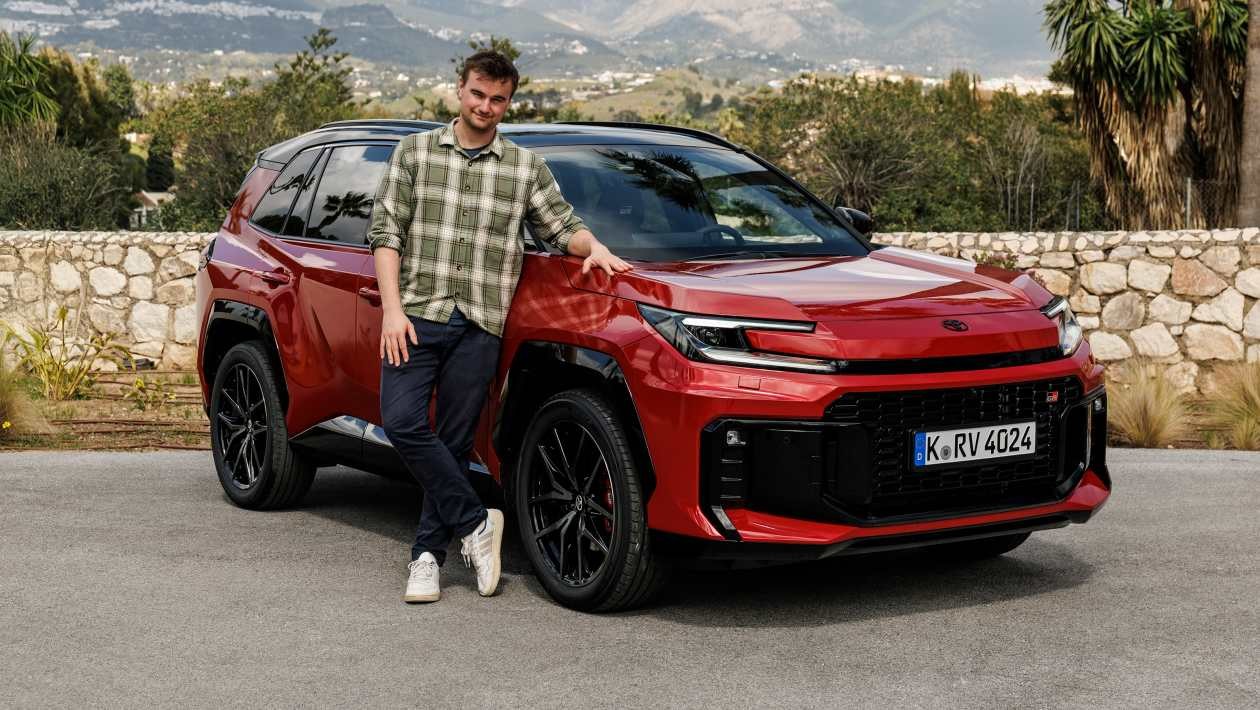
The Toyota RAV4 has long been a titan of the SUV market, boasting over 15 million sales worldwide. As the sixth generation arrives, it carries the heavy burden of maintaining its status as a global bestseller. While the new model excels in electric efficiency and driving refinement, it faces a difficult balancing act between rugged capability and a polarizing interior redesign.
The Core Proposition: Efficiency Meets Capability
In the UK, Toyota has made a bold—and perhaps controversial—move by offering the RAV4 exclusively as a Plug-in Hybrid (PHEV). While this aligns with consumer trends toward electrification, it removes the option for traditional “self-charging” hybrids, potentially alienating buyers looking for a lower entry price.
Despite this limited choice, the technical upgrades are significant:
* Enhanced Electric Range: Thanks to a larger 22.6kWh battery, the RAV4 now offers an impressive electric-only range of 82 to 85 miles, outperforming many key rivals like the Ford Kuga and VW Tiguan.
* Faster Charging: The upgrade to a 50kW charge rate means the battery can go from 10% to 80% in just 30 minutes, a massive leap from the previous generation’s sluggish charging speeds.
* Performance: Whether you choose the Front-Wheel Drive (272bhp) or the All-Wheel Drive (300bhp), the power delivery feels smooth and responsive, mimicking the instant torque of a pure EV.
Driving Dynamics: Smooth, Not Thrilling
The RAV4 remains a master of “unassuming” driving. It is designed for comfort and refinement rather than adrenaline.
On the Road
The chassis has been stiffened by nearly 10%, resulting in a more composed ride. For those seeking a bit more engagement, the GR Sport trim offers retuned steering, a lower ride height, and sportier seating. However, even with these enhancements, the RAV4 remains a sensible family cruiser. The inclusion of “manual” gearshift paddles on a CVT-style gearbox feels more like a gimmick than a functional performance tool.
Off-Road and Urban Use
True to its heritage, the RAV4 remains competent on light off-road trails. In urban environments, the high driving position and improved parking camera resolution make it easy to maneuver, though the large C-pillars still necessitate a reliance on technology for rear visibility.
The Interior Dilemma: Style vs. Substance
This is where the new RAV4 faces its toughest criticism. While the dashboard takes aesthetic cues from the rugged Toyota Land Cruiser, the execution leaves much to be desired.
- Design Shifts: Toyota has moved away from the previous generation’s metallic inserts and color accents, opting for a darker, more monochrome look.
- Ergonomic Trade-offs: In an effort to modernize, Toyota has moved climate controls into the touchscreen. While temperature adjustments remain physical, the integration feels less intuitive than a dedicated control panel.
- Material Quality: For a vehicle in this price bracket (starting at £43,845), the prevalence of hard black plastics is disappointing. Specific areas, such as the central armrest, lack the premium feel one might expect from a flagship SUV.
Market Position and Value
The RAV4 enters a crowded arena. It must contend not only with established European names like Volkswagen and Ford but also with a rising tide of competitive Chinese brands like BYD and Chery.
| Model Trim | Estimated Starting Price | Key Feature |
|---|---|---|
| Icon | £43,845 | Entry-level value |
| Design | £45,745 | Likely the volume seller |
| Excel | £50,045 | Mid-tier luxury |
| GR Sport | £52,045 | Sporty aesthetics & AWD |
While the initial purchase price is high, Toyota’s strong brand reputation suggests that depreciation should remain manageable, with historical residuals sitting in the mid-50% range.
Verdict: The new Toyota RAV4 is a highly competent, technologically advanced PHEV that excels in range and refinement. However, its appeal may be dampened by a lack of powertrain variety and an interior that prioritizes a “tough” aesthetic over premium material quality.
Summary: The RAV4 remains a top-tier choice for drivers prioritizing electric range and reliability, provided they can overlook a somewhat uninspired cabin.


