Nissan has officially begun outlining the roadmap for the return of the Xterra, a move aimed at reclaiming its territory in the highly competitive rugged SUV market. While enthusiasts have long campaigned for a return to mechanical simplicity, Nissan is offering a strategic compromise: a powerful, naturally aspirated engine paired with modern hybrid options, but without the manual gearbox many purists crave.
The Engine Strategy: Prioritizing Power Over Turbocharging
At the New York Auto Show, Ponz Pandikuthira, Nissan Americas’ chief product and planning officer, confirmed that the reborn Xterra—slated for a 2028 release —will center around a traditional internal combustion engine (ICE).
In a move that will likely resonate with off-road enthusiasts, Nissan has ruled out the use of a turbocharged four-cylinder engine. Instead, the lineup will feature:
- A Pure Gasoline V6: Expected to be an updated version of the 3.8-liter V6 currently powering the Nissan Frontier.
- A Hybrid Variant: A hybrid version based on the same V6 architecture will follow the gas-only model, though the exact timing and technical specifics remain under development.
This decision to stick with a large-displacement V6 rather than downsizing to a smaller, turbocharged engine suggests that Nissan is prioritizing reliability and consistent torque —two critical factors for vehicles intended for heavy off-road use.
Design: A “Breath-Taking” Return to Ruggedness
The Xterra has always been defined by its “go-anywhere” aesthetic, and Nissan intends to maintain that identity. Pandikuthira hinted that early mock-ups of the vehicle are “super imposing” and feature “tough, in-your-face design cues.”
By focusing on a bold, uncompromising look, Nissan is positioning the Xterra to go head-to-head with established heavyweights like the Toyota 4Runner and the Ford Bronco. The goal is to capture the nostalgia of the original model while delivering a vehicle that feels modern and capable.
The Manual Transmission Debate
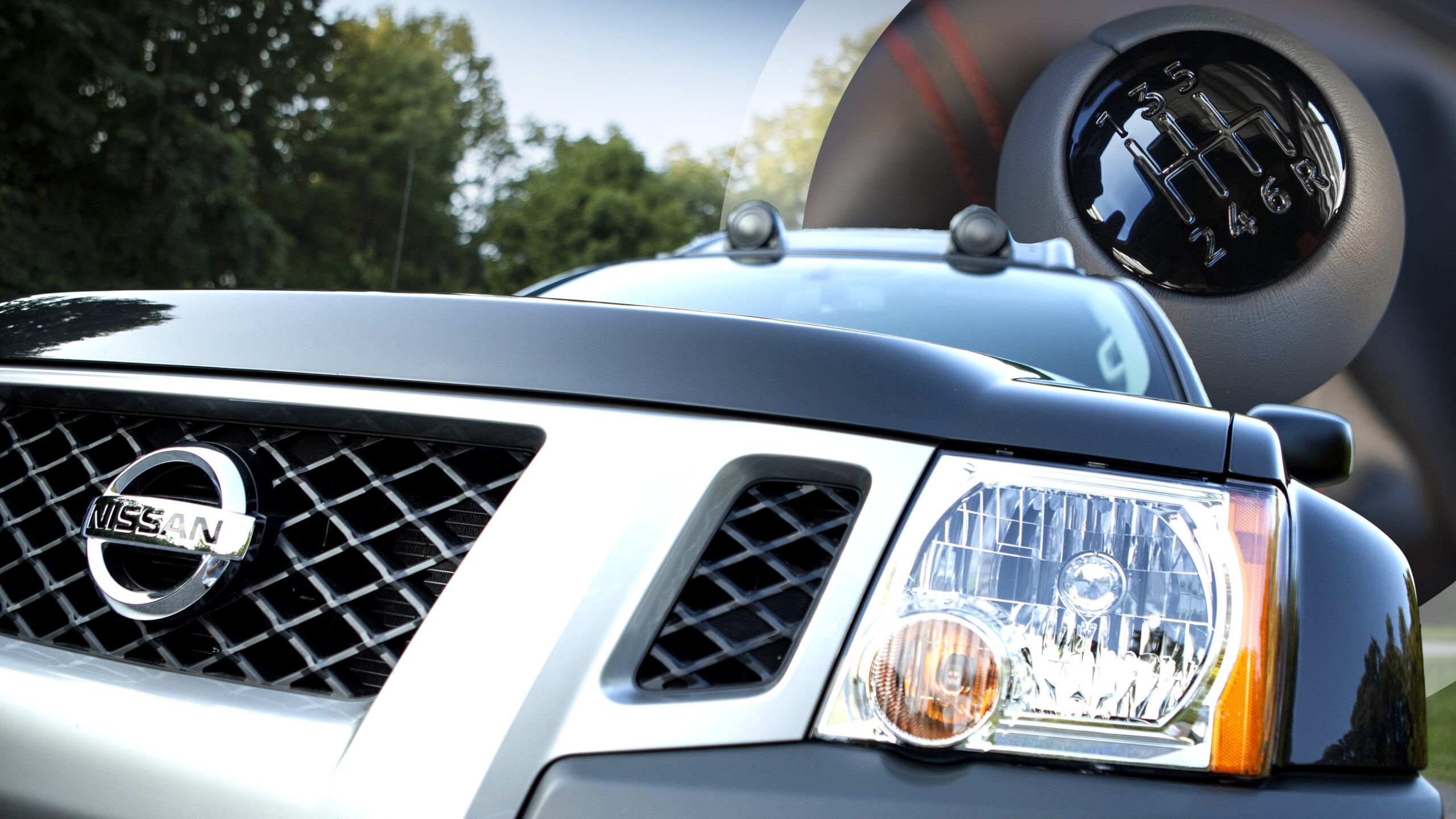
Despite the positive news regarding the engine, Nissan has delivered a disappointment for those hoping for a manual transmission. Unlike the Ford Bronco, which offers a manual option to appeal to driving enthusiasts, Nissan will stick exclusively to automatics.
Pandikuthira provided two primary justifications for this decision:
- Engineering Focus: He argued that modern buyers prioritize suspension tuning, steering feel, and powertrain calibration over the ability to shift their own gears.
- Interior Utility: From a practical standpoint, he noted that a manual shifter occupies significant space in the center console, which could otherwise be used for much-needed storage.
This highlights a growing trend in the automotive industry: as vehicles become more complex, manufacturers are increasingly prioritizing packaging efficiency and electronic integration over traditional mechanical engagement.
While the lack of a manual transmission may alienate some purists, Nissan is betting that a robust V6 and a rugged, “in-your-face” design will be enough to win back the Xterra faithful.
Conclusion
The upcoming Xterra is shaping up to be a purpose-built, V6-powered adventurer that favors rugged capability over mechanical nostalgia. By focusing on a proven powertrain and a bold design, Nissan is attempting to bridge the gap between old-school toughness and modern hybrid technology.