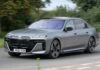
For decades, Volkswagen followed a predictable global formula: design vehicles tailored to European and American preferences and export them to the world. However, a massive shift in the automotive landscape has forced a reversal of roles. Today, rather than selling German engineering to China, Volkswagen is increasingly looking to Chinese innovation to stay competitive in its most vital market.
A New Strategic Pivot in China
Volkswagen is currently developing a new electric SUV specifically for the Chinese market, marking a significant departure from its traditional development cycles. Unlike many of its recent electric vehicle (EV) efforts in the West, which some critics argue are beginning to lose their edge, this new model is being designed to go toe-to-toe with aggressive local Chinese brands.
While much of VW’s recent EV push has come through its partnership with JAC (the Volkswagen Anhui venture), this new project is being spearheaded by the FAW-Volkswagen joint venture. This distinction is important; it shows VW is diversifying its local partnerships to tap into different segments of the Chinese manufacturing and technological ecosystem.
The ID.Aura Family: High-Tech and High-Voltage
While the official name remains unconfirmed, the new model is part of the upcoming ID.Aura family. This lineup was first teased last year with a sleek, low-slung sedan and is expected to fill a growing gap in the market for premium, high-performance electric mobility.
Key technical details emerging from recent leaks include:
– Advanced Architecture: The model is expected to utilize the CEA architecture, a platform co-developed with Chinese EV specialist Xpeng.
– Rapid Charging: The vehicle will reportedly feature 800-volt technology, allowing for much faster charging speeds than standard current EV models.
– Sophisticated Design: Leaked images of a prototype suggest a large SUV silhouette that is more conventional and “upright” than the smaller ID. Unyx, featuring bulging fenders and a split-headlight design.
Integrating Cutting-Edge Intelligence
The most telling detail of this new model is its emphasis on autonomous driving capabilities. Prototypes have been spotted with a LiDAR unit positioned above the windshield—a high-end sensor crucial for advanced driver-assistance systems (ADAS) and self-driving functions.
By integrating LiDAR and leveraging the Xpeng-partnered architecture, Volkswagen is attempting to bridge the “tech gap” that has allowed Chinese domestic brands to leapfrog traditional Western automakers in software and smart-driving features.
This shift represents more than just a new car launch; it is a fundamental change in Volkswagen’s DNA, moving from a “top-down” German design philosophy to a “localized” approach driven by Chinese technological standards.
Conclusion
Volkswagen is no longer just selling cars in China; it is learning from them. By leveraging local partnerships and advanced architectures like CEA, the automaker is attempting to reclaim its footing in a market that has moved faster than the traditional automotive industry expected.