


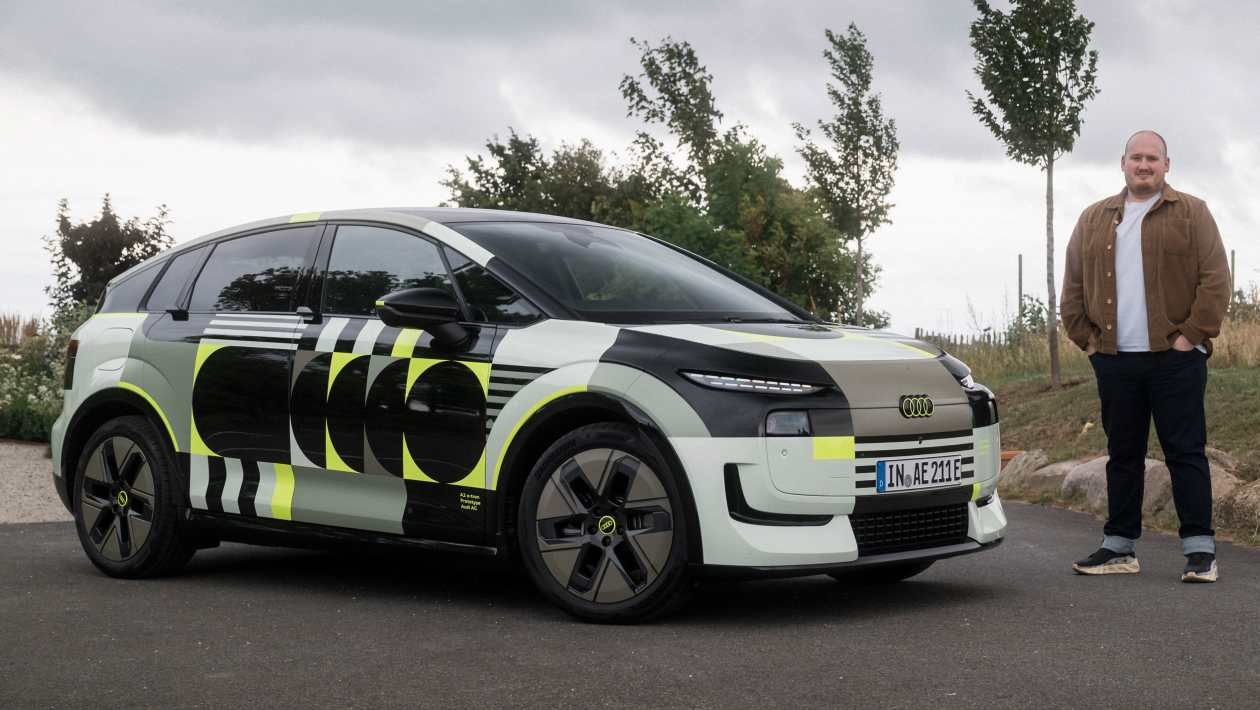
The Audi A2 isn’t just coming back. It’s evolving.
The original was a ghost from the future. An aluminium-skinned, wedge-shaped anomaly that arrived in 1999. It was brilliant. It was also a commercial disaster. People didn’t get it. They were afraid of the tech. The repairs were expensive. It died quietly.
This time? Different story.
Audi has been quietly engineering a successor for just over three years. Not to repeat mistakes. To fix them. The result is the new Audi A2 e-tron. It looks radical. It drives efficient. It promises to be the entry-level EV gateway for the brand. And early signs say it will actually work.
I tested a disguised prototype in Scandinavia. The goal? See if this retro-futuristic hatch can match the efficiency of its ancestor. The answer is yes. And it does something else, too. It feels like a real car.
Why now? The strategy behind the revival
You might wonder why Audi revived a name that failed so spectacularly.
Michael Schurr, the vehicle project manager, was blunt. The goal wasn’t nostalgia. It was necessity. Audi needed an entry-level electric vehicle. Fast. They already have the Q4 e-tron and the Q6 e-tron. They sell well. But they aren’t small. They aren’t cheap.
The market demands a zero-emission alternative to the A3 hatchback. Mercedes is working on an EV version of the A-Class. BMW is doing the same with the 1 Series. Alfa Romeo is launching a new hatch too.
Audi moved quickly. Normally, it takes five years to bring a car to market. They did it in three and a half. How? By refusing to pivot. The team had a clear mission. No detours. No “maybe an SUV instead” moments. Just pure focus on the A2 philosophy: lightweight (in spirit, if not material), efficient, and compact.
The result? The A2 e-tron arrives years before its German rivals.
The platform: Proven, not pioneered
The original A2 used a spaceframe aluminum structure. It was revolutionary. It was also expensive and fragile. That helped kill the car.
The new A2 doesn’t reinvent the wheel. It uses the MEB+ platform.
This is the same architecture underpinning the VW ID.3, the Audi Q4 e-tron, and the upcoming ID.3 Neo. It’s not bespoke. It’s proven. It reduces development time. It lowers risk. But Audi didn’t just copy-paste. They refined.
New rear electric motor. Revised gearbox. Better battery cooling. These aren’t minor tweaks. They are efficiency boosts. They are also trickling down to the Volkswagen ID.3 Neo, proving this architecture is getting sharper every day.
Design: Aerodynamics with a purpose
The camouflage on the prototype was loud. Colorful. Distraction-heavy.
But the silhouette was unmistakable.
Sloping roofline. Short, rounded nose. Bulging wheelarches. It’s a Kammback design. Sharp rear edge. No rounded trunk lid. This shape cuts drag.
The original A2 had a weird tailgate with a extra glass panel. Good for visibility. Bad for aerodynamics. The new design keeps the glass but optimizes the airflow.
Active shutters in the front bumper. Air curtains guiding air down the sides. Aero-optimized wheels.
The result? A drag coefficient of just 0.24 Cd. Less than the original. Which means… less energy wasted pushing against the wind. In city driving or on the highway.
Interior: Space where you don’t expect it
The interior is covered in cloth. You can’t see much. But the bones are visible.
Audi is rolling out the “Digital Stage” across its range. Expect a curved housing for the screens. Likely a 12.8-inch display and an 11.9英寸 driver screen. Running on an Android-based system.
There are shared parts with the VW ID.3. The light bar across the dash. The quarterlights.
But the driver’s zone is Audi. Unique stalk. Unique gear selector. Taken from the new Q3. Matt plastics. Woven fabric door tops. No glossy black fingerprints.
Is it spacious?
The car is slender. Low roof. So front headroom is tight for tall drivers.
Rear? Surprising.
Six-foot adults fit. Just. With a few inches to spare. Legroom is decent. It’s not a limousine. But it’s usable. For four people. As Schurr promised. You can have aero or space. They tried for both.
Driving dynamics: Frugal by nature, fun by accident
The road in Sweden was smooth. Calm. Cornerless.
The A2 e-tron felt pleasant. Direct steering. Good weight in the controls. Not thrilling. But competent.
We drove a mid-range version. It was zippy. Got onto motorway speeds quickly.
But the prototype had sport suspension. Too firm. Bobbing. Every bump thudded into the cabin. Road noise was present. Always.
Would the final car be softer? Maybe. The UK’s roads are worse than Sweden’s. We’ll have to see.
What surprised us wasn’t the ride. It was the efficiency.
We tested with AC on. Normal driving. Not aggressive. Not timid.
Average: 5.5 miles per kWh.
That’s impressive. Real-world range estimate? Around 315 miles.
But here’s the kicker.
We drove hard. Threw it into corners. Let off the restraint.
Average: 4.9 miles per kWh.
How does that make sense?
The car is rear-wheel drive. You can slide it slightly. Push the rear end out on a tight bend. It’s engaging. And it’s still efficient.
The battery technology is key here. The car will likely use LFP (Lithium Iron Phosphate) batteries for the standard versions. 50 kWh or 58 kWh. Up to 305 miles range.
Top-spec might get a 79 kWh NMC cell. Up to 390 miles. Breaking the 400-mile barrier? Plausible.
Pricing: Affordable luxury?
The VW ID.3 Neo starts around £31,580. With the government EV grant.
The Audi A2 e-tron will likely cost more. But not by much.
Estimates suggest a starting price around £35,000.
If so, it’s cheaper than the petrol A3. It undercuts the Q4 e-tron by roughly £15,000.
But it brings Audi tech. Design. Build quality. To a lower price point.
No compromises. On engineering. On innovation.
For a brand that needs volume. And a market that needs affordable EVs. This could be the hit.
The verdict
The original A2 was a lesson in being too early.
The new A2 e-tron seems to know exactly where the line is.
It’s not a spaceframe. It’s an MEB+ car. It’s not trying to be a spaceship. It’s trying to be a practical, efficient, stylish hatch.
It looks good. It drives well. It saves energy.
The prototype felt firm. Noisy. But efficient. Very efficient.
Will it work? The signs point to yes.
The world is ready. The tech is ready. Audi is ready.
And unlike 1999… people might actually buy it.
Autumn 2026 launch. Keep an eye on this one.


