


America has always been obsessed with speed. It’s in the DNA of the road trip. You want to get from point A to point B comfortably, sure. You tolerate gridlock for the sake of a grocery run. But the real magic? The engine rumble. The gear whine. The wind screaming past a rolled-down window. It’s the stuff of cinematic montages. It’s an icon.
Hybrids are shifting that image. They aren’t built for noise. In fact, they actively try to be quiet. Most fuel-efficient models shut off the gas engine at stoplights or when coasting. An electric motor takes over. It’s silent. It’s efficient. It cuts emissions.
Critics have piled on. Some claim hybrid batteries are ticking time bombs. They say they fail often and cost a fortune to replace. That’s mostly fear-mongering. Nearly every manufacturer guarantees the battery for the life of the vehicle.
Then there’s the speed argument. Drivers used to the thrill of modern gasoline sedans say hybrids are slow. They argue that focusing on MPG means sacrificing horsepower. That the cars lack punch. That they’re boring. This clashes with the traditional American muscle car fantasy.
So, are hybrid cars really slower? Why do they feel that way? And does performance even matter if you’re trying to save gas?
The Torque Advantage
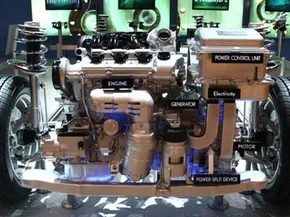
Let’s look at how hybrid engines actually work. They don’t just use a small gas engine. They pair it with an electric motor.
Electric motors produce instant torque. You don’t need to rev the engine to get power. You press the pedal. You move.
This changes acceleration. It feels different than a traditional car.
Traditional cars need to build RPMs. They shift gears. They lag.
Hybrids bypass that lag. The electric motor fills the gap immediately.
Think about city driving. Stop-and-go. The gas engine is off. The electric motor pulls away from the light. It’s quick. It’s smooth.
Highway merging? The gas engine kicks in. It adds power. The combined output is often higher than a similar-sized non-hybrid.
But here’s the catch. The feeling isn’t the same.
There’s no engine roar. No vibration. No mechanical connection between the pedal and the exhaust note.
It’s efficient. It’s fast. But it’s quiet.
And for some drivers, quiet equals slow.
“Electric motors produce instant torque. You don’t need to rev the engine to get power.”
Where Speed Comes From
Speed isn’t just about horsepower. It’s about power delivery.
Hybrids prioritize efficiency. They manage energy carefully. They don’t dump fuel into the engine unnecessarily.
This means they don’t scream when you floor it.
They hum. They glide. They conserve.
A gasoline engine screams because it’s burning fuel violently. It’s creating explosions. It’s loud. It’s aggressive.
A hybrid modulates power. It blends sources. It’s calculated.
That’s not a flaw. It’s a feature.
If you want raw noise, buy a muscle car. If you want to get across town in half the time, buy a hybrid.
The perception of slowness comes from a lack of sensory feedback. No wind in the ears. No engine strain. Just progress.
Is that boring? Maybe.
Is it fast? Absolutely.
Think about the Tesla. Electric. Silent. Fast.

The Hybrid Performance Paradox
Buyers expect trade-offs. That’s the unspoken rule when you cross the threshold into hybrid ownership. You want the green credentials without sacrificing too much on the road. The industry pushed this narrative hard. Global warming fears met engineering pragmatism. Gasoline engines paired with electric motors seemed like the ultimate compromise. But does efficiency kill velocity?
Most hybrids don’t crawl. They don’t sit at 45 mph while traffic blurs past. The limitation isn’t top speed. It’s acceleration. And that starts with the hardware.
Engine Size Equals Power Trade-offs
Hybrid powertrains are fundamentally different. The internal combustion engine is usually downsized. Smaller displacement means less peak horsepower. Less torque. It has to be. You can’t have a massive V8 and claim superior fuel economy.
The electric motor picks up the slack. At a standstill, the battery drives the wheels. This gives hybrids their initial shove. But that electric motor? It’s no match for a full-size gas engine in sustained high-speed runs. The systems work in tandem. The motor handles the city crawl. The gas engine takes over for highway cruising. It’s a relay race, not a solo sprint.
Real-World Speed and 0-60 Times
Let’s look at the numbers. Most hybrid cars top out around 100 mph (161 km/h). That’s plenty fast for highway merging. It’s not a sports car limit, but it’s not slow.
Where hybrids stumble is the zero to 60 mph (0-97 km/h) test. A typical hybrid clocks in around 10 seconds. That’s adequate. Some enthusiasts find it sluggish. A relatively quick hybrid might do it in six seconds. Better. But it’s still not thrilling.
Compare that to all-electric vehicles. Many have lower top speeds. Some feel unstable at highway velocities. Hybrids avoid this because the gas engine is always there. It provides the high-end power the battery alone struggles to sustain.
Building Faster Hybrids
Car makers noticed the complaint. Drivers wanted speed without guilt. The response? Bigger engines. More powerful motors.
Frazer-Nash Research teamed up with Italdesign Giugiaro to build the Namir. It’s a plug-in hybrid concept. And it’s fast. Really fast.
0 to 62 mph (100 km/h) in 3.5 seconds. That’s supercar territory. Top speed hits 187 mph (301 km/h). The range? 1,200 miles (1,931 km). You can drive it across continents. You can blast past traffic. You’re still driving green.
“The real matter for hybrids is in acceleration.”
Is It Enough?
Not everyone needs a 3.5-second 0-60 time. The average commuter is fine with 10 seconds. But for the gearheads? The Namir shows it’s possible. You don’t have to choose between eco-friendly driving and performance. The technology exists.
Other manufacturers are chasing this too. Mercedes looked at V8 power with V6 efficiency in the ML450 Hybrid. Toyota keeps refining the Prius. Ford is tweaking the Fusion. The gap between “efficient” and “fast” is closing.
“Hybrid technology developer Frazer-Nash Research and Italian design firm Italdesign Giugiaro, for instance, worked together to build the Namir…”
The compromise is evolving. It used to be power for pollution. Now it’s both. Just in different ratios.


