


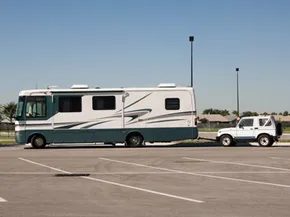
The appeal of RV travel is seductive. You swap hotel bills for campground fees and wake up to coffee made in your own kitchen. It’s freedom. But that freedom has a weight limit. And when you decide to tow a “dinghy”—your street car, SUV, or truck—the physics change dramatically.
An RV is built for straight lines and wide highways. It is not built for the tight corners of a historic downtown or the narrow roads of a national park trailhead. You need a smaller vehicle to get around once you’ve parked the beast. But towing that extra mass isn’t just about horsepower. It’s about stopping power.
Standard brakes on a Class C or Class A motorhome are tuned for the rig’s own mass. Add a 3,000-pound sedan behind the bumper, and you’re asking those brakes to do way more work than they were designed for. Without intervention, you risk fading brakes, overheating rotors, and significantly increased stopping distances. That’s where a dedicated RV towing braking system comes in. It’s not optional gear. It’s the difference between a smooth stop and a tailgate impact.
Types of Towing Braking Systems
Not all braking setups are created equal. The technology ranges from simple mechanical links to sophisticated electronic controllers that read your RV’s speed and deceleration rates. Understanding the difference matters.
Electronic Brake Controllers
This is the gold standard for most modern RV owners. An electronic controller mounts on your dashboard, usually near the steering column. It connects to your RV’s brake lights and a sensor in the chassis. When you hit the brake pedal, the controller sends a signal to the towed vehicle’s brakes.
Some are proportional. They match the deceleration of your RV. Hard stop? The towed car brakes hard. Light tap? Light braking. Others are time-delayed models, which apply a set amount of force for a set duration regardless of how hard you brake. The proportional units are generally preferred for safety and comfort.
Key components include:
– The Controller: The brain, mounted in the cab.
– The Wiring Harness: Connects to the RV’s electrical system.
– The Breakaway Switch: A safety tether. If the trailer detaches, this switch applies the trailer’s brakes independently to stop it from rolling away.
Electric Brakes on the Tow Vehicle
The towed vehicle itself must have brakes. In most cases, this means a trailer brake assembly on the rear axles of the dinghy. For smaller cars, this often involves installing magnetic or surge brake kits specifically designed for flat towing. The electric signal from the controller activates these magnets, which push brake shoes against the drum.
Surge Brakes
You’ll mostly see these on boat trailers or utility trailers, but they exist in the RV world too. Surge brakes don’t need an electronic controller. Instead, they rely on physics. When the RV slows down, the trailer pushes against the hitch ball. This linear motion activates a master cylinder on the trailer tongue, which pushes hydraulic fluid to the trailer brakes.
It’s simple. No wires. No controller. But it’s less responsive than an electronic system. You can’t fine-tune the braking force. And if the hitch angle changes, the efficiency can drop.
“Electronic controllers

It’s physics, plain and simple. Imagine a relay race where the baton is a two-ton camper. If the lead runner sprints and then slams on the brakes without warning, the second runner doesn’t have time to react. They crash. Or worse, they keep going while the first one stops, snapping the baton.
In towing terms, that baton is momentum. And if your RV stops and your towed vehicle doesn’t, you’re looking at a jackknife situation. The towed vehicle becomes a massive, uncontrolled pendulum swinging into the back of your rig. That extra weight puts immense strain on your RV’s braking system. You’ll wear out pads faster than you can say “overheated caliper.” More importantly, you lose control.
So, you need a braking system that talks to the car behind you. There are three main ways this conversation happens.
The Surge System: Mechanical Simplicity
This is the old-school method. No wires. No electronics. Just steel and leverage.
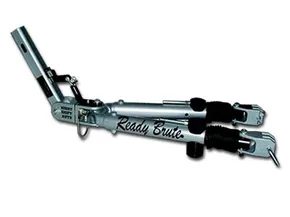
A surge braking system uses a coupler that sits inside a slide receiver. When you hit the brakes in your RV, the whole rig slows down. The towed vehicle, still moving forward due to inertia, pushes the hitch head backward into the receiver. This mechanical action pulls a lever connected to the towed vehicle’s brake actuator.
It’s crude. It’s reliable. It works.
The downside? It’s reactive. The towed vehicle’s brakes engage after the RV has already started slowing down. There’s a tiny lag. In an emergency stop, that split-second delay matters. But for long-haul RVers who value simplicity and low maintenance, surge brakes remain a popular choice.
Deceleration Controllers: Sensing the Slowdown
These systems don’t wait for physical contact. They sense the change.
Inside the control unit, you’ll find mercury switches, pendulums, or accelerometers. These devices detect how quickly your RV is losing speed. The faster you decelerate, the harder the sensor kicks, sending a signal to the towed vehicle’s brakes.
It’s more responsive than surge brakes because the system anticipates the stop based on momentum rather than waiting for the hitch to compress. You get earlier brake application. Better control.
Electronic Pressure Systems: The Modern Standard
This is where things get precise. Electronic brake controllers monitor the pressure you apply to your RV’s brake pedal. Push lightly? The towed vehicle gets light pressure. Slam the pedal? It gets full braking power.
The controller sends an electrical signal through wires to the towed vehicle’s brake actuator. It’s proportional to your foot, not just the momentum. This gives you the most predictable braking behavior. You feel what you’re doing, and the towed vehicle mirrors it.
Most modern setups use this method because it integrates seamlessly with anti-lock braking systems (ABS) and offers the best safety margin.
Proportional vs. Time-Delayed: Which Logic to Choose?
Not all electronic systems are created equal. You’ll run into two distinct logic types when shopping for a controller.
Proportional Controllers: Follow the Foot
A proportional controller is the gold standard for most drivers. It measures the actual deceleration of your RV and applies the exact same level of braking force to the towed
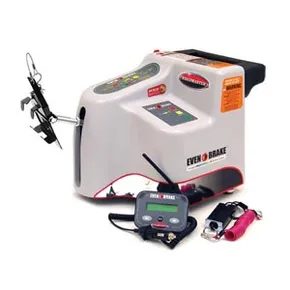

The choice between installing a portable or direct-connect braking system isn’t just about budget. It comes down to lifestyle. Do you treat your motorhome as a temporary ride, swapping it out like a weekend rental? Or is it the golden goose you plan to haul across the country for the next decade? Your answer dictates which supplemental brake setup makes sense.
If you are constantly buying and selling RVs, or perhaps you tow a different car behind your rig depending on the trip, a portable braking system is the logical move. It’s designed for versatility. Installation is straightforward, usually taking about an hour or less. You simply clamp the device onto your RV’s brake pedal, plug in the wiring harness, and connect the power cord to a standard outlet. No drilling. No permanent modifications. When you sell the RV, you take the system with you.
The Case for Permanent Installation
On the flip side, if you’ve found your dream rig and plan to keep it, a direct braking system might be worth the effort. These units connect directly to your RV’s master brake fluid reservoir or brake lines. This integration provides a more seamless feel underfoot, though it requires significantly more labor to install.
It’s important to clarify a common misconception. A direct system isn’t strictly “permanent” in the sense that you can’t ever remove it. It just means it’s harder to move. If you were to sell that specific RV tomorrow, you’d have to unhook the direct system and potentially install a portable one in the new vehicle. For the dedicated owner who sticks with one tow vehicle, though, the direct connection offers stability and simplicity in daily use.
The Safety Net: Breakaway Kits
Regardless of which system you choose, almost all modern towing braking setups include a breakaway kit. This is a critical safety feature. It’s a battery-powered electronic unit mounted on the towed vehicle.
The breakaway kit is your last line of defense against a runaway trailer.
Here is why it matters: if the towed vehicle somehow separates from the hitch while you’re driving, the breakaway mechanism activates immediately. It sends a signal to the battery, which then applies power directly to the towed vehicle’s brakes. This slows the runaway car down and brings it to a halt, preventing catastrophic damage to other drivers on the road. It’s not a matter of if something will go wrong, but when. Having this redundancy is non-negotiable for responsible towing.
Making the Right Call
Choosing between a portable and a direct system boils down to two factors: frequency of vehicle changes and tolerance for installation complexity.
- Portable systems are ideal for frequent changers. Quick install, easy removal, high portability.
- Direct systems suit long-term owners. Better integration, more labor-intensive setup, less mobility between vehicles.
- Breakaway kits are essential for everyone. They prevent disasters when hitches fail.
For deeper dives into the mechanics behind these systems, consider looking into how towing steering stabilizers dampen sway, or how brake controllers modulate the power sent to the trailer. Understanding the interplay between your tow vehicle’s brakes and the supplemental system is key to confident driving.
Sources like Automotive Accessories Connection and Roadmaster offer detailed guides on installation specifics, while RV.net forums provide real-world anecdotes from owners who have wrestled with both types. The technology is mature, but the application remains personal. Your rig. Your rules. Just make sure you’re stopped before you need to be.


