Most people know Alfa Romeo for two things: looks that make hearts skip beats and reliability that makes engineers sigh. But look past the badge. Peel back the paint. The history here is messier, sharper, and stranger than the brochures let on.
The Milan-based brand didn’t just follow trends. Sometimes they broke them. Usually badly, but occasionally brilliantly.
The Biscione Didn’t Start Out Clean
Look at the logo now. Sharp. Red and Green. The serpent ready to strike. It looks intentional. It feels final.
It wasn’t.
In 1910 the badge was… minimal. Barely there. A rough sketch of the Biscione—those Visconti snakes that rule the Milanese coat of arms—without the polish. No red field yet. Just the essence.
It took nearly a century to settle on the design we recognize today. The borders changed. The colors shifted. The graphic weight got heavier. Yet the core never left. A nod to Milan. A nod to history. Identity persists, even when the paint job doesn’t.
They Built Planes Too
Cars were the main act. But between the two world wars, Alfa Romeo put its hand in other pies. Specifically, the sky.
Alfa engines powered aircraft. Not drones. Actual military and civilian planes.
This wasn’t a side hustle for fun. It was heavy engineering. Industrial scale. Developing aviation powerplants required precision that translated back to the auto line later. You can argue whether the experience made the cars better. But the capability was there. Real metal. Real heat.
Who knew your family sedan’s lineage went straight up?
The 33 Stradale: Hand-Rolled Royalty
Rare doesn’t cover it. Obscure feels wrong. Mythical fits better.
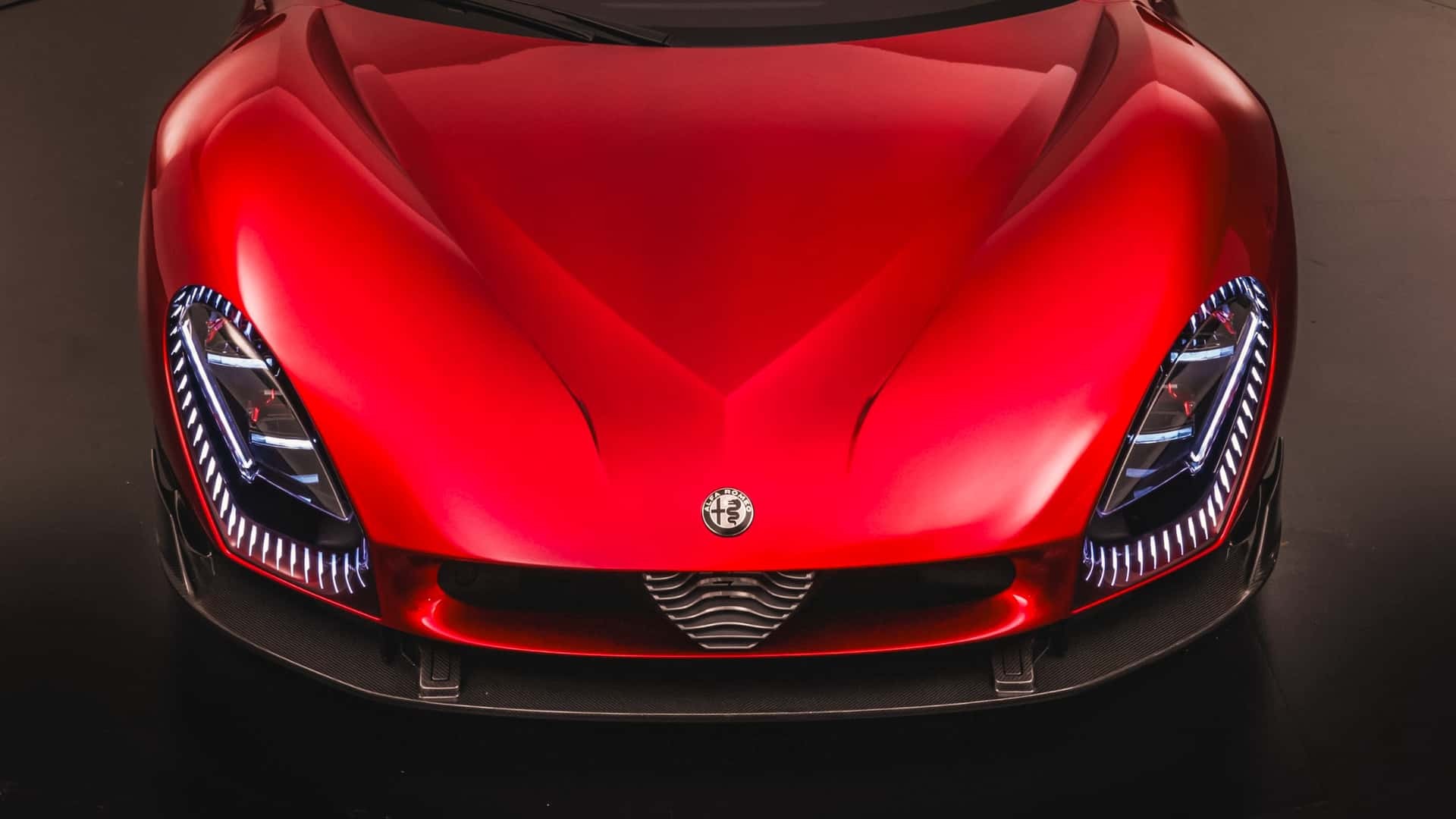
The Alfa Romeo 33 Stradase arrived in 1967. It looked like a race car. Because it basically was one, with the lights installed for legal compliance rather than necessity.
They didn’t mass-produce these beasts. They assembled them. Almost entirely by hand. Every single unit had tiny differences from its neighbor. No two were identical twins. Just close siblings born from the same racing DNA.
It remains one of the most hunted cars by collectors worldwide. Not because it’s practical. It’s because it’s art. And art isn’t practical.
Global Reach Before Globalism
Back when most European brands stayed put—happy to sell locally, terrified of shipping logistics—Alfa looked outward.
The 1920s. The 1930s. They were shipping cars to South America. To the United States. Competing directly against homegrown giants while playing away games.
The Alfa Romeo 6C 1,750 started this fever. A Mille Miglia winner on the tarmac, a luxury item on the shelf. Then came the 8C models. Fast. Advanced. Technically ahead of the curve by years.
Victories on foreign soil built prestige faster than advertising ever could. They turned “Italian car” into “World Class machine” before “Global Corporation” was a business model.
“Designed by the wind.”
That phrase stuck because it was true. Or at least, it aimed to be.
Aerodynamics Before It Was Cool
We take low drag coefficients for granted now. Tesla loves their numbers. BMW brags about their shape.
In the 1960s? Few cared. Style dictated form. Boxes were fashionable. But Alfa Romeos spent time in the wind tunnel. Systematically.
Look at the 1962 Giulia TI. A sedan. Boxy? Maybe. But it achieved a 0.34 drag coefficient. Think about that number for a second.
Decades later, cars would struggle to hit that. This was early. This was deliberate. The engineers wanted stability. They wanted the engine’s power to push the car forward rather than just pushing air aside.
It seems obvious today. It was a radical choice then. Safety improved. Efficiency ticked up. The car stuck to the road better when it wanted to.
Does anyone miss when “pioneering” meant risking a crash instead of filing a patent? Probably not.
The legacy of the Biscione is complex. A mix of brilliant engineering and emotional marketing. You buy the soul. You inherit the quirks.
Some say you can’t own an Alfa Romeo without breaking your heart. I’d argue the car breaks the rule of logic. The rest is just negotiation.