


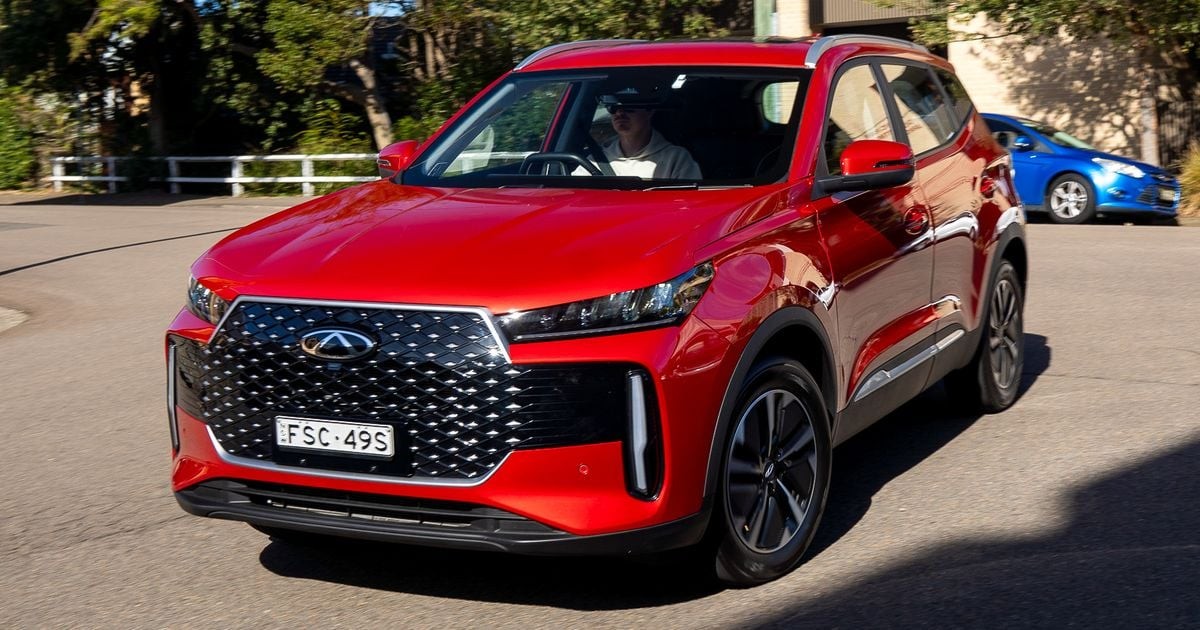
Hybrids are the new normal. Not because we all suddenly love batteries, but because the government is cracking down on emissions. Automakers have no choice.
This shift isn’t limited to luxury brands either. Even tiny budget cars are getting electrified. Chery’s smallest SUV, the Tiggo 4, is leading this charge.
Introduced late last year, the hybrid follows its turbo-petrol sibling into our test fleet. That petrol version basically saved Chery in Australia during the 2024 relaunch. Now, after the Tiggo 4 took the title of best-selling small SUV in both 2025 and the first few months of 2026, we’re living with the hybrid.
Everyday commutes. Road trips. Real life.
Here is the verdict so far.
Price and Trim Levels
The Tiggo 4 is already a volume seller. Why? Because it’s cheap. The petrol version starts at $23,999 drive-away. That puts it in the bargain bin for new cars.
Chery recently added a hybrid powertrain to widen the appeal.
There are two grades.
- Urban: $29,999 drive away.
- Ultimate: $32,999 drive away
We drove the Ultimate. It’s the range-topper, packed with extras we’ll get to shortly.
It comes in Martian Red (standard). The other colors—Mercurial Grey, Lunar White,.Space Black, Lunar Silver—cost an extra $500 each.
Is it worth the extra cost over the petrol model? Probably.
Cabin Impressions
Open the door and it looks modern. Expensive, even.
Dual digital displays dominate the top of the dash. A third screen below them controls the air conditioning. The layout is traditional. T-shaped center console. Everything is where you expect it. It’s not as polarizing as the BYD Atto 3.
Build quality is solid. Our tester had 8,000 km on the clock before we picked it up. No squeaks. No rattles. No loose plastics.
The piano black trim on the console? A magnet for dust and fingerprints. Wipe it often or ignore it and live with the grime.
That big AC screen? Useless.
It’s a display only. Actual controls sit next to the gear shifter. It feels like overkill. Worse, it wastes space. Just cupholders and a phone slot sit on top. Dig under, though, and you find a hidden nook. Wireless charger. USB ports. An extra shelf. Practical, yes, but awkward to access.
The main infotainment screen is bright. Menus are simple. Widgets mimic a smartphone interface. The six-speaker sound system in the Ultimate sounds decent. Better than you’d expect.
We had a couple of glitches with wireless Apple CarPlay. Once, it wouldn’t connect automatically. Another time, the screen went black while music still played. We are keeping an eye on these.
Comfort
Front seats are supportive. High up. Good lateral grip. Tall drivers might hit their head. People with long legs? Their thighs might hang over the edge. No under-thigh bolster.
Adjustability is good. The steering wheel has plenty of tilt and reach.
Vision is excellent. The glasshouse feels open.
Rear passengers get decent legroom and headroom for this size car. One air vent in the back. One USB outlet. An armrest with extra cups.
Fold the 60/40 rear seats down. Not flat. Close. The cargo space expands to a cavern. Chery claims 470 liters of capacity in a five-seat config.
What Powers It?
Under the hood sits a naturally aspirated 1.5-liter four-cylinder.
Not turbocharged.
- Engine only: 71 kW power, 120 Nm torque
Compare that to the turbo model. It made 108 kW and 210 Nm. This feels weaker. Until you add electricity.
- Electric Motor: 150 kW, 310 Nm
The e-motor sits inside a single-speed transmission. It drives the front wheels. Power comes from a small 1.8 kWh battery under the rear floor. Chery doesn’t publish a combined maximum figure.
They claim combined consumption of 5.4 L/100 km. In the city, it could drop to 4.1 L/100 km?
With a 51-liter tank, the theoretical range exceeds 1,000 km around town. If you drive the average Australian commute of 40 km daily, you might only fill up once a month.
We’re going to test that. Properly.
Driving Dynamics
The hybrid transforms the Tiggo 4. It becomes a much better car.
The standard petrol version felt underpowered at low speeds. The turbo lag was noticeable. When it finally kicked in, traction vanished as the front tires smoked.
The Hybrid fixes this.
It uses the electric motor as the primary driver in town. Effortless. Quiet. Smooth. Traffic jams stop feeling annoying.
The petrol engine only kicks in when needed. Barely noticeable at low loads. A gentle chug on the highway.
Ask for full throttle, though.
Or climb a steep hill. The engine screams. Loud. Raunch. It works against the single-gear ratio. It sounds like it’s working too hard.
Despite that, the hybrid powertrain is the better option. Worth the price premium over the turbo for the refinement alone. Plus the fuel savings.
Handling Flaws
The ride is soft. Comfort-oriented. It eats up small bumps well.
It struggles with big impacts. Potholes. Sharp speed bumps. The chassis crashes through them. You feel it in your teeth.
Steering needs work.
There is zero feedback. The wheel is vague. It refuses to self-center naturally. It feels heavy in a way that isn’t sporty, but sluggish. Like riding a chopper motorcycle. You turn it. You have to unwind it manually later. Unnatural.
It’s not a sports car. Sure. But good steering is basic. This feels lazy.
Standard Equipment
Chery doesn’t skimp. The base Urban trim is packed with gear for a sub-$30k price tag.
Urban Includes:
– Auto LED headlights and high-beam
– Rain-sensing wipers
– 17-inch alloys
– Eco and Sport drive modes
– Heated power mirrors
– Proximity entry
– Remote start
– Two 10.25-inch screens (cluster and infotainment)
– Apple CarPlay and Android Auto
– Dual-zone climate control
The Ultimate trim costs $3,000 more. What do you get for that money?
A lot.
- Synthetic leather seats
- Heated front seats
- Power-adjustable driver’s seat (with lumbar)
- 6-speaker audio
- Sunroof
- Power-folding mirrors
- Remote window operation
- Ambient lighting
- Wireless phone charging (15W)
- Space-saver spare (Urban gets a repair kit)
- 360-degree camera
That $3k gap disappears fast when you count these items individually.
Safety Features
The petrol Tiggo 4 earned a five-star ANCAP rating in 2024.The hybrid shares the same hardware. ANCAP hasn’t officially tested the hybrid yet, but the safety systems remain the same.
Standard kit includes:
Autonomous emergency braking
Forward collision warning
Lane keeping assistance
Adaptive cruise control
Traffic jam assist
Blind-spot monitoring
Rear cross-traffic alert
Seven airbags
The lane-keeping assist is a bit twitchy. It drifts toward the lane markings, then jerks the wheel back to correct.
The driver attention monitor is paranoid. Look at your phone for a second too long while stopped at a light? It warns you of “distraction” on the dashboard.
Cost to Own
Ownership costs are predictable.
Chery backs it with a seven-year unlimited-kilometer warranty. The first year includes roadside assistance. It renews annually for seven years, provided you service it at a Chery dealer.
Servicing interval: 12 months or 13,500 km.
Capped price servicing is fixed for the life of the warranty. It averages $359 a year. Reasonable.
Final Thoughts
We will spend another month with this car. More miles. More data.
But right now, the verdict leans positive.
The hybrid powertrain makes the Tiggo 4 a more refined machine. It’s quieter in traffic. Smoother overall. If you can stretch the budget past $23,000, the Hybrid is the smarter buy. The petrol turbo has traction issues and lag that the electric motor solves effortlessly.
Is it perfect? No. The steering is bad. The suspension is wallowy on bad roads.
But look at the value. Under $33k. Full kit. Good fuel economy. Solid build quality.
Most competitors at this price ask more questions than they answer. This one just works. Most of the time.
Whether it will hold up after 50,000 kilometers remains to be seen. For now, though, it’s a strong contender in the entry-level market.
Do you think the steering will age well? Probably not.


