We live in a world of trade-offs.
Want cheap? Accept the rattling window regulator. Craving speed? Look at your wallet and then your pump. Need to save on gas? Probably means driving a glider wrapped in a Prius shell.
Boring, right. Usually yes. But what if the compromise disappeared?
The 2026 Honda Civic hybrid doesn’t feel like a concession. It feels like a promotion. It takes a car that used to be strictly functional and makes it fun. It’s faster than its sibling. It drinks less. And it doesn’t cost enough to require a second mortgage.
Sure it costs more than the base ICE model. But in the grand scheme of new car purchases? The price is fair. Maybe even reasonable.
Hybrids Weren’t Always Fast
Let’s rewind. Hybrids started for one reason: guilt.
We needed to lower emissions. Early engineers wanted fuel efficiency. Period. Speed wasn’t the point. The original Honda Insight? Tiny engine. Tiny motor. The Toyota Prius? Same story. 1.5-liter engines doing the heavy lifting alongside electric helpers. They mimicked the punch of larger 1.8-liter engines while sipping air instead of gas.
People bought them to signal virtue. Or because the silence was weirdly cool. Gliding past a V8 in silence felt futuristic. Aspirational, almost. But nobody bought a 2000s Prius because it could win at drag racing.
Until things changed.
The Muscle Hybrid Era
Automakers eventually got bored of downsizing. What happens when you don’t shrink the engine? What happens if you take a massive, thirsty V-8 and slap an electric motor onto it?
Power explodes.
The Corvette Grand Sport X and the ZR1 X are the proof. Take that 6.7-liter cross-plane V-8 or the turbocharged 5.5-liter. Keep the engine mostly alone. Add electricity. The result isn’t just efficient—it’s brutal. The ZR1 X makes 1,250 horses. It gets 15 MPG. The non-hybrid ZR1 gets 14.
Is that efficiency? Barely. It’s incremental. But it works. You keep the soul of the combustion engine but get extra oomph. The math finally works in favor of power, not just the pump.
The Civic Does It Better
This leads us to the main character. The 2026 Honda Civic Sport Hybrid.
It’s compact. It’s mundane. It’s also the fastest thing you can buy in this class that doesn’t come with a $60,000 price tag.
Let’s look at the competition. The Corolla hybrid? No. It’s not faster than the gas-only version. The Civic, however? It punches at 200 hp. Same as the Civic Si. You know, the one with the turbo engine and the manual transmission? The one people buy to feel something?
The Hybrid beats the Si.
Car and Driver put them side-by-side. The Hybrid sedan hits 60 mph in 6.2 seconds. The hatch in 6.1. The Si? 6.6 seconds.
How? Well. Computers are precise. Humans hesitate. Remove the driver’s foot from the equation and the Hybrid accelerates with ruthless consistency. The base Civic with the 2.0L engine takes 8.9 seconds. That’s almost three seconds of difference. Three seconds is an eternity. It’s a canyon. The hybrid doesn’t compromise. It dominates.
Why It Drives Good
Speed means nothing if the ride sucks. The Civic Hybrid handles well. Better, actually.
Honda calls their system e:HEV. It features something called Linear Shift Control. Fancy words. Here’s the plain truth: it fakes gears.
Most hybrid CVTs whine. They drone. They sound like a refrigerator dying. Honda’s system uses a clutch to engage the engine when needed, creating simulated shift points. No whining. No droning. Just clean acceleration.
Plus, electricity is quiet. Fewer vibrations mean a smoother chassis. Mix that with tight steering and a rigid frame? It’s fun. Really fun. You’re burning 49 MPG combined and having a blast doing it. The gas-only Civic needs refueling sooner. The hybrid just keeps going.
Is that magic? No. It’s engineering. But it’s nice.
Not A Design Icon (But Built Tough)
Let’s be real about the looks. The Civic isn’t setting trends here.
If you want sharp lines and forward-thinking aesthetics, go buy the Kia K4. It looks braver. It chases trends. But trends fade. The Civic looks simple. Honest. It probably ages better because it doesn’t try too hard.
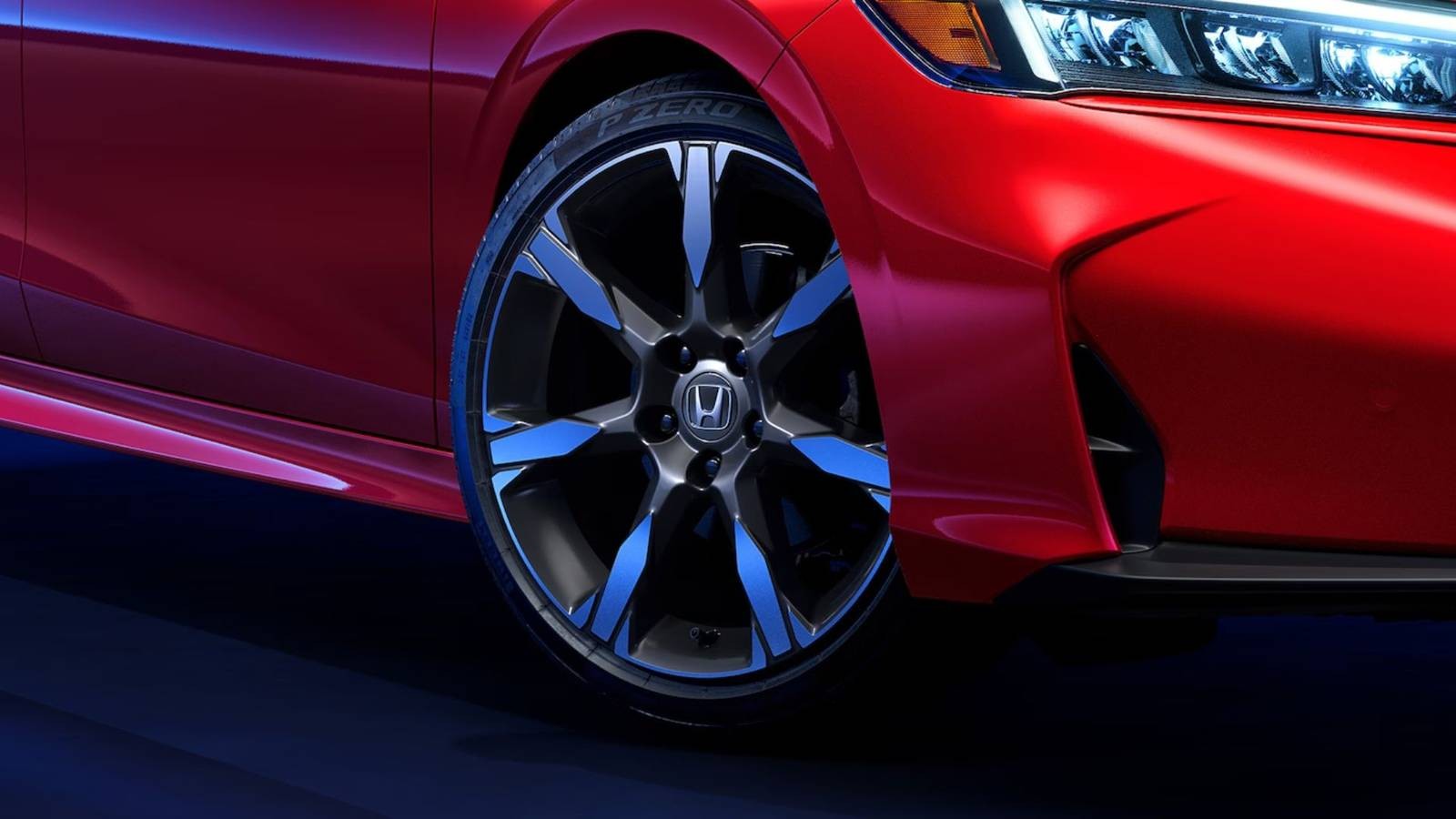
The hybrid starts as the Sport trim. You get black 18-inch wheels. LED lights everywhere. The Sport Touring swaps to multi-spoke wheels and adds leather. Both sedan and hatch are available. Pick your poison.
Inside, it’s straightforward. No radical new dash designs. But everything fits together tightly.
Here is the thing: the cheap plastic in the lower Sport doors isn’t bad. It just exists. Touch the higher trim Sport Touring? Soft materials. Bose sound. Google built into the screen. But walk away from the cheap plastics and you’ll barely tell the difference.
Space is king though.
The Civic is huge inside. Not just seats. Space. The hatchback rear? Legroom galore. Compare that to the cramped back seats of a Corolla Hatch or a Mazda 3 Hatch? The Civic wins easily. Cargo room improves with the hatch, obviously.
You get space. You get speed. You get efficiency.
The car costs between $29k and $30.5k depending on if you pick the sedan or the hatch. The Kia K4 tops out right there, but gives you less power and no hybrid badge.
So. Do you buy the trend-setter with less power? Or do you buy the car that quietly outperforms everything in its class?
The math seems obvious. The drive is better. The tank lasts longer.
But is it exciting enough for you?
I think it is. But you might still prefer the noise of a combustion engine.
That’s a choice. Not a compromise. Just a preference.
Which one will you make?