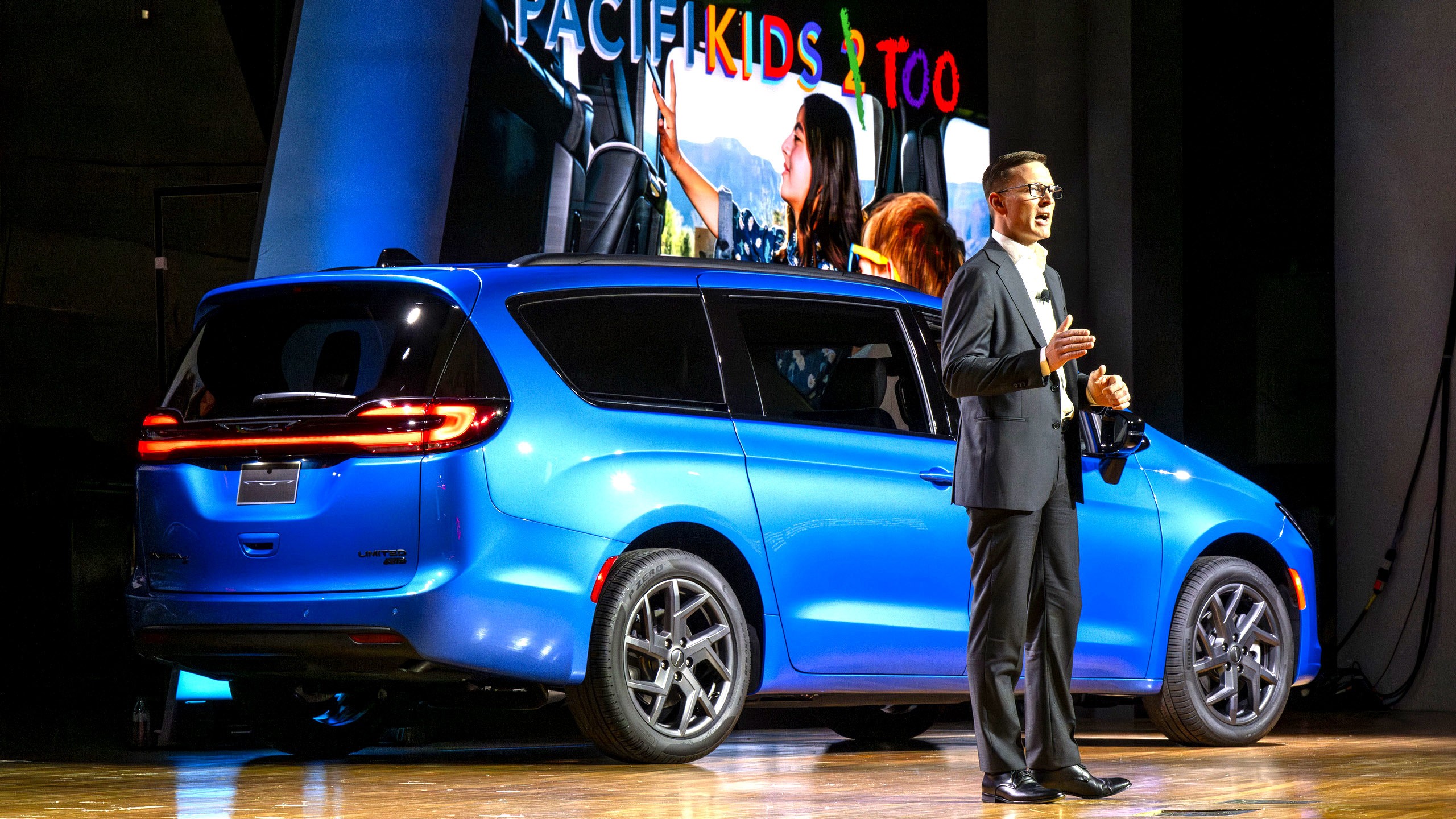
Chrysler is leaning heavily into its most reliable asset: the minivan. Following the recent unveiling of an updated Pacifica, the brand’s new CEO, Matt McAlear, is signaling a renewed focus on the segment. However, as Chrysler attempts to revitalize its image around a single vehicle type, it faces a significant mathematical challenge: how to build a brand around a category that is increasingly losing ground to SUVs.
The Growth Paradox
During a recent interview with CNBC, McAlear expressed optimism regarding the minivan market, suggesting that Chrysler is positioned for year-over-year growth. While his confidence is notable, the underlying data presents a more complex picture:
- Recent Sales Slump: In the first quarter of the year, Chrysler moved 25,423 Pacifica and Voyager models—a 28% decrease compared to the same period last year.
- The Recovery Trap: While Chrysler saw slight growth in 2025 compared to 2024, 2024 was actually the brand’s lowest-selling year in a decade. Consequently, a modest uptick from a record low is a small victory rather than a massive resurgence.
- Market Share Constraints: Minivans occupy a tiny fraction of the total automotive market. Their share has grown only marginally, from 1.7% in 2017 to 2.4% in 2025.
This highlights the central tension for Chrysler: even if they dominate the minivan niche, the niche itself is not expanding fast enough to support a full-scale brand revival.
Utility vs. Image: The Practical Advantage
McAlear’s strategy relies on a “function over fashion” argument. He suggests that the resurgence of the minivan will be driven by pure utility—the idea that consumers are beginning to prioritize ease of life over the social prestige of an SUV.
The practical advantages of the minivan remain significant:
– Interior Versatility: Minivans offer superior cargo management, making it easier to transport large items (like kiteboarding gear) or specialized equipment securely inside the cabin.
– Cost Efficiency: According to Edmunds, the average minivan costs approximately $48,269, significantly lower than the $77,215 average for large three-row SUVs.
– Ease of Use: Beyond price, minivans generally offer better fuel efficiency and more intuitive entry/exit points for families compared to bulky SUVs.
What Lies Ahead?
For Chrysler, the minivan is both a lifeline and a limitation. Relying on a single vehicle segment creates a “single point of failure” risk; if consumer tastes shift further away from vans, the brand has no fallback.
McAlear has remained tight-lipped about diversifying the lineup, offering only that Chrysler has “a lot of things in the works.” The industry is now waiting for the brand’s Investor Day on May 21, where more concrete details regarding Chrysler’s future product roadmap are expected to be revealed.
The core challenge for Chrysler is whether a brand can truly thrive by mastering a niche that remains a small fraction of the total automotive market.
Conclusion: Chrysler is attempting to turn the minivan’s practical utility into a brand identity, but they must find a way to scale this success beyond a shrinking market segment to ensure long-term survival.