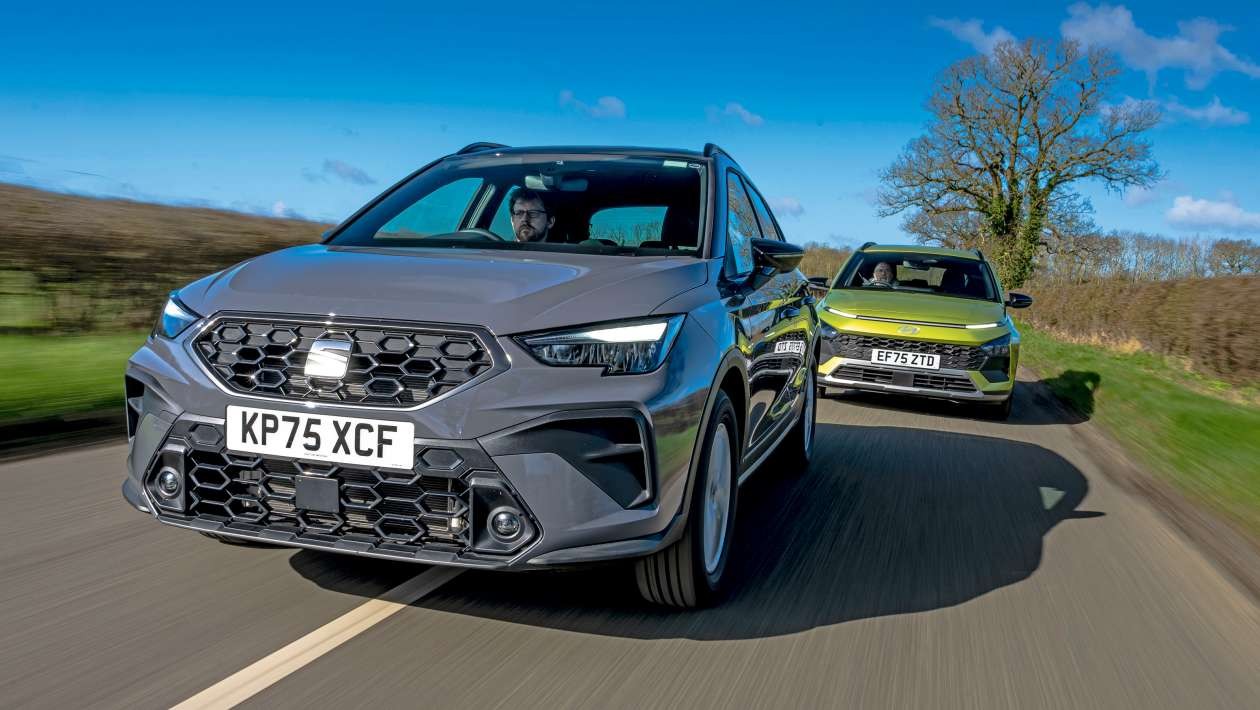
The small SUV market is crowded, but two contenders stand out for their affordability and practicality: the Hyundai Bayon and the SEAT Arona. Both have been around for a while, with the Arona being the older of the two, yet they remain competitive due to low running costs and functional designs. This review breaks down which vehicle offers the better value at their price point.
Aging Yet Competitive
SEAT has been pushing finance deals for the Arona and Ibiza, highlighting their longevity in the market. The Arona, first launched in 2017, feels decidedly old-school with its traditional petrol engine and lack of hybrid options. The Hyundai Bayon, introduced more recently in 2018, brings a slightly fresher look with a recent Black Line trim option, but it’s not without its quirks.
Key Specs at a Glance
Here’s a side-by-side comparison:
| Feature | SEAT Arona 1.0 TSI 115 DSG SE Technology | Hyundai Bayon 1.0 T-GDi 90 Black Line |
|---|---|---|
| Price (as tested) | £24,640 | £23,795 |
| Engine | 1.0-liter 3-cyl turbo, 114bhp | 1.0-liter 3-cyl turbo, 89bhp |
| 0-62 mph | 9.9 seconds | 11.9 seconds |
| Fuel Economy | 47.1 mpg | 46.9 mpg |
| Warranty | 3 years/60,000 miles | 5 years/unlimited miles |
On the Road: Performance and Handling
The SEAT Arona has a clear edge in performance, offering 25 more horsepower and 27Nm more torque. Its dual-clutch DSG transmission provides smoother, snappier shifts compared to the Bayon’s six-speed manual, which feels somewhat clunky between first and second gears. However, the Arona’s advantage is most noticeable in real-world conditions, making it more responsive for everyday driving and easier on the highway.
Interior and Practicality
The Hyundai Bayon is wider, offering slightly more space for passengers in the rear. It also boasts a larger boot, though with a higher load lip. The SEAT Arona’s taller ride height makes it easier to get in and out of, offering a more SUV-like experience. Notably, the Arona is one of the few new cars still offering a space-saver spare wheel, a feature not available on the Bayon.
Tech and Safety
Both cars offer basic safety features, but the Hyundai Bayon has a slight advantage with its more comprehensive warranty. The SEAT Arona’s touchscreen infotainment system, while visually appealing, can be frustrating to use due to limited physical controls. The Bayon’s touchscreen is functional but requires navigating through several menus.
Ownership and Reliability
Neither manufacturer excels in owner satisfaction surveys. Hyundai placed 20th out of 31 manufacturers in the 2025 Driver Power survey, while SEAT ranked 24th. SEAT’s standard warranty is basic at three years/60,000 miles, but can be extended for an additional cost. Hyundai offers a more generous five-year/unlimited-mile warranty.
Verdict: Hyundai Bayon Takes the Edge
While both cars have their strengths, the Hyundai Bayon narrowly wins. Its longer warranty, better-equipped base model, and slightly more spacious interior make it a more practical choice. However, the SEAT Arona’s superior driving dynamics and taller ride height may appeal to those who prioritize a more engaging driving experience. Ultimately, the best choice depends on individual needs and preferences.
The Bayon offers a solid, reliable package, but the Arona’s more spirited performance should not be overlooked if driving enjoyment is a priority.