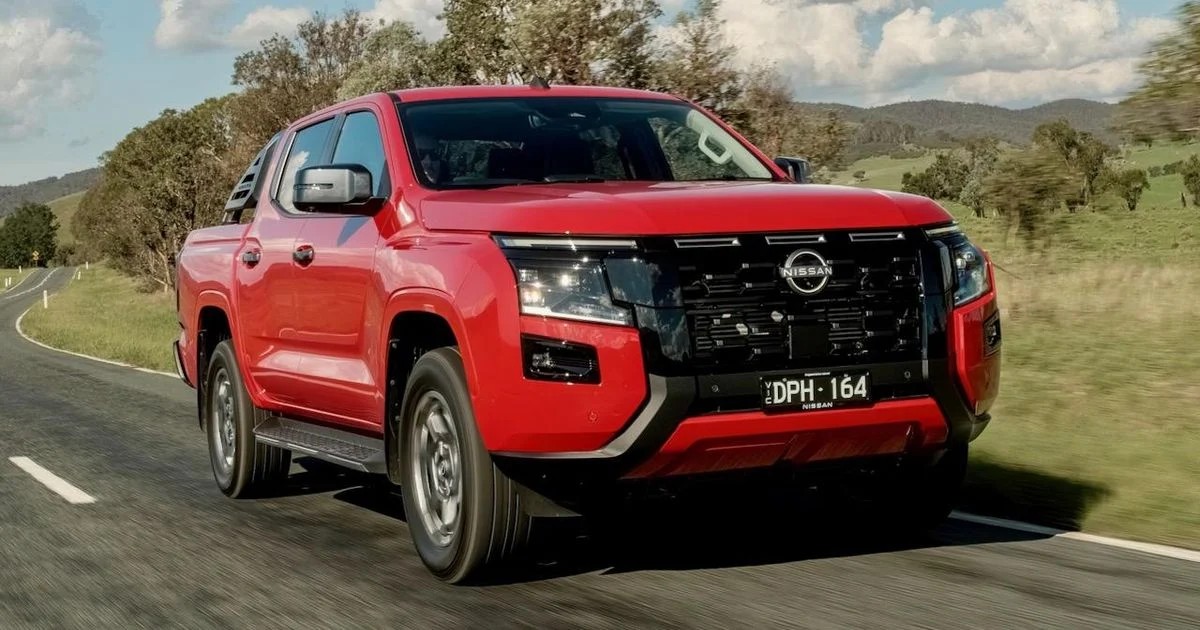
The Nissan Navara has been a staple in the Australian ute market since 1986, earning a loyal following over four decades. The latest ‘D27’ model, launched in 2026, represents a significant shift: it shares a platform with the 2023 Mitsubishi Triton due to the Renault-Nissan-Mitsubishi Alliance. However, this isn’t simply a rebadge. Nissan has collaborated with Australian engineering firm Premcar to refine the steering and suspension, ensuring the Navara stands apart.
Platform Sharing and Local Refinement
The new Navara is essentially a Triton with Nissan styling cues – a new front fascia, badges, and minor cosmetic changes. Crucially, Nissan didn’t stop there. They tasked Premcar, a firm with roots in Ford Performance Vehicles, to develop chassis tunes specifically for the Australian market. Over 18 months and 18,500km of testing, Premcar created three distinct setups for the four Navara variants. This commitment to local refinement is key, as it addresses the specific needs of Australian drivers who often demand rugged durability.
Suspension and Ride Quality
The SL and ST models, equipped with heavy-duty four-leaf rear springs, receive one tune. The higher-spec ST-X and Pro-4X variants get unique setups tailored to their 18- and 17-inch wheel packages, respectively. Premcar tested 37 damper codes and over 550 internal shims to achieve optimal performance. The result? A ride quality that stands out from the Triton, especially in the ST-X and Pro-4X, where cornering stability and bump absorption are noticeably improved. The locally-fitted twin-tube Monroe shock absorbers, manufactured in South Australia, contribute to this enhanced experience.
Engine and Performance
Under the hood is a 2.4-liter twin-turbo four-cylinder diesel engine producing 150kW and 470Nm of torque, paired with a six-speed automatic transmission. The engine meets Euro-6 emissions standards and includes AdBlue technology and an idle stop/start system. While the powertrain delivers adequate performance, it may not match the raw power of some competitors in heavy towing scenarios. Fuel consumption is rated at 7.7L/100km, though testing showed 7.1L/100km under highway conditions.
Interior and Technology
The interior is virtually identical to the Triton’s, a step up from the dated cabin of the previous Navara. It’s not luxurious but offers predictability, durability, and comfort. Key features include a 9.0-inch infotainment touchscreen with wireless Apple CarPlay and Android Auto, physical buttons for essential controls, and USB-A/C ports with wireless phone charging in higher trims. The driver attention monitoring system, however, can be overly sensitive, a common complaint among early Triton owners.
Off-Road Capability
The Navara retains its off-road credentials with standard four-wheel drive, a rear locking differential across all variants, and selectable driving modes (including 4HLC and 4LLC in the ST-X and Pro-4X). Testing on moderate four-wheel drive tracks proved the Navara capable, even with road-oriented tires. The suspension tuning by Premcar further enhances its off-road performance, making it a strong contender for those who demand ruggedness.
Value Proposition
The 2026 Nissan Navara lineup consists of four dual-cab 4×4 automatic variants: SL, ST, ST-X, and Pro-4X. The base models are priced higher than the equivalent Triton variants due to the Australian-developed suspension and standard features like a rear locking differential. While it may not match the refinement of the HiLux or Ranger, the Navara offers a compelling combination of value, capability, and local tuning.
In conclusion, the Nissan Navara 2026 is a well-rounded ute that leverages platform sharing with the Triton while benefiting from Australian engineering expertise. It may not redefine the segment, but it delivers a refined and capable driving experience, making it a strong contender for buyers seeking a durable and well-tuned workhorse.