Value is its main weapon.
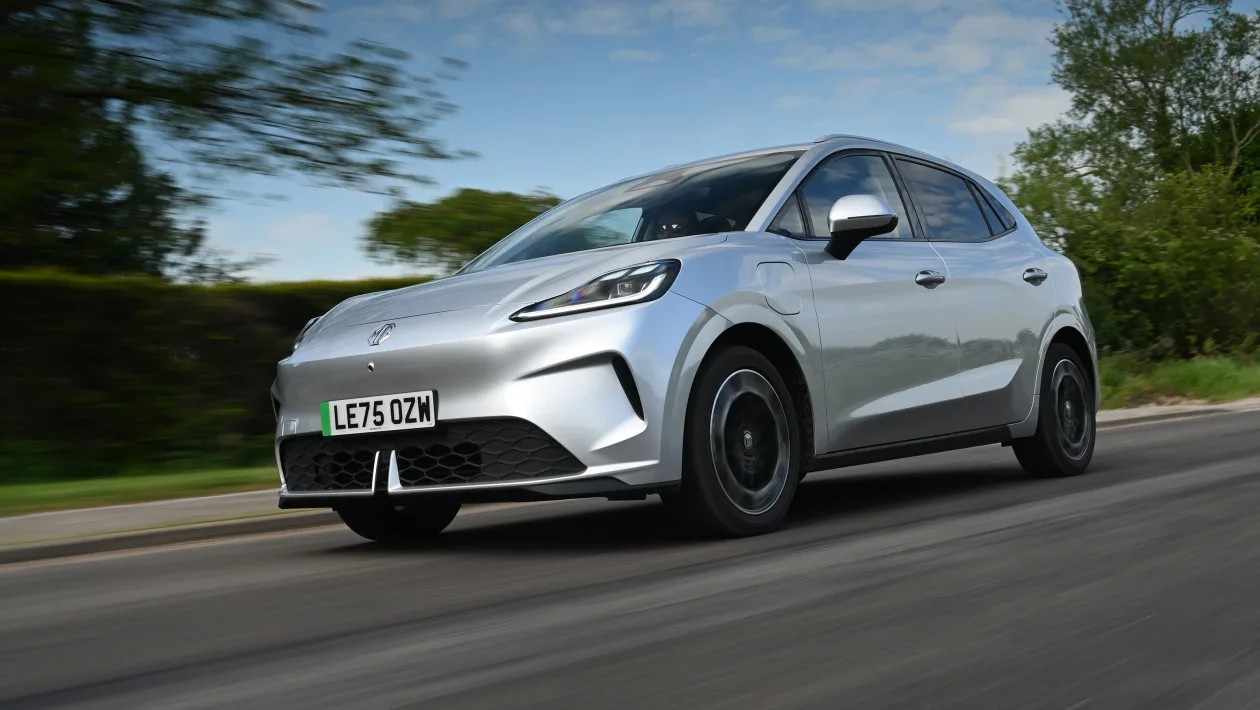
For under £23,550 the MG4 EV Urban humiliates the competition on price while outspacifying most mid-size SUVs.
It’s a family hatchback that refuses to feel cheap inside, comes with everything you actually need, and drives efficiently. Yes it’s boring to look at. Yes the ride is forgettable. But compared to what you save and get for your money those are small pills to swallow.
We think the standard MG4 only beats this one if you desperately need extra range.
Not siblings at all
Two MG4s in the lineup sounds confusing but they’re strangers. The 2022 model is wedge-shaped, sporty and rear-wheel drive. The new Urban is a softer, front-wheel drive compact hatch that’s actually bigger than the original despite the “Urban” name implying something small enough for city parking.
Same badge. Different platform. Different powertrains. The original MG4 gets a 2026 refresh with better tech but the Urban stands alone as a budget-friendly entry point. MG uses smaller batteries here targeting buyers who just want to commute not cross continents.
The Urban costs less yet offers more passenger legroom and boot space. It’s a supermini price point for a subcompact hatch reality.
Money talks
Starting at less than £23,,500 the MG4 Urban undercuts the standard MG4 by £6,500. That puts it in the same arena as the Renault 5 and the Citroën e-C3 but with significantly more interior volume.
- Standard Range (41.9kWh): £23,450 approx. Range hits 201 miles.
- Long Range (52.8kWH): Add £2,000. Range jumps to 258 miles with a slightly more powerful motor.
- Premium Spec: Add another £2,500 on top of Long Range for a 360-degree camera and heated seats.
Why pay more? Unless you need that extra 50 miles range the standard pack covers most daily needs. The price difference alone makes the entry level a strong case study in value engineering.
Driving the unsexy electric
Is it fun?
No.
Is it terrible? No either. It’s pleasant, effortless, and competently boring. The E3 platform prioritizes space and efficiency over grip. Unlike the RWD original the Urban sits on FWD with a simple torsion-beam rear suspension. Weight is down roughly 250kg thanks to cell-to-body construction helping the car feel agile despite the soft suspension.
The 0-60 times sit just inside ten seconds (147bhp for Standard, 158 for Long Range) so there is no thrill here. Just instant torque when you mash the pedal.
The good:
– Visibility is excellent with a big windscreen.
– Light steering makes parking effortless.
– One-pedal driving works well enough though you can switch regenerative braking from low to adaptive if you hate the brake-by-wire feel.
The bad:
– Body roll exists. Don’t take it on a track.
– Road noise. Wind noise specifically from the base of the screen gets loud at motorway speeds.
– Potholes thump through. Loudly.
It’s not inspiring but nobody is buying this to enjoy driving dynamics. They buy it to get from A to B quietly.
The MG4 Urban isn’t as much fun as the original but most people don’t care about that.
Efficiency and range reality
Here’s the trick. MG saved money by switching battery chemistry.
While the pricier MG4 uses NMC (Nickel-Manganese-Cobalt) the Urban runs on LFP (Lithium-Iron-Phosphate). This tech is cheaper and safer but slightly heavier for the same capacity. The trade-off is worth it for the budget.
Real world testing of the Premium Long Range version pulled an average of 4.3 miles/kWh.
That translates to about 227 miles of actual range on a full tank not the optimistic WLTP figure. Add a rapid charger capable of 150 kW and you hit 80 percent charge in 30 minutes. Decent for a car in this class.
Insurance is tricky. Sitting in Group 22-23 puts it slightly above some rivals but car tax remains the flat EV rate of £5/year plus 4% BIK tax which makes running it as a company car cheap. Depreciation hurts less than the older model but it’s still around 40% residuals after three years. Not ideal but not a disaster.
Interior vibes
It doesn’t try hard.
The cabin layout was introduced on the MGS5/SUVs. A central floating touchscreen dominates the view with physical dials for climate control below. A driver’s digital screen hides behind the wheel. Buttons are unlabeled so you tap blindly.
There is hard black plastic everywhere. You can’t argue with that given the price but some softer trim around the dash helps. Rattles were noticeable during testing which feels like an oversight in final assembly.
The lack of rotary gear shifters feels old-school but functional. The column stalk does gear selection. Light controls have moved into the screen menu. A design choice we find annoying but workable.
It feels sturdy. It looks dated. It gets the job done.