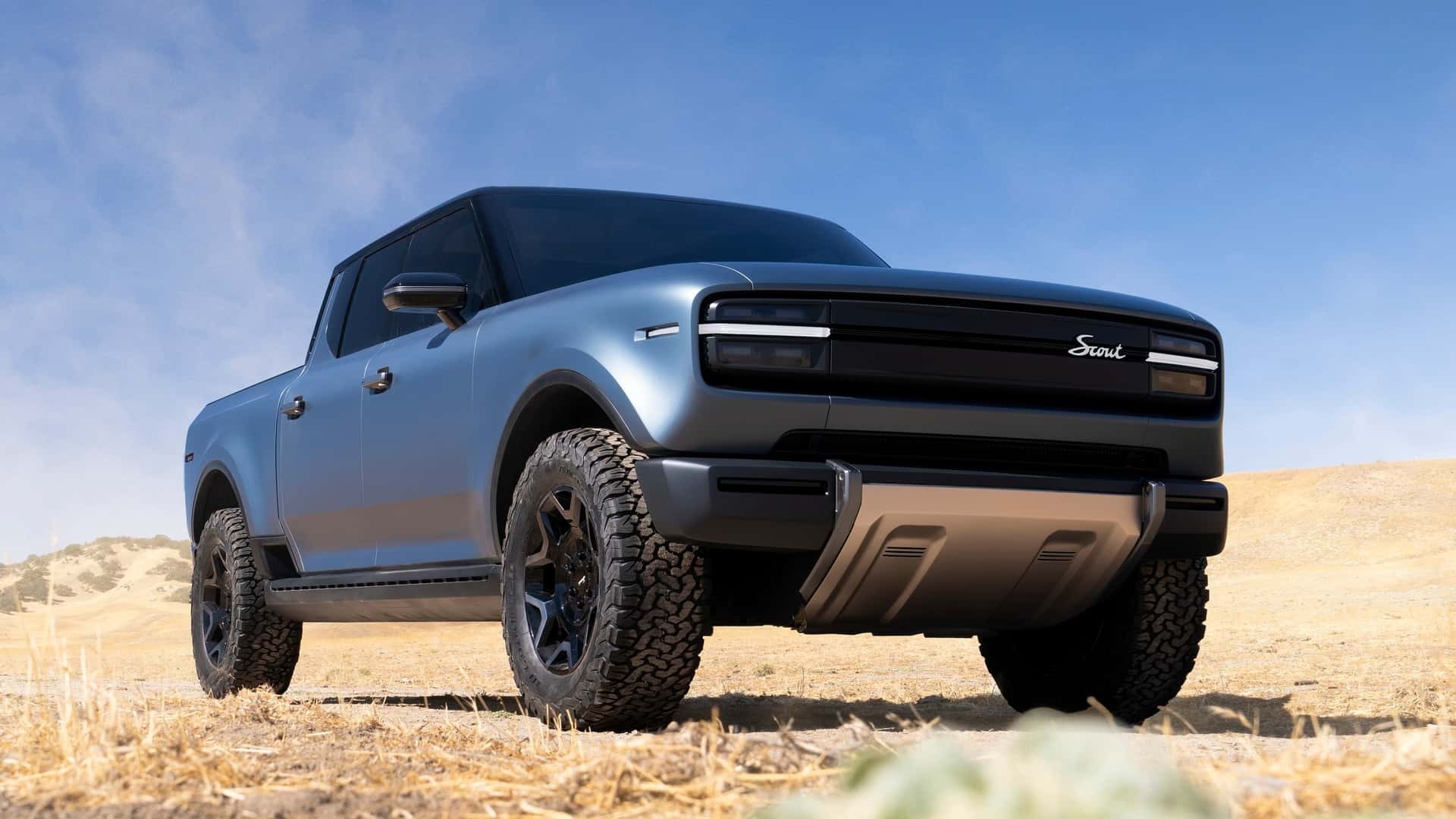
The revival of the legendary Scout brand is facing a potential setback. While the company originally aimed for a rapid return to the market, recent reports suggest that the highly anticipated Terra pickup may not enter production until March 2030.
If these reports prove accurate, it would mark a six-year gap between the debut of the Terra prototype and its actual arrival in showrooms.
Conflicting Timelines: Official Stance vs. Industry Reports
There is currently a discrepancy between what Scout Motors is telling the public and what industry analysts are reporting:
- The Industry View: A report from AutoForecast Solutions indicates that the Traveler SUV production has been pushed to 2028, while the Terra pickup faces a much longer delay, sliding into 2030.
- The Official Scout Position: Scout Motors has officially disputed these specific claims. A spokesperson stated that the company has not communicated with AutoForecast Solutions and maintains its original target: initial production in 2027, with customer deliveries beginning in 2028.
The company noted that they are currently working on “validation vehicles,” a critical phase in automotive development where prototypes are tested to ensure they meet safety and performance standards before mass production begins.
Why the Delays Matter: The Complexity of the EV Transition
While Scout has not explicitly confirmed technical issues, previous reports from Der Spiegel suggested that “technical problems” were already impacting the Traveler SUV’s timeline.
These delays highlight a broader trend in the automotive industry: the difficulty of transitioning to new powertrains. Developing entirely new electric vehicle (EV) platforms from the ground up is an immense engineering challenge. Even established manufacturers often face “teething” issues when moving away from internal combustion engines toward complex battery and software-driven architectures.
A Strategic Pivot: The Rise of EREVs
One interesting factor in Scout’s strategy is their decision to prioritize Extended-Range Electric Vehicles (EREVs) over pure EVs.
Instead of relying solely on a battery, the EREV models will use a small four-cylinder gasoline engine to act as a generator, charging the battery on the go. This approach addresses “range anxiety”—the fear that an EV will run out of power before reaching a charging station—which is a significant concern for off-roaders and long-distance travelers.
The projected range comparison:
– EREV Models: Over 500 miles of combined range.
– Pure EV Models: Up to 350 miles on a single charge.
Consumer interest seems to support this strategy; as of October, more than 100,000 reservation holders had chosen the extended-range versions over the pure electric options.
Looking Ahead
As Scout Motors moves through its validation phase, the primary question remains whether they can maintain their promised price point—originally targeted at under $60,000. In an era of fluctuating material costs and supply chain volatility, long delays often lead to increased production costs, which could impact the final sticker price for eager customers.
Summary: While Scout Motors officially maintains a 2027 production target, industry analysts warn of significant delays that could push the Terra pickup as far back as 2030 due to technical complexities and the ambitious nature of their new EV/EREV platforms.