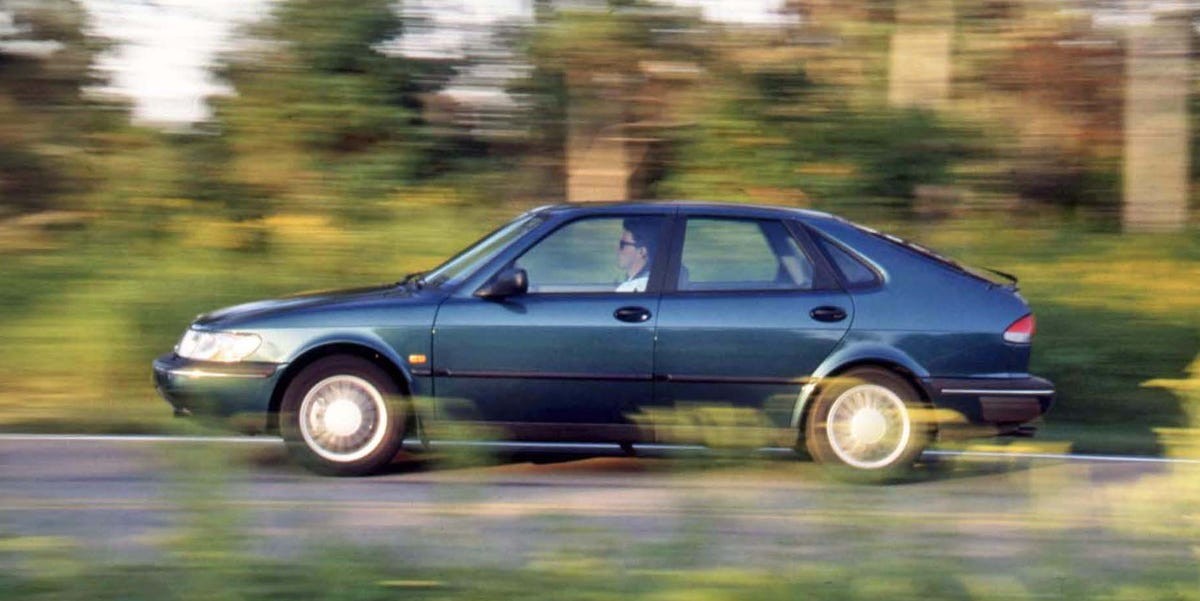
The 1994 Saab 900SE represented a significant evolution for the Swedish automaker, blending quirky tradition with modern engineering. Tested by Car and Driver in November 1993, the new 900 wasn’t about radical design; it was about refining a formula that had worked for decades. Saab deliberately avoided chasing mainstream aesthetics, rejecting proposals from Pininfarina and ASC, and instead doubled down on its unique identity.
A Deliberately Different Approach
Saab’s approach was straightforward: retain the recognizable elements that made the brand stand out. This included the distinctive “Perot-ear” mudflaps, the trapezoidal grille, and the signature wraparound windshield that forces drivers to peer upward at traffic lights. While other manufacturers chased aerodynamic perfection, Saab openly admitted its new model’s drag coefficient was 0.32 with mudflaps—a detail that underscored its commitment to practicality over pure efficiency.
The company’s target was BMW’s 3-series, but Saab didn’t try to imitate German precision. It doubled down on Swedish eccentricity, even preserving quirks like the ignition switch between the seats and a famously rubbery shift linkage. These weren’t oversights; they were intentional choices that reinforced the brand’s identity.
Performance and Practicality
The 900SE offered a 170-hp V-6 engine as an option, marking the first time Saab had ever offered a six-cylinder powertrain. Performance was competitive: 0-60 mph in 7.0 seconds, close to the BMW 325i. The car’s handling was predictable, leaning towards understeer—a deliberate choice suited to Scandinavian driving conditions.
Beyond speed, the 900SE excelled in practicality. The rear hatch opened to a cavernous 24 cubic feet of storage, expandable to 49.8 with the seats folded. Details like steel O-rings for securing cargo and a trap door for passing oversized items reinforced the car’s utility.
Obsessive Attention to Detail
Saab’s engineers focused on refinement in unexpected places: flawless paint inside the doorjambs, a rattle absorber in the glovebox, and a fuse box accessible without contortion. The exterior door handles were textured to prevent slippage when wet, and carpeting lined the rear seat area. The climate controls were simplified, though the dashboard layout remained uniquely Saab-complex.
The car also included standard features like ABS, dual airbags, and a theft alarm. The optional traction control was well-tuned, allowing controlled wheelspin before intervening.
A Lasting Legacy
The Saab 900SE wasn’t about being the fastest or most luxurious car on the market. It was about being authentically Saab: quirky, practical, and unapologetically itself. As Car and Driver concluded, it was “the company’s best car in 44 years.” The 900SE’s blend of tradition and innovation solidified Saab’s position as a niche automaker with a loyal following, proving that sometimes, the best approach is to simply stay true to your roots.