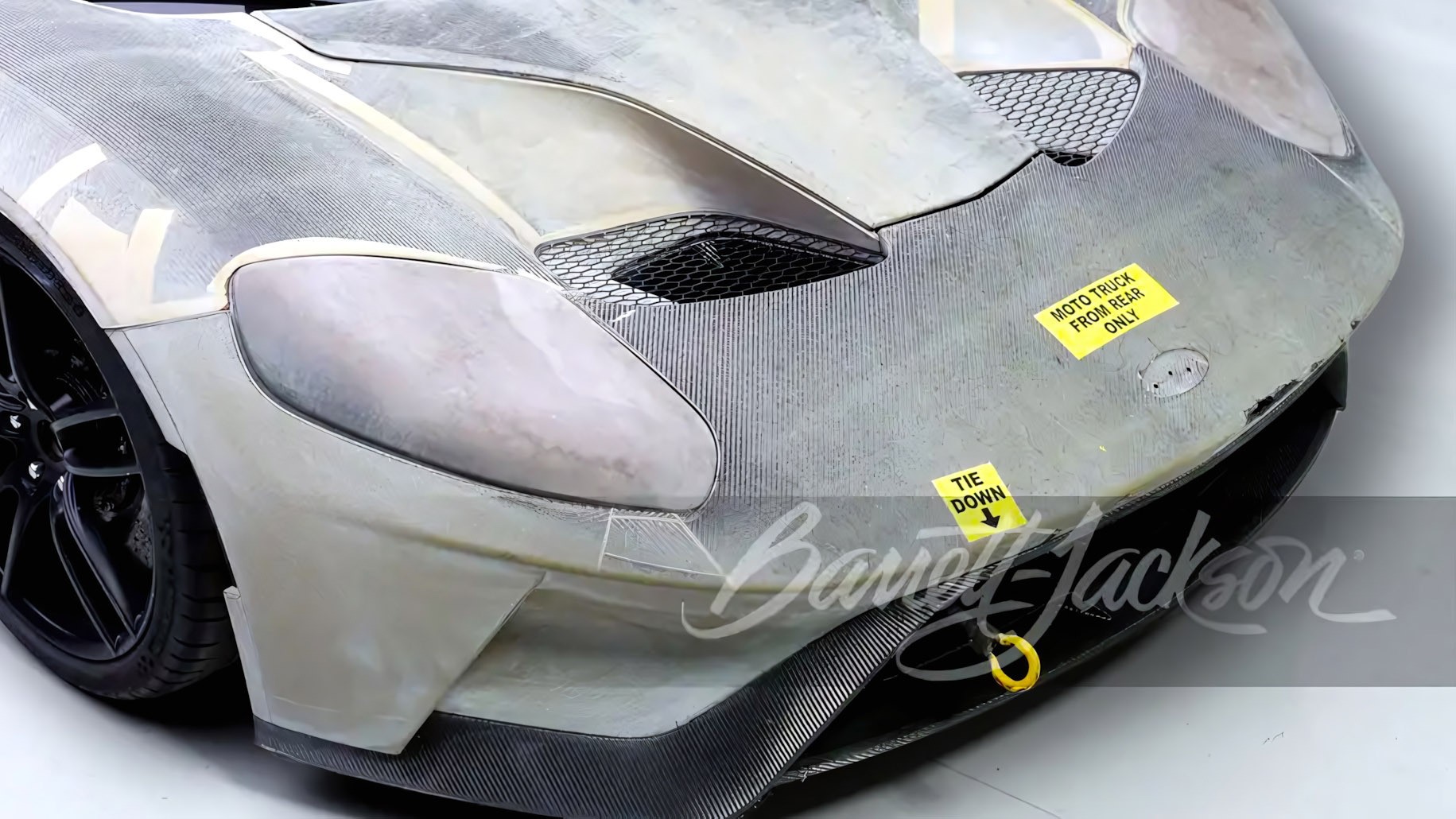
A unique Ford GT prototype, one that never saw a showroom floor, is heading to auction at Barrett-Jackson Scottsdale. This isn’t a collector’s dream in the traditional sense; it’s a raw, unpainted development vehicle built in late 2015 to push the second-generation GT’s performance to its limits. The catch? Ford is explicitly selling it as a non-road-legal display piece.
The Engineering Mule
Unlike the polished production models, this GT was built for data, not aesthetics. It sports a bare, dry carbon fiber body – beauty wasn’t a priority; functionality was. This prototype served as a powertrain and calibration testbed, meaning it exists solely to demonstrate how the modern GT came to be.
Under the hood lies the familiar twin-turbo 3.5-liter EcoBoost V6 paired with a seven-speed dual-clutch transmission, driving a chassis packed with carbon fiber, aluminum subframes, adjustable suspension, and high-performance brakes. It’s a testament to raw engineering.
A Spartan Interior
The cockpit is equally unrefined. A single fixed carbon bucket seat, adjustable pedals, and an F1-inspired steering wheel control a digital display. There’s no passenger seat, and the interior is functional rather than luxurious. This car wasn’t meant to impress anyone; it was built for testing.
Why This Matters
Ford is auctioning off this prototype with no reserve price, meaning its final sale could significantly undercut the cost of a pristine production GT. The proceeds will go towards preserving Ford’s Heritage Fleet, which is a win-win for enthusiasts.
However, the biggest caveat is its legal status: this GT cannot be registered or insured for road use. It’s a museum piece, a statement of automotive history… but not a vehicle you’ll drive down the street.
For collectors already owning a road-legal GT, this prototype represents an unparalleled opportunity to own a piece of Ford’s engineering legacy. It’s a reminder that sometimes, the most valuable cars are the ones that never made it to production.