Toyota reliability. BMW soul. A car that made no sense but somehow worked better than anything else on the lot.
We are losing it.
The Toyota GR Supra isn’t just discontinuing. It is vanishing. Production ended in March 2026? That seems to be the new timeline for “already happened.” The configurator sits online like a digital ghost, waiting for customers who don’t exist yet. No new models. No successors. Just a final edition cash-grab and the sinking realization that we watched something unique die.
And the news? Barely a whisper in the major media. Why? Because it’s boring on the surface. But look deeper. This wasn’t just another car. It was an anomaly. A once-in-a-lifetime collision of corporate wills that will almost certainly never happen again.
The Austrian Oddity
Think about this car for a second. It has a Japanese badge. A German engine. Built in Graz, Austria.
Who else? Nobody.
The Supra exists only because two automakers that should have nothing in common decided to build a platform together. The deal is done now. The BMW twin, the Z4, is also gone. The partnership is over. For this coupe to return, Toyota needs a new ally or a new floorpan. Both are unlikely.
Toyota hasn’t designed an inline-six of its own in twenty years. Could they? Yes. Should they spend the billions to build an engine that will sit in maybe fifty cars per minute? No. The math doesn’t work. The window for this specific arrangement has snapped shut.
The B58 couldn’t have arrived at a more perfect time. Toyota had been limping along for a decade looking for a powertrain. They needed an inline-six that was cheap to source and tough enough to drive to the moon.
When the MkV Supra first leaked, the JDM internet screamed betrayal. A Toyota using a BMW engine? Blasphemy. Now? With the car dead, that “betrayal” is the only reason we have anything to talk about at all.
The BMW B58 engine. Three liters of inline perfection. In 2019 it was already the king of bang-for-buck. Responsive. Balanced. Built like a tank. Toyota saw this and thought yes. The GR Supra’s 382 horses and 368 lb.-ft of torque aren’t just numbers. They are proof of a brilliant shortcut. The car does zero-to-sixty in roughly 3.9 seconds stock. Independent testers squeeze 3.7 seconds out of it. It’s underrated on paper. It’s honest in person.
Not Just a Reskin
Stop calling it a badge-swapped Z4.
It’s lazy.
Sure, they share a floorpan. But the engineers didn’t just slap a grill on it. Toyota’s chief engineer, Tetsuya Tادا, insisted on their own voice. The chassis tuning? Different. The suspension geometry? Aligned with Toyota’s goals, not BMW’s. Drive a Z4, then a Supra. Feel the difference? The Z4 wants to cruise. The Supra wants to hunt corners. One is a grand tourer. The other is a sprinter.
This is where the “GR” in the name matters.
Why It Actually Worked
Let’s talk numbers, because that’s what enthusiasts ignore until the bill arrives.
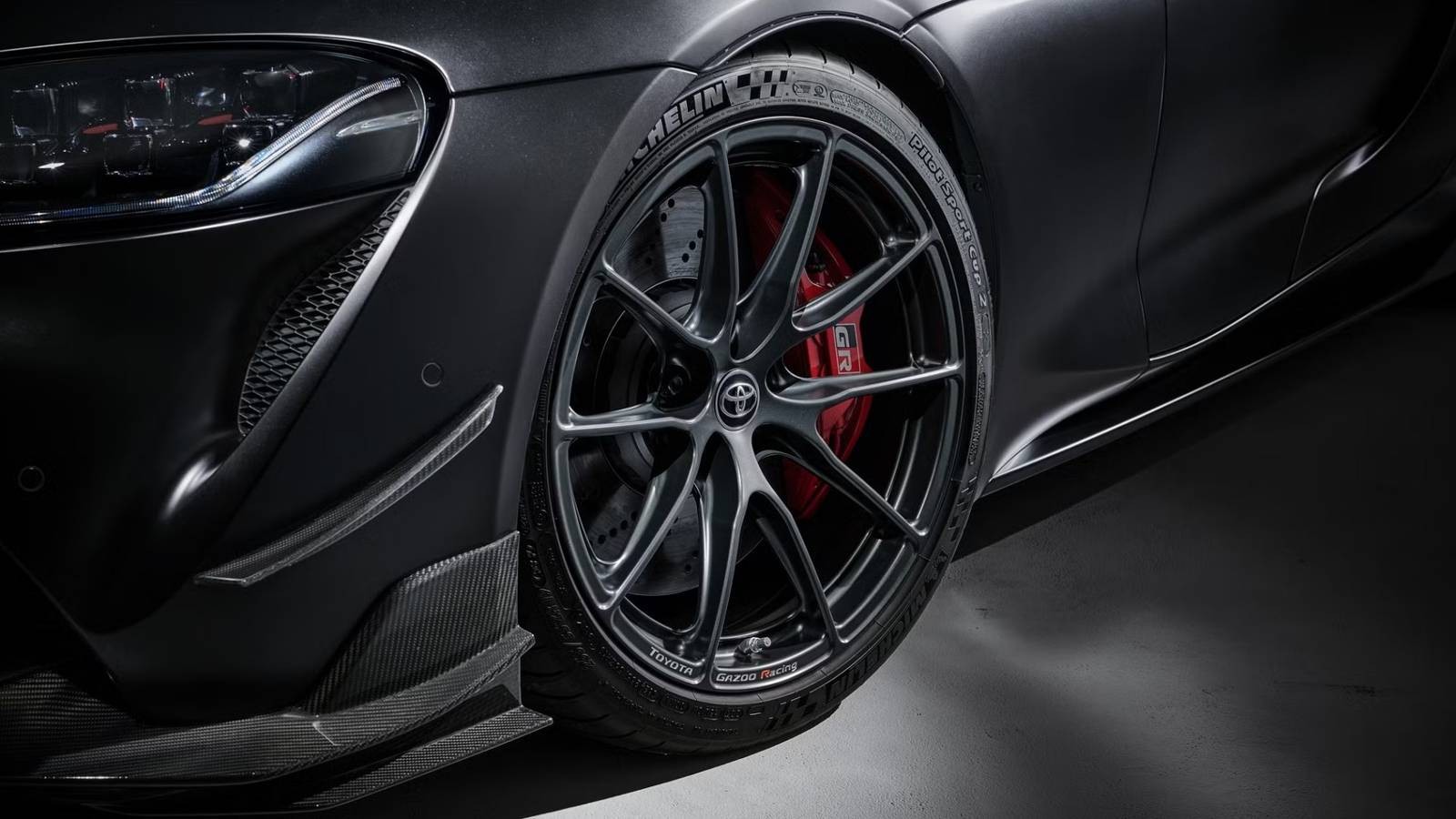
The 2026 GR SupRA 3.0 starts at roughly $59,600. That gets you Brembo brakes. Adaptive suspension. Michelin Pilot Sport tires. An active limited-slip differential. A 0-60 time that laughs at most M-car competitors that cost ten grand more.
Compare it to the 2026 BMW 4 Competition. That one runs you nearly $87,000 for similar speed. The M2? Starting around $69k, yet slower. You want Porsche speed? Go look at the GT4 RS prices. Four figures higher.
The SupRA did what no other modern coupe could: It offered M-car performance at Toyota prices.
And then there is the boring part. The part that makes owning it sane.
Toyota dealerships. They are everywhere. BMW has nice places. Toyota has everywhere. Thirty-five percent larger network. Service bays in towns where BMWs aren’t even allowed in.
Warranty? Toyota gives five years, sixty thousand miles. BMW gives four. One extra year of coverage just for wearing the bull logo. German engineering. Japanese peace of mind.
CarEdge ran the numbers. Ten years of ownership costs for a SupRA? About $5,300 for maintenance. For a Z4? Nearly $15,000. The SupRA has a lower chance of major repair over ten years (roughly 13% vs 43%). Over five years? You save $20,000 in total ownership cost compared to the German cousin.
Is that a “perfect balance”? No. That is just good business. Toyota stripped out the luxury bloat the Z4 requires and kept the performance hardware. You get the car without the markup.
The Last of Its Kind?
This feels sad, doesn’t it?
It’s not just a model year ending. It’s a philosophy dying. We are drifting away from the rear-wheel-drive, gas-powered, manual-transmission dream. Emissions. Hybrid mandates. Battery weights.
The barrier to entry for being an “enthusiast” keeps climbing. The 2008 economy hurt the industry, but regulation is finishing it off. Analog driving experiences are becoming niche hobbies for the wealthy. The GR86 is nice. It’s accessible. But it’s not a six-cylinder. It doesn’t sing. It doesn’t match the SupRA’s power band.
If Toyota builds another SupRA, it will be lighter in character. Hybrid? EV? Probably more sanitized. More expensive. Less raw.
We might look back at 2025 and realize we saw the peak of affordable internal combustion excitement. The collision of German power and Japanese pragmatism was a glitch in the corporate matrix.
A happy glitch.
But the code is changing. The next car will be different. And we aren’t sure if it will be better.
So enjoy the silence of the engine while you have it. Before the wind takes it all. 🏁