For much of the last two years, Tesla has signaled a massive strategic shift. CEO Elon Musk has consistently steered the conversation away from traditional consumer vehicles, focusing instead on a future defined by robotaxis, artificial intelligence, and humanoid robotics. However, recent reports suggest that the company may be recalibrating its priorities to address the immediate demands of the global EV market.
A New Entry in the Compact Segment
According to a report from Reuters, Tesla is currently developing an entirely new compact electric SUV. This is not merely a budget-friendly trim of an existing vehicle; rather, it is being designed from the ground ground up as a distinct model.
Key specifications emerging from the report include:
– Dimensions: Approximately 4.28 meters (168.5 inches) in length. This would make it nearly half a meter shorter than the Model Y, placing it in direct competition with compact crossovers like the Volvo EX30 and Hyundai Kona Electric.
– Weight Target: Roughly 1.5 metric tons, a significant reduction from the Model Y’s weight of approximately 2 tons.
– Hardware: To achieve these weight and cost targets, the vehicle is expected to feature a single electric motor and a smaller battery pack.
Strategic Manufacturing and Global Reach
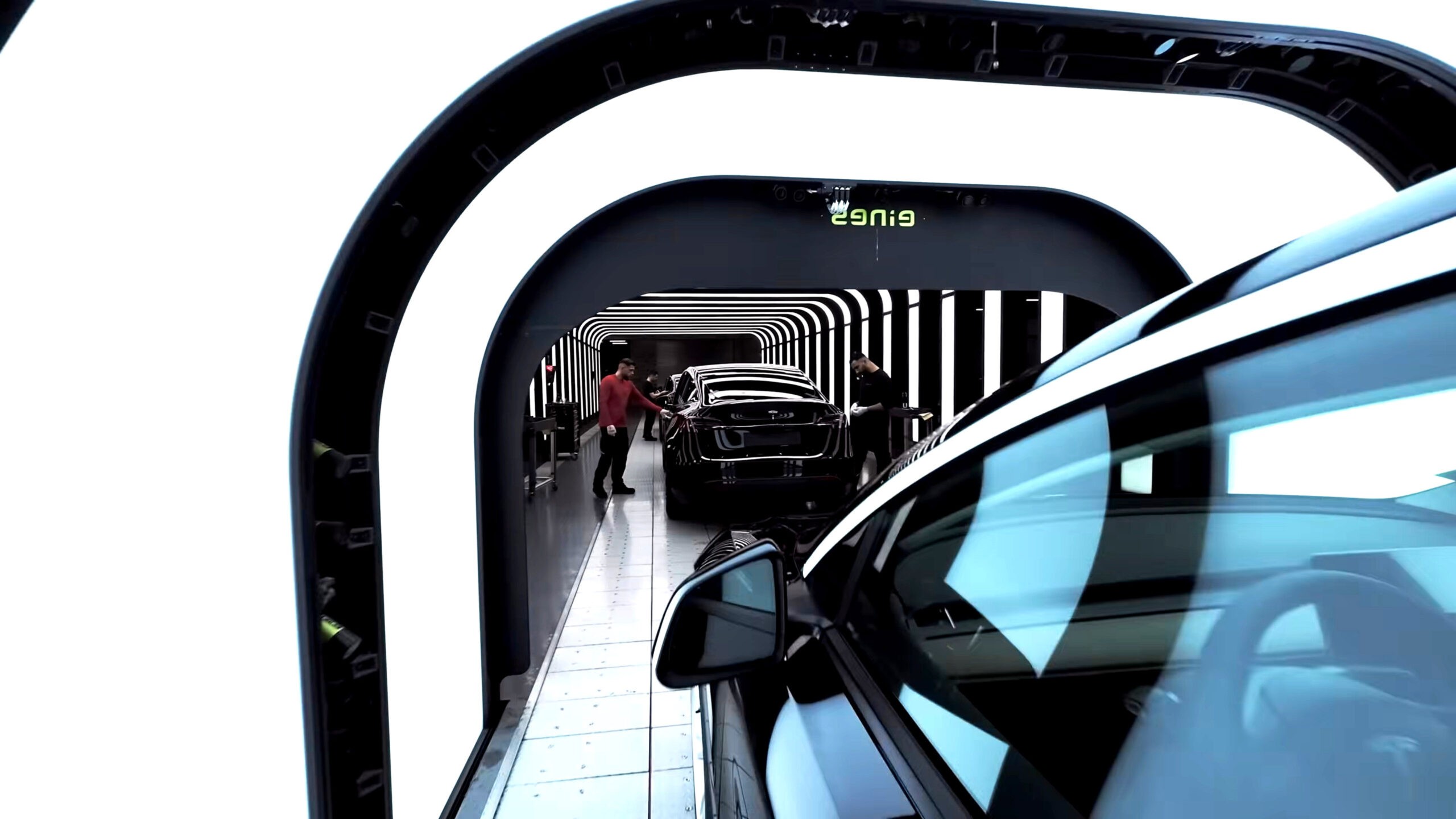
The development of this vehicle appears to be moving from concept to supply chain integration. Sources indicate that Tesla has already begun contacting suppliers regarding parts and production methods.
The initial manufacturing hub is expected to be Tesla’s Shanghai plant in China. While Tesla has not officially commented on the project, the choice of China is strategic; the region offers a highly efficient ecosystem for low-cost EV production. If successful, production could eventually expand to the United States and Europe, turning the vehicle into a truly global offering.
Why This Matters: The Shift in EV Strategy
This development marks a potential departure from Musk’s recent “AI-first” rhetoric. While robotaxis represent the long-term vision, the automotive industry is currently facing a critical transition period:
- The “Affordability Gap”: While early EV adopters were willing to pay premiums, the mass market requires lower price points. A smaller, lighter vehicle allows Tesla to capture a broader demographic of buyers who prioritize utility and cost over high-performance specs.
- Market Competition: Competitors in Europe and China are rapidly saturating the compact SUV segment with efficient, lower-cost models. For Tesla to maintain its market share, it may need a vehicle that competes on price rather than just software and autonomy.
- The Trade-off: By opting for a single motor and a smaller battery, Tesla is making a deliberate engineering trade-off. The vehicle will likely offer less range and lower performance than its larger siblings, but this is the necessary price for achieving a significantly lower MSRP.
This move suggests that while Tesla’s eyes are on the future of autonomy, its feet remain firmly planted in the practical realities of the current global automotive market.
Conclusion
Tesla appears to be developing a compact, low-cost SUV to bridge the gap between its high-end models and the mass market. If realized, this vehicle could serve as a crucial tool for maintaining volume growth while the company pursues its long-term AI ambitions.