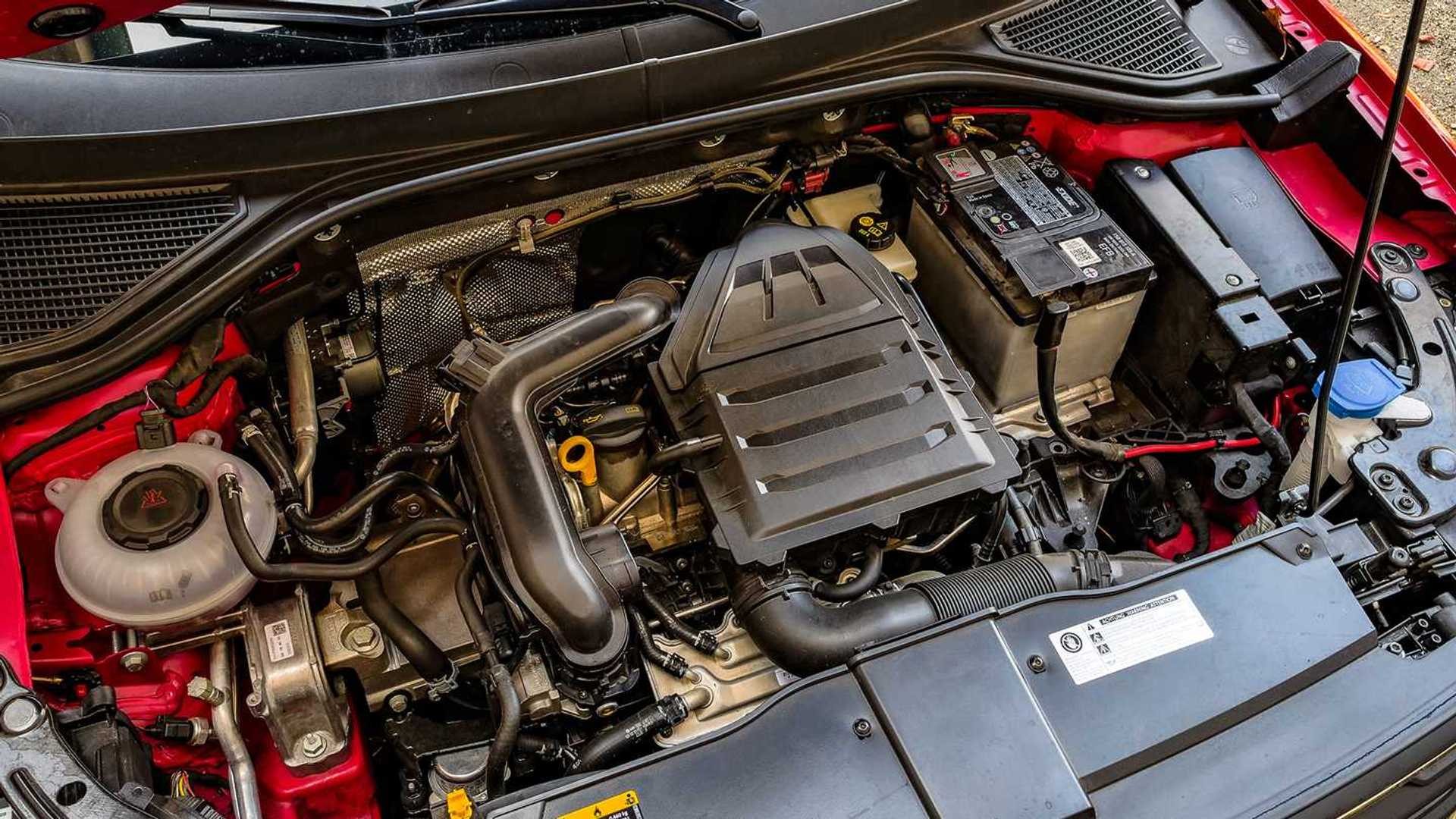
Despite recent industry rumors suggesting that small-displacement engines are being phased out, Volkswagen has confirmed that its three-cylinder 1.0 TSI engine is not going anywhere just yet.
While the company had previously paused development on this specific powertrain, a shift in European regulatory landscapes has provided a lifeline for the compact engine.
The Euro 7 Factor: Why Development Halted
The uncertainty surrounding the 1.0 TSI engine was primarily driven by the initial, highly stringent drafts of the Euro 7 emissions regulations. The technical requirements proposed in those early versions were so demanding that Volkswagen decided to halt further development of the EA 211 inline-three engine to avoid investing in a platform that might quickly become non-compliant.
However, the situation changed when the European Union approved a more relaxed version of the legislation. This regulatory pivot has allowed Volkswagen to reconsider the engine’s viability.
“Regarding the final version of the EU7 legislation, we are investigating actually, if it makes sense, to use this engine in smaller cars (like the Polo or the T-Cross) for some European markets,” stated Stefan Voswinkel, Head of Product Communications at Volkswagen.
Shifting Landscapes in the VW Group Portfolio
While the three-cylinder engine remains a staple for subcompact models, there is a visible trend toward larger engines in the Group’s more premium or “compact” segments.
- The Survivors: The 1.0 TSI continues to power entry-level models such as the VW Polo, Skoda Fabia, and SEAT Ibiza.
- The Upgrades: In larger models like the VW Golf, Skoda Octavia, and Audi A3, Volkswagen has largely transitioned to the 1.5-liter four-cylinder engine. These units offer more refinement and power, typically ranging from 114 hp to 148 hp.
- The High-End: For performance-oriented vehicles, the Group utilizes the 2.0-liter EA888 engine, which can produce up to 329 hp in models like the Golf R.
Why Small Engines Still Matter
The decision to keep the 1.0 TSI in the lineup is a strategic move driven by market accessibility and cost-efficiency.
In the automotive industry, “downsizing” (using smaller engines with turbochargers to achieve higher efficiency) has been the standard for a decade. However, as cars become more technologically complex, the price of entry-level vehicles tends to rise. By maintaining the 1.0 TSI, Volkswagen provides an affordable option for budget-conscious buyers who do not require the extra power or smoothness of a four-cylinder engine.
While three-cylinder engines are inherently less smooth than their four-cylinder counterparts due to natural vibration patterns, the 1.0 TSI has maintained a reputation for reliability and efficiency, making it a logical choice for urban commuters.
Conclusion
While the era of small-displacement engines will eventually end as electrification takes hold, the relaxation of Euro 7 rules has ensured that the three-cylinder engine remains a vital, cost-effective tool in Volkswagen’s arsenal for the foreseeable future.