


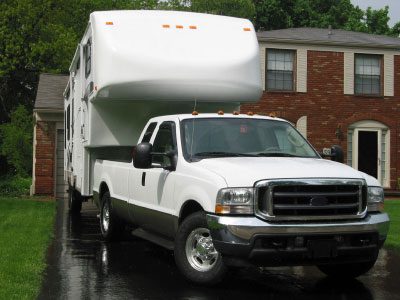
Most car buyers obsess over the usual stats. Fuel economy. Horsepower. Torque. You know these numbers. They are the marketing gold standard. But if you are shopping for a vehicle to haul a boat, a camper, or a loaded trailer, there is one metric that actually keeps you off the side of the highway. It is not towing capacity. It is not payload. It is the gross combination weight rating.
You might have seen GCWR on a spec sheet and scrolled past it. Big mistake. Ignoring it is how you end up with fried brakes and a broken axle.
Defining the Gross Combination Weight Rating
Let’s cut through the jargon. The gross combination weight rating is the absolute maximum weight a vehicle and its attached trailer can have combined, according to the manufacturer. It is not a suggestion. It is a hard limit.
If you overload this number, you are playing Russian roulette with your suspension, tires, and braking system.
Most people confuse this with Gross Vehicle Weight Rating (GVWR). The difference is simple. GVWR is how much your tow vehicle can handle on its own, including passengers and cargo. GCWR adds the trailer to that equation. It is the sum of both.
According to Ford, calculating this involves several moving parts. You start with the curb weight of the tow vehicle. You add allowable payload. Then you add the weight of the driver and passengers. Finally, you add the weight of the loaded trailer. If that total exceeds the manufacturer’s listed GCWR, you are in the danger zone.
“The total weight of the tow vehicle and trailer should never exceed the manufacturer’s listed GCWR.”
This is not an actual measurement of your current setup. It is a ceiling. A red line. Do not cross it.
Why Overloading GCWR Is Dangerous
The reason manufacturers set these limits is not to save paper. It is to prevent catastrophic failure.
When you overload a tow rig, you are asking components to do work they were not designed for. The first thing to go is often the braking system. Brakes can overheat rapidly under excessive strain. When they do, they fade. You lose the ability to slow down or stop.
Tires are next. They have load limits. Exceed them, and you risk a blowout. A blowout at highway speeds with a heavy trailer is a death sentence.
The engine and transmission take a massive hit from the added strain. They can overheat, leading to mechanical failure in the middle of nowhere. Suspension components can bend or break. You lose control. The list of potential disasters is long.
You need to know your vehicle’s specific gross combination weight rating before you hook up anything.
Where to Find Your GCWR
Where do you look for this critical number? It is not always in the brochure.
- Door Jamb Label: Look for a sticker on the driver’s side door frame, near the latch. This is the primary source for weight limits.
- Manufacturer Website: Most automakers publish detailed weight data online. Search for your specific year and model.
- Owner’s Manual: Sometimes buried in the towing section.
If you cannot find it, assume you do not know it. And if you do not know it, do not tow.
GCWR by Make and Model
The following data helps identify the gross combination weight rating for specific vehicles. Note that some older or lighter models may not have a published towing rating or GCWR, indicated by a dash.
Acura GCWR
| Year | Model | GCWR (lbs) |
|---|---|---|
| 2006 | MDX | 8121 |
| 2006 | RL | 5162 |
| 2006 | RSX | 4384 |
| 2006 | TL | 4730 |
| 2006 | TSX | – |
| 2007 | MDX | 10053 |
| 2007 | RL | 5164 |
| 2007 | RDX | 6394 |
| 2007 | TL | 4773 |
| 2007 | TSX | 4407 |
| 2008 | MDX | 10053 |
| 2008 | RL | 5164 |
| 2008 | RSX | 6394 |
| 2008 | TL | 4773 |
| 2008 | TSX | 4407 |
| 2009 | MDX | 10053 |
| 2009 | RL | 5233 |
| 2009 | RSX | 5574 |
| 2009 | TSX | 4550 |
More Acura Specs:
– Acura GVWR
– Acura GAWR
– Acura Cargo Carrying Capacity
– Acura Curb Weight
– Acura Payload
– Acura Towing Capacity
Audi GCWR
| Year | Model | GCWR (lbs) |
|---|---|---|
| 2006 | A3 | – |
| 2006 | A4 | – |
| 2006 | A6 | – |
| 2006 | A8 | – |
| 2006 | S4 | – |
| 2006 | TT | – |
| 2007 | A3 | – |
| 2007 | A4 | – |
| 2007 | A6 | – |
| 2007 | A8 | – |
| 2007 | Q7 | 10665 |
| 2007 | RS4 | – |
| 2007 | S4 | – |
| 2007 | S6 | – |
| 2007 | S8 | – |
| 2008 | A3 | – |
| 2008 | A4 | – |
| 2008 | A5 | – |
| 2008 | A6 | – |
| 2008 | A8 | – |
| 2008 | Q7 | 10665 |
| 2008 | R8 | – |
| 2008 | RS4 | – |
| 2008 | S4 | – |
| 2008 | S5 | – |
| 2008 | S6 | – |
| 2008 | S8 | – |
| 2008 | TT | – |
| 2009 | A3 | – |
| 2009 | A4 | – |
| 2009 | A5 | – |
| 2009 | A8 | – |
| 2009 | Q7 | 10665 |
| 2009 | R8 | – |
| 2009 | S4 | – |
| 2009 | S5 | – |
| 2009 | S8 | – |
| 2009 | TT | – |
More Audi Specs:
– Audi GVWR
– Audi GAWR
– Audi Cargo Carrying Capacity
– Audi Curb Weight
– Audi Payload
– Audi Towing Capacity
BMW GCWR Limits
The numbers here don’t tell a complete story. Most BMW sedans and coupes from this era are rear-wheel-drive or xDrive platforms built for handling, not hauling. If you see a dash, it means the Gross Combined Weight Rating is either not applicable or restricted by the manufacturer to protect the drivetrain.
For the E60/E61 5-Series, the V8s (525, 530, 550) and the big 600s (650, 750, 760) lack specific GCWR data in public records. The M3, M5, and M6 are track-biased. Their transmission coolers and suspension components aren’t rated for heavy trailer loads. Don’t try to tow a camper with a 2006 M3.
The SUVs are where BMW shines. The X3 starts at 7,673 lbs in 2006 and settles at 7,662 lbs from 2007 onward. It’s a compact luxury hauler. Capable, but not for heavy boats.
The X5 is the workhorse. 2006 model year pulls up to 10,802 lbs. By 2007, that jumps to 11,132 lbs. It holds steady at that figure through 2009. The X6 enters the fray in 2008 with a 11,044 lbs rating.
If you’re looking for BMW GCWR data for specific towing tasks, stick to the SUVs. The sedans are lightweight luxury items. Treat them as such.
Buick GCWR Limits
Buick in the late 2000s was all about volume. The LaCrosse and Lucerne are midsize sedans with nearly identical ratings. Both sit at 4,645 lbs (LaCrosse) and 4,914 lbs (Lucerne) from 2006 to 2009. These are city cars. Towing anything larger than a small utility trailer will strain the transmission.
The Rainier disappears after 2007. It held 10,500 lbs in 2006 and 2007. That’s a serious number for a crossover that’s been gone for over a decade.
The Rendezvous also fades out after 2007, holding 7,746 lbs.
Then there’s the Enclave. It debuts in 2008 with a 9,500 lbs rating. It stays there in 2009. This is the vehicle to buy if you need to pull a travel trailer. The Lucerne can’t touch that capacity. The Enclave uses a stronger platform designed for family logistics.
Cadillac GCWR Limits
Cadillac pushes harder on the heavy end of the spectrum. The CTS starts at 4,659 lbs and increases to 5,011 lbs by 2008. The CTS-V maxes out at 5,000 lbs initially, but the STS-V goes up to 5,544 lbs in 2008 and 2009.
The Escalade family is the real story here.
2006 is where it gets interesting. The standard Escalade hits 12,902 lbs. The ESV (Extended Sport Utility) version goes to 14,000 lbs. The EXT (coupe utility) sits at 13,464 lbs.
From 2007 to 2009, the standard Escalade, ESV, and EXT all stabilize at 14,000 lbs. That’s a massive increase over the 2006 standard model. If you’re comparing Cadillac GCWR specs for towing a large fifth-wheel, the 2007+ Escalade ESV is your best bet among these years.
The Escalade Hybrid in 2009 drops back down to 6,314 lbs. The electric assist doesn’t help with towing capacity; it often penalizes it due to added battery weight and different gearing.
The STS-V holds steady at 5,544 lbs from 2008 to 2009. The regular STS is lower, around 5,123 lbs. Avoid towing with the V-series sedans unless you want to melt your transmission fluid.
Chevrolet GCWR Limits
Chevy covers the full range. From small compacts to heavy-duty trucks.
Small Cars
The Aveo, Cobalt, and HHR are lightweights.
The Cobalt holds 4,141 lbs across all years listed.
The HHR stays at 4,305 lbs.
The Malibu has no rating listed for most years, implying it’s not rated for towing at all. The Malibu Classic (2008) and Hybrid (2009) also lack clear GCWR data.
Midsize SUVs and Crossovers
The Equinox is consistent at 7,252 lbs from 2006 to 2009.
The Traverse enters in 2009 with 9,500 lbs.
The TrailBlazer (including the EXT) starts high at 11,000 lbs (2006), drops to 10,000 lbs in 2007, and stays there through 2009.
Trucks and Large SUVs
The Colorado improves significantly. 2006: 5,218 lbs. 2007: 5,772 lbs. 2008-2009: 7,000 lbs.
The Silverado 1500 varies.
2006: Up to 13,793 lbs for the HD trim.
2007-2009: Settles at 10,000 lbs for standard models, but the HD versions hit 16,000 lbs.
The heavy hitters are the 2500 and 3500 HD models. They consistently hit 16,000 lbs from 2006 to 2009.
The Suburban 2500 goes from 13,822 lbs (2006) to 14,000 lbs (2007) and finally to 16,000 lbs (2008-2009).
The Tahoe Hybrid in 2008 and 2009 holds 12,000 lbs.
If you need Chevrolet GCWR for heavy towing, stick to the 2500/3500 HD trucks and the Suburban 2500. The standard 1500s are limited.
Chrysler GCWR Limits
Chrysler’s lineup is smaller here, but the capacity ranges are wide.
The 300 and 300C sedans are similar. The regular 300 holds 4,862 lbs. The 300C, with its V8 options, goes up to 6,196 lbs (2008-2009) or 6,216 lbs (2006). Don’t exceed these limits.
The PT Cruiser is an anomaly. In 2006 and 2008-2009, it’s rated for 8,132 lbs and 7,105 lbs respectively. In 2007, it drops to 4,297 lbs. The inconsistency suggests different trim levels or engine configurations had varying ratings. Verify the specific VIN for the PT Cruiser.
The Pacifica minivan is robust. 2006: 4,297 lbs. 2007: 7,105 lbs. 2008-2009: 4,297 lbs (standard) and 7,000 lbs (likely the AWD or heavier trim).
The Aspen SUV is the heavy lifter. 2006: 11,000 lbs. 2007: 11,000 lbs. 2008: A massive jump to 13,966 lbs. 2009: 11,000 lbs (standard) and 11,700 lbs (Hybrid). The 2008 Aspen is the peak year for towing capacity in this group.
Dodge GCWR Limits
Dodge and Chrysler share platforms, but the ratings differ slightly due to engine and suspension options.
Minivans and Compacts
The Caravan (2006) has a confusing 660 lbs rating. This is likely a typo in some sources or a specific low-trim limitation. The Grand Caravan is the real mover at 8,600 lbs (2006-2007) and
Ford GCWR
The numbers don’t lie. If you are hauling anything heavier than a small sedan, you need to know the Gross Combined Weight Rating. It is the hard limit. Total weight of vehicle plus trailer. Go over it and you are gambling with the drivetrain.
Ford changed the landscape in 2006. The Crown Victoria sat at a modest 5592 lbs. Not for heavy towing. The E-Series vans were the real workhorses. The E150 hit 11,318 lbs. The E250 dropped slightly to 10,912. The E350 Super Duty jumped to 13,000. Big difference.
Trucks told a different story. The F-150 started at 11,665 lbs. The F-250 and F-350 both maxed out at 15,000 lbs. That was the sweet spot for serious hauling in ’06. Smaller cars? The Focus sat at 3,771 lbs. The Five Hundred at 4,799. The Fusion, Mustang, Taurus, GT? No ratings listed. Probably not meant for it.
2007 saw shifts. The F-250 and F-350 got a bump to 17,000 lbs. That is significant. The F-150 crept up to 11,700. New models entered the fray. The Edge added 6,248 lbs. The Expedition EL pushed past 15,000 at 15,078. The Mustang finally got a rating of 4,611. The Ranger dropped to 5,820. The Freestar also saw a decline to 7,000.
By 2008, the F-350 stabilized at 17,000. The F-450 entered the chat with a massive 27,000 lbs. That is a commercial-grade rig. The F-250 dropped back to 15,000. Why? Maybe chassis reinforcement elsewhere. The F-150 ticked up to 11,765. The Taurus returned with 4,793. The Taurus X added 6,183. Focus and Fusion still had no numbers.
2009 brought more confusion. The F-150 jumped to 14,950. The Ranger held at 6,000. The F-450 dropped drastically to 16,983. Did they reclassify it? The Explorer dipped to 8,110. The Sport Trac held steady around 8,233. The Flex added 6,900.
GMC GCWR
GMC followed a similar, but distinct, path. In 2006, the Sierra 1500 sat at 8,361 lbs. The Sierra 2500 and 3500 both hit 15,792. The Yukon was 11,000. The Yukon XL was heavier at 13,000. The Envoy and Envoy XL capped at 10,000. The Savana vans varied. The 1500 model at 9,500. The 2500 and 3500 models both at 12,000. The Canyon started low at 5,179.
2007 introduced the Acadia. It hit 9,500 lbs. The Canyon grew to 5,679. The Sierra 2500 edged up to 15,858. The Sierra 3500 actually dropped to 15,342. The Sierra 1500 improved to 9,398. The Yukon dropped to 10,000. The XL stayed at 13,000. The Envoy dipped to 9,854.
2008 saw the Sierra 3500 rebound to 16,000. The Sierra 1500 hit 9,500. The Canyon grew to 5,882. The Acadia held at 9,500. The Yukon Hybrid appeared with 12,000. The Yukon stayed at 10,000. The XL remained at 13,000.
2009 was a year of stability and slight drops. The Sierra 2500 rose to 15,926. The Sierra 3500 held at 16,000. The Canyon ticked up to 5,887. The Acadia stayed at 9,500. The Yukon Hybrid held at 12,000. But the Yukon XL dropped to 11,000. That is a 2,000 lb cut. Why? Aerodynamics? Suspension? The Sierra Hybrid had no rating.
Honda GCWR
Honda kept it tighter. Smaller numbers. Less towing, more commuting.
In 2006, the Civic led at 4,968 lbs. The Accord was lower at 4,206. The CR-V had no rating. The Element sat at 5,021. The Pilot was 7,914. The Ridgeline hit 9,653. The Odyssey managed 8,210. The Insight was tiny at 2,250. The Accord Hybrid had no rating. The S2000 had none either.
2007 brought changes. The Civic jumped to 6,060. The Accord rose to 4,274. The Pilot surged to 9,700. The Ridgeline grew to 10,085. The Element ticked up to 5,083. The Fit had no rating. The Odyssey dropped slightly to 8,034. The Civic Hybrid held at 3,736.
2008 was stagnant. The Civic stayed at 6,060. The Pilot held at 9,700. The Ridgeline held at 10,085. The Element held at 5,083. The Odyssey returned to 8,210. The Accord, CR-V, Fit, S2000 still had no numbers. It seems Honda just stopped listing them for non-towing models.
2009 saw a major drop. The Civic fell to 3,738. The Pilot dropped to 8,466. The Odyssey held at 8,210. The Civic Hybrid lost its rating. The Accord, CR-V, Fit still had no ratings. Honda was clearly phasing out towing for their smaller cars.
HUMMER GCWR
Hummer didn’t do “subtle.” The numbers reflect that.
In 2006, the H2 sat at 13,050. The H3 was 8,000. The H1 Alpha was massive at 17,300. That thing was built for war, not camping.
2007 saw the H2 rise to 13,150. The H3 stayed at 8,000.
2008 bumped the H2 to 14,000. The H3 remained at 8,000.
2009 kept the H2 at 14,000. The H3 stayed at 8,000. But the H3T appeared. It hit 9,461. The truck version could handle more. Still, not exactly a fleet hauler.
Hyundai GCWR
Hyundai was playing catch-up in these years. Smaller ratings.
In 2006, the Elantra was 4,434. The Sonata was 4,403. The Tucson was 4,403. The Santa Fe led at 6,399. The Azera was 4,779. The Accent, Tiburon had no ratings.
2007 saw the Elantra drop to 3,623. The Santa Fe dropped to 5,527. The Tucson dropped to 4,390. The Azera held at 4,779. The Sonata held at 4,403. The Entourage appeared at 5,550. The Accent, Tiburon, Veracruz still had no ratings.
2008 brought some weirdness. The Accent rose to 4,779. The Elantra jumped to 5,550. The Azera dropped to 3,623. The Entourage grew to 5,898. The Santa Fe held at 5,527. The Sonata held at 4,403. The Tucson held at 4,390. The Tiburon, Veracruz still had no ratings.
2009 was sparse. The Azera held at 4,779. The Sonata rose slightly to 4,442. The Accent, Genesis, Tib
Kia GCWR
Kia’s heavy-duty towing numbers were still finding their footing in the mid-2000s. Most of the lineup didn’t have a Gross Combination Weight Rating (GCWR) listed, which usually means the manufacturer didn’t certify it for towing in the US market at that time. Or they just didn’t publish the data.
In 2006, the 2006 Kia Sportage was capped at 4880 lbs. The 2006 Kia Optima shared that same limit. The rest of the roster—the Amanti, Rio, Spectra, and Sedona—had no listed rating.
By 2007, the 2007 Kia Sedona minivan showed up with a massive 8015 lbs GCWR. The 2007 Kia Sorento SUV could handle even more at 9299 lbs. The Optima and Sportage stayed static at 5292 and 4880 lbs respectively.
The 2008 model year didn’t shake things up. The Sorento held its 9299 lb rating. The Sedona vanished from the list entirely. The Optima and Sportage remained unchanged.
2009 brought the Borrego. If you were looking for the 2009 Kia Borrego GCWR, it sat at 9398 lbs. The Spectra models had no listed rating. The previous SUV and sedan limits persisted where applicable.
Land Rover GCWR
Land Rover wasn’t messing around. These are luxury off-roaders built to pull. The 2006 Range Rover could handle a combined weight of 13324 lbs. The 2006 Range Rover Sport was slightly lighter at 13318 lbs. The 2006 LR3 sat at 13165 lbs.
2007 kept the Range Rover steady at 13324 lbs. The Sport crept up slightly to 13334 lbs. The LR3 lost a pound, landing at 13276 lbs.
In 2008, the LR2 appeared with no listed GCWR. The LR3 also disappeared from the table. The Range Rover Sport remained at 13334 lbs. The main Range Rover wasn’t listed for this year.
2009 saw the LR2 enter the list with a modest 7905 lbs. The LR3 jumped significantly to 13662 lbs. The 2009 Range Rover hit 13564 lbs. The Sport held firm at 13334 lbs.
Lexus GCWR
Lexus splits its GCWR data into two camps. The sedans and coupes barely rate. The trucks and large SUVs carry the load.
In 2006, the 2006 Lexus LS 430 had a very low GCWR of 6140 lbs. The 2006 Lexus RX 330 sat at 7510 lbs. The hybrid RX 400h was rated at 8015 lbs. The heavy hitters were the GX 470 at 11521 lbs and the LX 470 at 12240 lbs.
2007 mixed in the new hybrids. The 2007 RX 400h kept its 8015 lb rating. The 2007 RX 350 dropped to 7520 lbs. The GX 470 and LX 470 stayed locked at 11521 and 12240 lbs. The LS 460 arrived with no listed rating.
2008 saw the massive 2008 Lexus LX 570 enter with a 14645 lb GCWR. The GX 470 remained at 11521 lbs. The RX models shed weight. The 2008 RX 350 dropped to 6020 lbs. The 2008 RX 400h fell to 6340 lbs.
In 2009, the LX 570 held its 14645 lb mark. The GX 470 stayed at 11521 lbs. The RX 350 remained at 6020 lbs. The rest of the Lexus lineup had no listed GCWR data.
Lincoln GCWR
Lincoln’s GCWR numbers vary wildly depending on whether you are pulling a boat or dragging a camper trailer. The Mark LT pickup was a tank.
The 2006 Lincoln Mark LT had a GCWR of 14500 lbs. The 2006 Lincoln Navigator was rated at 11900 lbs. The 2006 Town Car was limited to 6460 lbs. The LS and Zephyr had no listed ratings.
2007 introduced the MKX, rated at 6370 lbs. The Navigator jumped to 15000 lbs. The Mark LT stayed at 14500 lbs. The Town Car held steady at 6460 lbs.
2008 saw the MKX increase to 7350 lbs. The Navigator and Mark LT remained at 15000 and 14500 lbs respectively. The Town Car edged up slightly to 6502 lbs.
2009 brought the MKS, rated at a modest 5277 lbs. The MKX stayed at 7350 lbs. The Navigator and Town Car held their 15000 and 6502 lb ratings. The MKZ had no listed GCWR.
Mazda GCWR
Mazda’s old B-Series trucks and their SUV cousins had specific limits. The newer sedans rarely made the cut for towing stats.
In 2006, the 2006 Mazda B4000 was the beast, rated at 6973 lbs. The 2006 B3000 sat at 6072 lbs. The 2006 MPV minivan was rated at 5904 lbs. The 2006 B2300 was limited to 4744 lbs. The 2006 Tribute SUV was at 4842 lbs.
2007 added the CX-7 and CX-9. The 2007 CX-9 could handle 6826 lbs. The 2007 CX-7 sat at 5860 lbs. The B-series trucks held steady around 6000-7000 lbs. The B2300 was 4800 lbs.
2008 kept the CX-7 and CX-9 at their 2007 marks. The 2008 B4000 stayed at 7000 lbs. The 2008 Tribute increased slightly to 4893 lbs. The 2008 Tribute Hybrid was lighter at 4747 lbs.
2009 saw the B-series shrink. The 2009 B4000 dropped to 6952 lbs. The 2009 B2300 fell to 4749 lbs. The 2009 CX-9 dropped significantly to 6484 lbs. The CX-7 held at 5860 lbs. The Tribute disappeared from the list.
Mercedes-Benz GCWR
Mercedes separates its GCWR data by engine and model year quite strictly. You have to look at the specific trim to find the limit.
In 2006, only the ML class was listed. The 2006 ML500 had a GCWR of 6893 lbs. The 2006 ML350 was lower at 6773 lbs. No other Mercedes models had listed ratings.
2007 saw a flood of data. The 2007 GL450 led with 12946 lbs. The 2007 GL320 was higher at 12946 lbs. Wait, check the 2007 GL320 again. It’s listed at 12946 lbs. The 2007 G500 was 12695 lbs. The 2007 ML63 AMG sat at 12443 lbs. The standard ML350 was 12056 lbs. The ML320 was 12167 lbs. The ML500 dropped to 12145 lbs.
2008 kept the GL class high. The 2008 GL550 hit 13084 lbs
Nissan GCWR
The Nissan lineup of the mid-to-late 2000s ranged from compact commuters to heavy-duty haulers. Understanding the Nissan GCWR is key if you plan to tow anything substantial.
In 2006, the Altima sat at 4151 lbs. The Maxima was slightly heavier at 4623 lbs. If you needed to pull a load, the Armada was the heavy hitter with a 11818 lbs rating. The Frontier offered 10676 lbs. The Pathfinder was close behind at 10523 lbs. The Titan, built for work, hit 11465 lbs. The Xterra managed 9658 lbs. The Murano sat at 8100 lbs. The Quest was lighter at 7662 lbs. The Sentra was minimal at 3663 lbs. The 350Z had no rating.
2007 brought some updates. The Altima climbed to 4205 lbs. The Altima Hybrid stood at 4632 lbs. The Armada jumped significantly to 12800 lbs. The Frontier saw a rise to 11133 lbs. The Maxima went to 4741 lbs. The Pathfinder stayed steady at 10523 lbs. The Quest increased to 7941 lbs. The Sentra rose to 4003 lbs. The Titan hit 11600 lbs. The Xterra remained at 9658 lbs. The Versa had no rating. The Murano stayed at 8100 lbs.
2008 introduced the Rogue. The Rogue rated at 4430 lbs. The Armada surged to 15100 lbs. The Frontier dropped back to 10676 lbs. The Pathfinder bumped to 10596 lbs. The Quest went to 7943 lbs. The Sentra rose to 4047 lbs. The Titan hit 11688 lbs. The Xterra dropped to 9300 lbs. The Altima stayed at 4205 lbs. The Altima Hybrid stayed at 4632 lbs. The Maxima stayed at 4741 lbs. The Versa had no rating. The 350Z had no rating.
2009 saw minor tweaks. The Altima was 4217 lbs. The Altima Hybrid was 4620 lbs. The Armada held at 15100 lbs. The Frontier was 11133 lbs. The Maxima was 4706 lbs. The Murano dropped to 7505 lbs. The Pathfinder stayed at 10596 lbs. The Quest stayed at 7943 lbs. The Rogue stayed at 4430 lbs. The Titan stayed at 11688 lbs. The Xterra stayed at 9300 lbs. The GT-R had no rating. The Versa had no rating.
Related specs include Nissan GVWR, Nissan GAWR, Nissan Cargo Carrying Capacity, Nissan Curb Weight, Nissan Payload, and Nissan Towing Capacity.
Pontiac GCWR
Pontiac was wrapping up its run during this period. The numbers reflect the final few years of the brand.
2006 models included the G6 at 4530 lbs. The GTO was 4578 lbs. The Grand Prix was 4634 lbs. The Montana SV6 hit 8500 lbs. The Torrent was 7310 lbs. The Vibe was 4351 lbs. The Solstice had no rating.
2007 added the G5. The G5 rated at 4141 lbs. The G6 stayed at 4530 lbs. The Grand Prix dropped slightly to 4627 lbs. The Torrent went up to 7407 lbs. The Vibe stayed at 4351 lbs. The Solstice had no rating.
2008 introduced the G8. The G8 was a heavy sedan at 6035 lbs. The G5 stayed at 4141 lbs. The G6 dropped to 4455 lbs. The Grand Prix stayed at 4627 lbs. The Torrent dropped to 7310 lbs. The Vibe dropped to 4350 lbs. The Solstice had no rating.
2009 saw the G5 drop to 3902 lbs. The G6 stayed at 4455 lbs. The G8 stayed at 6035 lbs. The Torrent stayed at 7310 lbs. The Vibe rose to 4506 lbs. The Solstice had no rating.
Related specs include Pontiac GVWR, Pontiac GAWR, Pontiac Cargo Carrying Capacity, Pontiac Curb Weight, Pontiac Payload, and Pontiac Towing Capacity.
Porsche GCWR
Porsche kept it simple. Mostly just the Cayenne. The sports cars didn’t have towing ratings.
2006 Cayenne rated at 12628 lbs.
2008 saw the same Cayenne rating. The 911 had no rating. The Boxster had no rating. The Cayman had no rating. The Cayenne stayed at 12628 lbs.
2009 bumped the Cayenne to 12650 lbs. The 911 Carrera had no rating. The Boxster had no rating. The Cayman had no rating.
Related specs include Porsche GVWR, Porsche GAWR, Porsche Cargo Carrying Capacity, Porsche Curb Weight, Porsche Payload, and Porsche Towing Capacity.
Saab GCWR
Saab’s lineup was small but stout. The 9-7X shared platforms with GMC, so it could pull.
2006 models: The 9-2X was 5220 lbs. The 9-3 was 5430 lbs. The 9-5 was 7120 lbs. The 9-7X hit 10500 lbs.
2007 models: The 9-3 went to 5380 lbs. The 9-5 stayed at 7120 lbs. The 9-7X stayed at 10500 lbs. The 9-2X was not listed for this year.
2008 models: The 9-3 stayed at 5380 lbs. The 9-5 stayed at 7120 lbs. The 9-7X stayed at 10500 lbs.
2009 models: The 9-3 jumped to 5680 lbs. The 9-5 stayed at 7120 lbs. The 9-7X stayed at 10500 lbs.
Related specs include Saab GVWR, Saab GAWR, Saab Cargo Carrying Capacity, Saab Curb Weight, Saab Payload, and Saab Towing Capacity.
Saturn GCWR
Saturn was struggling. The numbers reflect a brand trying to clear inventory.
2006 models: The Ion was 3946 lbs. The Relay was 8500 lbs. The VUE was 4857 lbs.
2007 added the Aura. The Aura rated at 4678 lbs. The Aura Hybrid had no rating. The Ion dropped to 3902 lbs. The Outlook was a heavy SUV at 9500 lbs. The Relay dropped to 7918 lbs. The VUE stayed at 4857 lbs. The VUE Hybrid was also 4857 lbs. The Sky had no rating.
2008 added the Astra. The Astra had no rating. The Aura stayed at 4678 lbs. The Aura Hybrid had no rating. The Outlook dropped to 6872 lbs. The Sky had no rating. The VUE rose to 5475 lbs. The VUE Hybrid rose to 5439 lbs.
2009 models: The Astra had no rating. The Aura stayed at 4678 lbs. The Aura Hybrid had no rating. The Outlook dropped to 6852 lbs. The Sky had no rating. The VUE stayed at 5475 lbs. The VUE Hybrid stayed at 5439 lbs.
Related specs include Saturn GVWR, Saturn GAWR, Saturn Cargo Carrying Capacity, Saturn Curb Weight, Saturn Payload, and Saturn Towing Capacity.
Scion GCWR
Scion was young. And small. Most models had no towing rating.
2006: tC, xA, xB all had no rating.
2007: tC had no rating.
2008: tC
Volkswagen’s approach to towing limits was strictly tied to the chassis architecture. If you were lugging a boat or a trailer in a 2006 Beetle or Jetta, you’re out of luck. The GCWR data for those models is effectively non-existent in manufacturer specs from that era, meaning you couldn’t legally tow anything that pushed the combined weight beyond the vehicle’s own limits. The only exception in the early years was the Touareg.
VW Towing Limits by Year
The Touareg was the workhorse of the lineup. In 2006, it carried a GCWR of 12,952 lbs. That number climbed slightly by 2007 to 13,034 lbs for the updated V8 and diesel variants. By 2008, the Touareg 2 platform arrived, and while the curb weight increased, the GCWR settled back down to 12,952 lbs for the 2009 model year.
Other models had strict ceilings. The Routan minivan, introduced in 2009, had a surprisingly low GCWR of just 6,771 lbs. It was built for people, not cargo haulers. The Tiguan fared even worse, capped at 5,748 lbs. You wouldn’t be dragging a camper with a first-gen Tiguan.
For the compact sedans and coupes, the lack of GCWR data implies a “do not tow” policy unless the owner’s manual specified otherwise for light trailers. In practice, that meant no trailers for the Golf GTI, Rabbit, or Passat. The GLI and R32 shared this limitation. They were fast, but not tow-ready.
Volvo GCWR Breakdown
Volvo played a different game. Their sedan and wagon lines had specific, albeit conservative, limits. The XC90 was the clear leader. In 2006, it sat at 8,694 lbs. By 2007, it dipped to 8,570 lbs, then held steady through 2008 before dropping again to 8,476 lbs in 2009. The weight creep of newer safety tech and platform changes ate into the towing capacity over time.
The XC70 showed more consistency. It started at 7,125 lbs in 2006 and 2007, then jumped to 7,549 lbs in 2008 and 2009. That increase likely came from chassis stiffening or engine tuning changes that allowed for better torque management at the limit.
Smaller cars were tight. The S40, V50, and C30 hovered around 5,300 to 5,500 lbs. If you tried to tow a small utility trailer with a 2009 S40, you were staring at a 5,423 lb GCWR. That leaves almost no room for passengers, fuel, and cargo if the trailer weighs anything substantial.
The S80 and S60 sat in the middle. The S80 climbed from 7,184 lbs in 2006 to 7,425 lbs in 2009. The S60 stayed flat around 6,950 lbs. The C70 convertible was a bit of a mystery box, ranging from 5,777 lbs down to 5,942 lbs in 2007 before settling back at 5,777 lbs. Soft tops generally don’t benefit from high-torque towing applications.
Why GCWR Matters More Than GVWR
Most buyers fixate on Gross Vehicle Weight Rating (GVWR). That’s the max weight of the car itself. GCWR is the hard limit of the car *plus


