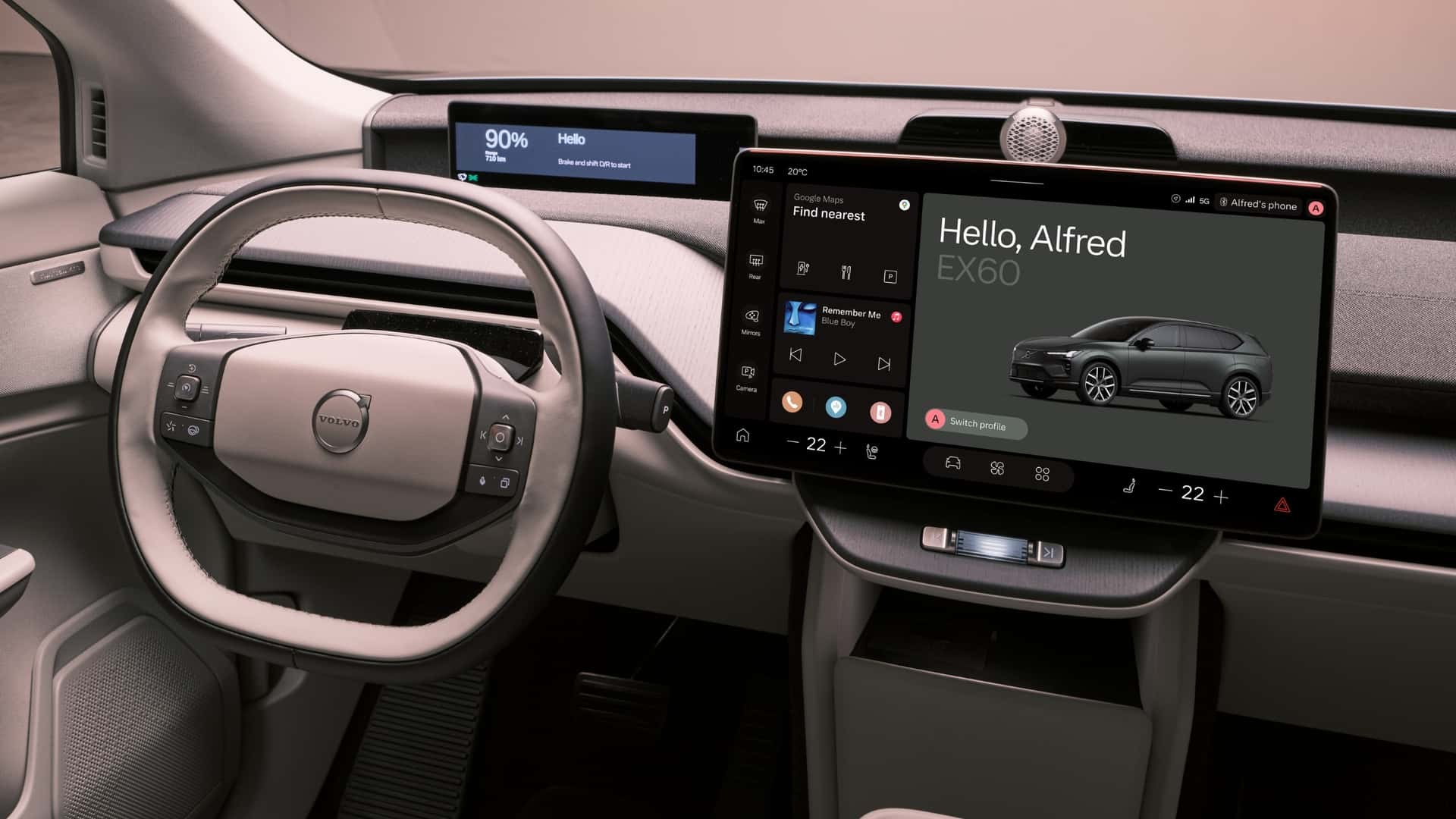
Volvo is launching its first Sweden-built electric vehicle, the EX60, at a pivotal moment in its corporate history. As production begins at the Torslanda plant in Gothenburg, the company is signaling a clear strategic direction: prioritizing manufacturing efficiency and customer value over the controversial trend of in-car subscription models.
With a $1 billion investment in advanced “megacasting” technology, Volvo aims to lower production costs to compete with plug-in hybrids. Simultaneously, the brand is drawing a hard line against “nickel-and-diming” customers for basic features, positioning itself as a premium manufacturer that values transparency and reliability.
The Torslanda Transformation: More Than Just One Car
The start of EX60 production is not an isolated event but the cornerstone of a broader industrial shift. Volvo has invested heavily in infrastructure at its Torslanda plant, particularly in megacasting —a process that uses massive die-casting machines to create large, single-piece components rather than assembling hundreds of smaller parts.
According to Eric Severinson, Volvo’s Chief Commercial Officer, the initial investment is in the infrastructure itself—the machines, buildings, and processes—rather than just the molds. This approach allows for rapid scalability. The foundation laid for the EX60 can support future models with minimal additional cost. This strategy is already being replicated in Volvo’s new facility in Slovakia, which was designed from the ground up to accommodate multiple future vehicles on the same platform.
Key Insight: By building flexible infrastructure, Volvo aims to reduce the marginal cost of producing new EV models, allowing for quicker market entry and better economies of scale.
Redefining EV Economics: Margins and Manufacturing
The fundamental challenge for electric vehicles (EVs) is cost. Raw materials for EVs are roughly three times more expensive than those for internal combustion engine (ICE) vehicles. To close this gap, Volvo is rethinking the entire manufacturing process.
Two technologies are central to this effort:
1. Cell-to-Body Integration: Instead of using traditional battery modules, Volvo integrates cells directly into the vehicle’s floor structure. This reduces complexity and cuts the cost of the floor structure by approximately 30%.
2. Megacasting: This technology reduces the number of parts in the rear floor structure, cutting production costs by another 30%.
The goal is to bring EV production costs down to parity with plug-in hybrids. When price parity is achieved, consumer adoption typically accelerates. Volvo is also taking a hands-on approach to battery production. While cells are sourced from Chinese suppliers like Sunwoda and CATL, the assembly, bonding, and integration of battery packs happen in-house at Torslanda. This contrasts with many competitors who buy pre-built modules, giving Volvo greater control over quality and cost.
Software as a Service, Not a Trap
Volvo’s approach to software and subscriptions highlights a growing tension in the auto industry: how much of a car’s functionality should be unlocked via monthly fees?
Severinson argues that premium brands should not charge for basic features. “If you sell a premium product, you shouldn’t nickel-and-dime customers,” he states. Charging $5 a month for heated seats—features often included in cheaper cars—undermines the premium experience.
However, Volvo sees value in subscription models for comprehensive software services. Similar to streaming platforms like Netflix or Disney+, subscriptions make sense for:
* Advanced connectivity packages.
* Bundled driver-assistance suites.
* Continuous software updates that evolve the car’s capabilities over time.
The underlying philosophy is that the car should be a “product that continuously evolves,” leveraging a single electrical architecture and “master software” shared across the SPA2 and SPA3 platforms. This allows for rapid, centralized updates across the entire lineup, ensuring vehicles remain relevant long after purchase.
Addressing Reliability and Repair Concerns
Critics of modern EV manufacturing often raise concerns about repairability, particularly regarding megacasting and battery longevity. Volvo addresses these directly:
- Battery Life: Batteries are designed to last the life of the vehicle, backed by a 10-year warranty. Severinson notes that consumers rarely worry about the cost of replacing a combustion engine in an older car, yet EVs offer stronger guarantees.
- Repairability: While megacasting components are more complex to repair than stamped steel, methods already exist. Interestingly, insurance premiums for EVs are sometimes lower than for ICE vehicles, suggesting insurers are adapting to these new technologies.
Market Strategy: Who Buys the EX60?
The EX60 targets the primary family vehicle segment. The typical buyer is in their early-to-mid 40s, with children, a solid income, and homeownership. However, early orders reveal a broader appeal:
* Customers downsizing from larger SUVs.
* Child-free buyers attracted to the design, software, and premium audio system (featuring 28 speakers and active noise cancellation).
Sales targets are ambitious, with the EX60 expected to play a major role in Torslanda’s output of 285,000–290,000 vehicles annually. Early results are already exceeding expectations.
Regional Realities: Europe, US, and China
Volvo’s outlook on EV adoption varies significantly by region:
- Europe: Growth is steady but not linear. Rising energy costs and increased interest in used EVs are driving adoption. Countries like Germany, Belgium, the Netherlands, and Scandinavia are leading the charge. The real inflection point for mass adoption is expected between 2030 and 2035.
- United States: The market is currently contracting due to the end of many incentives and a political swing back toward combustion engines and energy independence.
- China: Electrification is progressing from the bottom up, with local manufacturers focusing on affordable segments. Margins are under pressure, but the volume of EVs is growing rapidly.
In markets like Italy, Volvo recognizes the need for localized strategies. Diesel still holds significant share among high-mileage drivers, such as sales professionals. Volvo aims to convert these skeptics by highlighting the comfort, quietness, and fast-charging capabilities of the EX60.
The Future of Dealerships
Despite the digital shift, Volvo views its dealership network as central to its success. The challenge is not to replace dealers but to evolve with them. As customers become more digital and inclined toward leasing, dealerships must:
* Enhance online experiences.
* Drive foot traffic to showrooms.
* Deliver personalized service.
This transition requires a shared effort between the manufacturer and the retail network.
Conclusion
Volvo’s launch of the EX60 marks a strategic pivot toward manufacturing efficiency and customer-centric value. By leveraging megacasting and cell-to-body integration, Volvo aims to overcome the cost disadvantage of EVs. Simultaneously, by rejecting aggressive subscription models for basic features, the brand reinforces its premium identity. As the global auto industry navigates a complex transition to electrification, Volvo’s approach suggests that long-term success will depend on balancing technological innovation with tangible customer benefits.