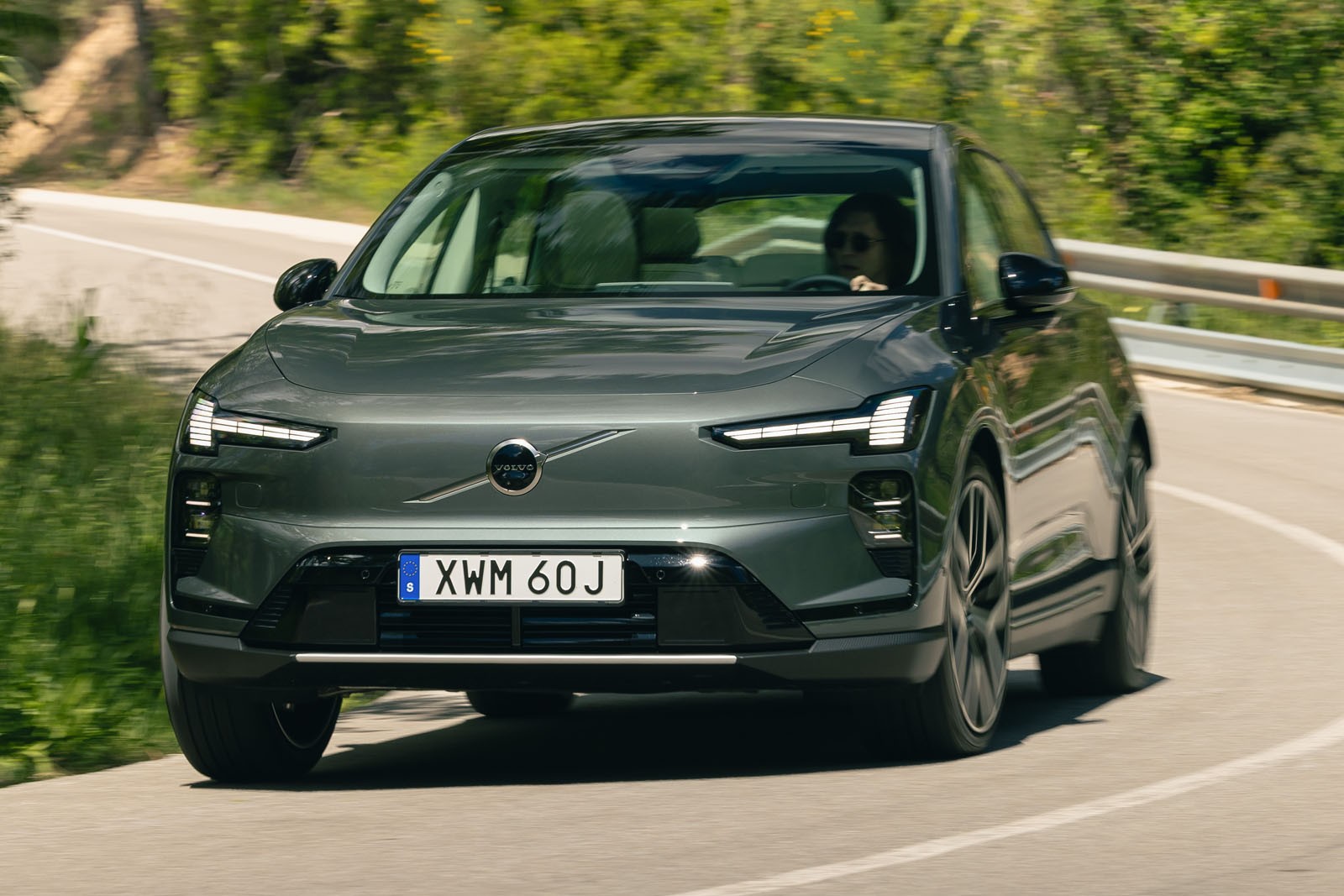
The EX60 matters.
Not just another metal box with wires, but the electric shadow of Volvo’s most successful product ever. The XC60 brought the crowds to dealerships for years, dragging in buyers with that quiet, Scandinavian promise. The EX60? It keeps none of that combustion engine soul. It doesn’t even look much like the ICE model, because imitation is the fastest way to failure in 2026 EV land.
Instead, we get the SPA3 platform.
If SPA2 was a rocky debut, plagued by unfinished software and hardware teething pains for the EX90 and Polestar, then SPA3 is Volvo’s attempt to fix its own mess. Hopefully, it worked this time.
Battery science, simplified
The battery construction is where the engineering gets dense, though Volvo tries to sell it as “cell-to-body.” Don’t get too excited by the terminology. The nickel-manganese-cobalt prismatic cells aren’t modular. They aren’t loose, either. They live in a large metal box. Cell-to-pack is more accurate, honestly, but it provides serious structural stiffness to the chassis and can still be removed.
Volvo has tied battery capacity directly to motor outputs, stripping away the confusion of multiple trim choices for each powertrain.
- The P6 : Smallest battery, 83 kWh (nominal 80 kWh). A single rear motor pushes 369 bhp. Range? Up to 380 miles.
- The P10 : Steps up to 95 kWh. Dual motors now—a 268 bhp asynchronous unit at the front and a 402 bhp permanent magnet sync at the back. Total output hits 503 bhp with up to 410 miles of range.
- The P12 : The peak. Same motor hardware as the P10 but better cells allow more energy flow. Output jumps to 671 bhp from a 117 kWh battery. Range stretches to an impressive 503 miles.
No technical limitation forced these bundles. Just a desire for a simpler shopping list.
Less screen, more life
The interior philosophy is clear.
Minimalist, yes, but not the sterile kind of minimalist that recent Mercedes offerings peddle. It feels homelier, thanks to layers of wood, fabric, and leather-like material that actually suggest warmth rather than plastic indifference. The quality feels distinctly above BMW, even if the first glance looks plain. There are hidden storage cubbies everywhere, and—bless them—a mechanical button to open the central glovebox. Not a touch gesture. A button.
Four physical window switches. Actual steering wheel buttons.
These are signs of sanity returning to Stockholm. Annoyingly, you must still adjust your mirrors and steering wheel via the touchscreen. But we can’t expect a full resurrection overnight.
The steering wheel itself is small, slightly weirdly shaped, but pleasant to hold. Why so small? Because the digital instrument cluster is pushed back to the far end of the dash. Like in BMW’s iX3, this reduces eye refocusing distance. Makes a head-up display mostly redundant. A smart trick, though the execution feels a bit clinical.
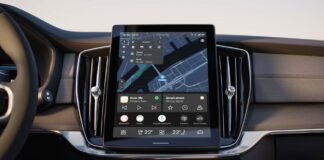
Speaking of screens, the center display is finally in landscape orientation. Landscape makes sense. It leaves room for permanent climate controls and shortcuts, finally acknowledging that vertical screens were a fad based on form over function.
The software? Much improved. It works logically and fast, a direct development from the EX90 base. Apple CarPlay and AndroidAuto arrive weeks after launch, which feels like an unnecessary hurdle. The Google Gemini AI voice assistant is genuinely capable for navigation and charger searches, but it chokes on obscure settings or complex queries. It’s a helper, not a genius.
Space and storage
Perception is reality inside the cabin, and Volvo plays both sides of this coin. The light colors help, as does the standard glass roof, but the real magic is structural. The battery is low—literally the floor of the car—so seating positions feel natural. No diving into the cockpit. The boot is low, with a deep well. There’s even a frunk. Not huge, 58 liters, but it’s there.
The seats remain outstanding, a standard fit. Sit in one. Press the brake. Pull the stalk into drive. You go.
At least, that’s the plan.
The phone-as-key function on my test car demanded that Bluetooth be toggled off and on before recognizing my phone. Volvo blames Apple, offering a plastic puck and card as backup, but it smells of the same connectivity misery found in SPA2-era Volvos and the Polestar 3. It persists. Disappointing. A traditional key comes later, which implies it should have been job number one. Not an afterthought.
Drives like a Volvo, which is the point
Once you start it, the driving experience settles in. Quiet. Serene.
Adjust regeneration levels or the auto-crawl feature via the screen—no paddles needed—but everything feels smooth. Progressive. The P6 is usefully brisk for city work, while the P10 offers push-back-in-the-seat speed without being aggressive.
Efficiency is surprisingly strong.
- P6 Observed: 4.0 miles/kWh
- P10 Observed: 3.6 miles/kWh
I didn’t drive the P12. Its 671 bhp feels excessive for a car that explicitly avoids being a “driver’s car.” Volvo aimed for predictable. Controllable. Comfortable. And they nailed it.
The steering gives no feedback. Light. Filtered. But precise, weighted consistently, and paired with massive grip. The neutral balance wants to rotate, though a cautious traction control system constantly threatens to smother the fun. The iX3 feels more involved, but let’s be honest: that’s the difference between BMW’s intent and Volvo’s.
Is it engaging? Sure.
The ride quality is where the Swedish road engineers shined. Adaptive dampers make even rough Spanish tarmac feel flat, absorbing bumps with silence. The passive setup gets tripped more often on uneven surfaces, but remains settled enough to lull you into sleep. They actually tested this in the UK, realizing that if the ride survives British roads, it survives everywhere. My hopes are high.
Value or overkill?
Pricing starts at £56,865 for the single-motor P6 Plus. Well-equipped right out of the box. Step up to Ultra, and you’re adding Bowers & Wilkins, dimming roof glass, and adaptive lighting for almost £6,000 extra. Seems steep.
At only £3,000 more than the entry price, the dual-motor P10 offers much better value proposition. Add another £5,000 to the P10 and you wait a year for the 671 bhp, 500-mile P12 beast.
The P10 will likely move the most metal. Yes, the iX50 offers more range—410 miles here vs over 500 there—but for similar specs, the Volvo costs slightly less on purchase and significantly less on finance.
Charge speeds are healthy:
* P6: 320 kW
* P10/P12: 370 kW
Real-world numbers from my trip suggest both P6 and P10 variants deliver 320–330 miles comfortably. That’s not a figure that makes you hunt for chargers every morning. It just gets on.