You know the drill. Stuck at a red light, you hear a whir. Your heart skips a beat. Is that the A/C compressor? Is it a failing serpentine belt? You glance at the car next to you. It looks like it’s held together with duct tape and hope. You decide it’s definitely their car.
This is the classic driver’s rationalization loop. We do it with every rattle, every odd smell, every sudden shudder. The car jerks? Blame the potholes. The engine smells strange? Blame the nearby industrial park. The check engine light turns on? It’s just a loose gas cap, right?
We tell ourselves these stories because the alternative is terrifying. A dead engine means missed work, missed deadlines, and money bleeding out of your wallet. It’s a financial panic attack dressed up as a mechanical issue. So we turn the radio up. We ignore the dashboard. We hope.
But ignoring the symptoms doesn’t make them go away. In fact, it often makes them worse. Here is what those scary signs actually mean, and why you need to stop pretending everything is fine.
What the Check Engine Light Actually Tells You
The check engine light (or MIL, Malfunction Indicator Lamp) is not just a generic “something is wrong” signal. It is a diagnostic tool. When it illuminates, it is usually because the Engine Control Unit (ECU) has detected a fault in one of the monitored systems.
Common culprits include:
- Oxygen sensor failure : A faulty O2 sensor tells the ECU the air-fuel ratio is off. This hurts fuel economy and increases emissions.
- Loose or missing gas cap : This is the most benign cause. The evaporative emissions system detects a vapor leak and triggers the light. Tightening the cap often resolves it within a few cycles.
- Catalytic converter issues : If the light stays on after other fixes, the cat may be clogged or failing. This is an expensive repair, which is why you shouldn’t ignore the warning.
“The check engine light is a warning, not a verdict. It gives you time to react before a minor issue becomes a major breakdown.”
Ignoring it can turn a $20 part replacement into a $1,500 head gasket job. The light is there to save you money, not to scare you. Listen to it.
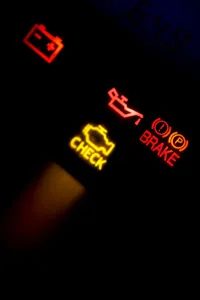
Dashboard Lights: The “Good Morning” Check
When you turn the key, the dashboard erupts. Every light you own goes on. It’s a carnival of reds, ambers, and yellows. Audra Fordin, writing for “What Women Auto Know,” calls these the “hello, good morning” lights. The car’s computer is running a self-test. One by one, they should extinguish. If they do, you are good to go.
If they stay on, the mood shifts. The lights are wired to sensors monitoring every mechanical function in the vehicle. When a sensor detects an anomaly, the computer flags it. It cannot speak. It is not KITT. It simply glows.
Three lights demand immediate attention:
- Check Oil / Oil Level Low
- Oil Pressure Low
- Check Engine
The Check Engine light is the wildcard. It covers a massive spectrum of issues. One end of the spectrum is a loose gas cap. The other end is pistons exiting through the hood into the stratosphere. You will not know which one you have just by looking at the bulb.
You need data. A scan tool is the standard method. It looks like a bulky calculator and plugs into the OBD-II port, usually under the dash. You tell it to scan, and it talks to the car’s ECU to retrieve the specific error codes triggering the lamp.
You can buy a basic OBD2 reader for under $100 at any auto parts store. But having the tool does not mean you will crawl under the hood to fix it. You will likely need a professional. A technician at a service station will run the scan, interpret the codes, and identify the root cause.
Jerking, Surging, and Stalling
The “Jerk” is not a dance move. It is an engine failure mode.
Driving should be smooth. It should feel like ballet, not a pop-lock session. If your car is surging, stalling, or jerking forward unexpectedly, the engine is struggling.
Common culprits include:
- Fouled spark plugs
- Clogged fuel lines
- Blocked fuel filters
- ECU calibration errors
The danger lies in context. If your car hesitates to accelerate or cuts out while you are merging onto a busy highway, you are creating a hazard. Other vehicles are barreling down behind you. They are not going to slow down because your transmission is slipping.
Uncontrolled acceleration or high revving at idle are equally alarming. These are not quirks; they are symptoms of a failing system. A qualified technician needs to investigate these issues immediately.
Preventive maintenance is your best defense. Sticking to recommended intervals for oil changes and belt replacements keeps the engine components clean and functional. It keeps you out of the danger zone.
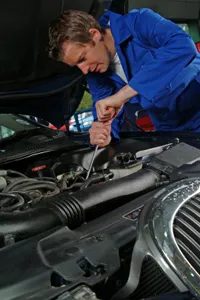
Decoding the smoke: What color tells you what’s wrong
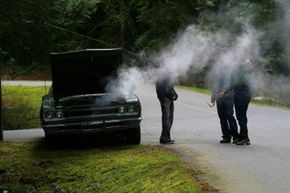
Smoke rising from under the hood isn’t just bad for your resale value. It’s a diagnostic signal. The color is the key.
White smoke usually means coolant is getting into the engine. Steam is the harmless version. Thick, persistent white smoke that smells sweet? That’s antifreeze burning in the cylinders. It’s often a blown head gasket. That is a major repair. If the smoke lingers after the engine warms up, pull over. Continuing to drive can warp the cylinder head. The metal expands unevenly when it’s hot and wet with water. You want to avoid that.
Blue smoke is oil. It’s being burned as fuel. It can come from worn valve seals, worn piston rings, or a leaking valve cover gasket. A little blue smoke on cold starts is normal. The oil condenses on cold metal and burns off quickly. If the blue smoke continues at cruising speed, or if you see it puffing out the tailpipe when you accelerate, you have a wear issue. It’s not an immediate “stop driving” emergency like the white smoke, but it needs inspection. You’re losing oil. Eventually, you’re going to knock a bearing.
Black smoke is rich fuel mixture. Too much gas, not enough air. It’s bad for your catalytic converter and the environment. It often points to a clogged air filter, a failing mass airflow sensor, or a stuck fuel injector. It’s not as catastrophic as the other two colors, but it kills your fuel economy and fouls the exhaust system.
How to tell if it’s steam or coolant
Here is the trick. Steam from a hot exhaust manifold or a turbocharger is thin and dissipates quickly. It’s water vapor. It’s harmless. Coolant smoke is thicker, often smells sweet, and doesn’t go away as the engine reaches operating temperature.
Another test: pull the dipstick. If the oil looks like chocolate milk, coolant has mixed with the oil. Stop driving. Now. That is a head gasket failure. The piston rings are contaminated. The engine is essentially cooked.
Why smell and sound matter more than the dashboard light
The check engine light is a general alarm. It doesn’t tell you where the fire is. Smoke and smell do. They give you location and type.
A burning smell from the front of the car is usually a belt. The serpentine belt drives the alternator, power steering pump, and A/C compressor. If it’s frayed or glazed from heat, it will snap. When it snaps, your power steering dies and your battery stops charging. You’ll be on the side of the road. It’s cheaper to replace the belt now than to tow the car later.
A smell of gasoline in the cabin is a leak. It’s in the fuel lines, the fuel rail, or the vapor canister. It’s a fire hazard. Don’t ignore it. The vapor pressure in the fuel system is high. A tiny leak creates a cloud inside the car. One spark from a static shock or an electrical fault and you have a problem.
Where to go when you’re stuck
If you can identify the source, you can communicate it clearly. “I smell burnt rubber from the front left, and I see blue smoke when I accelerate.” That’s better than “My car smells bad.”
Mechanics charge by the hour. If you can narrow down the problem, you save them time. They can pull the relevant component and check it first. If you just say “something’s wrong,” they’re going to do a general inspection. That costs more.
The goal isn’t to become a mechanic. It’s to be a better customer. You know your car better than the service writer. You know what it sounded like yesterday and what it sounds like today. Use that.
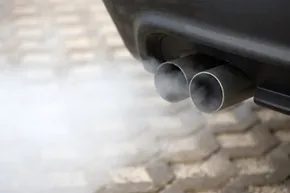
Why White Smoke Turns into Hood Venting
If that white plume from the exhaust didn’t stop, the problem likely migrated under the hood. Water mixed with fuel usually signals a head gasket breach or cracked engine block. Ignoring that early warning leads to a rapid temperature spike. You end up with steam escaping from the radiator cap or pressure relief valve. It smells like sweet syrup. That is antifreeze boiling off.
Identifying the Source of Blue Smoke
Blue smoke indicates oil ingestion. Piston rings, valve stem seals, or the PCV system have failed. The engine is literally eating its lubricant. Checking the dipstick confirms this. Low oil levels combined with blue exhaust mean internal wear. You can top off the crankcase to buy time. Doing so regularly will not fix the mechanical failure. It just delays the catastrophic seizure.
How to Differentiate Between Condensation and Coolant Leaks
Morning white smoke that disappears after ten minutes is harmless condensation. It happens in cool weather. Persistent white smoke, especially if it smells sweet, means coolant is entering the combustion chamber. Check the coolant reservoir level. It drops without visible external leaks. That confirms internal mixing. The engine overheats because the cooling system loses its fluid.
Which Repairs Address Tailpipe Smoke Issues
Seal replacement fixes blue smoke. Head gasket replacement fixes persistent white smoke. These are labor-intensive jobs. They require disassembling part of the powertrain. Cost depends on engine type. A simple valve stem seal job costs less than a full head gasket and valve resurface. Never ignore the color. It is the only diagnostic tool the engine gives you for free.