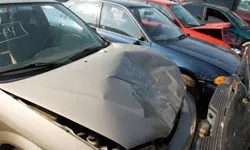
You see it. The exact year. The exact trim. Maybe it’s a rusted-out 911 with a cracked hood or a pristine 300ZX with a story too dark for the listing image. The price is suspicious. It’s too good to be true. You scroll down. You see the words you’ve been taught to fear: salvage title.
Your heart drops. Then it skips.
A salvage title isn’t just a bureaucratic stamp. It’s a scar. In most states, this designation means the car was damaged, recovered from theft, or written off as a total loss by an insurer. Depending on where you live, this paper trail might stop you from ever registering the vehicle. It might block you from buying it outright. Or, it might just be a red herring—a paper glitch that has nothing to do with whether the car drives safely.
Every state has its own twisted logic on what constitutes a “salvage” status. But the reasons behind the title usually fall into familiar categories. Some are safety nightmares. Others are financial decisions made by insurance adjusters who care about their bottom line, not your safety.
Here is the reality of buying a car with a salvage title.
The Math Behind the Totaled Car
When people hear “totaled,” they imagine a pancaked sedan. Smoke. Airbags deployed. A crane needed to lift the wreckage.
Reality is often quieter.
An insurance company declares a car totaled not because it’s unreadable, but because it’s uneconomical. The repair bill exceeds a specific percentage of the car’s actual cash value. In many jurisdictions, that threshold sits around 75 percent. If fixing a dented bumper and a blown headlight costs $8,000 and the car is worth $10,000, the insurer walks away. They pay you the market value. They take the wreck to auction. You, the buyer, pick up the pieces.
This is where the salvage title becomes a critical warning flag.
Modern cars are plastic-heavy and sensor-laden. A minor rear-end clip can trigger airbag systems, damage crumple zones, and confuse ADAS cameras. The cost to fix these “minor” issues skyrockets. Even if the car looks cosmetic perfect after a rebuild, the structural integrity might be compromised. The frame could have subtle bends that a laser-aligner missed, or worse, a frame that was welded rather than replaced, weakening the chassis in a high-impact zone.
Insurance companies often use aftermarket parts to cut costs. These “alternative components” are supposed to meet Original Equipment Manufacturer (OEM) standards. In theory, a replacement fender is a fender. In practice, fitment can be off. Paint match can be suspect. Sensors might not calibrate correctly.
If you are buying a salvage vehicle to fix it yourself, you need to know exactly what broke. Did it hit a tree? Did it hydroplane? Did someone hit it while it was parked? The story matters. The repairs matter more.
Stolen and Recovered
A car doesn’t need to crash to get a salvage title. It just needs to disappear.
When a vehicle is stolen, the owner files a police report. The insurance company writes off the loss. Then, miracle of miracles, the car is found. It’s parked three towns over. It’s covered in mud. It’s missing its stereo. Or, it’s been stripped for parts and dumped in a field.
When this happens, the title status shifts. It becomes a salvage title.
Why does this matter? Because theft isn’t passive. A thief doesn’t just drive the car away. They hotwire it. They bypass alarms. They often strip electronics or damage ignition systems in the process. The battery is likely drained to death. The starter might be shot. The keys might not work anymore.
And if the car was recovered after being driven recklessly to escape law enforcement? The engine might have been redlined for miles. Transmission fluids might be burnt. Tires could be bald. The interior might have been tossed.
Sometimes, a recovered car is in perfect shape. You buy it cheap. You get a steal. But you never know for sure unless you have a full service history and a mechanic who trusts nothing and verifies everything.
This is only the beginning. The title on the door doesn’t tell the whole story. What happened next? Did it get fixed properly? Or is it sitting in a yard waiting for another buyer who doesn’t ask questions?
The Hidden Damage of Floods and Fires
Not all salvage titles come from collisions or theft. Some come from the elements.

A vehicle in America gets stolen every 33 seconds. That’s the statistic from 2010, and it paints a clear picture of how quickly insurance companies have to move. When their clients lose their keys and their ride, insurers often step in to get them back on the road fast. This speed leads to the second most common reason your dream car might arrive with a salvage title. It wasn’t crashed. It was stolen.
Not every stolen car ends up branded. If police recover the keys and the car within hours, they just hand it back. Simple. But if the car vanishes for weeks or months, the insurance company has likely already paid off the owner and issued a replacement vehicle. That original car? It’s now a total loss on paper. Even if it’s found later, sitting intact, it carries the stigma of being written off due to an accident. It gets titled as a salvage vehicle because, to the insurer, it was a loss.
“The car, when recovered, is then titled as if it had been written off due to a totaling accident.”
A salvage title for a non-damage reason like theft can often be upgraded. If the car is recovered and undamaged, the owner can usually apply for a rebuilt title. This designation lets you drive it legally again. The process usually just requires a state safety inspection. But don’t get too comfortable. Rules vary wildly from state to state. Some states make it easy. Others treat a recovered stolen car like a wrecked one.
If you see a salvage-title car and the seller claims it was stolen, ask why it hasn’t been retitled yet. Good business practice means fixing the paperwork before listing the asset. If they can’t explain the delay, there’s likely a hidden problem. Maybe it was stolen, recovered, and then stolen again. Maybe parts were stripped. Maybe it’s junked.
The Natural Disaster Angle
Earthquakes and hurricanes don’t just destroy buildings. They wreck cars. Picture a vehicle flipped onto its roof by a massive tremor. Or one that spends 24 hours bobbing in hurricane surge. The damage is severe.
When disasters strike, the volume of claims overwhelms the insurance system. Insurers are supposed to pull these damaged cars from circulation. But human error and fraud exist. A car meant for the crusher can slip through the cracks. It ends up in the inventory of a used car lot.
The salvage title is supposed to be a warning label here. If a seller tries to pass off a flood-damaged car by lying and saying it had a salvage title from a simple theft, they’ll face tough questions. But water damage is sneaky. A thorough cleaning can hide mildew, rust, and electrical gremlins. Unscrupulous sellers profit by selling these cleaned-up disasters to unsuspecting buyers who think they’re getting a bargain.
If a car looks pristine but carries a salvage title and originates from a flood-prone region, be wary. Don’t trust the shine. Check the Vehicle Identification Number (VIN). A history report will show where the car has been licensed and if it has been flagged for flood damage. It’s the only way to know if you’re buying a car or a sponge.
When the Dealer Gets Hit Too
It’s not just homeowners who suffer. Dealerships sit on inventory. A warehouse full of new sedans or luxury SUVs doesn’t care if it’s raining. When a tornado touches down or a levee breaks, that inventory turns into scrap. The salvage titles issued to dealers can then leak into the market through auctions or internal sales, creating another layer of complexity for buyers looking for a deal.
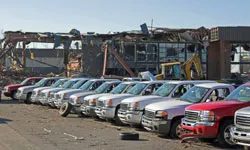
Salvage classifications often blur the lines between actual destruction and administrative convenience. Consider the flood scenario again, but twist the lens. A dealer’s inventory sits on a slope. The river rises. The bottom tier of sedans and SUVs goes under. The top tier stays dry. An insurance adjuster faces a logistical nightmare. Inspecting three hundred vehicles individually costs money. Time costs money. So, they cut a corner. They declare the entire lot a total loss.
This is a broad-brush write-off. It isn’t about individual damage assessment. It’s about risk mitigation for the insurer. The cars at the top? They might be pristine. Or they might have water wicking up through the floor pans from the lower levels. You can’t see that from the outside. But on paper, they are now salvage property.
For the right buyer, this is opportunity disguised as bureaucracy. If you dig into the local weather reports from that specific date, you can verify the flood event. You can confirm the dealer’s location relative to the waterline. If a car was parked high enough to likely escape damage, you might buy it, repair minor cosmetic issues, and get a rebuilt title. The cost basis could be significantly lower than a clean-title equivalent.
But don’t get cocky. Insurance premiums on rebuilt titles often spike. You are paying for perceived risk. Plus, verifying the “high ground” theory takes work. You need records. You need proof. If the owner can’t show you why that specific VIN was spared in the initial write-off, walk away. The title history doesn’t lie, but it doesn’t tell the whole story either.
The Ghost in the Title: Unfinished Restitutions
A salvage designation is a starting point, not a tombstone. States categorize these vehicles differently. Some call them “repairable.” Others say “irreparable.” The difference matters. Repairable means you can fix it. Irreparable means it’s a parts donor or scrap metal.
If a vehicle falls into the repairable bucket, the path to a rebuilt title involves passing a state safety inspection. This is where the bureaucratic maze gets tricky. Inspections vary wildly. New York might demand a multi-point structural check. California might just want to see that the brakes work. You need to know your state’s specific regulations before you buy a salvage-to-be car. Guessing is expensive.
Now, consider the car you’re looking at. It has a salvage title. It looks restored. Paint is fresh. Interior smells new. But the title hasn’t been switched to “rebuilt” yet. Why?
Maybe the previous owner is lazy. Maybe they didn’t understand the process. Simple mistakes happen. But often, an unfinished title signals a hidden problem. Maybe the repairs didn’t pass inspection. Maybe there’s hidden rust that the new paint covers up. Maybe the seller is trying to offload a car that failed the state’s rigorous safety standards.
Ask for the inspection records. Ask for receipts. If the seller shrugs and says, “I just haven’t gotten around to it,” be skeptical. A clean title is a promise of history. A pending rebuild title is a question mark. And question marks in car buying are usually red flags.
Aftermarket Components: The Unseen Variables
When you’re digging into a salvage vehicle’s history, the physical modifications matter just as much as the title status. Aftermarket components can complicate insurance, inspections, and even resale value.
Think about the suspension. If a salvage car was repaired with non-OEM parts that aren’t street-legal in your state, you’ll fail inspection. Period. No debates.
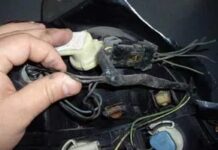
Then there’s the electrical system. Salvage repairs often involve splicing wires, rerouting harnesses, or bypassing modules. If the previous owner installed a high-output audio system or aftermarket lighting without proper fusing or integration, you’re looking at a fire hazard or a parasitic battery drain.
These modifications aren’t always visible. A quick visual check won’t catch a poorly spliced ground wire or a non-compliant exhaust modification. You have to look closer. Check for signs of recent work. Fresh tape on factory wiring? Mismatched panel gaps around custom lights? These are clues.
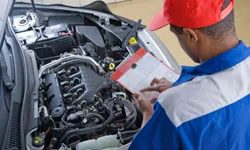
States have strict rules about vehicle titles, but sometimes the line between “restored” and “rebuilt” gets blurry. If an owner replaces a massive chunk of a car—a transmission, a floor pan, an entire engine block—the state might slap a rebuilt title or even a salvage title on the paperwork.
It’s not inherently evil.
If you’re hunting for that specific 911 with a swapped engine, an aftermarket part can be the hook that makes you pull the trigger. But before you sign on the dotted line, you need to understand the risks. Insurance companies get nervous. Safety inspectors get skeptical. And the previous owner’s wrench-turning skills? That’s a gamble.
Why Aftermarket Parts Complicate Ownership
Let’s be real. Some insurers look at a modified car and see a liability black hole. They don’t like covering vehicles that have been tuned to exceed factory speed limits or altered to perform outside their original design parameters.
The result? Higher insurance premiums.
You might find yourself paying significantly more just to keep your dream car on the road. If you’re in a state with strict emissions testing, it gets worse. An aftermarket exhaust or engine swap that increases noise or greenhouse gas output can prevent registration entirely.
“Components installed by the car’s current owner may only be as good as that owner’s mechanical skills.”
This is the critical point most buyers miss. You aren’t just buying the part; you’re buying the installation. Did the previous owner torque the bolts to spec? Did they seal the fluid lines properly? If you don’t understand the modification deeply, you’re buying a potential liability.
4: The Vehicle Is a Kit Car
You spot it at a car show. It looks like a 1960s Shelby Cobra. It sounds amazing. But something feels off. The panel gaps are uneven. The interior looks a bit… generic.
You’re likely looking at a kit car.
These aren’t just mods. They are replicas. Enthusiasts with serious mechanical chops build these from scratch using components supplied by specialized manufacturers. You get the look of a rare Porsche Speedster or a Le Mans racer, but the bones are often a donor car or a custom tub.
Builders pick and choose. They mix and match. The result is a unique vehicle that looks like a classic but might be running on 1990s-era electronics and a modern V8.
The Titling Headache
Here is where it gets tricky. States treat kit cars with suspicion.
Unlike a salvage car, which is inspected primarily for safety, a kit car faces a dual burden. It must pass safety inspections to be roadworthy. But it also undergoes scrutiny to ensure none of the parts were stolen.
If you are buying a kit car, the title history is your first red flag.
- Clean Title: The seller has done the legwork. Inspections passed. Registration is current. This is ideal.
- No Title: Walk away. Or at least start asking very hard questions.
- Salvage Title: Proceed with extreme caution. This suggests the car was previously declared a total loss or had significant structural issues.
A responsible seller will have the paperwork in order. If they don’t, assume something amiss. The burden of proof shifts to you.
3: The Car Is Being Sold for Parts Only
Sometimes a car is dead. Or close to it. The engine is seized. The transmission is toast. The frame is bent beyond repair.
But the body is pristine. The interior is mint.
This is where parts cars enter the market. For enthusiasts, these aren’t junkers. They are harvesters.
If you are restoring a rare model, finding a donor car with a matching-numbers engine or an undamaged interior can save you thousands. You aren’t buying a drivable vehicle. You are buying a parts bin with four wheels.
This changes the entire dynamic of the purchase. There is no test drive. There is no check of the transmission fluid. You are buying the potential of the car, not its current function.
Always verify the VIN on the chassis matches the title, even for a parts
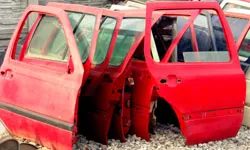
The Parts Car Gamble
Most states draw a hard line: if a car gets a salvage title, it doesn’t belong on the pavement. Some jurisdictions are even stricter. They declare certain vehicles structurally unsound, banning them from repair entirely. These cars are restricted to the scrap heap or the parts bin.
For the DIYer with a garage and a wrench, this is a goldmine. If your daily driver is older, rare, or just too old for OEM support, a “parts car” is a bargain. You get usable components for pennies on the dollar. The catch? The sale. In many states, only licensed rebuilders can buy salvage titles. You cannot just pick up a wreck and drive it away. Check your local DMV laws first.
If you clear that hurdle, the logistics get tricky. You can’t tow a non-running wreck to your house without a flatbed or trailer. And your HOA or city code might frown on a rusting hulk in the driveway. Do you have the space to strip it? The tools to clean the parts? A plan to store them without them becoming a neighborhood eyesore? Think it through. Otherwise, you’re just storing junk.
The Owner Who Refused a Total
Not every salvage title comes from an insurance adjuster’s calculator. Sometimes the owner just refuses to let the insurer write it off. They love the car too much. They’d rather patch it up than get a check for a new vehicle.
This happens for a few reasons. Maybe they’re tired of filing claims. Maybe they think they can sell the damaged car themselves for more than the insurer’s payout. Or maybe they just have a sentimental attachment that overrides financial logic. The result? The car gets a salvage title, regardless of whether it’s actually roadworthy.
When you see a salvage title with this backstory, step back. Look at it like an insurance adjuster. How bad is the damage? Can you fix it for a reasonable price? Is the seller telling the truth? Owners who waive total claims often inflate the price. They know they saved themselves a hassle. Don’t fall for it. Negotiate hard. If you can’t make the numbers work for a roadworthy car, walk away [sources: Carfax, Ohio Department of Public Safety, Connecticut Department of Motor Vehicles].
Restoring the Past: Antique and Classic Revival
This is where the narrative shifts from damaged goods to hidden gems. A salvage title on a classic car doesn’t always mean “crushed.” It often means “restored.”
Enthusiasts buy these cars to bring them back to life. The title is just paperwork. The car might have been in a fender-bender, or maybe it sat in a barn for thirty years. Either way, the salvage designation is a starting point, not an end.
The key here is provenance. Who restored it? Where did they source the parts? Is the work documented? A well-documented restoration on a salvage-title classic can be worth a premium. A sloppy job? It’s a headache waiting to happen.
Check the frame. Look for welds that look amateur. Test the engine compression. Don’t trust the seller’s word alone. Even if the car looks beautiful, the history might be muddy. A clean title on a barn-find is one thing. A salvage title on a restored classic is another. You need to dig deeper.

The romance of the barn find is real. You picture a rusted shell in a field, a dreamer with a wrench, and years of sweat turning metal back into glory. That narrative sells well. It also hides a legal trap.
Many of these stories end in paperwork nightmares. The original title? Gone. Long gone. Even if you hold the paper, the car itself might be a Frankenstein build. You might have swapped the block, moved the transmission, and grafted a different body onto the chassis. Your state’s DMV doesn’t care about the romance. They care about the VIN. And if that number doesn’t match the paperwork, you’re stuck.
Prove Ownership with Paper Trails
Here is the rule that saves headaches: get bills of sale for every major component.
Don’t just buy the car. Buy the proof. If you pick up a donor motor, get a receipt. If you buy a donor chassis or a body shell, demand a bill of sale for that too. These documents create a collective chain of custody. When you finally stand in line at the registration office, that stack of receipts is your shield. It proves you own the pieces that make up the whole. Without it, you’re just guessing.
Know Your State’s Restoration Laws
Regulations vary wildly across state lines. Some jurisdictions have specific pathways for custom or antique vehicle registration. Others treat a self-assembled vehicle like a new build, requiring rigorous inspections.
Before you start welding, check the local statutes. Look for processes that allow for a title issuance based on inspection rather than a lost original. It might save you from chasing ghosts. It might spare you a lengthy inspection process. A little research upfront cuts down the time until you’re actually driving.
Get bills of sale for every major component: body, chassis, motor, and subassemblies.
The Bottom Line
Restoring a classic is a labor of love. But the road to the garage is paved with legalities. Secure your paperwork. Understand the local laws regarding salvage title or rebuilt title vehicles if your project involves significant parts swapping. Don’t let a missing slip of paper keep you off the road.
For more context on the industry side of these issues, the following resources provide deeper dives into vehicle history and insurance trends:
- Carfax – Glossary of Terms
- Connecticut DMV – Salvaged (Totaled) Vehicles
- Lease Guide – Damaged, Flood, and Salvage Cars
- AutoBlog – Infographic on Car Theft Statistics
- Ohio BMV – Salvage & Self-Assembled Vehicle Inspections
- PARS Certified – Insurance Industry Trends
- QuinStreet Insurance – Rebuilt vs. Salvage Titles
- Salvage Title Cars – Theft Recovery Processes
- Texas DMV – Registering Custom or Antique Vehicles
The paperwork never ends. It just changes shape.