Modern vehicles are equipped with digital and mechanical safety nets. They have anti-lock brakes, automatic emergency braking, reversing cameras and radar sensors that monitor blind spots. It’s easy to fall into the trap of thinking that nothing bad can happen as long as you don’t drive on ice like an idiot. But what if the electronics fail? What happens if brake fluid leaks or the car accelerates on its own?
Douglas Adams’ advice still stands: Don’t panic.
Knowing how to respond will help you regain control. This requires preparation and a cool head. We divide this into two categories: mechanical failures and dangerous road conditions. Let’s start with mechanical nightmares that can send you towards a concrete barrier.
Brake failure at high speed
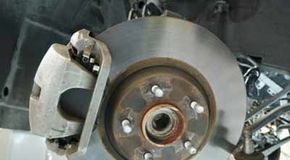
You see a red light. Or a stopped sedan. Or a sharp turn you didn’t take in time. You press the brake pedal and it feels like it’s touching the floor. Nothing happens. This is often caused by loss of brake fluid or worn brake pads. This should have been noticed during routine maintenance, but 30 mph over the limit doesn’t help being right.
First, don’t step on the gas pedal. You must have figured it out.
Check the pedal movement. Sometimes a water bottle rolls under the footwell and blocks the mechanism. Remove the obstacle. If the pedal moves but doesn’t resist, you need to use engine braking.
Drivers with a manual transmission, press the clutch and downshift one gear at a time. Switch to the second and then to the first. Don’t shift into first gear immediately unless you are seconds away from a collision. The engine speed screams and you might damage the transmission, but a rear bumper crash is even worse.
Drivers with automatic transmissions can also downshift. Most modern vehicles allow the transmission to be placed in L or downshifted manually with paddle shifters. You don’t need a switch for this. In an emergency, you can skip gears. It might ruin your transmission, but it will save your life.
Finally, use the emergency brake. Also known as handbrake or parking brake. It’s called that for a reason. It doesn’t offer the same stopping power as hydraulic brakes, and if you pull too hard, you’ll end up skidding. Use it in conjunction with the engine brake to bring the car to a complete stop.
Dealing with runaway acceleration
Every few years there are reports of a car that takes off like a rocket without any driver intervention. These are typically manufacturer recalls, which means there is likely a solution for your model. But if it happens to you, what is the acceleration protocol?
First make sure the pedal is not stuck. The floor mat can get stuck under the gas pedal or the pedal itself can get stuck. If it gets stuck, pull it back up by wedging your right foot under it. Use your left foot to apply the brakes. This is a two-foot operation.
If the pedal moves freely, but the car continues to accelerate, the problem is probably with the electronics or a vacuum leak. Shift into neutral. This separates the engine’s power from the wheels. Now press the brake pedal firmly and continuously. The car is slowing down.
If the brakes fail while in neutral, you have one last option: turn off the engine.
If the vehicle is push button start, press and hold the button for three seconds. This forces the ignition to turn off. If you have a traditional key, turn it to the “Off” position. Do not pull the key out completely. If you completely remove the key, the steering column will lock and you will not be able to steer the vehicle while it is still in motion.
With the engine off, you lose power steering and brake assist, but you can still steer and use the mechanical brakes to stop. Keep your eyes on the road. Look for a soft shoulder. Let the car stop.
The First Few Hours of Rain Are the Most Dangerous
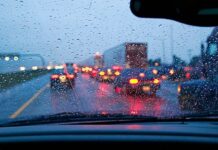
If the sky has been clear for a week, your local roads are likely coated in a thin, invisible layer of oil. It’s not just dirt. It’s gasoline residue, tire rubber, and atmospheric grime settling into the asphalt. When rain finally breaks the drought, that oil doesn’t just vanish. It turns into a slippery emulsion.
This mixture creates a hazard zone. The first hour or two after the downpour starts is when your tires have the least grip. The oil is still there, suspended in the water, turning your commute into a slide. You need to slow down. Not “a bit” slow. Significantly slower. Avoid sudden braking. A sharp tap on the pedal is all it takes to break traction.
There is a specific mechanical failure you need to understand here: hydroplaning.
This isn’t just splashing. It’s a loss of physical contact between the tire tread and the road surface. Water builds up faster than the tire’s grooves can channel it away. The tire rides on a wedge of water. You are literally floating. Steering becomes useless. Braking becomes useless. You are a sled on a sheet of ice, but the ice is liquid.
How do you escape hydroplaning if it catches you?
Do not slam the brakes. That locks the wheels and guarantees a spin. Ease off the accelerator. Let the car slow down naturally. Keep the steering wheel straight. Pointing the wheels at an angle while you have zero traction will send you into a skid you can’t recover from. It feels counterintuitive to drive straight toward a puddle or an obstacle, but regaining friction requires linear momentum. As the water speed drops below your vehicle speed, the tires bite again. The car stabilizes.
Snow Demands Patience and Rhythmic Braking
Snow changes the game. The primary enemy isn’t just sliding; it’s inertia. If your car is parked in snow and won’t move, listen to it. It’s telling you to stay put. If you force it, you’re just digging a hole.
Assuming you can get moving, the rules shift slightly. Traction is low, but it’s not non-existent like in hydroplaning. You still have rubber on pavement. You just have very little of it.
If you start to skid, lift off the gas. Straighten the wheel. Let the car straighten out before you think about accelerating again. Speed is your enemy. On a snow-covered road, high speed means you have less time to react to a patch of ice or a hidden dip.
Your braking technique depends entirely on your hardware.
If you are driving an older vehicle without Antilock Braking System (ABS), you need to pump the brakes. Press and release. Press and release. This mimics the threshold of lockup, keeping you rolling without skidding. If you stomp on the brakes, the wheels lock, and you become a brick sliding down a hill.
If you have ABS, the system does the pumping for you. It modulates brake pressure hundreds of times per second. You don’t need to pump. You just need to apply firm, steady pressure. Let the computer handle the rhythm.
The Invisible Threat of Black Ice
Freezing rain is arguably the most treacherous driving condition you will ever face. It happens when raindrops fall through a layer of air that is below freezing. The water becomes supercooled. It remains liquid until the moment it touches a surface that is 32 degrees Fahrenheit or colder.
Then it freezes. Instantly.
You don’t get slush. You don’t get accumulation. You get a clear, glass-like coating on the highway. This is black ice. It’s called “black” because you don’t see white snow. You see the dark asphalt. The only difference is that the asphalt has turned into a skating rink.
Can you see it coming? No.
You can’t see black ice until you are already sliding. The only clue might be the cars ahead of you. If their tires generate enough friction to melt the ice, they might leave a wet trail. But rely on that at your peril. Assume every bridge, overpass, and shaded curve is coated in ice the moment temperatures drop near freezing.
Driving on ice requires a complete rewrite of your muscle memory. Brake long before you think you need to. Gentle inputs only. If you feel the rear end step out, do not panic. Do not jerk the wheel. Lift off the gas. Steer into the skid if necessary, but primarily, focus on maintaining straight-line travel until the car slows enough for the tires to find purchase.
It is surprisingly easy to lose control on ice. It is surprisingly hard to regain it once you’re spinning.
The Best Option Is Often Not Driving
There is a reason this advice repeats itself. The most effective safety measure for driving in freezing rain, heavy snow, or severe hydroplaning risk is to not drive at all.
Stay home. Make tea. Watch the storm pass.
You might miss a meeting. You might miss a movie. You might miss a party. But your car will survive. Your insurance premiums won’t spike. You will wake up without a hospital bill or a tow truck receipt.
The road will still be there tomorrow. It won’t be there if you lose control on a patch of black ice at 60 mph.