You know that sinking feeling when you load your hatchback with too many bags of mulch? The rear squats down. The nose lifts up. Your suspension groans. You stop. It’s obvious.
Do the same with a full-size pickup? You might not notice much until you’re hauling actual cargo. The frame is stiffer. The springs are tougher.
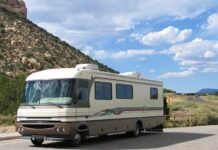
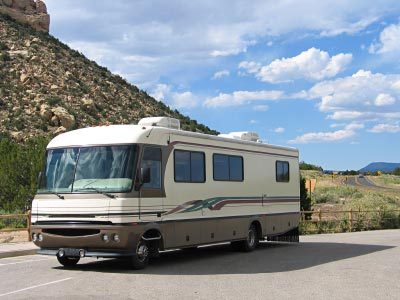
Now imagine loading a massive fifth-wheel RV. You could park a small sedan in there and barely feel it. Why? Because these rigs are built to carry weight. But here is the trap: most drivers assume “big vehicle equals infinite space.” It doesn’t. There is a hard limit.
How do you know when you’ve crossed it? You need to calculate the RV cargo carrying capacity.
It’s not a guess. It’s math. And if you skip it, you’re playing Russian roulette with your brakes, tires, and frame.
The Math Behind the Limit
The magic number is called the cargo carrying capacity, or CCC. This is the maximum weight of all your gear, food, water, propane, and passengers that the RV can safely carry.
Here is the formula. Write it down. Memorize it.
-
Start with the GVWR.
This is the Gross Vehicle Weight Rating. It’s the absolute max weight the manufacturer says the vehicle can handle. Everything on it. Every bolt. Every person. -
Subtract the UVW.
This stands for Unloaded Vehicle Weight. It’s the weight of the RV as it rolls off the lot. But not empty. It includes a full tank of fuel, coolant, and oil. -
Subtract the SCWR.
Sleeping Capacity Weight Rating. Manufacturers assume every bunk holds a person weighing 154 pounds. Multiply that number by the number of sleeping spots. -
Subtract the Propane Weight.
LP gas isn’t air. It weighs 4.2 pounds per gallon. If your tanks are full, that adds up fast. -
Subtract the Fresh Water Weight.
Water is heavy. Roughly 8.3 pounds per gallon. A full tank is dead weight until you use it.
Let’s run the numbers on a theoretical 20,000-pound RV.
- GVWR: 20,000 lbs
- Minus UVW: 14,500 lbs
- Minus SCWR: 924 lbs (6 beds x 154 lbs)
- Minus Propane: 50.4 lbs (12 gallons x 4.2 lbs)
- Minus Fresh Water: 207.5 lbs (25 gallons x 8.3 lbs)
Result: 4,318.1 lbs of CCC.
That is it. That is your budget. You have 4,318 pounds to spend on everything else. People. Coolers. Bikes. TVs. Beer. If you go over, you’re violating safety standards. Period.
Where to Find Your Numbers
You can’t guess the CCC. You have to look it up.
Check your owner’s manual. Look at the door jamb sticker. Call the manufacturer. Most brands publish these specs online now, though hunting them down can be a chore.
Once you have the CCC, you can start filling the space. But how much space is “space”? That depends on the model.
Below are the cargo volumes for specific makes and models from the late 2000s. Note that these figures are in cubic feet. They tell you volume, not weight. You still have to do the math on the weight.
Acura Cargo Carrying Capacity
2006
* MDX: 81.5 ft³
* RL: 13.1 ft³
* RSX: 25.3 ft³
* TL: 12.5 ft³
* TSX: 13.2 ft³
2007
* MDX: 83.5 ft³
* RL: 13.1 ft³
* RDX: 60.6 ft³
* TL: 12.5 ft³
* TSX: 13.2 ft³
2008
* MDX: 83.5 ft³
* RL: 13.1 ft³
* RSX: 60.6 ft³ (Note: Listed as RSX in source, typically RDX/X5 context varies by region/model year, adhering to source text)
* TL: 12.5 ft³
* TSX: 13.2 ft³
2009
* MDX: 83.5 ft³
* RL: 13.1 ft³
* RSX: 60.6 ft³
* TSX: 12.6 ft³
Related Specs: GVWR, GAWR, GCWR, Curb Weight, Payload, Towing Capacity.
Audi Cargo Carrying Capacity
2006
* A3: 54.6 ft³
* A4: 13.4 ft³
* A6: 15.9 ft³
* A8: 14.6 ft³
* S4: 13.4 ft³
* TT: 24.2 ft³
2007
* A3: 54.6 ft³
* A4: 13.4 ft³
* A6: 15.9 ft³
* A8: 14.6 ft³
* Q7: 88.7 ft³
* RS4: 13.4 ft³
* S4: 13.4 ft³
* S6: 13.9 ft³
* S8: 14.6 ft³
2008
* A3: 54.6 ft³
* A4: 10.2 ft³
* A5: 16.1 ft³
* A6: 15.9 ft³
* A8: 14.6 ft³
* Q7: 88.7 ft³
* R8: 3.5 ft³
* RS4: 13.4 ft³
* S4: 13.4 ft³
* S5: 16.1 ft³
* S6: 15.9 ft³
* S8: 14.6 ft³
* TT: 8.8 ft³
2009
* A3: 54.6 ft³
* A4: 10.2 ft³
* A5: 16.1 ft³
* A8: 14.6 ft³
* Q7: 88.7 ft³
* R8: 3.5 ft³
* S4: 10.2 ft³
* S5: 16.1 ft³
* S8: 14.6 ft³
* TT: 8.8 ft³
Related Specs: GVWR, GAWR, GCWR, Curb Weight, Payload, Towing Capacity.
BMW Cargo Carrying Capacity
2006
* 325: 12 ft³
* 330: 12 ft³
* 525: 14 ft³
* 530: 14 ft³
* 550: 14 ft³
* 650: 13 ft³
* 750: 18 ft³
* 760: 18 ft³
* M3: 9.5 ft³
* M5: 14 ft³
* M6: 13 ft³
* X3: 71 ft³
* X5: 54.4 ft³
* Z4: 9.2 ft³
* Z4M: 10.6 ft³
2007
* 328: 11.1 ft³
* 335: 12 ft³
* 525: 14 ft³
* 530: 14 ft³
* 550: 14 ft³
* 650: 13 ft³
* **75
GM Storage Breakdown
Buick doesn’t just make sedans. They made haulers. The Rainier, a mid-size SUV that aims to bridge the gap between practicality and luxury, offering 80.1 cubic feet of space. Not bad for a crossover. But if you need to move a sofa, the Rendezvous has your solution at 108.9 cubic feet. The Terraza is larger at 136.5 cubic feet. For daily driving, the LaCrosse and Lucerne have 16 and 17 cubic feet, respectively. Then came the Enclave. It debuted in 2008 with 116.2 cubic feet, dropping to 115 cubic feet in 2009. This is Buick’s attempt to dominate the three-row segment.
Cadillac knew how to pack a trunk, even if the numbers don’t look like much on paper. Luxury sedans (CTS, DTS, STS and their high-performance V models) range in volume from 12 to 19 cubic feet. CTS and STS volumes range from 12.5 to 13.6 cubic feet. DTS will be extended until 18.8。 The XLR? Stylish 11.6 cubic feet. because style usually costs you space.
But the Escalade family is a real beast. The standard Escalade capacity started at 104.6 cubic feet in 2006 and increased to 108.9 cubic feet in 2007. The ESV version increased in length and capacity to 131.6 cubic feet and eventually 137.4 cubic feet. Introduced in 2009, the Escalade Hybrid offers 69.5 cubic feet of space. The SRX SUV has 69.5 cubic feet of comfortable seating for years to come. EXT pickup? Volume is not listed. Maybe the bed is a suitcase.
シボレーは でんでですです。 各广くに貨物ををををさんををさんますいでましででしまい。 225.1 cubic feet of space. Don’t try to beat it with a sedan. The capacity of the Suburban 1500 and 2500 is 137.4 cubic feet. The Tahoe is slightly smaller, with a capacity of 108.9 cubic feet. The TrailBlazer offers 80.1 cubic feet of space. The HHR Panel? A quirky 62.7 cubic feet. The HHR hatchback sat at 57.7. The Aveo 5, a small wagon, gave you 42 cubic feet. The Malibu MAXX is a surprising contender with a capacity of 41 cubic feet, up from the standard Malibu’s 15.4 cubic feet. TrailBlazer EXT は、107.4 立方フィートのしますしですおおおおおおおおおおおおおおおおおおおおおおおおおおおおおおおおおおおすかおおおすおおおするします. Of course, the Corvette’s trunk is still 22.4 cubic feet (later 11 cubic feet). The cargo capacity of the cargo in the cabin is not listed on the キロラド、シルレラド、アバランド truck. There is a bed. This is how the truck works.
Chrysler and Dodge Utility
Chrysler had the Town & Country. There’s a reason it’s the benchmark for minivans. In 2006, it had a capacity of 146.7 cubic feet. In 2007, its volume decreased slightly to 144 cubic feet, then 143.8 in 2008 and 2009. The PT Cruiser is a retro box that was 92.2 cubic feet in 2006 and 2008, and has dropped to 62.7 cubic feet in 2007 and 2009. Maybe the roofline was fixed at that time. The Pacifica started at 62.7 in 2006 and jumped to 92.2 in 2007. The 300 sedan settled at 15.6 cubic feet, jumped to 17.2 in 2008 and returned to 15.6 in 2009. The Aspen SUV has 102.4 cubic feet. The Sebring sedan is small, with a ride height of about 11.3 to 13.6 cubic feet. The Crossfire Coupe has a tight 6.5-7.6 cubic feet of space.
Dodge had the Grand Caravan. This is a family sized mover. Its capacity in 2006 was 167.9 cubic feet and remained stable at 144.3 cubic feet in 2008 and 2009. Sprinter vans are commercial. In 2006, the Sprinter Wagon 2500 had a capacity of 321 cubic feet, then 141.3 in later years. The Sprinter Van 3500 reached 247 cubic feet in 2006 and 371 cubic feet in 2007-2009. With a volume of 71.6 cubic feet, the Magnum Wagon is a passenger’s dream. The Durango SUV has 102.4 cubic feet. Ram Trucks lists the 1500, 2500 and 3500 as 41 cubic feet in capacity. Dakota has no capacity listed. Charger and Challenger sedan/coupe have 16.2 cubic feet. The small Caliber SUV has 48 cubic feet of space. The Nitro offers 75.6 cubic feet. Viper sports car? 6.8 to 8.9 cubic feet. small. They do it on purpose.
Why are these numbers important?
You might look at the CTS’s 12.5 cubic feet and think it’s cramped. It is. When you look at the Express’ 225.1 cubic feet, you might think that’s a lot. It is. These numbers define the intended use of the vehicle. Sedan chairs are for people. Trucks are used to transport goods. SUVs have a bit of both, but usually more. Although the Escalade Hybrid is smaller than the V8, hybrids don’t necessarily sacrifice space. The HHR Panel sacrificed passenger comfort for cargo. The Malibu MAXX sacrificed trunk space for rear headroom.
Where are these vehicles now? They are classics. They’re used cars. They are Navy survivors. Knowing the cargo capacity will help you buy the right used car. If you need to move a refrigerator, you don’t need to buy a sports car. If you need mulch, you don’t need to buy a sedan. The numbers don’t lie. The volume is fixed. Utility is how you use it.
What about GVWR? From Gaul? GCWR? These are different numbers. It refers to the vehicle’s weight, not its volume. The vehicle has 100 cubic feet of space and can carry up to 1,000 pounds. You can fill the space with feathers or bricks. Bricks can damage the suspension. Feathers just look stupid.
Encore, Encore GX? They came later. We focus on the years 2006-2009. The market has changed. Crossovers have swallowed SUVs. Sedan is dying. Minivans are a niche market. But the data is still there. This is a microcosm of American auto logistics. A time when size mattered. If you buy a truck that doesn’t have a trunk listed, it’s because it has a trunk. When you can buy a bigger van than a small apartment.
Is 16 cubic feet enough for lacrosse? For food, yes. On road trips, it’s barely okay. Is 137.4 cubic feet enough for the suburbs? For families it is. It can be for business. It depends on what you have with you. It depends on who you are.
Technical information is accurate. The purpose is clear. Nothing to do but drive.
Ford cargo capacity
Ford’s product range from 2006-2009 tells the story of diversity. They offer cars, trucks and SUVs at the same time. The numbers don’t lie. If you need something, you can see exactly how much space you get in the information below.
2006 Ford models
The Crown Victoria has a capacity of just 20.6 cubic feet. Big vans are a real means of transportation. The E-150, E-250 and E-350 Super Duty each offer 256.5 cubic feet of space. It’s amazing.
– Escape: 66.3 ft³
–Escape Hybrid: 65.5 ft 3
– Explorer: 85.8 ft³
–F-150:
37.8 cubic meters
– Five hundred: 21.2 ft³
– Focus: 40.2 ft³
– Freestar: 134.3 ft³
– Freestyle: 86.1 ft³
– Fusion: 15.8 ft 3
– GT: 1 cubic foot
– Mustang: 9.7ft 3
– Ranger: 18.1 ft3
–Taurus: 17 ft3
– F-250/F-350: Information not available
2007 Ford models
The edge is coming. It contains 69.6 cubic feet of space inside the frame. Expedition EL expands capacity to 130.8 cubic feet. The Explorer Sport Trac adds 44.4 cubic feet of space.
– Edge: 69.6 ft³
– Escape: 66.3 ft³
–Escape Hybrid: 65.5 ft 3
– Expedition: 108.2 ft³
– Expedition EL: 130.8 ft3
–
Explorer: 85.8 ft³
– Explorer Sport Trac: 44.4 ft. 3
– Five hundred: 21.2 ft³
– Focus: 40.2 ft³
– Freestar: 137.2 ft³
– Freestyle: 86.1 ft³
– Fusion: 15.8 ft 3
– Mustang: 9.7ft 3
– Crown Victoria/E-series/F-series/Ranger: Information not available or unchanged
2008 Ford models
The E-Series drops a few cubic feet, settling at 230.6 cubic feet. The Taurus X has 85.5 cubic feet of space. Focus information disappears from the record.
– E-150/E-250/E-350 Super Duty: 230.6 ft 3
– Edge: 69 feet 3
– Escape: 66.3 ft³
–Escape Hybrid: 66 ft3
– Expedition: 108.2 ft³
–
Expedition EL: 130.8 ft3
– Explorer: 85.8 ft³
– Explorer Sport Trac: 44.4 ft. 3
– Fusion: 15.8 ft 3
– Mustang: 9.7ft 3
– Ranger: 18.1 ft3
– Taurus: 21.2 ft3
– Taurus X: 85.5 ft 3
– F-150/F-250/F-350/F-450/Focus: Information not available
2009 Ford models
The Flex has a volume of 83.2 cubic feet. The volume of the Focus has been significantly reduced to 13.8 cubic feet. Expedition adds a tenth of a cubic foot.
– E-150/E-250/E-350 Super Duty: 230.6 ft 3
– Edge: 69 feet 3
– Escape: 66.3 ft³
– Escape Hybrid: 66.1 ft.3
– Expedition: 108.3 ft³
– Explorer: 85.8 ft³
– Explorer Sport Trac: 44.4 ft. 3
– Flex: 83.2 ft³
– Focus: 13.8 ft 3
– Fusion: 15.8 ft 3
– Mustang: 9.7ft 3
– Taurus: 21.2 ft3
– Taurus X: 85.5 ft 3
– F-150/F-450/Ranger: No data available
Accurate Ford data: GVWR, GAWR, GCWR, vehicle weight, payload, towing capacity.
GMC cargo capacity
GMC’s heavy duty trucks are still pretty solid. Savana Van is a workhorse. They haven’t changed much in 4 years. Acadia and Envoy offer different approaches to space.
2006 GMC Models
– Canyon: No information
– Envoy: 43.7 ft³
– Envoy XL: 23.4 ft 3
– Savana 1500/2500/3500: 225.1 cu.ft.
– Sierra 1500/2500/3500: Information not available
– Yukon: 63.6 ft³
– Yukon XL: 45.7 ft 3
2007 GMC Models
The Acadia arrived with a capacity of 19.7 cubic feet. The Envoy stops at 43.7 cubic feet. The Yukon has dropped slightly to 60.3 cubic feet.
– Acadia: 19.7 ft3
– Envoy: 43.7 ft³
– Savana 1500/2500/3500: 225.1 cu.ft.
– Sierra 1500/2500/3500: Information not available
– Yukon: 60.3 ft3
– Yukon XL: 45.8 ft 3
– Canyon: No information
2008 GMC Models
The Acadia was expanded to 25.5 cubic feet. The Yukon Hybrid is available now, but it’s only 16.9 cubic feet. There is not much space for luggage.
– Acadia: 25.5 ft 3
– Envoy: 43.7 ft³
– Savana 1500/2500/3500: 225.1 cu.ft.
– Sierra 1500/2500/3500: Information not available
– Yukon: 60.3 ft3
– Yukon Hybrid: 16.9 ft 3
– Yukon XL: 45.8 ft 3
– Canyon: No information
2009 GMC Models
Introducing the Sierra Hybrid. No data available. The rest remains consistent.
– Acadia: 25.5 ft 3
– Envoy: 43.7 ft³
– Savana 1500/2500/3500: 225.1 cu.ft.
– Sierra 1500/2500/3500: Information not available
– Sierra Hybrid: Information not available
– Yukon: 60.3 ft3
– Yukon Hybrid: 16.9 ft 3
– Yukon XL: 45.8 ft 3
– Canyon: No information
Detailed GMC data: GVWR, GAWR, GCWR, vehicle weight, payload, towing capacity.
ホンダの貨物積載量
ホンダはスペースを非常に効率的に利用しています。 オデッセイはミニバンの王様です。 シビックセダンは狭いですが、ハッチバックはスペースを与えます。 CR-Vとパイロットは残留
Jeep Utility and Storage Metrics
The Jeep lineup of this era tells a story of strength and durability. Looking at Jeep Grand Cherokee cargo capacity, between 2006 and 2009, the number has remained at around 67.4 cubic feet. This volume doesn’t change much, so it’s good if you want predictable space for your gear. The Commander sits directly above that, floating around 68.5-68.9 cubic feet, depending on the model year. This is a niche car and is usually overshadowed by the Grand Cherokee, but it offers a little more room for those who need it.
The Liberty is another constant. For two years, its volume has remained stable at 69 cubic feet. Then in 2008 and 2009, the number dropped to 64.2. Why does it shrink? It may be a change in design or a change in dimensions, but the result is less room for snowboard gear. The Patriot offers an average of 62.7 cubic feet, while the Compass follows with 53.6 cubic feet.
The Wrangler is a wild card. This two-door model started at a small 45.8 cubic feet in 2006, went up to 61.2 cubic feet in 2007, and has remained the same ever since. However, if you need real towing space, consider the Wrangler Unlimited. It was introduced in 2008 and 2009 and has a size of 86.8 cubic feet. This is significantly higher than the standard model and puts it directly in competition with large SUVs. This is a practical choice if you value off-road performance without sacrificing cargo space.
Kia’s wide range of transport options
Kia has worked hard to expand its product range over the years, which has resulted in a huge variety of storage solutions. Amanti and Optima sedans are not built for bulk. The Amanti has a volume of approximately 15.5-15.9 cubic feet, while the Optima has a volume of approximately 14.8 cubic feet. These are commuter vehicles. If you need even more cargo, the Rio 5 and Spectra 5 hatchbacks have roughly 49.6 cubic feet and 52.8 cubic feet, respectively.
The real volume comes from the larger vehicles. The Sedona minivan was the king of cargo, offering 141.5 cubic feet of cargo capacity in 2006 before settling to 121.3 cubic feet in subsequent years. This is more than enough for family outings and carrying boxes. The Sorento and Sportage crossovers have the same volume: 66.4 cubic feet and 66.6 cubic feet.
Introduced in 2007, the Rondo offers 74.4 cubic feet of space, making it the perfect compromise between a small hatchback and a large SUV. By 2009, the lineup for this series had shrunk, with the Borrego offering 97.6 cubic feet of capacity. It’s a competent hauler, but if you don’t mind the minivan stigma, the Sedona still wins on size.
Land Rover balances luxury and practicality
Land Rover’s space strategy is closely linked to model generations. The LR3 is a strong storage capacity, offering 90.3 cubic feet in 2006 and 2007. However, 2008 data showed a sharp drop to 9.9 cubic feet. This seems unusual and may reflect the year’s measurement conditions or an error in the source data. In 2009, it returned to 90.3.
The Range Rover offered a more modest 74.9 cubic feet in 2006 and 2007. In 2008, that number dropped to 35.1 cubic feet, but returned to 74.2 cubic feet in 2009. Amazingly, the Range Rover Sport maintains 71 cubic feet for all years. It doesn’t budge.
The LR2 was added in 2008 with a dash indicating no information, then introduced in 2009 with a capacity of 58.9 cubic feet. It has a smaller footprint in terms of both size and storage space. If you compare Land Rover Range Rover cargo space, you’ll see that this space is competitively priced with some American SUVs, but not class-leading compared to some American SUVs. Measured correctly, the LR3 offers the most space.
Lexus Precision and Practicality
Lexus prioritizes luxury, so there is often less cargo space than you would expect from an SUV. The ES 350 Sedan has 14.7 cubic feet of space. The GS series is more compact at 12.7 cubic feet, while the hybrid GS 450h drops to 7.5 cubic feet due to battery packaging. The SC 430 Coupe is small, measuring just 8.8 cubic feet.
SUVs tell a different story. The GX 470 has a capacity of 77.5 cubic feet, which is a solid number. The LX 470 is larger at 90.4 cubic feet, while the later LX 570 has 83.1 to 15.5 cubic feet, depending on year and configuration. With a volume of 84.7-85 cubic feet, the RX 350 and RX 400h are strong choices for families who need reliability and space.
The IS-F sports sedan has 13.3 cubic feet of space, and the LS 460 and LS 600h sedans have 18 cubic feet. The market space for the sedan is limited, but the RX and LX models make up for it with generous volumes. If you want a Lexus that can handle camping gear, the RX or LX are your best options.
Lincoln’s Traditional Space Allocation
During this time, Lincoln sticks to a traditional formula for this period. The MKZ Sedan has 15.8 cubic feet of space. The capacity of the MKS introduced in 2009 has increased to 18.7 cubic feet. The Town Car is a body-on-frame sedan with 21.1 cubic feet of space. This is a surprising number for a car of this size, probably due to the larger rear seats and the design of the trunk.
Lincoln excels most when it comes to space in its SUVs. The MKX crossover has a ride height of 69 cubic feet, matching the 2007-2009 figures. The Mark LT’s open bed is 47.9 cubic feet, a reasonable compromise for a luxury truck.
The Navigator is the heavyweight. In 2006, it was 104.8 cubic feet, settles at 103.5 in 2007 and 2008, and grew slightly to 104.7 cubic feet in 2009. That’s a huge space. If you want to transport large luxury items, the Navigator is the best choice. Although not shown in the annual snapshot, the Mountaineer is known to be around 84-85 cubic feet. It’s a step down from Navigator, but still substantial.
Mazda’s Compact Efficiency
Mazda’s focus is on small, efficient vehicles, and cargo numbers reflect that. Mazda 3 hatchback space grew from 31.2 cubic feet in 2006 to 43.8 cubic feet in later years. The Mazda 6 sedan has about 58.7 cubic feet of space, while the Mazdaspeed 6 version has 12.4 cubic feet, likely due to performance changes affecting space.
The CX-7 and CX-9 crossovers are the volume leaders. The CX-7 has 58.6 cubic feet of space. The CX-9 is a large family hauler with 100.7 cubic feet of space. That’s an amazing figure for a mid-size SUV. Sharing a platform with the Ford Escape, the Tribute’s offers 66.8 cubic feet in 2006, dropping to 29.2 cubic feet in 2008 and returning to 66.2 cubic feet in 2009. The Hybrid Tribute’s offers slightly less at 27.8 cubic feet in 2008.
The Mazda5 minivan has a volume of 44.4 cubic feet, which is a practical number for city living. The RX-8 Coupe has a compact 7.6 cubic feet of space. The MX-5 Miata is smaller at 5.3 cubic feet. These cars are intended for drivers who prioritize handling over hauling. If you need space, choose the CX-9.
Mercedes-Benz Luxury and Tech Constraints
Mercedes balances luxury with engineering, and this can sometimes affect the trunk. The C-Class has 12.2-12.4 cubic feet of space. The E-Class has even more space at 15.9 cubic feet. S-Class sizes range from 15.4 cubic feet to 19.8 cubic feet. The CLS class offers approximately 12.8 to 15.9 cubic feet of space.
SUVs offer more space. The G-Class (G500, G55) has 79.5 cubic feet of space. The GL-Class (GL320, GL450, GL550) is even larger at 83.3 cubic feet. ML-Class
Nissan’s Space Hack and Pontiac’s Final Swansong
Today, Nissan does more than just make cars. They built containers. Check out the 2006 Nissan Quest. While this isn’t a minivan in the traditional sense, it can carry 148.7 cubic feet of cargo. This figure is amazing. Why? That’s because it’s one of the few cars that tries to compete with vans without sacrificing car-like handling. Frontier and Titan trucks? Carrying capacity is not listed. Maybe it’s because the bed is a key metric and that info isn’t on this trunk space table.
By 2008, the 98 cubic foot Nissan Rogue was introduced. This is a game changer in the compact crossover segment. It can fit a mountain bike, a few boxes or a small dog. The Nissan Altima is even smaller, at just 7.4 cubic feet. It’s a sedan. Sedans are not made for hauling. The Maxima holds 15.5 and the Armada SUV holds a large 97.1 and is intended for families who need more than groceries.
Pontiac was dying. You know this. But when it died, it was huge. The 2006 Montana SV6 offers 136.5 cubic feet. It’s van space. Basically this is a rebranded Saturn relay. Torrent is provided by 68.6. In 2006, the G6 sedan only had 11 cubic feet, and in 2007, it went up a bit to 14. Solstice Roadster? 3.8 cubic feet. You can fit a helmet and jacket. that’s it. The Vibe has remained priced around 54 for several years, making it a solid hatchback option that will outlast many of its siblings.
Porsche’s Performance Penalty
Porsche knows a thing or two about space efficiency. Or lack thereof. The 2006 Cayenne has 62.5 cubic feet. It’s an SUV. It had to carry luggage for ski trips. Boxster and cayman are different beasts.
The capacity of the Boxster is 9.9 cubic feet. The front trunk and the back seat are combined. It is tight. Cayman offers 14.5. It has a bit more room for gear, but it’s still a sports car. You aren’t moving furniture in a Cayman.
Next up is the 2009 911 Carrera. 7.24 cubic feet. This is less than half the space of the Boxster. Why? Because the engine is in the back. It eats up the trunk. Cayenne was steady at 62.5. This is the workhorse. If you need space, buy a Cayenne. If you need speed, buy the 911 and leave your suitcase at home.
Saab’s Practical Niche
Saab is a niche market. But this is a practical niche. The 9-7X is essentially a turbocharged GMC Envoy. Between 2006 and 2009 it delivered 80.1 cubic feet. It’s huge. It looks like a box. It worked.
The 9-5 Sedan offers 15.9 cubic feet. Consistent. Boring but consistent. 9-3 The sedan is smaller. In 2006 it was 14.8 and in 2009 it dropped to 12.4. Maybe the interior design changed. Maybe the hybrid’s battery pack (if equipped) takes up space. Or maybe they just changed the design of the trunk lid. 2006 9-2X was 61.6. It was a Subaru Impreza with a Saab badge. This makes sense. Saab styling and Subaru reliability with Saab styling.
Saturn’s Last Stand
Saturn is struggling. 2007 Outlook is a Buick Enclave rebadge. Offers 115.9 cubic feet. It’s amazing. It was one of the biggest crossovers at the time. The Relay van’s score of 136.5 was on par with the Pontiac Montana. If you want to haul three kids and a dog, you can buy the Relay.
VUE is the volume seller. It started at 30.8 in 2006, jumped to 63.8 in 2007, dropped to 56.4 in 2008, and finally stabilized at 29.2 in 2009. The 2009 drop suggests a redesign that prioritizes aesthetics over practicality. The price of the Astra Hatchback is 44.8 in 2008. It is compact but easy to use. Aeon sedan is small 14.2 – 14.7. Not a cargo hauler. Sky Sports car? 5.4. Again, helmet and jacket.
Scion’s Youthful Utility
Scion targeted young buyers。 They needed space for music gear, surfboards, and dorm room furniture。 2006 年から 2009 年まで、tC クーペの体積は 12.8 立方フィート で安定していました。 小さいながらも後部座席は折りたためます。
xB バンが主役です。 2006 年には 32.8 でした。 2006 年には 43.4 でした (ちょっと待って、トリミングや測定値が違うのですか?)。 2008 年までに、初値は 69.9 に達しました。 カローラくらいのサイズの車としてはかなり大きいです。 xD このハッチバックは、2008 年と 2009 年に 35.7 で販売されました。 機敏で、箱型で、驚くほど広いです。 サイオンは、若者に贅沢は必要ないことを理解しています。 彼らにはスペースが必要です。
SMART SMALL SPACE
The 2008 smart fortwo offers 12 cubic feet of space. that’s it. There are 2 seats. small trunk. When properly packed, two hand luggage can fit. It is not used to transport goods. Designed for city driving. If you have to move your possessions, you probably won’t buy a smart car. You buy another car. 12 cubic feet is just a curiosity measure. Reference standard “What is the absolute minimum space?”
Subaru’s all-weather utility
Subaru makes cars for people who live in rain, snow and mountains. The B9 Tribeca was sold for 74.4 in 2006 and 2007. It is a mid-size SUV. Forester is the king of compact crossovers. In 2006 it was 57.7, in 2007 and 2008 it was 68.6 and in 2009 it was gone. Why? Maybe the new model hasn’t come out yet. or data is lost.
The Impreza Wagon scored 61.6 in 2006 and 2007. In 2008, it dropped to 44.4. Legacy Wagon fuel economy was 66.2 in 2006, 65.4 in 2007, 93 in 2008, and 65.4 in 2009. The jump to 93 in 2008 was unusual. Is there a difference in how the seats are folded? Or is the information wrong? Outback started at 33.5 in 2006, rose to 11.4 in 2007, reached 98 in 2008, and 65.4 in 2009. These numbers vary widely. You will see various metrics and changes in body size that are not clearly visible. Baja** A truck? Capacity not listed. The bed is the key.
The versatility of Suzuki
Suzuki makes small cars that can do big things. Grand Vitara prices rose 24.4 in 2006 to 68.9 by 2007. This is a significant increase. Have they redesigned the back? XL7 follows closely behind. In 2006 it was 75.1. The SX4 posted a 95.2 in 2007 and 2008. It then disappeared in 2009. The SX4 delivered a 64 in 2007 and a 54 in 2008 and 2009. Practical compact crossover. Elio Sedan remains 14.6. Forenza hatchback capacity is 12.4. Reno delivered 8.8 in 2006 and 45.4 in 2007 and 2008. The data has also increased rapidly.
Toyota cargo space by year
From 2006 to 2009, Toyota’s product range included everything from small sedans to large SUVs. If you’re looking for Toyota cargo carrying capacity numbers, they vary greatly by model year and body model. The numbers below refer primarily to cubic feet of volume behind the rear seats or with the seats folded down if possible.
2006 model
In the 2006 lineup, the Sienna leads the way with 148.9 cubic feet. The Sequoia follows with 128.1 cubic feet of capacity. Light trucks like the Matrix are 53.2 cubic feet, while the 4Runner and RAV4 are both around 73-75.1 cubic feet. The capacity of the sedan is limited. The Avalon has 14.4 cubic feet, the Camry has 16.7 and the Corolla only 13.6. The Prius offers 16.1 cubic feet. This data set lists trucks like the Tacoma and Tundra, but does not have specific cargo volume numbers.
2007 model
Change happens gradually. The Avalon’s massive 41.4 cubic feet was a significant change from last year. The Highlander increases that space to 80.6 cubic feet (hybrid and standard), while the Land Cruiser is 90.8 cubic feet. The new FJ Cruiser offers 66.8 cubic feet. When the Yaris debuted, it measured 25.7 cubic feet. The Sienna measures 148.9 cubic feet. The Highlander Hybrid’s trunk space was significantly reduced in 2006 (10.5 cubic feet ) and then increased in 2007, a quirk of battery placement.
2008 model
The Highlander grows again to 95.4 cubic feet and the hybrid version gets 94.1. The Land Cruiser dropped slightly to 81.7. The Sequoia shrinks to 120.8 cubic feet. The R32 is 43.4 cubic feet. The Touareg holds 71 cubic feet at any given time. Most sedans remain unchanged: the Camry gets 15 cubic feet and the Corolla 13.6.
2009 model
The Matrix adds more space, rising to 61.5 cubic feet. The Corolla drops slightly to 12.3 cubic feet. The new Venza is available, but sources lack specific cargo capacity figures. The Routan is a newcomer to Volkswagen in this data set, but it’s grouped into the context of the wider industry and offers 141 cubic feet. The Tiguan arrives with a volume of 56.1 cubic feet. The volume of the Touareg 2 is still 71 cubic feet.
Volkswagen cargo carrying capacity trends
Volkswagen’s approach to space varies greatly between small hatchbacks, compact cars and SUVs. If you follow Volkswagen cargo carrying capacity over the years, you’ll notice that the Rabbit/Golf GTI chassis is uniform while the Beetle is significantly narrower.
2006 model
The Rabbit (predecessor to the Golf in the US) offered 46 cubic feet. The Golf and GTI share 41.8 cubic feet of cargo space.
The Jetta is small, 16 cubic feet.
The Phaeton is a surprisingly compact luxury sedan with a capacity of 13 cubic feet.
The Beetle coupe is 27.1 cubic feet, while the convertible is smaller at just 5 cubic feet.
The Passat sedan is 14.2 cubic feet and the Touareg SUV is 71 cubic feet.
2007 model
GTI space increases to 46 cubic feet. When the Eos convertible debuted, it was 10.5 cubic feet. Introducing the 61.8 cubic foot Passat Wagon. Beetle and Jetta are no different. The rabbit stops at 46 cubic feet.
2008 model
The R32 is the performance variant that offers 43.4 cubic feet. The Touareg 2 kept the is 71 cubic feet. The GLI (Jetta version) measures 16 cubic feet, which is the same as the standard Jetta sedan. Eos and GTI remain the same.
2009 model
The Jetta Sport Wagon measures 66.9 cubic feet, a significant improvement over the sedan’s 16 cubic feet. The Routan minibus has a huge 141 cubic feet of space. The Tiguan SUV joins the lineup with 56.1 cubic feet. The volume of the Touareg 2 is 71 cubic feet. The Beetle convertible is still small, only 5 cubic feet.
Volvo’s practical hauling stats
During this period, Volvo favored station wagons and SUVs. The Volvo cargo carrying capacity figures reflect a focus on ease of use for families rather than just maximizing volume, as in minivans.
2006 model
The V70 and XC70 wagons have a capacity of 71.4 cubic feet. The XC90 SUV offers 84.9 cubic feet of space. The V50 wagon has a capacity of 62.9 cubic feet. The S60 sedan offers 36.5 cubic feet. The S40 sedan is more compact: 14.3 cubic feet. The S80 sedan has 14.4 cubic feet. The C70 convertible is limited to 12.8 cubic feet.
**2007 model