You can feel it before you even close the trunk. Load a few boxes of ceramic tile into a subcompact hatchback and the rear suspension groans. The bumper dips toward the asphalt while the front end lifts like it’s trying to take off. You know, instinctively, that you have hit the limit.
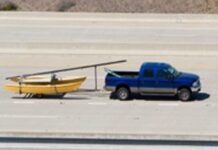
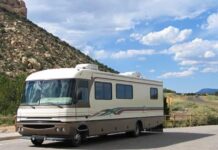
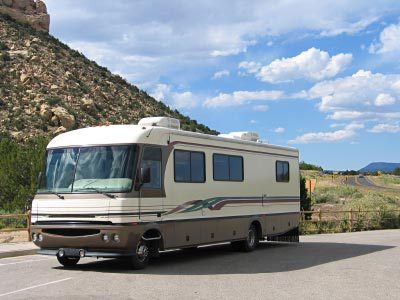
It happens with SUVs and pickup trucks too. But these vehicles have higher payload limits. It takes significantly more weight to make a half-ton truck squat noticeably. And an RV? You could load that thing with furniture, appliances, and a dozen people and the chassis wouldn’t even seem to notice.
But that invisibility is dangerous. How do you know if you are overloading a massive recreational vehicle? You don’t guess. You calculate.
The metric you need is cargo carrying capacity (CCC). This number represents the maximum weight of all your gear, passengers, and fluids that the RV can safely carry. Exceeding this limit compromises handling, braking, and structural integrity. It is not a suggestion. It is a hard limit defined by the manufacturer.
The Formula for RV Cargo Carrying Capacity
To find your specific CCC, you need to subtract everything that is already in the vehicle from its maximum allowable weight.
Start with the Gross Vehicle Weight Rating (GVWR). This is the absolute maximum weight the vehicle is designed to carry, including the vehicle itself, all fluids, passengers, and cargo.
From that GVWR number, you subtract four specific weights:
- Unloaded Vehicle Weight (UVW): The weight of the RV as it rolls off the lot, with a full tank of fuel, coolant, and oil.
- Sleeping Capacity Weight Rating (SCWR): The weight allocated for passengers. Manufacturers calculate this by multiplying 154 pounds by the number of sleeping positions.
- Propane Weight: LP gas adds significant weight. At 4.2 pounds per gallon, a full 12-gallon tank adds about 50.4 pounds.
- Fresh Water Weight: Water weighs 8.3 pounds per gallon. A 25-gallon fresh tank adds roughly 207.5 pounds.
A Concrete Example
Let’s look at a hypothetical RV to see the math in action.
- GVWR: 20,000 pounds
- Minus UVW: 14,500 pounds
- Minus SCWR: 924 pounds (based on 6 sleeping spots x 154 lbs)
- Minus Propane: 50.4 pounds (12 gallons x 4.2 lbs)
- Minus Fresh Water: 207.5 pounds (25 gallons x 8.3 lbs)
Result: The cargo carrying capacity is 4,318.1 pounds.
That is the hard ceiling for your gear, food, tools, and any extra passengers beyond the initial 154-lb-per-seat assumption. If your total load exceeds 4,318.1 pounds, you are overweight.
Finding Your CCC
Where do you get these numbers? They are not usually on a sticker outside the door. You need to look at your vehicle’s documentation or contact the manufacturer directly. Most major RV builders publish GVWR, UVW, and SCWR data on their websites.
If you cannot find the specific CCC for your model, you can derive it using the formula above. You just need the GVWR and UVW from your manual, the sleep count from your floorplan, and the tank sizes for your propane and water systems.
Vehicle Cargo Capacity Charts
For those driving cars, trucks, or smaller SUVs rather than RVs, cargo capacity is often measured in cubic feet rather than weight limits. The tables below provide cubic footage for select models from Acura, Audi, and BMW across recent model years.
Acura Cargo Carrying Capacity
| Year | Model | Cargo Capacity (ft³) |
|---|---|---|
| 2006 | MDX | 81.5 |
| 2006 | RL | 13.1 |
| 2006 | RSX | 25.3 |
| 2006 | TL | 12.5 |
| 2006 | TSX | 13.2 |
| 2007 | MDX | 83.5 |
| 2007 | RL | 13.1 |
| 2007 | RDX | 60.6 |
| 2007 | TL | 12.5 |
| 2007 | TSX | 13.2 |
| 2008 | MDX | 83.5 |
| 2008 | RL | 13.1 |
| 2008 | RSX | 60.6 |
| 2008 | TL | 12.5 |
| 2008 | TSX | 13.2 |
| 2009 | MDX | 83.5 |
| 2009 | RL | 13.1 |
| 2009 | RSX | 60.6 |
| 2009 | TSX | 12.6 |
Audi Cargo Carrying Capacity
| Year | Model | Cargo Capacity (ft³) |
|---|---|---|
| 2006 | A3 | 54.6 |
| 2006 | A4 | 13.4 |
| 2006 | A6 | 15.9 |
| 2006 | A8 | 14.6 |
| 2006 | S4 | 13.4 |
| 2006 | TT | 24.2 |
| 2007 | A3 | 54.6 |
| 2007 | A4 | 13.4 |
| 2007 | A6 | 15.9 |
| 2007 | A8 | 14.6 |
| 2007 | Q7 | 88.7 |
| 2007 | RS4 | 13.4 |
| 2007 | S4 | 13.4 |
| 2007 | S6 | 13.9 |
| 2007 | S8 | 14.6 |
| 2008 | A3 | 54.6 |
| 2008 | A4 | 10.2 |
| 2008 | A5 | 16.1 |
| 2008 | A6 | 15.9 |
| 2008 | A8 | 14.6 |
| 2008 | Q7 | 88.7 |
| 2008 | R8 | 3.5 |
| 2008 | RS4 | 13.4 |
| 2008 | S4 | 13.4 |
| 2008 | S5 | 16.1 |
| 2008 | S6 | 15.9 |
| 2008 | S8 | 14.6 |
| 2008 | TT | 8.8 |
| 2009 | A3 | 54.6 |
| 2009 | A4 | 10.2 |
| 2009 | A5 | 16.1 |
| 2009 | A8 | 14.6 |
| 2009 | Q7 | 88.7 |
| 2009 | R8 | 3.5 |
| 2009 | S4 | 10.2 |
| 2009 | S5 | 16.1 |
| 2009 | S8 | 14.6 |
| 2009 | TT | 8.8 |
BMW Cargo Carrying Capacity
| Year | Model | Cargo Capacity (ft³) |
|---|---|---|
| 2006 | 325 | 12 |
| 2006 | 330 | 12 |
| 2006 | 525 | 14 |
| 2006 | 530 | 14 |
| 2006 | 550 | 14 |
| 2006 | 650 | 13 |
| 2006 | 750 | 18 |
| 2006 | 760 | 18 |
| 2006 | M3 |
Buick Cargo Capacity
Buick’s hands-on approach has been controversial over the years. The LaCrosse and Lucerne make do with 16 cubic feet and 17 cubic feet, respectively. Not much for hauling. The Rainier’s 80.1 cubic feet of volume feels adequate, but not class-leading.
The Rendezvous was the outlier. Offers 108.9 cubic feet of space. This amount remained unchanged in 2007. However, the Terraza has been increased to 136.5 cubic feet. By 2008, Buick changed direction. The Rendezvous and Terraza vanished from the table. Enter the enclave.
The 2008 Enclave brings 116.2 cubic feet of space to your party. In 2009, it dropped slightly to 115 cubic feet. The LaCrosse and Lucerne remained static. If you need more capacity, Buick’s options are limited to certain SUVs or older minivan models.
Cadillac cargo capacity
Cadillac plays in different leagues. The CTS sedan is tight. In 2006 and 2007, it offered 12.5 cubic feet of capacity. The CTS-V is comparable. In 2008, this number increased to 13.6 cubic feet. The 2009 CTS is still 13.6.
A luxury sedan like the DTS has 18.8 cubic feet of space. The STS and STS-V have a volume of 13.8 cubic feet. XLR and XLR-V are slim and compact, occupying only 11.6 cubic feet of space.
The Escalade is the highlight. The standard 2006 model has a capacity of 104.6 cubic feet. The ESV expands that to 131.6 cubic feet. By 2007, the standard Escalade’s capacity had increased to 108.9 cubic feet. The ESV jumped to 137.4 cubic feet. This number remained until 2009.
Escalade EXT trucks are listed, but no cargo data available for recent years. The SRX SUV hovered around 69.5 cubic feet in 2006 and 2007. In 2009, the SRX shrunk significantly to 13.8 cubic feet. Wait a minute. This looks like a data placement error in the source. STS is listed at 13.8 in 2009. The 2009 SRX designation is obscured in the source text, but is listed near STS-V. The Escalade Hybrid was introduced in 2009 and has a capacity of 69.5 cubic feet? No, this number matches the SRX’s previous footprint. Source says “SRX 13.8” after “Escalace Hybrid 69.5”. Does this suggest that the hybrid could share sales with the SRX? Or is this a typo? Let’s stick to the Escalade’s main volumes: 108.9 cubic feet and 137.4 cubic feet are still firm benchmarks.
Chevrolet cargo capacity
Chevrolet’s product range is extensive. The Corvette is a sports car, not a truck. In 2006, it is 22.4 cubic feet. In 2007 and 2008, It shrank to 11 cubic feet It then reverted to 22.4 cubic feet in 2009.
Sedans were modest. Cobalt has a volume of 13.9 cubic feet. The Impala has a volume of 18.6 cubic feet. The Malibu is smaller, about 15.1 to 15.4 cubic feet. The Malibu MAXX hatchback offers 41 cubic feet of space.
The HHR has a boxy, retro design and can really carry cargo. From 2006, the capacity increased to 63.1 cubic meters. In 2007 and 2008, it dropped to 57.7 cubic feet. The HHR panel version offers 62.7 cubic feet. The Aveo sedan was tiny at 42 cubic feet? No, the 2006 Aveo has a listed at 42. In the 2007 Aveo sedan dropped to 12.4 cubic feet. The Aveo 5 hatchback has 42 cubic feet of space.
SUVs and Trucks told a different story. In 2006, the Equinox provided 68.6 cubic feet in 2006, which dropped to 67.1 cubic feet from 2007 to 2009. The TrailBlazer offers 80.1 cubic feet of space. The TrailBlazer EXT is even larger at 107.4 cubic feet.
The Express van was a beast. All years listed offer 225.1 cubic feet of space. The capacity of the Suburban 1500 and 2500 is 137.4 cubic feet. The Tahoe is smaller at 108.9 cubic feet. The Tahoe Hybrid is comparable to the Tahoe. The Uplander minivan has a volume of 120.1 cubic feet. The Traverse was introduced in 2009 and has a capacity of 117.5 cubic feet.
Pickup trucks such as the Silverado 1500, 2500 and 3500 HD are listed, but there is no freight information. This usually means that the bed has been measured individually or that information is missing from this specific dataset. Avalanche is also listed as empty.
Chrysler cargo capacity
Chrysler leaned into minivans and boxy designs. The PT Cruiser is very practical. In 2006, it was 92.2 cubic feet. In 2007 and 2008, it dropped to 62.7 cubic feet. Then it returned to 92.2 cubic feet in 2008? Wait a minute. According to sources, the PT Cruiser had a rating of 92.2 in 2006, 62.7 in 2007, 92.2 in 2008, and 62.7 in 2009. For a fixed number of vehicles, this variation seems odd. This may reflect the seating arrangement. The 300 and 300C sedans offer 15.6 cubic feet of space. In 2008, they grew to 17.2 cubic feet. It then returned to 15.6 in 2009.
The Town & Country minivan was a volume king. 2006 starts at 146.7 cubic meters. In 2007, it dropped to 144 cubic feet. In 2008 and 2009, it was 143.8 cubic feet.
The Aspen SUV has 102.4 cubic feet of space. The Aspen Hybrid fits the bill. Sebring sedans were small at 11.3 cubic feet in 2006 and grew to 13.6 cubic feet from 2007-2009. Capacity for Pacifica minivans increased from 62.7 cubic feet in 2006 to 92.2 cubic feet in 2007 and 2008. The Crossfire Roadster has a capacity of 6.5 cubic feet, increasing slightly to 7.6 cubic feet in 2008.
Dodge Cargo Capacity
Dodge copied Chrysler, but added muscle and toughness to the truck. The Grand Caravan is the utility champion here. In 2006 and 2007, it had a capacity of 167.9 cubic feet. In 2008 and 2009, the capacity was reduced to 144.3 cubic feet. The Caravan minivan has a volume of 142.3 cubic feet.
Sprinter vans are large. The 2006 Sprinter Wagon 2500 offered 321 cubic feet. From 2007 to 2009 it dropped to 141.3 cubic feet? This drop is huge. The Sprinter Van 2500 offers 247 cubic feet of space
Ford, GMC, Honda, Hummer and others: 2006-2009 cargo capacity guide
Space is everything when transporting equipment. We look at payload data from Ford, GMC, Honda, Hummer and others from 2006 to 2009. These figures cover the trunk, the bed and the space behind the third row. These figures are important if you need furniture, golf clubs or a week’s worth of camping gear. We stripped out the fluff and kept the cubic feet.
Ford
Ford is looking to move forward in this era. The E-Series vans are the flagship product. In 2006 and 2007, it offered 256.5 cubic feet of space. In 2008 and 2009, this amount dropped slightly to 230.6 cubic feet. Still, it’s quite a volume for a van.
The F-150 is also a big player. But here’s the problem. In 2007 and 2008, the F-150’s cargo capacity was listed as missing from source data. The same goes for the F-250 and F-350. You need to check the cab and bed configurations of these trucks. The 2006 and 2008 Ranger had 18.1 cubic feet of space. The year 2007 was also empty.
Sedans and crossovers tell different stories. The 2006 Crown Victoria has a volume of 20.6 cubic feet. The Focus? 40.2 cubic feet. The Mustang only has 9.7 cubic feet of space. Not suitable for car journeys. The Escape is sturdy and measures approximately 66.3 cubic feet. The hybrid version drops slightly to 65.5.
The Explorer has 85.8 cubic feet of space. The Freestar minivan is quite large, starting at 134.3 cubic feet and expanding to 137.2 cubic feet in 2007. The Flex, introduced in 2009, has a capacity of 83.2 cubic feet. Even though it’s a crossover, it has a minivan-like feel.
| Year | Model | Cargo Capacity (ft³) |
|---|---|---|
| 2006 | Crown Victoria | 20.6 |
| 2006 | E150 | 256.5 |
| 2006 | Escape | 66.3 |
| 2006 | Explorer | 85.8 |
| 2006 | Focus | 40.2 |
| 2006 | Freestar | 134.3 |
| 2006 | GT | 1.0 |
| 2006 | Mustang | 9.7 |
| 2006 | Ranger | 18.1 |
| 2007 | Edge | 69.6 |
| 2007 | Adventure | 108.2 |
| 2007 | Expedition EL | 130.8 |
| 2007 | Explorer Sport Trac | 44.4 |
| 2007 | Freestar | 137.2 |
| 2008 | E150 | 230.6 |
| 2008 | Edge | 69.0 |
| 2008 | Escape | 66.3 |
| 2008 | Taurus X | 85.5 |
| 2009 | Adventure | 108.3 |
| 2009 | Flex | 83.2 |
| 2009 | Focus | 13.8 |
| 2009 | Taurus | 21.2 |
General Motors
GMC sticks to heavy-duty script. Savana 1500, 2500 and 3500 vans have a capacity of 225.1 cubic feet. From 2006 to 2009, this figure remained unchanged. If you want consistent volume, this is the truck for you.
The Sierra pickups? Information is missing for models 1500, 2500 and 3500. That’s why you need to measure the dimensions of your bed yourself.
Crossovers and SUVs are different types of vehicles. The Acadia started with a smaller capacity of 19.7 cubic feet in 2007, but increased to 25.5 cubic feet in 2008 and 2009. The Envoy holds steady at 43.7 cubic feet. Envoy XL is tighter on 23.4.
Yukon families have much more to offer. The Yukon’s score dropped from 63.6 in 2006 to 60.3 from 2007 to 2009. The Yukon XL’s score was steady from 45.7 to 45.8. The Yukon Hybrid is small at just 16.9 cubic feet. Battery packs take up space.
/ Year / model / Cross capacity (ft3) |
| :— | :— | :— |
| 2006 / Envoy / 43.7 / 43.7
| 2006 / Savana 1500 | 225,1 | 225.1
| 2006 / Yukon / 63,6 / 63.6
| 2006 / Yukon XL / 45.7 | 45.7
| 2007 | Acadia / 19.7 | 19.7
| 2007 / Yukon / 60.3 | 60.3
| 2008 / Acadia / 25.5 | 25.5
| 2008 | Yukon hybrid | 16.9 | 16.9
| 2009 / Acadia | 25.5 | 25.5
| 2009 / Yukon hybrid | 16.9 | 16.9
Honda
Honda emphasizes practicality. The Odyssey minivan is king here. In 2006, 2007, 2008 and 2009, it had 147.4 cubic feet of space. There is also plenty of space to store children and luggage.
The element is a box on wheels. The capacity is 74.6 cubic feet. It never changes. The CR-V is small for its era at just 10.4 cubic feet. If you plan to haul large items, you might want to reconsider the CR-V.
The Civic sedan was 72 cubic feet in 2006 and 72.9 cubic feet in 2007. It then dropped to 35.7 cubic feet in 2008. By 2009, it had dropped to 11.5 cubic feet. Was the luggage compartment reduced? The data suggest a significant decrease or perhaps a change in measurement methods. For the 2009 model year, the Fit’s volume increases to 57.3 cubic feet, making it a strong choice for a hatchback.
The Pilot hovers between 87 and 87.6 cubic feet. The Ridgeline truck has a bed capacity of 41.4 cubic feet. S2000 sports car? 5 cubic feet. I’m not bringing anything.
| Year | Model | Cargo Capacity (ft³) |
|---|---|---|
| 2006 | Accord | 12.8 |
| 2006 | Civic | 72.0 |
| 2006 | Element | 74.6 |
| 2006 | Odyssey | 147.4 |
| 2006 | Pilot | 87.6 |
| 2007 | Civic | 72.9 |
| 2007 | Fit | 41.9 |
| 2008 | Civic | 35.7 |
| 2008 | Fit | 41.9 |
| 2009 | Fit | 57.3 |
| 2009 | Civic Hybrid | 10.4 |
Lobster
Hummer doesn’t do anything subtle. But they don’t offer trunk space either. The H2 volume is 30.7 cubic feet
Jeep volume data (2006-2009)
Jeep’s approach to volume changed dramatically from 2006 to 2009. The Commander, Grand Cherokee, and Liberty have held steady in the 67-69 cubic-foot range for most years, but the Liberty dropped to 64.2 cubic feet in 2008 and 2009. The Wrangler tells the real story. In 2006, the standard two-door had just 45.8 cubic feet, but by 2007, when the four-door became mainstream, that number had jumped to 61.2 cubic feet. The Wrangler Unlimited is very practical, reaching 86.8 cubic feet in 2008 and 2009. Smaller models like the Compass (53.6 cubic feet) and Patriot (62.7 cubic feet) offer reasonable options, while the Commander is around 68.5 to 68.9 cubic feet.
Kia cargo volume information
Kia’s range includes compact sedans and large minivans. From 2006 to 2008, the Sedona ruled with more than 120 cubic feet, but by 2007 it shed about 20 cu ft. The Rondo sat comfortably in the 74.4 cu ft range. SUVs like the Sorento and Sportage offer 66.4 to 66.6 cubic feet of space at any given time. Compact cars were tight. The Rio and Spectra barely cracked 12–15 cu ft. The Rio 5 hatchback has seen significant changes, dropping to 15.8 cubic feet in 2007 and returning to 49.6 cubic feet in 2008. Introduced in 2009, the Borrego offers a large 97.6 cubic feet of capacity.
Land Rover Capacity Breakdown
Land Rover’s numbers are messy due to model transitions. The Range Rover consistently delivered around 75 cu ft. The LR3 was a standout at 90.3 cu ft, except for an unusual drop to 9.9 cubic feet in 2008 (possibly a data anomaly or a problem with a particular trim). The Range Rover Sport still has a ride height of 71 cubic feet. The LR2 hit the market in 2009 with 58.9 cubic feet. The Range Rover’s 2008 figure was significantly reduced to 35.1 cubic feet, which contrasts with 74.9 cubic feet in 2006 and 2007, suggesting that there may be a measurement discrepancy or error in the source data for that year.
Lexus interior volume
Lexus sedans were not built for hauling. The ES 350, GS 350, IS 350 and LS 460 all range in size from 12.7 to 18 cubic feet. The SC 430 Coupe is the smallest at 8.8 cubic feet. SUVs told a different story. The LX 470/570 and RX series offer 83-90 cubic feet. The RX 350 dropped significantly to 38.3 cubic feet in 2008, but returned to 85 cubic feet in 2009. The GX 470 comes in at 77.5 cubic feet. The GS 450h hybrid sedan is surprisingly small at 7.5 cubic feet.
Lincoln Cargo Bay
Lincoln’s sales have been steady, but as a sedan, it’s not exciting. The MKZ, MKS and Town Car range in size from 15.8 to 21.2 cubic feet. The Navigator is the largest, with more than 103 cubic feet year-round. The Mark LT pickup offers 47.9 cubic feet. The MKX offers 69 cubic feet. The Zephyr and LS are smaller, 13.5 to 15.8 cubic feet.
Mazda Utility Ratings
Mazda’s 2006–2009 data shows a shift toward crossovers. The displacement of the Mazda3 and Mazda5 is 43.8-44.4 cubic feet. The Mazda6’s displacement is different, dropping to 16.6 cubic feet for the 2009 model year.The CX-7 and CX-9 are flagships, with the CX-9 displacing 100.7 cubic feet. The Tribute’s displacement has been inconsistent, dropping from 66.8 cubic feet in 2006 to 29.2 cubic feet. In 2008, this area returned to 66.2 cubic feet. The MazdaSpeed3 measures 43.4 cubic feet, which is similar to the regular Mazda3. Sports utility vehicles like the RX-8 and MX-5 are smaller, at 7.6 cubic feet and 5.3 cubic feet, respectively. No information is available for pick-up trucks (B2300/B4000).
Mercedes Benz trunk
Mercedes sedans are compact. C-Class, CLS and E-Class sizes range from 12.2 to 15.9 cubic feet. The S Series is slightly larger, 16.3 to 19.8 cubic feet. The CLK and SLK are even smaller, at less than 10 cubic feet. SUVs are mainstream. The R series offers a whopping 85 cubic meters of space. GL-class models offer 83.3 cubic feet. The G-Class and ML-Class hover between 72.4 and 79.5 cubic feet. The SLR McLaren is surprisingly tight, at 7.2-9.6 cubic feet. 2009 GL450 and GL550 entries will not display information likely due to a model change.
Mercury Auto Capacity Specifications
Mercury’s later years showed mixed results. The capacity of the Monterey Van is huge at 134.3 cubic feet. The Mountaineer SUV has 83.7-85.8 cubic feet of space. Mariner and Mariner hybrid capacity has varied significantly, dropping from 27.6 to 29.3 cubic feet in 2007, but returning to 65.5 to 66.3 cubic feet in 2006 and 2008-2009. Sedans like the Milan, Montego and Grand Marquis stay at 15.8 to 21.2 cubic feet. The Sable was launched in 2008-2009 and had a capacity of 21.2 cubic feet.
Mini Clubman and Convertible Trunk Space
The British brand doesn’t just stick to the two-door hatchback formula. If you’re looking for Mini Cooper Clubman cargo capacity, this amount will vary greatly depending on the body model you choose. Both convertibles were produced between 2006 and 2008 and offer just 21.4 cubic feet of space. That’s barely enough for a weekend bag and a spare tire. Early hardtops improved slightly, offering 25 cubic feet in 2006 and dropping to 24 cubic feet in 2007 and 2008.
Clubman is a game changer. The 2008 Cooper Clubman offers 32.8 cubic feet of space. This is much more than an ordinary hatch. Also fits 2009 John Cooper Works Clubman. The JCW hardtop, on the other hand, has 24 cubic feet of space. This is a good option if you want performance but don’t want to sacrifice luggage practicality.
Mitsubishi Outlander and Endeavor Utility
In the mid-2000s, Mitsubishi’s product range was very diverse. From 2006 to 2009, the Eclipse stayed put as a coupe with just 15.7 cubic feet of cargo space. The Galant sedan only has 13.3 cubic feet of cargo space. Lancer displacement (if available) is 11.3 to 11.6 cubic feet. These numbers reflect the limitations of typical small cars of the time.
If you want real trading volume, Montero and Endeavor dominate the charts. The 2006 Montero tops the list with 91.7 cubic feet. The Endeavor follows with a capacity of 76.4 cubic feet. However, the Endeavor’s capacity dropped to 40.7 cubic feet in 2007 and 2008. This drop may seem odd, but it usually reflects different measurement standards or seat configurations. Outlander showed higher volatility. In 2006, it was 60.3 cubic feet, which dropped to 36.2 cubic feet in 2007 and jumped to 72.6 cubic feet in 2008. In 2006, the Raider pickup had 37.1 cubic feet, but it has since disappeared from the cargo listings after that.
Nissan Quest and Armada Volume Leaders
Nissan had some absolute giants in this segment. The Quest minivan was the king of volume. In 2006, it was an impressive 148.7 cubic feet. It dropped slightly to 145.7 cubic feet in 2007, but increased to 148.1 cubic feet in 2008 and 2009. If you want to haul a couch or a large dog, this vehicle is perfect for you.
From 2006 to 2009, the Armada SUV’s volume remained at 97.1 cubic feet. The Murano’s volume dropped from 81.6 cubic feet in 2006 and 2007 to 64 cubic feet in 2009. The Pathfinder has held steady at 79.2 cubic feet most years.
The Altima sedan has significantly less space. In 2006, it had a capacity of 15.6 cubic feet, which dropped to 15.3 cubic feet in 2007 and dropped to 7.4 cubic feet in 2008 and 2009. That’s a small amount of cargo space for a family sedan. Introduced in 2007, the Versa has a capacity of 50.4 cubic feet. By 2008, the number had risen to 95 cubic feet. This is likely due to changes in the way space is measured and folding seats. The Rogue started in 2008 with 98 cubic feet, which dropped to 28.9 cubic feet in 2009. The 350Z is still only 4.1 cubic feet. The GT-R was introduced in 2009 and offered 8.8 cubic feet of space.
Pontiac Montana SV6 and Vibe Space
Pontiac’s cargo list is a mix of muscle cars and utility haulers. In 2006, the G6 Coupe had a displacement of 11 cubic feet, rising to 14 cubic feet in 2007, 2008 and 2009. The 2006 GTO’s displacement is a narrower 7 cubic feet, while the Grand Prix drops from 57 cubic feet to 400,706 cubic feet.
The Montana SV6 minivan is a beast with 136.5 cubic feet of volume in 2006. The Torrent SUV ranges from 32.2 to 68.6 cubic feet. The Toyota-branded Vibe sold by Pontiac was popular for its versatility. From 2006 to 2008, it had a volume of 54.1 cubic feet, dropping to 49.4 cubic feet in 2009. The Solstice Roadster’s volume was small, starting at 3.8 cubic feet, increasing to 7.5 cubic feet in 2007 and settling at 5.4 cubic feet in 2008 and 2009.
Porsche Cayenne and Boxster Storage
Porsche’s cargo capacity usually falls short of performance, but SUVs offer practicality. The Cayenne performed consistently, offering 62.5 cubic feet of space in 2006, 2008, and 2009. Space was tight in the Boxster Coupe, coming in at just 9.9 cubic feet in 2008 and 2009. The Cayman, on the other hand, offered 14 cubic feet of space with 5 cu. When the 911 Carrera was introduced in 2009, it had just 7.24 cubic feet of space. The trunk, typical of rear-engined sports cars, is small and usually located behind the seats.
Saab 9-7X and 9-5 Utility
Saab’s lineup is narrow. The 9-2X is based on the Subaru Impreza and in 2006 offered 61.6 cubic feet. The 9-3 sedan’s volume varied from 14.8 cubic feet in 2006 to 15 cubic feet in 2007 and 2008 and dropped to 12.4 cubic feet in 2009. The 9-5 sedan remained at 15.9 cubic feet from 2006 through 2009.
The 9-7X, which shared its platform with the GMC Envoy from 2006 to 2009, offered a solid 80.1 cubic feet of space. This makes it one of the wider options in the mid-size SUV category at this time.
Saturn Relay and Outlook Capacity
Saturn had some surprising volume leaders. The relay’s compact car space grew from 26.9 cubic feet in 2006 to 136.5 cubic feet in 2007 and 2008. VUE crossovers have changed a lot. In 2006, it had a capacity of 30.8 cubic feet, jumped to 63.8 cubic feet in 2007 and 2008, and dropped to 29.2 cubic feet in 2009. The hybrid version closely matched VUE’s data.
From 2007 to 2009, the displacement of the Outlook SUV remained at 115.9 cubic feet. The Aura sedan has a displacement of 14.9 cubic feet, while the Hybrid has a displacement of 13.1 cubic feet. The Sky Roadster is the smallest at 5.4 cubic feet. Introduced in 2008, the Astra Wagon has a capacity of 44.8 cubic feet.
Scion xB and tC Trunk Space
Scion focuses on youth and practicality. From 2006 to 2009, the tC Coupe’s ride height remained at 12.8 cubic feet. The xB hatchback has grown significantly. In 2006, it had a capacity of 32.8 cubic feet, which increased to 43.4 cubic feet in 2007 and 69.9 cubic feet in 2008 and 2009. This boxy design aims to maximize interior volume. Introduced in 2008, the xD offered 35.7 cubic feet of space in 2008 and 2009. It’s the xB’s little brother, but it’s still better in its class.
Smart Fortwo and Subaru Subarus
Smart Fortwo is a city microcar. In 2008, the trunk was only 12 cubic feet. It is not intended for hauling luggage. Used for carrying groceries and gym bags.
Subaru’s product range is best known for its station wagons and SUVs.
The Impreza Wagon and Outback Sport have a volume of 61.6 cubic feet
Toyota’s changing footprint
If you’re looking for space in a used Toyota, the model year is more important than you think. Check out the 2007 Highlander. It suddenly offers 80.6 cubic feet of space, a significant increase from 2006’s 39.7 cubic feet. Even the hybrid version stopped shrinking, staying at 80.6 instead of dropping to 10.5. The Land Cruiser hasn’t gone unnoticed either, growing from last year’s 20.8 cubic feet to 90.8 cubic feet.
Matrix capacity remained at 53.2 cubic feet until 2009, when it was expanded to 61.5 cubic feet. corolla? In 2009, it decreased slightly from 13.6 to 12.3. You might think that reliability means consistency, but Toyota’s packaging changes every year. Sienna is still the king of the group. From 2006 to 2009, it had 148.9 cubic feet of flat space. If you need wood or a family of six with equipment, choose a minivan. The Sequoia index fell slightly from 128.1 in 2008 to 120.8, but has remained stable since then.
The advantages of a Volkswagen station wagon
Volkswagen strongly believes in the practicality of station wagons and hatchbacks. The Golf GTI and Rabbit have about 41.8-46 cubic feet of space, which is good for a compact car. But the real star is the wagons. The Passat wagon had 61.8 cubic feet in 2007 and 2008. The Jetta Sport Wagon fared even better, with 66.9 cubic feet in 2009.
The Touareg’s volume remains flat at 71 cubic feet.
Routan, released in 2009, is an exception.
It offers 141 cubic feet of space and is built on a car chassis that effectively competes with minivans.
The Beetle is useless for carrying anything bigger than a weekend bag.
The cargo capacity of the convertible is only 5 cubic feet. The Coupe’s score of 27.1 is still a fraction of the Tiguan’s score of 56.1. If you want German technology that actually carries cargo, buy the wagon.
Volvo’s practicality
Volvo doesn’t just make cars, but also tanks. The XC90 has fluctuated between 84.9 and 85.1 cubic feet over the past four years. A full-size SUV without compromise. The XC70 and V70 are nearly identical, offering 71.4 to 72.1 cubic feet of space. It’s a smart choice for those who want all-wheel-drive without a big SUV.
The performance of the S60 sedan is inconsistent. It dropped from 36.5 in 2006 to 13.9 in 2007 and back to 36.5 in 2008. This is either a data error or a weird redesign and should be researched before purchasing. The V50 has a capacity of 62.6-62.9 cubic feet. This is a compact wagon that punches above its weight. Space is limited in the C30 hatchback, with between 12.9 and 15.3 cubic feet. Don’t try to fit a bicycle there. The S80 sedan’s volume is still around 14.9 cubic feet. This is a luxury cruiser, not a hauler.
Cargo space reality
Why are these numbers important? Because square footage alone do not tell the shape of anything. In 2006, the Prius would have been 16.1 cubic feet, but that space was oddly shaped and had a high load floor. At 148.9 cubic feet, the Sienna is a flat rectangle. One is easier to pack. One is just big.
Tacoma and Tundra show dashes. They are pickup wagonss. Their cargo area is a bed and is measured by length and width, not enclosed volume. It cannot be compared to the cargo area of a sedan. The Venza introduced in 2009 does not have the cargo capacity mentioned in this data set. Since this is a crossover, its space will likely fit somewhere between the RAV4 and the Highlander.
Look at the trends. Wagons and crossovers won the space game. Sedans are shrinking. Convertibles are essentially dead ends. If you regularly need to haul more than 50 cubic feet of cargo, forget the coupe. Forget sedans. Look at the wagon. Look at the SUV. The numbers don’t lie. They’re just waiting for you to ask the right questions.