


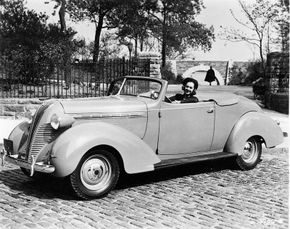
Hudson president Roy D. Chapin saw an opportunity in the massive success of the 1932-1933 Essex Terraplane. He decided to strip away the “Essex” prefix, rebranding the line simply as the Terraplane for the 1934 model year. This wasn’t just a marketing tweak. It was a strategic pivot that literally saved the company from financial ruin.
The engineering under the hood changed significantly. The older 193-cubic-inch six-cylinder and the 244-cid V8 were gone. In their place came a new long-stroke six-cylinder engine displacing 212 cubic inches. Early output sat at 80 to 85 horsepower. By 1935 and 1936, that figure climbed to 88 bhp. The 1937 model year pushed power even higher, delivering 96 to 102 horsepower. When the separate brand identity ended, the Terraplane name became a Hudson sub-series, but its standalone run provided the volume Hudson desperately needed.
Pricing and Model Hierarchy
Entry-level Essex Terraplanes had started at a modest $425. The 1934 successors moved upmarket. Prices ranged from $565 to $880. This higher pricing reflected a more complex lineup.
The 1934 range featured three distinct tiers:
* Special: Built on a 112-inch wheelbase.
* Challenger: The midline option, also on a 112-inch chassis.
* Major: A larger model riding on a 116-inch platform.
The Major line was discontinued after 1934. For 1935, the Challenger was renamed the DeLuxe. The 1936 lineup streamlined further, offering DeLuxe and top-tier Custom models on a new 115-inch platform. By 1937, this chassis was stretched by two inches to accommodate DeLuxe and Super models.
Body Styles and Design Choices
Unlike many companion makes of the era that chased exaggerated styling, the Terraplane adhered to period trends without excess. The 1936-1937 “fencer’s mask” grille divided opinion. Most buyers likely ignored the controversy and focused on utility.
Body styles followed conventional expectations. There were no roadsters or phaetons. Instead, buyers could choose from:
* Brougham and coach sedans in regular and trunkback “touring” configurations.
* Fixed-roof and convertible coupes.
* A smart victoria body style, available only for 1934.
A DeLuxe wood-bodied station wagon appeared exclusively in 1936. In 1937, a small batch of Terraplane chassis were converted for commercial use.
Performance and Real-World Testing
These weren’t slow economy cars. A British road test of a 1936 Terraplane sedan highlighted impressive capabilities. The car weighed around 2,800 pounds. Despite that mass, it hit 0-60 mph in 26.6 seconds. Top speed reached 82 mph.
The tester noted the engine’s character. It ran with a suppleness and quietness typical of American six-cylinder design. Even at 70 mph, the cabin remained composed without excessive noise or vibration. The report concluded that the Terraplane was a swift car for long-distance travel and easy to handle. It delivered significant value for the money.
Sales Volume and Legacy
The Terraplane accounted for the majority of Hudson’s sales volume during its four years as a separate make. Total sales approached 280,000 units. Annual output tells the story of its importance:
* 1934: ~51,000 units
* 1935: ~51,000 units
* 1936: ~87,000 units
* 1937: 90,253 units
By 1938, other junior brands had vanished. Terraplanes received Hudson badges and expanded to include Standard, DeLuxe, and Super models. The V8 gained eight extra horsepower. However, the introduction of the new Hudson “112” line meant the Terraplane was no longer the brand’s smallest or most affordable offering.
Sales disappointed. The name was dropped after 1938. Yet the spirit of the Terraplane lived on in the 1939 Series


