


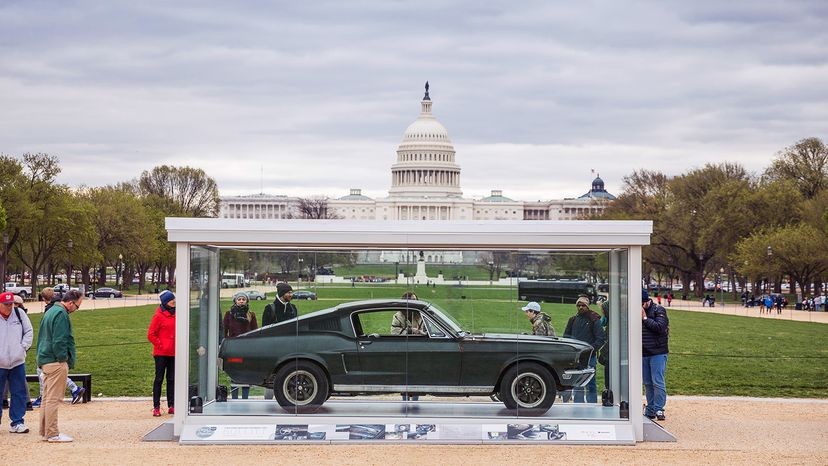
They seem like strangers in different automotive universes. One is a muscle car built for high-speed chases. The other is a family hauler designed for soccer practice runs. Yet, the original Ford Mustang GT390 from Bullitt and the very first 1984 Plymouth Voyager minivan share a rare distinction: both sit on the National Historic Vehicle Register.
Most people have never heard of it. That is understandable. It is not the National Register of Historic Places, which lists buildings and landmarks. This registry specifically archives significant automobiles within the Library of Congress. The effort began in 2013. The Historic Vehicle Association, a group dedicated to preserving and celebrating the stories of our nation’s most significant vehicles, partnered with the U.S. Department of the Interior to create the list.
Currently, only 24 vehicles hold this title.
Every April, the Historic Vehicle Association hosts an exhibition called Cars at the Capital. This event brings a rotating selection of these rare machines to the National Mall in Washington, D.C. If you missed the 2018 showcase, you missed some serious history.
The lineup included:
* The original 1968 Ford Mustang driven by Steve McQueen in Bullitt
* The 1985 Modena Spyder Ferrari from Ferris Bueller’s Day Off
* A 1927 Ford Model T
* The 1918 Cadillac U.S. 1257X
* The very first 1984 Plymouth Voyager minivan
For the average enthusiast, this exhibition is often the only chance to get close to these artifacts. All the cars on the register are privately owned. Some reside in museums across the country, but displaying them is entirely up to the owner’s discretion. The National Historic Vehicle Register website does note where a specific car is being publicly exhibited if you want to check it out.
You can find out where one of the cars is being publicly exhibited so people can check them out.
It raises a simple question. Why does a minivan deserve the same historical weight as a screen-famous Mustang? The answer lies in how these machines changed American life. One defined a genre of cinema and driving. The other redefined how families moved.
The register does not just list cars. It archives them. It ensures that the stories behind these metal shells are not lost to time. The Historic Vehicle Association works to preserve those narratives. Their goal is clear. Celebrate the machines that shaped the nation.
Access remains limited. You cannot just drive up to a garage and see a registered vehicle. The owners hold the keys. The public relies on exhibitions like Cars at the Capital or museum displays to catch a glimpse. If you are in Washington, D.C. in April, you might see the Voyager. Or the Mustang. Or something else entirely from that exclusive group of 24.
The list is small. The ownership is private. The history is real. Whether you care more about the screech of tires or the practicality of sliding doors, these vehicles earned their place. They are on the register. That is enough for now.
The National Historic Vehicle Register is an exclusive club. There are only 24 entries on the list. Getting in isn’t a lottery. It is a rigorous filtration process.
Vehicles must prove an undeniable relationship to U.S. history. They must also hit at least one of four significance criteria.
- Historic Event Association: The car is tied to an event important in automotive or American history.
- Notable Figure Association: The vehicle belonged to someone significant in those same fields.
- Distinctive Merit: It stands out for design, engineering, craftsmanship, or aesthetic value.
- Rarity or Preservation: It is the first or last of its type. It is a rare survivor. Or it is among the best-preserved or most thoughtfully restored examples still in existence.
Casey Maxon, a historian at the Historic Vehicle Association (HVA), notes that timing matters too. Once the criteria are met, the staff looks for anniversaries or current events that can generate buzz. Public attention helps. It encourages people to look at automotive history.
The selection isn’t top-down. Staff choose the vehicles. They get input from advisors. These advisors come from academia. From museums. From the collector car community. Experts in restoration, preservation, and conservation weigh in too.
“Cars are chosen by our staff with input from a number of HVA advisers… as well as experts in restoration, preservation and conservation.” — Casey Maxon
The Cost of Archiving a Legend
Selecting the car is the easy part. The real work begins.
Between five and ten vehicles are chosen each year. Then the expensive documentation starts. The HVA uses guidelines from the Historic American Engineering Record. The standard is high.
Each entry requires:
– Extremely detailed photography
– A written report outlining the vehicle’s history with historic images
– Scale drawings based on laser scan data
– A short documentary film
This work usually happens at the HVA’s National Laboratory. Sometimes it happens on-site. If the car is relevant to a specific location, they go there.
Compiling this archive isn’t cheap. It requires significant fundraising. The HVA has industry partners who help. For big projects, they seek additional funding.
The list is predominantly American. But a few imports made the cut. They had an impact on American culture.
- A 1938 Maserati
- A 1954 Mercedes-Benz
- The 1985 Modena Spyder Ferrari from Ferris Bueller’s Day Off
Can you submit your own collector car? No. The register does not accept public submissions. You cannot pay to get on the list. If you want your car documented alongside film stars and groundbreaking minivans, you’re out of luck unless the HVA picks it.
Why Only 24 Cars?
The Library of Congress archives all this material. They keep it accessible to the public. But access doesn’t mean abundance.
Being selected for the register doesn’t mean every car of that model year is included. Take President Ronald Reagan’s 1962 Willys “Jeep” CJ-6. It is one of the 24. But not every 1962 Willys CJ-6 is listed. Each vehicle is evaluated on its own merits. Its specific history. Its condition. Its story.
The HVA maintains a database of vehicles that meet the criteria but were passed over. Why? Maybe the funding wasn’t there. Maybe another vehicle took priority. Or maybe the timing wasn’t right for public attention.
The network behind these selections is vast. Maxon notes the group has people with various areas of expertise in the vintage and collector car worlds. It’s not just about having a rare car. It’s about who knows it, who cares about it, and who can tell its story.
The register remains small. Intentionally so. It preserves a snapshot of history. One carefully documented car at a time.
The next entry won’t be added soon. The bar is high. The process is slow. And the list stays at 24. For now.


