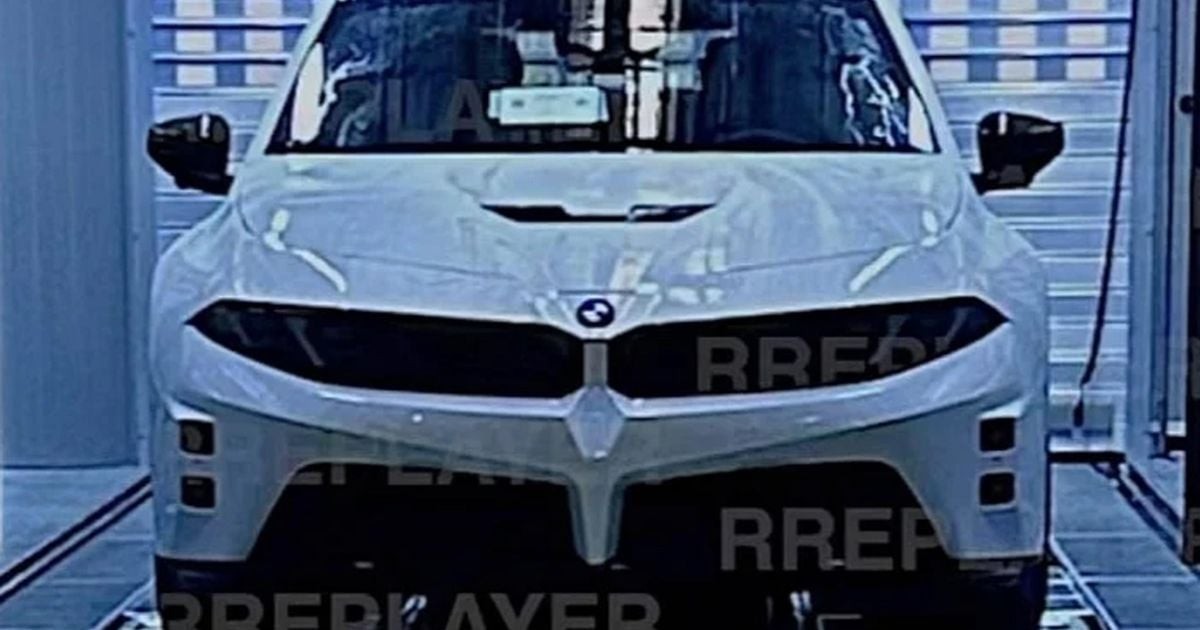
BMW is preparing to launch its first-ever all-electric M3, and in a strategic move aimed at accelerating EV adoption among performance enthusiasts, the company plans to price it similarly to its internal combustion engine (ICE) counterpart.
Despite boasting a quad-motor powertrain delivering over 1,000 horsepower (746 kW), the electric M3 will sit “in the same ballpark” price-wise as the traditional petrol version. This pricing strategy signals a significant shift in BMW’s approach to high-performance vehicles, suggesting that the cost premium often associated with electric powertrains is being absorbed to make the transition more accessible for customers.
The “Twin” Strategy: Same Look, Different Soul
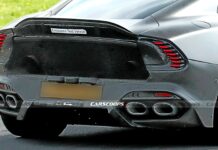
When launched in 2027, the new M3 lineup will present a unique visual paradox. The electric and petrol versions will look nearly identical on the outside, serving as stylistic “twins,” but they will be fundamentally different machines underneath.
- The Electric M3 (likely named iM3): Built on BMW’s new Neue Klasse architecture, this model will share its foundation with the recently revealed BMW i3 electric sedan. It promises advanced technology, including the “Heart of Joy” central computing system and next-generation AI-driven iDrive interface.
- The Petrol M3: This model will continue to use the existing CLAR platform but will receive a body redesign to align with the Neue Klasse aesthetic language.
Sylvia Neubauer, BMW M’s sales chief, emphasized that while the designs will converge, the driving experience remains the core differentiator. “It’s not only about acceleration and power, it’s about drivability, manoeuvrability and that level of trust and connection between the driver, car and road,” Neubauer stated.
Bridging the Gap Between Petrol Heads and EV Adopters
BMW acknowledges that it cannot convert every traditional enthusiast overnight. Neubauer noted that while they won’t convince 100% of “petrol-heads” to switch, they aim to persuade a significant portion of testers through direct experience. To facilitate this, BMW plans try-before-you-buy events, allowing drivers to feel the difference firsthand without being segmented into specific marketing buckets.
“Obviously we will not convince 100 per cent out of the petrol-head target group to buy an all-electric BMW M3. But out of 100 people that try it, we will be able to convince some. And for everybody else, we will still provide combustion engines.”
The goal is to maintain the integrity of the “BMW M” brand regardless of the drivetrain. Whether a customer prefers the instant torque of electricity or the mechanical feedback of a piston engine, the promise remains the same: a genuine, high-performance driving experience.
Technical Specifications and Performance Context
The electric M3 is expected to leverage the same technological backbone as the standard i3 50 xDrive, but with significantly upgraded performance components. Key features likely to include:
- Powertrain: A quad-motor setup sending over 1,000 hp to all four wheels.
- Battery: A large pack exceeding 100 kWh, supporting an 800V electrical architecture.
- Charging: DC fast-charging speeds up to 400 kW.
- Range: While specific M3 figures are unconfirmed, the base i3 offers a claimed WLTP range of up to 900 km, surpassing competitors like the Tesla Model 3 Long Range.
In comparison, the current petrol M3 (S58 engine) produces 353 kW and 550 Nm, starting at $169,100 (before on-road costs). The M3 Competition xDrive offers 390 kW and 650 Nm for $186,900, while the range-topping M3 CS Touring reaches 405 kW for $253,900. If the electric M3 aligns with these price points, it represents a substantial value proposition given the massive jump in power output.
Conclusion
BMW’s strategy for the next-generation M3 reflects a broader industry trend: democratizing electric performance. By keeping prices competitive and offering identical styling cues, BMW aims to reduce the friction for buyers considering an EV switch. The success of this “twin” approach will depend on whether the electric variant can deliver the visceral driving connection that defines the M brand, proving that performance is no longer defined solely by horsepower, but by the quality of the driving experience.