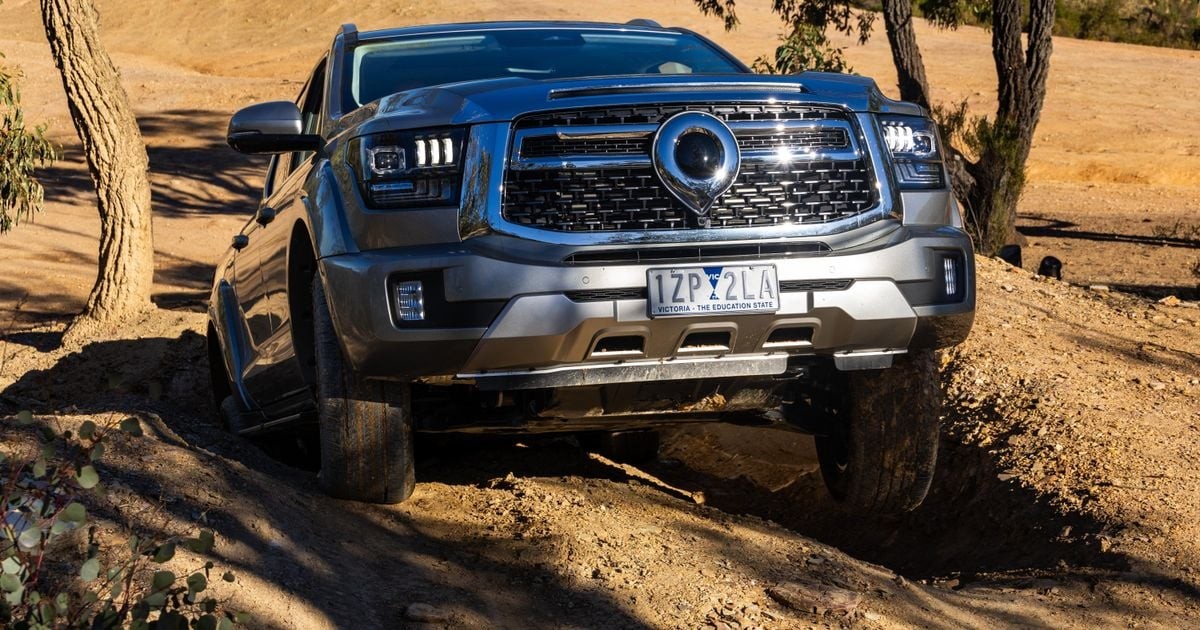
Great Wall Motor (GWM) has revealed technical details for its upcoming 3.0-litre turbo-diesel four-cylinder engine, a move designed to significantly boost the performance of its heavy-duty lineup in Australia. The new engine is slated to power the Tank 500 SUV and the Cannon Alpha ute, both of which are expected to arrive in the Australian market during the third quarter of 2026.
Challenging the V6 Standard
The most striking aspect of this new powerplant is its torque delivery. Despite having only four cylinders, the 3.0-litre diesel is engineered to produce 620Nm of torque, surpassing the 600Nm output of the popular 3.0-litre V6 found in the Ford Ranger and Everest.
While the Ford V6 maintains a power advantage—offering 184kW compared to GWM’s 170kW—the GWM engine aims to bridge the gap in heavy-duty utility. This strategy positions GWM as a serious contender in the “workhorse” segment, where low-end torque is often more critical than top-end horsepower.
Performance and Efficiency Gains
The new engine replaces the existing 2.4-litre turbo-diesel in the Cannon Alpha, offering a substantial leap in capability:
– Power Increase: +35kW (from the previous 135kW)
– Torque Increase: +140Nm (from the previous 480Nm)
– Acceleration: A promised 20% improvement in 0–100km/h times.
– Fuel Economy: A projected 5% improvement in NEDC-cycle fuel consumption.
By increasing the displacement to 3.0 litres, GWM joins Isuzu (D-Max/MU-X) and Mazda (BT-50) in the large-displacement four-cylinder club. However, the GWM engine appears to be tuned for much higher output than its Japanese rivals, which currently offer 140kW and 450Nm.
Expanding the Tank 500 Lineup
For the Tank 500, this diesel engine marks a significant shift in product strategy. It will replace the current 2.0-litre petrol hybrid variant, which is currently in its runout phase.
While the existing hybrid system offers higher total output (255kW and 648Nm), the new diesel provides a more traditional, robust alternative for long-distance towing and heavy-duty use.
Notably, the introduction of this engine will also upgrade the Tank 500’s utility. While the current model is limited to a 3,000kg braked towing capacity, the new diesel-powered version is expected to match the Cannon Alpha’s 3,500kg towing capacity.
The Road to Electrification
GWM is not just focusing on traditional diesel; the company is using this 3.0-litre architecture as a foundation for future technology. The engine is designed to be compatible with hybrid and plug-in hybrid (PHEV) systems currently under development.
While GWM plans to launch electrified diesels in China by early 2027, it remains to be seen how these advanced powertrains will be integrated into the Australian market. For now, the focus remains on delivering a high-torque, efficient diesel that can compete directly with established leaders in the 4×4 and ute segments.
Conclusion: GWM is pivoting toward larger-displacement diesel technology to provide higher torque and improved towing capacities, directly challenging the dominance of established V6 and small-diesel competitors in the Australian SUV and ute markets.