


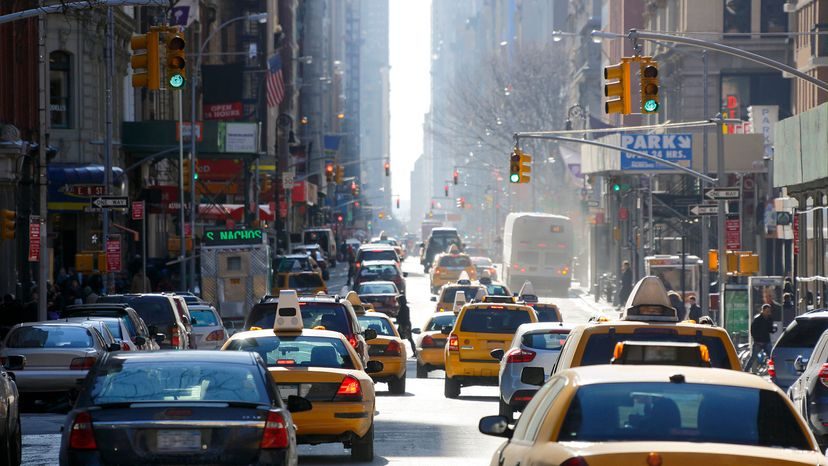
Los Angeles spent 30 years and $400 million building one of the most sophisticated traffic management systems in the United States. The project involved deploying magnetic sensors under roadways and installing hundreds of cameras across the city’s 469 square miles. The goal was simple: use a centralized computer system to capture real-time data and synchronize 4,500 traffic lights to reduce gridlock.
When the system went live in 2013, engineers were pleased. Average traffic speed jumped 16 percent. The time it took to drive 5 miles dropped from 20 minutes to 17.2 minutes. It seemed like a win. Then 2018 came, and Los Angeles still held the No. 1 spot for the most congested city in the U.S.
So why did the money not buy relief? Tim Lomax, a research fellow at the Texas A&M Transportation Institute with 35 years in traffic analysis, says adaptive signals are good, but they are not the magic bullet commuters expect.
How signal synchronization actually works
The concept is straightforward. A city’s traffic control center calculates when a group of cars will reach an intersection, assuming they are traveling at a specific speed. It times the signal to turn green just as that group arrives. Main streets get more “green time” than side streets with lower volume.
This does not mean you will hit green lights endlessly. It means all signals on a main road run the same cycle length after servicing side streets. Ideally, the light turns green again as the next group of cars arrives. Los Angeles went further than many cities by using cameras and sensors to adjust these timings in real-time.
“If you tell me that’s the pattern of traffic flow, I can design a pretty well-functioning traffic signal system,” says Lomax.
Lomax explains that synced lights work best when traffic flows predictably in one direction. Think of the classic commuter pattern: suburbs to city center in the morning, city to suburbs in the evening. In that scenario, you can give longer green lights to the busy direction and time them to keep cars moving.
The problem is that modern economic landscapes are not that simple. Jobs and populations are spread across metropolitan areas. High-volume commuting often happens between two suburbs, not just into a downtown core. This creates heavy traffic at critical bottleneck intersections from both directions simultaneously.
Why retiming costs money and often stalls
Retiming traffic lights is expensive and labor-intensive. According to Texas A&M research, cities should expect to spend between $3,500 and $4,000 per intersection. It also takes 20 to 30 man hours to analyze and retime each signal.
Jurisdiction issues make it worse. If a road passes through different municipalities, coordination becomes difficult. What if one suburb refuses to pay for the upgrade? That single refusal can hold up a retiming effort for years.
Atlanta offers a stark example. The last time its traffic lights were fully synced was in the mid-1970s, when the city had signals at 320 intersections. By 2011, Atlanta had added another 945 intersections that were not part of the coordination system.
Lomax notes that poorly timed signals cause significant delays. If a city upgrades from a poorly timed system to a well-timed one in a growing area, it can eliminate half the delay, or even more. He defines delay as the difference between travel times during low-traffic and peak traffic conditions.
Other factors driving congestion
Synced lights are just one tool. Lomax points to accident clearance as another effective strategy. Commuters are less upset by long drive times than by unpredictable ones. A daily 45-minute commute that suddenly becomes an hour-and-a-half commute is what stresses people out. Accidents and stalled cars are the most common causes of these unexpected delays.
There is also a behavioral trap. Once people realize congestion has improved on a street, they are encouraged to drive on it. More people get in their cars. The number of vehicles on the road increases. Traffic returns.
Which cities have the worst traffic?
In 2018, INRIX, a global traffic analysis company, ranked the worst U.S. cities for congestion. The list:
- Los Angeles
- New York City
- San Francisco
- Atlanta
- Miami
The tech helped. The numbers proved it. But physics and human behavior kept winning.


