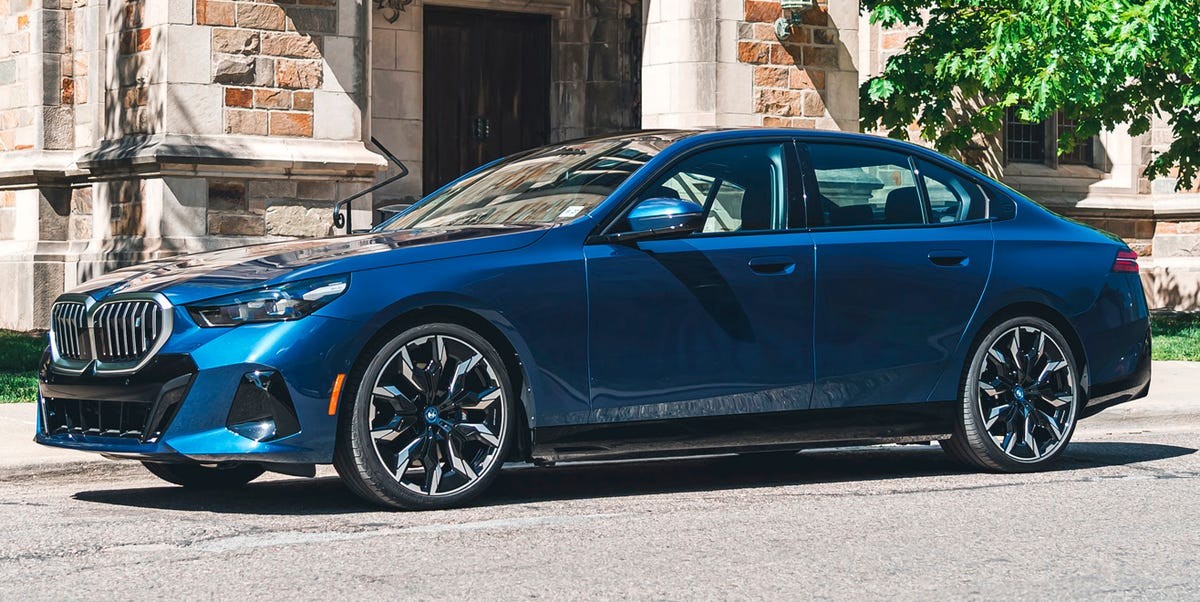
The BMW i5 remains one of the most compelling entries in the luxury electric sedan market, largely because it refuses to look like an experiment. To the casual observer, it is indistinguishable from its gas-powered 5 Series sibling, sharing the same sculpted exterior lines and premium interior appointments. The only giveaways are the subtle badging on the trunk and the eerie silence of its powertrain.
For the 2027 model year, the vehicle remains mechanically and aesthetically unchanged from its predecessor, save for one pivotal update that addresses a major pain point for North American EV owners. This consistency suggests BMW is confident in the platform’s appeal, banking on the brand’s heritage rather than radical redesigns to win over buyers.
The Big Change: NACS Integration
The single most significant update for the 2027 model year is the switch to the NACS (North American Charging Standard) charge port. Previously, the i5 relied on the CCS Combo 1 standard, requiring adapters to access Tesla’s Supercharger network.
Why this matters: The adoption of NACS eliminates the need for cumbersome adapters and grants owners seamless, direct access to Tesla’s extensive and reliable Supercharger network. This move aligns BMW with the broader industry trend, following the lead of Ford, GM, and Rivian, effectively standardizing charging across the continent.
Trim Levels and Performance
The i5 lineup is structured to cater to different driving priorities, ranging from efficient daily commuting to high-performance driving. There are three distinct trims, each offering a different balance of range, power, and luxury.
1. BMW i5 eDrive40: The Efficient Choice
- Powertrain: Single rear-mounted electric motor (335 hp).
- Drivetrain: Rear-wheel drive (RWD).
- EPA Range: Up to 310 miles.
- Best For: Buyers prioritizing maximum range and efficiency.
The eDrive40 is the sweet spot for many buyers. It delivers the refined, quiet ride characteristic of a gas-powered 5 Series but with instant electric torque. In testing, it achieved 0–60 mph in 5.1 seconds—adequate for daily driving without being sporty. It offers the best fuel economy in the lineup, rated at 110 MPGe combined, though larger wheels can significantly reduce this figure.
2. BMW i5 xDrive40: The Balanced All-Wheel Drive
- Powertrain: Dual electric motors (389 hp).
- Drivetrain: All-wheel drive (AWD).
- EPA Range: Up to 278 miles.
- Best For: Drivers needing all-weather capability without sacrificing too much range.
This mid-tier option adds a second motor to the front axle, providing better traction in snow and rain. While it loses about 30 miles of range compared to the rear-wheel-drive version, it offers a more robust performance profile with a 0–60 time that sits between the base and top trims.
3. BMW i5 M60 xDrive: The Performance Variant
- Powertrain: Dual electric motors (593 hp, 605 lb-ft torque).
- Drivetrain: All-wheel drive with M-tuned suspension.
- EPA Range: Up to 277 miles (230 miles in real-world testing).
- Best For: Enthusiasts seeking a sporty driving experience.
The M60 is the driver’s choice. It features active anti-roll bars, wider tires, rear-wheel steering, and a stiffer suspension setup. Despite its weight (over 5,200 lbs), it feels surprisingly agile in corners. It sprints from 0–60 mph in just 3.3 seconds, outpacing competitors like the Mercedes-Benz EQE 350 4Matic. However, this performance comes at a cost: reduced range and lower efficiency (85 MPGe combined).
Interior, Tech, and Comfort
The cabin of the i5 is designed to feel familiar to BMW owners, avoiding the stark, minimalist aesthetic found in some competitor EVs.
- Display Setup: The dashboard is dominated by a curved display housing a 12.3-inch digital instrument cluster and a 14.9-inch infotainment touchscreen.
- Software: It runs on BMW’s iDrive 8.5 interface, which is responsive and supports over-the-air updates. Wireless Apple CarPlay and Android Auto are standard.
- Materials: Buyers can choose between traditional leather or Veganza, a high-quality synthetic alternative. A unique option includes glass-encased controls for a premium tactile experience.
- Audio: Standard models come with a 12-speaker Harman Kardon system, while the M60 and optional packages offer a 17-speaker Bowers & Wilkins setup.
Comfort Note: While the front seats are spacious and offer heating, ventilation, and massage functions, the rear seat is best suited for two passengers. The center seat is compromised by a raised tunnel hump, making it uncomfortable for adult occupants.
Range, Charging, and Efficiency
The i5 uses an 84.3 kWh liquid-cooled lithium-ion battery pack. Charging capabilities are robust, supporting DC fast charging up to 205 kW.
- Fast Charging: The battery can charge from 10% to 80% in approximately 30 minutes at compatible DC fast-charging stations.
- Free Charging: New buyers receive two years of free charging sessions at Electrify America stations, a valuable perk for those without home charging infrastructure.
- Real-World Range: In professional testing, the M60 achieved 230 miles of range on a highway loop, while the eDrive40 typically exceeds its EPA rating in mixed driving conditions.
Efficiency Tip: Wheel size significantly impacts efficiency. Upgrading from standard wheels to 20-inch or 21-inch options can reduce combined MPGe by 10–12 points. For maximum range, stick with the smaller wheels.
Safety and Driver Assistance
The i5 comes equipped with a comprehensive suite of standard safety features, including:
* Automated emergency braking with pedestrian detection.
* Lane departure warning and lane-keeping assist.
* Blind-spot monitoring.
For those seeking more automation, optional packages include BMW Highway Assistant, which offers hands-free driving on mapped highways, along with adaptive cruise control and a 360-degree camera system.
Warranty and Ownership
BMW backs the i5 with its standard electrified vehicle warranty coverage:
* Basic Warranty: 4 years / 50,000 miles.
* Powertrain Warranty: 4 years / 50,000 miles.
* Battery Warranty: 8 years / 100,000 miles.
* Complimentary Maintenance: 3 years / 36,000 miles.
Conclusion
The 2027 BMW i5 is a well-rounded luxury EV that succeeds by being unmistakably a BMW. It does not reinvent the wheel but instead refines a proven formula, adding the critical NACS charging port to remove a key barrier to adoption. While competitors may offer longer range or more futuristic cabins, the i5’s blend of familiar driving dynamics, premium interior quality, and now, seamless charging access, makes it a strong contender for buyers who value tradition alongside electrification.