Chevrolet didn’t just build sedans. They built icons. The Malibu and its muscular cousin, the Chevelle, captured millions of buyers by doing exactly what they promised. You wanted practical midsize transportation? They had you covered. You needed raw speed? They delivered that too. These weren’t just cars. They were statements.
The Practical Malibu: Family Hauler with Hidden Potential
The Chevrolet Malibu wasn’t born for the track. It was born for the driveway. For decades, it served as the default choice for families who needed reliability without the luxury tax. But beneath the sensible exterior lay a platform capable of much more. The Malibu’s appeal wasn’t just in its affordability. It was in its versatility.
The Chevelle: Where Muscle Met Midsize
Then there was the Chevelle. If the Malibu was the sensible choice, the Chevelle was the rebellion. Built on the same midsize platform, it shared roots with the Malibu but diverged sharply in execution. The Chevelle wasn’t about commuting. It was about dominance. Its engines roared louder. Its lines cut sharper. It turned heads where Malibus blended into traffic.
Why Both Matters
Understanding both cars means understanding Chevrolet’s strategy. They didn’t see a divide between comfort and performance. They saw an opportunity to offer both under one roof. The Malibu satisfied the need for basic transport. The Chevelle satisfied the need for speed. Together, they covered every angle.
The 1964 Midsize Revolution
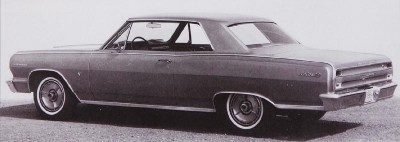
The 1964 Chevrolet Malibu marked the debut of a brand that would define American midsize motoring. It wasn’t just a car. It was a strategic play. Chevrolet needed a bridge between its full-size Biscayne, Bel Air, and Impala giants, and the smaller Chevy II and Corvair compacts. They built two models to fill that void. The Chevelle and the Malibu.
Technically, Chevelle was the primary name. Malibu was the trim level for the upscale versions. But buyers didn’t care about corporate nomenclature. They cared about looks. The new intermediates were roomy. They were affordable. They featured sharp, square-cut styling that stood out in a sea of curves.
Sales numbers don’t lie. In that first year alone, Chevy moved 338,160 combined units. Yet the Malibu editions outsold the base Chevelles by more than two to one. Why? Sporty flair. The Super Sport package delivered exactly that. It added attitude to an already capable platform.
Muscle Car Origins
By 1965, the formula evolved. Chevrolet dropped the 375-horsepower 396-cubic-inch V-8 into the Malibu SS. This wasn’t just an option. It was a legend in the making. The combination of lightweight body and big-block power created one of the most iconic muscle cars of the era.
The Chevelle/Malibu family thrived on variety. Enthusiasts could choose from convertibles, hardtops, sedans, and station wagons. Some wagons even came with two doors. It was a rare configuration that appealed to families who wanted utility without sacrificing style.
Under the hood, the range was just as broad. Six-cylinder engines covered the base market. Eight-cylinder options ranged from mild to wild. Add in a long list of available options, and you had a car that fit almost any need.
Styling Shifts and The End of an Era
The design language shifted in 1968. The sharp lines gave way to curvaceous, more fluid styling. It was a softer look. It suited the era. But the engineering remained solid.
By 1973, the convertible was gone. It didn’t sell well enough to survive federal safety standards and insurance costs. In its place came the “colonnade” roofline. These hardtops had fixed B-pillars and no rear side windows. It was an adventurous, distinct look that became synonymous with late-70s Chevelles.
Then came 1978. Chevrolet downsized its entire intermediate line. The Chevelle name vanished. The model was now just the Malibu. It ran that way through 1983.
That year marked the end of the rear-wheel-drive stalwart. It was over. Chevrolet had bigger plans. The front-wheel-drive Chevrolet Celebrity arrived in 1982. It was the wave of the future. Fuel efficiency mattered more than straight-line speed. The V-8s were being phased out. The muscle car era was dying a slow death.
The Nameplate Survives
But the Malibu name was too valuable to discard. Too much goodwill was tied to it. So, when Chevrolet needed a
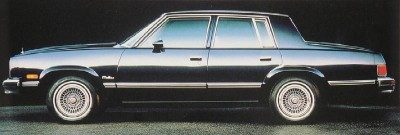
The nameplate has survived five decades of American automotive history. It has shifted from a trim level to a standalone identity and back again. But in 1983, it meant something specific. It marked the final year for the classic rear-wheel-drive Malibu as it existed since the mid-60s. This wasn’t a reboot. It was a farewell to a platform that had outlasted its own relevance.
If you are looking for the pure muscle days, you need to look earlier. The golden age of tire-smoking Chevys is well documented. But the 1983 Malibu sits in that awkward, interesting gap between the boom and the bust. It is the last of the old guard before GM pivoted entirely to transverse-engine, front-wheel-drive configurations for the mid-size segment.
The Final Rear-Drive Malibu
By 1983, the A-body platform was ancient. It had been around since 1978, and before that, its predecessors dated back to the late 60s. The styling was boxy. The technology was conservative. But for enthusiasts who prefer mechanical simplicity over electronic complexity, this car has a quiet appeal.
The 1983 Malibu was part of the second generation of the K-body platform? No, wrong. It was on the A-body. The K-body (Malibu Classic) had already transitioned to FWD for 1978. The 1983 Malibu was the last of the RWD A-bodies. It shared its underpinnings with the Monte Carlo and the Caprice. That connection matters. It gave the car a certain solidity, even if the engineering was showing its age.
Specs and Performance
Under the hood, the options were limited. This was the era of emissions tightening and fuel economy mandates. The big V8s were gone. The small block 305 cubic inch V8 was the primary powerplant for most buyers. It produced around 140 to 150 horsepower. Not much by today’s standards. But it moved the heavy body adequately.
For those who wanted more punch, the 350 cubic inch V8 was available, though rare. It pushed output closer to 175 horsepower. The transmission choices were simple. A three-speed automatic or a four-speed manual if you really wanted to engage with the drivetrain. The suspension was a mix of coil springs in the front and leaf springs in the rear. It wasn’t sporty. It was designed for comfort and durability.
Why the 1983 Model Matters
The significance of this year isn’t in its speed. It’s in its lineage. The Malibu name continued on the new, smaller, FWD cars. But those cars were different. They were European-inspired. They were lighter. They were less “American.” The 1983 Malibu was the last true American mid-size sedan in terms of layout and philosophy.
If you are hunting for a used example, know what you are getting into. These cars are not rare. They are not expensive. But they are also not plentiful in good condition. Rust is the enemy. Frame rust. Floor pan rust. The undercarriage needs inspection. The interior
The 1964 Chevrolet Chevelle: Defining the Midsize Segment
Chevrolet entered the midsize arena in 1964 with a car that didn’t just fill a gap—it defined a segment. The Chevelle wasn’t an afterthought. It was a calculated response to the Ford Fairlane and a bridge between the compact Chevy II and the sprawling full-size Impalas.
Proportions and Engineering
The A-body platform measured 115 inches between the axles. That’s five inches longer than the Chevy II but four inches shorter than the full-size lineup. The styling was upright. Conventional. It echoed the “classic” proportions of the 1955-57 Chevys.
Curved side glass was one of the few standout aerodynamic touches. But the real story was interior space. Despite being billed as a good foot shorter and a few inches narrower than the big sedans, the Chevelle offered nearly as much room as an Impala. Americans were beginning to tire of the excess. They wanted compromise. They wanted size without the footprint.
Engine Options and Performance
Chevrolet didn’t overcomplicate the mechanicals. A quartet of engines launched the model year:
- 194-cubic-inch six (120 hp)
- 230-cubic-inch six (155 hp)
- 283-cubic-inch V-8 (195 hp)
- 283-cubic-inch V-8 with dual exhaust and four-barrel carb (220 hp)
Gearboxes were flexible. The standard Powerglide two-speed automatic was common. You could swap it for a three-speed overdrive manual. Or go for the four-speed floor shifter if you wanted engagement.
Mid-year, the real power arrived. A 327-cubic-inch V-8 became available in 250 or 300 horsepower guise. This is the engine that would eventually turn the Chevelle into a legend. In ’64, it was just a hint of what was coming.
The Super Sport Package
“Everyone has a bit of swashbuckler in him.” That was the pitch in the sales catalog. You could satisfy that itch with the Malibu SS.
Priced at $162 as an option package, the Super Sport wasn’t just badges. It was a complete interior overhaul. You got front bucket seats. All-vinyl upholstery. A full gauge cluster. A center console with a big round knob for the shifter. And radial-pattern wheel covers borrowed straight from the Impala SS.
The exterior got a trim treatment. The usual beltline trim strip was deleted. The body sides looked cleaner. Sharper.
Sales and Variants
People bought it. Nearly half of all Malibu coupes and convertibles were equipped as Super Sports. That’s 76,860 units. More than a quarter of total Chevelle output. The heavy-duty suspension option added less than five dollars to the price and was practically a no-brainer for performance buyers.
Chevrolet also reintroduced the El Camino. The car-pickup returned after a hiatus, now integrated into the Chevelle line. The El Camino Customs package included bucket seats and a console, mirroring the SS treatment. It was practical. It was stylish. It worked.
Model Lineup
The Chevelle came in two series: the workaday 300 and the fancier Malibu. From the start, the proportions seemed right. Every angle worked.
Chevrolet’s portfolio swelled. With the Chevelle, Chevy now offered 43 models across five distinct lines. The hierarchy was clear. The top-level Chevelle was the Malibu SS. It came standard with the bucket seats, console, functional gauges, and emblems on the door panels and glovebox.
Other models filled out the roster. The Malibu SS convertible. The Series 300 four-door sedan. The Series 300 four-door wagon.
The engine bay remained the focus for enthusiasts. The 220-hp 283 was there. The 250-hp 327 was added. Then the 300-hp 327.
This wasn’t just a car. It was a statement. A clean line in a segment that was about to explode. The groundwork was laid. The swashbucklers were ready.
The 1964 Chevelle wasn’t just a car; it was a statement. And if you were buying the Malibu SS convertible, you weren’t just making a statement. You were making a loud one.
Let’s look at the sheet metal and the sales figures. The hierarchy in the lineup was strict. You had the base model. You had the Malibu. And then you had the SS. Each step up changed the weight, the price, and the destination of the car.
The Base Model: Chevelle 300
The Chevelle 300 was the entry point. It weighed between 2,250 and 3,270 pounds. That weight range tells you everything about the options. Strip it down. Get the two-barrel engine. Skip the AC. You’re at the bottom.
You paid between $2,231 and $2,674 for this privilege. Roughly 68,300 of these rolled off the line. It was a sensible car. Reliable. Affordable. But for the enthusiast, it was just a canvas.
The Sweet Spot: Malibu and Malibu SS
This is where the action was. The Malibu stripped out some of the base trim and added comfort. Weight crept up to 2,850-3,365 pounds. Price moved to $2,340-$2,852. Almost 150,000 were built. That’s a huge number. It says something about the American appetite for mid-size coupes and sedans that could also handle a weekend track day.
But then there was the 1964 Chevrolet Chevelle Malibu SS.
This wasn’t just a trim package. This was the performance variant. The Malibu SS weighed in at 2,875-3,145 pounds. It cost between $2,538 and $2,857. Total production? 76,860 units.
Why does this matter? Because the Malibu SS bridged the gap. It wasn’t a heavy, expensive Corvair-based spinoff. It was built on the new, larger platform. It had the styling cues of the big cars but the heart of a small block.
The Convertible Factor
The convertible version of the Malibu SS is a unicorn. Or at least, it feels like one. Demand is high. Supply is low. Values are high.
If you’re looking for a specific example, you’re not just looking for a car. You’re looking for a survivor. Rust is the enemy. Frames rot. Tops tear. Finding one with the original paint, the correct engine, and a clean title is like finding a needle in a haystack. But when you see it, you know.
The 1964 Chevelle changed the mid-size game. It forced Ford to rethink the Falcon. It forced Pontiac to double down on the GTO. And it gave enthusiasts a platform that was easy to modify and hard to beat.
What Comes Next?
The 1965 model year brought changes. More power. Different grilles. New options. But the foundation remained the same. The
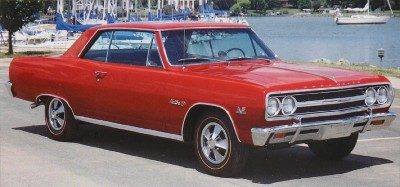
The Rare 1965 Chevelle Malibu SS 396
Chevrolet gave the Chevelle a sharp, subtle update for 1965. The body sat 1.3 inches lower. It stretched 2.7 inches longer. The wheelbase stayed put at 115 inches. Visually, it was all about that new V-shaped grille. The taillights grew significantly. Inside, the dashboard got deeper shrouds. That fixed the windshield reflection issue. It was crisp. Clean.
Four series hit the showrooms. The 300. The 300 DeLuxe. The Malibu. And the top-tier Malibu SS.
The Malibu was the volume king. Chevy moved 152,200 of them. But the real story is under the hood.
You could start with the Hi-Thrift 194-cubic-inch six. It made 120 horsepower. Not much. But steady. Step up to the 230-cubic-inch six. That gave you 140 horsepower. Still a six. But bigger.
V-8 buyers had options. The Turbo-Fire 283 delivered 195 horsepower. Then there were the big blocks. Three 327-cubic-inch V-8s were available. They made 250 horsepower. 300 horsepower. Or 350 horsepower.
Transmissions varied. A new fully synchronized three-speed on the column became an option. But most buyers stuck to what they knew. The Powerglide automatic. Or a four-speed manual.
Super Sport coupes and convertibles looked different than in ’64. Less chrome. Less brightwork. The front ended with that SS-treated grille and black accents. It set a trend. Sporty cars started going dark.
Inside, bucket seats came standard in textured vinyl. A console sat between them. Round gauges lived in a bright metal panel. Simple. Functional.
The Z16 Package and the 396 Porcupine
Out of 101,577 SS Chevelles built in 1965, one stood apart. The Malibu SS 396.
It wore crossed-flag emblems on the fenders. It hid a new 375-horsepower 396-cubic-inch V-8. The “porcupine” engine.
Only 201 were built. Why so few?
Price.
The Z16 package added $1,501 to the sticker. In 1965, that was a fortune. It turned a muscle car into a luxury item. A rare one.
This specific car isn’t just any SS 396. It’s a promotional vehicle. Created to hype the 1966 lineup. It came with a four-speed gearbox. And that 375 horsepower.
Beastly.
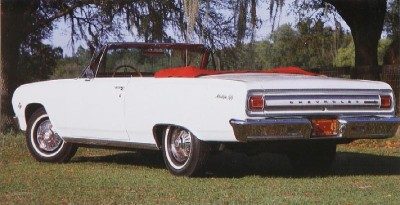
Other Chevelles existed in smaller numbers. Like the Malibu SS convertible. This one has a 195-horse 283 V-8. With an automatic.
It’s not the rare one. But it’s still a 1965 Chevelle.
The 396 was the real outlier. A glimpse of what
1965 Chevrolet Chevelle and Malibu Facts
The 1965 model year was the first for the Chevelle, and it quickly established a hierarchy that would define the mid-size market. You could buy a base Chevelle 300, step up to a Malibu, or go straight for the performance-oriented Malibu SS. Each trim had its own weight, price, and production run.
Here is how the numbers shook out for the year:
Chevelle 300
* Weight: 2,870–3,320 lbs
* Price: $2,156–$2,674
* Units Produced: ~73,200
Chevelle Malibu
* Weight: 2,930–3,355 lbs
* Price: $2,250–$2,755
* Units Produced: 152,200
Chevelle Malibu SS
* Weight: 2,980–3,210 lbs
* Price: $2,539–$2,858
* Units Produced: 101,577
“The Malibu SS convertible powered by a 195-horsepower 283-cubic-inch V-8” is a specific configuration that exists within this production run.
If you are hunting for a survivor from this era, knowing the base weight helps. A bare Malibu started around 2,930 lbs. Add options, and you could push past 3,355 lbs. The SS version sat in the middle of that range, typically heavier than the base Malibu but lighter than a fully loaded luxury cruiser. Prices reflected this too. A base Chevelle 300 could start under $2,200. An SS started at $2,539. That is a significant gap in 1965 money.
For more context on the lineage, check out the broader history of Chevrolet. The Malibu nameplate survived well past 1983, returning in 1997 and continuing today. But the 1965-1966 era remains the golden window for enthusiasts.
1966 Chevrolet Chevelle and Malibu
The 1966 Chevrolet Chevelle wasn’t just a facelift. It was a reshape. The lines smoothed out. The grille widened. The bumpers looked heavier, more substantial. Side windows curved with a sophistication that felt new for a mid-size sedan.
Chevrolet added a hardtop-styled Sport Sedan to the Malibu lineup. It looked sleek. The Sport Coupe got a treatment that made enthusiasts drool. The rear window was recessed so deeply it looked tunnelled into the body. It changed the profile entirely.
But the headline wasn’t the styling. It was the badge. And the engine.
The SS 396 Hierarchy
You could only get the Super Sport designation if you ordered the big block. This season, only the 396-cubic-inch V-8 qualified. If you wanted the “SS 396” badging, you left the smaller engines behind.
These weren’t just badges and stickers. They were serious machines. Coupes and convertibles rode on Malibu bodies, but the skeleton was different. The frames were reinforced. The front suspension took a hard look at performance. Springs were stiffer. Shocks were recalibrated to handle the torque. The front stabilizer bar got thicker.
Visual cues were aggressive. Simulated hood scoops. Red-stripe tires. Bright trim moldings that caught the light. Every SS used a floor shifter. You didn’t reach for a column here. You used your right hand.
Production Numbers and Power
Chevrolet built 72,300 Chevelle SS 396s. That’s a lot of muscle. Compare that to the 241,600 regular Malibus. The Malibu came in five body styles. It was the volume seller. The SS was the statement.
Under the hood, the 396 V-8 offered choices. 325 horsepower was the base. 360 horsepower got you more grunt. A 375-horsepower version existed, but it was rare. Fewer than a hundred were made. You had to hunt for one of those.
The advertising campaign didn’t lie about the intent. One ad read: “It isn’t extravagant, imported, or fattening.” It positioned the car as “a machine for the guy who’d rather drive than fly.”
The Rest of the Line
If the SS 396 was too much, or too expensive, you still had options. The base Chevelle 300 and 300 Deluxe remained. They kept it simple.
The Malibu series expanded its engine list. You could skip the six-cylinder entirely. A 327-cubic-inch V-8 was available. Or you could opt for the mid-level 283-cubic-inch V-8, rated at 220 horsepower.
For those who wanted precision, the options list was generous. A tachometer. Mag-style wheel covers. Sintered-metallic brakes that stopped harder than standard pads. Judicious attention to the options sheet could turn a daily driver into a weekend warrior.
1966 Chevrolet Chevelle and Malibu Facts
| Model | Weight range (lbs.) | Price range (new) | Number built |
|---|---|---|---|
| Chevelle 300 | 2,895-3,350 | $2,156-$2,681 | 66,200 (approx.) |
| Chevelle Malibu | 2,935-3,375 | $2,352-$2,766 | 241,600 (approx.) |
| Chevelle Malibu SS | 3,375-3,470 | $2,776-$2,984 | 72,300 |
“It isn’t extravagant, imported, or fattening… it’s a machine for the guy who’d rather drive than fly.”
For more picture-packed articles about Chevys and other great cars, see:
-
Muscle Cars: Look back at tire-smoking Chevys and scores of other machines from the golden age of American high performance.
-
Sports Cars: Discover the pleasure of sports motoring at its purest in these captivating articles on the best sports cars from around the world.
-
Consumer Guide Automotive: Here’s your source for news, reviews, prices, fuel-economy and safety information on today’s cars, minivans, SUVs, and pickups.
-
Consumer Guide Used Car Search: In the market for a used Chevy or virtually any other pre-owned vehicle? Check out these reports, which include safety recalls and trouble spots.
-
All Chevrolet Malibus: The
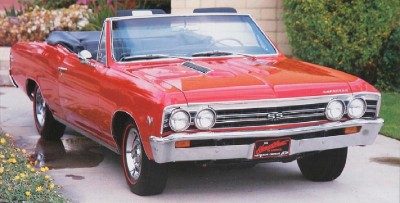
1967 Chevrolet Chevelle SS 396: Styling Tweaks and Engine Changes
The 1967 Chevrolet Chevelle arrived with a subtle shift in philosophy. The goal wasn’t radical redesign but rather elongation. The body lines stretched out. The front end looked simpler. The rear end was the most noticeable change. Large taillamps took center stage. Backup lights became standard equipment.
It was a cleaner look. Less clutter. More stance.
Inside, the intent was visceral. GM marketing claimed the interior would trigger a “severe compulsion to go driving.” That’s not subtle advertising. It’s an invitation.
Braking got an upgrade too. Front disc brakes were available across the board. A dual master cylinder system was introduced. It included a warning light for leaks. That was a big deal for safety-conscious buyers in the mid-60s.
The Super Sport Identity
The Super Sport trim carved out its own niche. It needed to stand out from the base Malibu and Malibu Custom models. The grille changed. It was exclusive to SS models. Bright trim surrounded the wheel wells. Rocker moldings shifted to a gray tone.
The hood got domed. It featured dummy air intake slots. They did nothing for airflow. They looked fast. That was the point.
Buyers had choices. The 300 series focused on value. The Malibu added luxury for families. The SS was for the “Driving Man.”
The 1967 Chevelle SS 396 convertible was a flagship. So were the Sport Coupes. They were promoted as quick-size performance machines.
Horsepower and Engine Reality
The numbers tell a strange story. The 396-cubic-inch V-8 was the heart of the SS. But the options list changed. The 375-horsepower version officially disappeared. It was gone from the brochure.
Yet 612 of them were built.
Why? Supply chain quirks. Dealer inventory. Unstated orders. The paperwork didn’t match the metal in the garage.
The step-up 396 dropped to 350 horsepower. The base V-8 stayed at 325 horsepower. It wasn’t a massive drop. It was a consolidation.
Production numbers reflect the era’s appetite. About 63,000 Super Sports rolled off the line. That’s significant. But it’s not the Camaro number. The Camaro was new. It was the headline. The Chevelle was the reliable veteran.
Transmission and Options
Choosing a powertrain was complicated. Six transmissions were available.
- Two three-speed manual options
- One four-speed manual
- Overdrive automatic
- Two Turbo Hydra-Matic automatics
The Turbo Hydra-Matic had a manual-shift feature. Advertisements touted this. It gave drivers control. It kept the performance in their hands.
Suspension and comfort were optional upgrades. Superlift air shock absorbers were available. Strato-ease headrests added support. Instrumentation could be specialized.
The SS 2-door Hardtop was another body style. It sat alongside the convertible. Both offered traditional sportiness. The Camaro was sporty too. But it was different. It was a pony car. The Chevelle was a muscle car with roots.
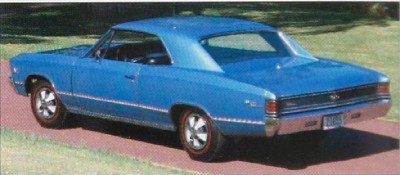
The calendar flipped to 1968 and Chevrolet didn’t bother reinventing the wheel. The second-generation Chevelle arrived looking almost identical to its predecessor. The sheet metal was carried over. The styling cues remained sharp, though subtle changes snuck in. A wider grille replaced the split-bumper look of 1967. The taillights lost the chrome bezels. It was a facelift, not a redesign. But don’t mistake this for stagnation. Underneath that familiar skin, GM was quietly shoring up safety and handling. The result was a car that felt familiar but drove like it had something to prove.
The lineup structure stayed largely the same. You still had the base Malibu, the upscale Malibu Concours, and the performance-focused SS. But the context had shifted. The muscle car war was heating up. Ford had the Mustang and the newer Mustang II. Plymouth was pushing harder with the Road Runner. Chevrolet needed to hold its ground. And they did.
1968 Chevrolet Chevelle Model Breakdown
The numbers tell a story of consistency. The base Malibu remained the volume seller. It started lower in price but carried a slightly heavier curb weight than the previous year. The Concours version sat in the middle, offering more comfort and less noise for those who wanted style without the sticker shock of a full SS.
1968 Chevrolet Chevelle Specs by Trim
| Model | Weight Range (lbs.) | New Price Range | Units Built |
|---|---|---|---|
| Malibu | 3,005–3,410 | $2,245–$2,815 | 144,000 (approx.) |
| Malibu Concours | 3,295–3,435 | $2,825–$2,940 | 28,500 |
| Super Sport (SS) | 3,430–3,500 | $2,840–$3,050 | 58,000 |
Note: Figures are approximate based on production records.
The weight creep is noticeable. The base Malibu gained about 25 pounds over the 1967 model. The SS models were no lighter. In fact, they were heavier. This wasn’t just due to safety equipment. It was also due to the larger engines being pushed into these cars. The 396 cubic-inch V8 was still king. But there were new options. And new regulations.
The Safety Shift
1968 wasn’t just about horsepower. It was about restraint. Seat belts became standard equipment on all models. Not optional. Not dealer-installed. Standard. This was a direct response to growing federal pressure. GM didn’t love it. But they complied. The interior got minor updates. The steering wheel changed shape slightly. The dashboard lost some of the chrome clutter of 1967. It looked cleaner. More modern.
The handling improved too. The front suspension received stiffer spring rates. The rear leaf springs were thicker. This wasn’t for drag racing. It was for cornering. And braking. The disc brakes became
1968 Chevrolet Chevelle and Malibu Redesign
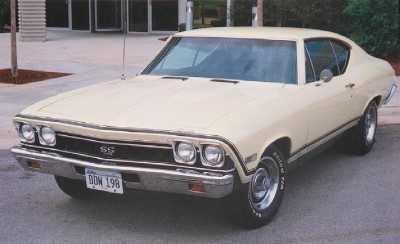
The 1968 Chevrolet Chevelle series saw a complete body overhaul. The Malibu and Chevelle models dropped their previous designs for something distinctly sculpted. Sleek. Low. The front fenders tapered sharply while the beltline rounded out. It was a long-hood, short-deck profile with a high rear-quarter kick-up that defined the midsize look of the late Sixties.
Hardtop coupes adopted a semi-fastback roofline. It was a trend sweeping through midsize coupes at the time.
Wheelbases shifted. 1967 models rode a 115-inch span. 1968 coupes and convertibles dropped to a sporty 112 inches. Sedans and wagons stretched to 116 inches. Tread width grew an inch front and rear.
Hidden Wipers and Trim Levels
Top-trim models got GM’s new Hide-A-Way wiper system. Windshield wiper blades hid beneath a panel except when in use. Lesser Chevelles got the feature later.
Competition in the muscle-car field was intensifying. Chevrolet responded by making the Super Sport SS 396 coupe and convertible a series on its own. It was largely devoid of trim. Only moldings along the rocker panels broke up the body lines. SS 396 insignias sat at the center of the grille and below the decklid molding.
SS 396 Specs and Pricing
Chevrolet issued 60,499 SS 396 hardtops. Only 2,286 convertibles rolled off the line. Black-accented Super Sports rode F70x14 red-stripe tires. Under the special twin-domed hood sat a standard 325-horsepower 396-cubic-inch Turbo-Jet V-8 engine. For extra zest, a 350-horsepower 396 could be substituted.
An SS 396 sales brochure claimed it “makes you wish for tougher twists and turns to challenge its any-kind-of-road hugging stability.”
The SS 396 Sport Coupe started at $2,899. That was $236 more than a comparable Malibu with its 307-cubic-inch V-8. All-vinyl bucket seats and a console were optional.
The Concours and Base Models
The new Concours Sport Sedan focused on luxury. “Splendid interior appointments” included special sound insulation and a deep-padded instrument panel with simulated woodgrain. The Concours Estate Wagon was one of four distinct Chevelle wagon models.
Regular Chevelle engines started with a 140-horsepower Turbo-Thrift six. The new 200-horsepower Turbo-Fire 307 V-8 was also available. Power stretched to a 325-horsepower rendition of the 327-cubic-inch V-8. Malibu gained a new Sport Sedan body style this year. The Concours had an all-vinyl interior with color-keyed options.
“Top dog in the Chevelle line was the SS 396, a handsome, well-proportioned car that cut loose with a 396-cubic-inch V-8 good for a blistering 375 horsepower.”
As muscle cars gained popularity in the Sixties, Chevelle made sure not to be left out. The SS 396 was the top dog.
1968 Chevrolet Chevelle and Malibu Facts
| Model | Weight range (lbs.) | Price range (new) | Number built |
|---|---|---|---|
| 300 | 3,020-3,545 | $2,341-$2,841 | 55,800 (approx.) |
| Malibu | 3,070-3,575 | $2,524-$2,951 | 266,300 (approx.) |
| Concours | 3,450-3,580 | $2,978-$3,083 | NA |
| SS 396 | 3,550-3,570 | $2,899-$3,102 | 62,785 |
For more picture-packed articles about Chevys and other great cars, see:
- Muscle Cars: Look back at tire-smoking Chevys and scores of other machines from the golden age of American high performance.
- Sports Cars: Discover the pleasure of sports motoring at its purest in these captivating articles on the best sports cars from around the world.
- Consumer Guide Automotive: Here’s your source for news, reviews, prices, fuel-economy and safety information on today’s cars, minivans, SUVs, and pickups.
- Consumer Guide Used Car Search: In the market for a used Chevy or virtually any other pre-owned vehicle? Check out these reports, which include safety recalls and trouble spots.
- All Chevrolet Malibus: The Chevrolet Malibu nameplate didn’t die with the 1983 model. Get the lowdown on the new-age Malibu that launched for 1997 and continues today.
- How Chevrolet Works: Get the inside story of one of America’s greatest automotive marques in this lavishly illustrated history of Chevrolet, beginning with its founding in 1911.
1969 Chevrolet Chevelle and Malibu
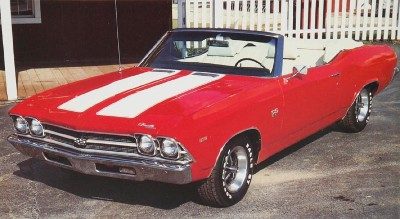
The 1969 Chevelle SS 396 Convertible
The 1969 Chevrolet Chevelle and Malibu lineup kept muscle-car fans happy while still appealing to families who didn’t need the bulk of a full-size Chevy.
Chevrolet billed the Chevelle as “America’s most popular mid-size car.” The 1969 model brought only minor updates. The front end got rounder. A single chrome bar connected the quad headlights. The slotted bumper held the parking lights. Taillight lenses grew larger and taller. They flowed smoothly into the quarter panels.
Front vent windows started disappearing. Astro Ventilation sent outside air into several models. This included the Malibu and 300 Deluxe Sport Coupes. Inside, new round instrument pods replaced the old linear layout.
The Chevelle series slimmed down. There were just two options left: the 300 Deluxe and the Malibu. The SS 396 was no longer its own series. It became a $347.60 option package for any two-door model. This meant you could get it in a convertible, a hardtop Sport Coupe, or even a pillared coupe in the lower-rent 300 Deluxe series.
The Super Sport group put a 265- or 325-horsepower 396-cubic-inch V-8 under a double-domed hood. The grille got blacked out with an SS emblem. The rear panel was black too. Red-stripe tires sat on chrome sport wheels.
Hotter versions of the 396 engine were available. You could spec one for 350 or 375 horsepower. A few hundred Chevelles even got a 427-cubic-inch V-8. That engine was usually reserved for full-size models.
Station wagons came in three levels. There was the Concours, the Nomad, and the Greenbrier. The Greenbrier badge was formerly used on the boxy Corvair van. The tailgate had a new dual-action design. You could open it traditionally or use it as a panel-type door. Wagons stretched to 208 inches overall. Coupes were only 197 inches long.
Options included headlight washers, power windows, power locks, and a rear defroster.
Production rose this year. Malibus were far more popular than the less-costly 300 DeLuxe models. Fewer than seven percent of Malibus had a six-cylinder engine. More than 86,000 got the SS 396 option.
That 1969 Chevelle convertible you see parked in the driveway with the SS 396 badge on the grille? It’s not just a pretty face. It’s the kind of car that makes gas prices feel like a minor inconvenience. But before we get to 1970, we need to settle the ledger on the previous year. The numbers tell a different story than the rumors.
The 1969 model year was a volume game. Chevrolet moved 367,100 Malibus. That’s a massive number. It wasn’t just about the muscle. It was about volume. The Nomad wagon sat at the heavy end of the scale. Weighing between 3,390 and 3,600 lbs, it cost between $2,668 and $2,800. Production numbers are missing from the archives for the Nomad, which is odd. You’d expect a halo vehicle to have a paper trail. The Greenbrier followed closely. It tipped the scales from 3,445 to 3,740 lbs and carried a price tag of $2,779 to $3,020. They built 45,900 of those.
The lighter cars were the volume drivers. The 300 Deluxe weighed between 3,035 and 3,230 lbs. You could pick one up for $2,458 to $2,611. Chevrolet built 42,000 of these basic machines. They were workhorses. The Malibu sat in the middle of the pack. Weight ranged from 3,095 to 3,340 lbs. Pricing hovered between $2,567 and $2,889. The Concours version was the luxury trim. It weighed 3,545 to 3,755 lbs and cost up to $3,266.
Why does this matter for 1970? Because the foundation was set. The manufacturing lines were dialed in. The pricing strategy was locked. But the rules were about to change.
1970 Chevrolet Chevelle and Malibu
The year 1970 didn’t just arrive. It crashed into the showroom floor. The Chevelle was no longer just a mid-size car. It was becoming a benchmark for performance, even as the air went out of the high-performance tire. Emissions controls started biting. The magic ratio of cubic inches to horsepower was shifting. But in 1970, you could still buy an engine that screamed.
The core lineup remained. The Malibu was still the best-selling nameplate. But the packaging changed. The body styles were refined. The bumper guards moved. The trim levels were tweaked. The weight distribution shifted slightly as safety glass and stricter crash standards crept in.
You want to know how the 1969 numbers stack up against the coming storm of 1970? Look at the Malibu. It carried the name. It carried the volume. But the 1970 model year would introduce new engine options that would make the 1969 396 look like a family sedan by comparison. The
1970 Chevrolet Malibu: The Squared-Off Muscle Era
The 1970 Chevrolet Malibu Sport Sedan arrived with a distinct shift in design language. The styling was no longer curvy. It was squared-off. This wasn’t just a facelift. It was a repositioning of the entire lineup.
For the first time in its history, the Malibu wasn’t just a trim level. It was the primary focus. Chevrolet started the model year with Malibus only. The traditional Chevelle nameplate took a back seat until later in the production run. When the basic Chevelle finally returned, it was essentially a reborn 300 Deluxe. You could get it as a Sport Coupe or a four-door sedan. But the hierarchy had flipped.
Engine Options and New Tech
Under the hood, the 1970 Malibu offered a spread of powerplants. You could start with the base six-cylinder. It made 155 horsepower. Not exciting, but reliable. If you wanted V-8 power, the entry point was the 307-cubic-inch unit. It pushed 200 horsepower.
Then there were the serious options. A pair of 350 V-8s sat in the middle of the range. At the top? The 400. It delivered 330 horsepower. These weren’t just numbers on a spec sheet. They defined how the car handled.
Interior updates matched the exterior. The sheetmetal received revisions to create that boxier stance. Inside, the dash and trim saw fresh designs. And for 1970, GM added some practical tech. Power door locks became available. So did the stalk-mounted wiper control. These small changes mattered to buyers who wanted modern convenience without sacrificing muscle.
The SS Package: 396 vs 454
If you bought a 1970 Malibu SS, you were signing up for performance. The Super Sport packages came in two flavors: SS 396 and SS 454. Both were available for the Sport Coupe and the convertible.
The SS 396 was the sweet spot for many enthusiasts. It featured a 350-horsepower Turbo-Jet V-8. But it wasn’t just about the engine. The package included special suspension tuning. You got the “power dome” hood. The grille got black accents. The rear bumper had a resilient insert designed to absorb impact. And you rolled on wide-oval tires mounted on sport wheels.
You could upgrade to a 375-horsepower version. Few did. Why? The price jumped significantly. It crept too close to the price of the ultimate machine: the SS 454.
The SS 454 was a monster. Under the hood lay a 454-cubic-inch V-8. The standard output was 360 horsepower. But if you looked for the LS-6 option, things changed. It used a solid-lifter cam and high compression. It made 450 horsepower. That figure put the Chevelle/Malibu in the league of the quickest muscle cars ever built.
Functional Aesthetics
Chevrolet’s marketing for the SS model highlighted its dual nature. It was tough. But it could be tougher. The brochure promised Cowl Induction. This wasn’t just a hood scoop for show. It
The 1970 Chevelle Super Sport with the LS-6 454 cubic-inch V-8 remains a holy grail for muscle car purists. But by 1971, the landscape shifted. Emissions regulations tightened. Horsepower ratings dropped. The golden age of raw, unadulterated power was ending, replaced by a new era of compliance and compromise.
For enthusiasts who know their way around an engine bay, the 1971 Chevelle and Malibu represent a transitional moment. You could still get big displacement. You could still get high-performance options. But the magic was fading.
The Numbers: 1968 Baseline
To understand what was lost, you have to look at the baseline. The 1968 model year set the stage for the mid-60s/early-70s muscle car wars. Here is how the lineup stacked up in terms of weight, price, and volume.
| Model | Weight range (lbs.) | Price range (new) | Number built |
|---|---|---|---|
| Chevelle | 3,142-3,312 | $2,585-$2,710 | 354,855 |
| Malibu | 3,197-3,409 | $2,685-$3,009 | 57,332 |
| Station Wagon | 3,615-3,880 | $2,835-$3,455 | NA |
Note that “NA” for the wagon production count doesn’t mean none were built. It just means GM didn’t break out individual production numbers for that specific variant in this particular dataset. The Chevelle itself was the volume leader, selling nearly 355,000 units. The Malibu badge was attached to higher-trim versions of that same body shell.
1971 Chevrolet Chevelle and Malibu
The 1971 model year brought significant changes. The body was restyled, but the real story was under the hood.
Emissions and Horsepower
The LS-6 454 was gone. In its place was the L75 454, rated at 360 horsepower. It sounded different. It breathed differently. It was still big, but it was no longer the land-rocket of 1970.
Safety equipment became mandatory. Front disc brakes were now standard on certain trim levels. Reinforced bumpers added weight, eating into the performance gains you might have hoped for.
Which Models Mattered?
The Chevelle nameplate covered multiple body styles. The coupe remained the enthusiast choice. The convertible was rare. The sedan was practical. The wagon was for families.
For a buyer in 1971, the choice wasn’t just about the engine. It was about what they could afford after inflation started creeping into car prices.
How Did Prices Change?
Base prices moved up. A 1971 Chevelle SS started higher than its 1970 counterpart. The Malibu followed suit. By the time you added the
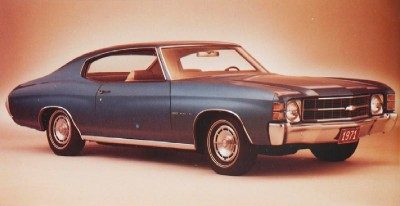
The 1971 Chevrolet Chevelle lineup was a sprawling family tree. You could buy it as a hardtop coupe, a sedan, a pillared sedan, a station wagon, or even a convertible. If you were looking for that specific muscle car aesthetic but wanted more cargo space, the wagon options were plentiful. The Malibu sat comfortably within the Chevelle hierarchy as a series, while the rest of the family offered four distinct wagon trims: the Nomad, Greenbrier, Concours, and the high-end Concours Estate.
Design changes were subtle but noticeable. The front end got a refresh. Gone was the dual-headlight setup. In its place were large, single-unit Power-Beam headlights. The grille was reworked, and the bumper took on a new shape. Park, signal, and marker lights were integrated directly into the bodywork. The rear followed suit with new round taillights that were built right into the back bumper.
For those hunting down a 1971 Chevelle SS 454, the visual cues were aggressive. It featured a blacked-out version of the new curved grille. The hood was domed, complete with functional lock pins. Underneath that metal skin sat the big-block V-8. Buyers had choices. If you had deep pockets, you could spec the 425-horsepower version of the 454-cubic-inch engine. If you were tighter on cash, the 365-horsepower version was still a monster.
Thinner wallets didn’t mean you were stuck with slow performance. The SS 350 was the alternative. It came with a 245-horsepower 350-cubic-inch V-8 as standard. You could upgrade that to 270 horsepower if you needed a bit more oomph. Even the utilitarian El Camino car-pickup wasn’t immune to the muscle car craze. It could be ordered with an SS package, turning a work vehicle into something sportier.
Not everyone wanted or could afford the SS badging. Other Chevelles came with the “396” engine. Technically, it measured 402 cubic inches. It pushed out 300 horsepower. That was a step up from the standard 250-cubic-inch six-cylinder or the 307-cubic-inch V-8.
Insurance companies hated the SS models. The surcharges were brutal. So mid-year, Chevrolet introduced a new “Heavy Chevy.” It looked like a full-blown muscle car. You could fit any V-8 into it. The catch? The 454 was off-limits. That massive engine remained exclusive to the SS models. It was a way to get the look without the insurance premium killing your budget.
Why The 1971 Chevelle SS 454 Remains a Collector Favorite
The year 1971 marked a turning point for muscle cars. Regulations were tightening. Emissions standards were getting stricter. The 454 SS was one of the last true big-block monsters before things changed. Finding one in good condition is rare. Most were driven hard and then abandoned.
The styling changes in 1971 were minor but effective. The single
The 1971 Chevelle SS wasn’t just another year for General Motors. It was the peak. By the time the decade turned, collectors started hunting these down. They are coveted now. But the 1972 model year brought a different story.
The Shift in 1972
Chevrolet tried to adapt. Emissions controls got stricter. Fuel prices were creeping up. The muscle car era was cooling off, even if the badge stayed. The Chevelle line continued, but the character changed.
Here is how the 1972 models stacked up compared to their predecessors.
| Model | Weight range (lbs.) | Price range (new) | Number built |
|---|---|---|---|
| Chevelle and Malibu | 3,270–3,525 | $2,745–$3,350 | 235,412 |
| Chevelle Wagon | 3,650–3,980 | $3,065–$3,715 | 36,850 |
The numbers tell a small part of the story. Production dropped. The 1971 Chevelle sold nearly 60,000 more units. Buyers were leaving the showrooms. Or they were looking elsewhere.
Engine Options and Specs
The big block V8s were still there. But they were detuned. The 454 cubic-inch engine dropped output. Horsepower ratings fell. Torque stayed respectable, but it wasn’t the brute force of 1970.
The small-block 350 became the workhorse. It was efficient. It was reliable. It kept the Chevelle moving when the bigger engines struggled with emissions testing.
Styling Changes
The body shell remained largely the same from 1971. The front clip got a slight refresh. The grille changed. The bumpers grew larger. Federal safety standards demanded it.
The rear end stayed clean. The taillights were distinctive. Vertical units framed the bumper. It looked heavy. It felt heavy.
Trim Levels
The Malibu nameplate persisted. It was the entry-level trim. Chrome accents were minimal. The interior was simple. Vinyl bench seats were standard.
The Chevelle SS option remained. It required the 350 or 454 engine. It added rally wheels. It added a sportier interior. The decal package was aggressive. But the performance gap narrowed.
Why Production Dropped
It wasn’t just style. It was economics. Insurance rates for high-performance cars spiked. Young buyers couldn’t afford the premiums. The market shifted toward smaller, more economical cars.
Chevrolet knew this. They adjusted production accordingly. The 1972 models were built for a different world. One where fuel economy mattered more than quarter-mile times.
The Legacy of the 1972 Chevelle
It wasn’t as hot as the 1970 or 1971 models. Collectors often overlook it. That makes it interesting. You can find a clean one for less. The parts are available. The community is active.
The 1972 Chevelle survived the transition
The 1972 Chevelle and Malibu: Numbers, Engines, and the California Divide
America’s second-best-selling car in 1972 wasn’t a Ford or a Plymouth. It was the combined output of the Chevrolet Chevelle and Malibu series.
That’s nearly half a million cars.
The base Chevelle line remained robust. Four wagon variants completed that roster. The Malibu handled the upscale role. It was the only place to find a convertible in the A-body family that year.
But the real story is in the sales figures.
More than 24,000 Malibu Sport Sedans rolled off the line. They came standard with the 307-cubic-inch V-8. This engine produced 130 net horsepower. It wasn’t thrilling. But it was reliable.
The top seller? The Malibu Sport Coupe.
It started at $2,923. That price point worked. The six-cylinder version undercut it by $90. Simple math. Simple appeal.
Powertrain Variations and Emissions
Chevrolet knew the 1972 lineup needed flexibility.
Powertrain options expanded beyond the base V-8. You could step up to a 175-horsepower 350-cubic-inch V-8. Or go big with the 240-horsepower 402-cubic-inch unit. It was still badged as a 396. Marketing inertia.
The big block was the 454. It managed only 270 net horsepower. Tight emissions standards in 1972 squeezed performance. But 454s were still 454s.
Here is where it gets interesting.
Chevelles sold in California faced different rules. They could not get the 307 V-8. Instead, they carried a 350-cubic-inch engine. This wasn’t a one-off anomaly. Throughout the 1970s, California models frequently featured distinct powertrains. States with less-stringent emissions regulations got different setups.
Styling Updates and Equipment
Visual changes were subtle but distinct.
Chevelles wore single-unit parking and side marker lamps. These were new for 1972. They sat on the front fenders. This was a shift from previous years.
The grille received a revision. It was now a twin-bar design.
Malibus got better treatment. They included concealed wipers. Cleaner lines. Less clutter.
Super Sport equipment lost its engine restrictions. You could now order SS packages with any V-8. That included the base 307. It wasn’t fast. But it looked the part.
Wagons and Final Output
Wagons told a different story.
Chevelle wagons measured 10 inches shorter than full-size wagons. They weighed about half a ton less. They were lighter. More maneuverable.
They also sold much slower.
Americans still liked their big cars. The compact wagon couldn’t compete with the space and presence of the full-size rivals.
Final model-year output reflects this preference.
Chevelle production totaled 49,352 units. Malibu output reached 290,008. Add in 54,335 station
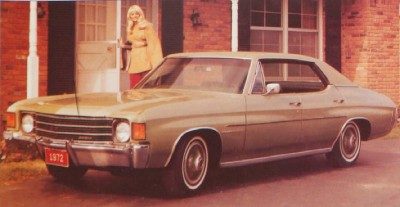
The 1972 lineup kept things steady, if not particularly exciting.
The Chevelle nameplate had been around long enough that everyone knew what it was. A mid-size car. Solid. Reliable. The Malibu trim sat in the middle of the heap, offering a bit more chrome and comfort without the sporty badge of the SS.
Take this hardtop sedan example. It’s the kind of car you see in black-and-white photos of suburban streets. Clean lines. No roof rails cluttering up the silhouette. It was built for people who wanted a Chevy but didn’t need the muscle car handling or the station wagon utility. Just a car to get from point A to point B in relative comfort.
1972 Chevrolet Chevelle and Malibu Facts
Here is the breakdown for the year. The numbers don’t lie. They show a company that knew its market.
| Model | Weight range (lbs.) | Price range (new) | Number built |
|---|---|---|---|
| Chevelle | 3,172-3,438 | $2,636-$3,187 | 339,360 |
| Station Wagon | 3,605-3,943 | $2,926-$3,538 | 54,335 |
Notice the weight difference. The wagon is over 400 pounds heavier. That’s not just wood and glass. That’s the frame, the suspension, the extra glass. It affects how the car drives. You don’t toss a wagon around corners like a coupe.
The price range tells another story. The base Chevelle started at $2,636. That’s under $18,000 in today’s money. A steal. The top-end Malibu wagon pushed past $3,500. Still affordable, but a significant jump for the average family.
Total production for the Chevelle nameplate hit 339,360 units. That’s a lot of cars. The wagon version sold in much smaller numbers—54,335. People wanted their muscle, not their cargo space, in ’72.
The 1972 Chevelle was a volume seller, not a boutique item.
Why these numbers matter
You might think 300,000 cars is a small number today. It wasn’t then. The market was crowded. Ford had the Torino. Mercury had the Montego. Plymouth had the Satellite. Dodge had the Dart and Coronet.
Chevy had to move volume. The Chevelle was the volume player. The Malibu trim was the sweet spot. Not too basic. Not too sporty. Just right for the growing middle class.
The weight range of 3,172 to 3,438 pounds for the standard Chevelle tells us about the options. A base model with no power steering, no air conditioning, and a small six-cylinder engine would be at the low end. A Malibu with V8, power brakes, and a lot of interior trim would be at the high end.
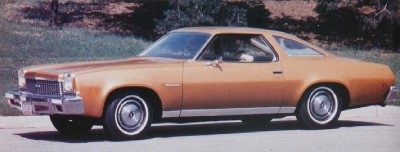
The 1973 Chevelle Colonnade Shift
The 1973 Chevrolet Chevelle and Malibu series introduced new “Colonnade” styling, as seen on this Malibu Colonnade Coupe.
The 1973 Chevrolet Chevelle and Chevrolet Malibu series featured General Motors’ all-new midsize-car “Colonnade” styling.
With a semi-fastback roofline that employed arched door frames and a large rear-quarter window the 1973 Chevrolet Chevelle and Malibu models looked considerably different from prior versions, and the long-lived pillarless hardtop coupe body style was gone.
Wheelbases were unchanged at 112 inches for two-door models and 116 inches for four-doors. But bodies were five inches longer and an inch wider. In addition to the new roofline, front and rear ends looked markedly different this year. Every 1973 Chevrolet Chevelle and Chevrolet Malibu came with front disc brakes.
New top-of-the-line Laguna coupes and sedans were added above the Malibu versions and helped move Chevelle marketing upscale. Lagunas had a body-colored urethane plastic front end incorporating a chrome-plated die-cast grille that held round parking lights.
The Laguna was created to compete with other GM A-body intermediates, including the Buick Century, Oldsmobile Cutlass, and Pontiac LeMans — and also to rival Ford’s Gran Torino. Two Laguna station wagons became available: a base model and a Laguna Estate.
A Super Sport coupe remained available, but convertibles departed from the Chevelle line. Shoppers could even get an SS station wagon this year — with the option of a 454-cubic-inch V-8 engine, no less — but the mix of sport and utilitarian wagon virtues would last only a single season.
As before, the top SS engine was a 454-cubic-inch V-8, developing 245 horsepower. Regular Chevelles had a standard 250-cubic-inch six or 115-horsepower 307-cubic-inch V-8, but the Laguna carried a 145-horsepower 350-cubic-inch engine with a two-barrel carburetor. That engine and a 175-horsepower step-up version also were available in other Chevelles.
Consumers continued to snap up Chevelles: 327,631 of them in the 1973 model year, plus 59,108 station wagons. The Malibu versions of the Chevelle continued to sell best by a wide margin, but the costlier Laguna coupe and sedan made a respectable showing, with 56,036 going to customers.
Super Sport options went on 28,647 Chevelles, of which 2500 held the big 454-cubic-inch engine — the last of their breed, as it turned out.
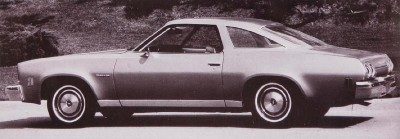
The 1973 styling update didn’t just tweak the body lines. It fundamentally changed how the Chevelle Malibu Coupe looked. The new colonnade coupe design introduced a semi-fastback roofline. This meant the roof pillars were formed into the body structure. You couldn’t see a separate B-pillar from the outside. The glass flowed into the steel. It looked cleaner. Sleeker.
This wasn’t just aesthetic. It was a response to changing tastes. The hardtop era was ending. The notchback was taking over. GM wanted a car that looked modern without killing sales. The formed-in pillars did exactly that. They hid the mechanical supports. They made the greenhouse look like one large piece.
1973 Chevrolet Chevelle and Malibu Facts
The numbers tell a specific story about that year. The Chevelle remained the volume seller. But the Malibu wagon held its own. Here is the breakdown.
| Model | Weight range (lbs.) | Price range (new) | Number built |
|---|---|---|---|
| Chevelle | 3,423-3,678 | $2,719-$3,203 | 327,631 |
| Station Wagon | 3,849-4,189 | $3,106-$3,795 | 59,108 |
Notice the weight jump. The wagon was heavier. Naturally. It carried more steel. More glass. More cargo space. The price reflected that too. You paid more for the utility. But the Chevelle sedan/coupe/convertible combo still moved nearly 330,000 units. That’s a lot of metal.
The colonnade design was significant. It wasn’t just a Chevy thing. It was industry-wide. But GM executed it with their usual scale. The result was a car that felt substantial. Solid. The roofline didn’t sag. It didn’t look flimsy. It looked like it could take a hit. Or just drive forever.
1974 Chevrolet Chevelle and Malibu
The 1974 model year arrived with more than just new badges. The market was shifting again. Emissions standards were getting tighter. Fuel prices were climbing. The muscle car era was cooling down. Not dying. Just changing.
The Chevelle didn’t disappear. It adapted. The colonnade coupe remained popular. But the focus shifted from pure performance to efficiency. Reliability. Comfort. The engines were detuned. The suspension was softened. It was no longer just a hot rod. It was a family car that could still move.
The weight ranges stayed similar. But the prices crept up. Inflation was real. Consumers wanted more features. Power steering. Power brakes. Air conditioning. These weren’t options anymore. They were expectations. The base model was still affordable. But it was heavier. Slower. Less exciting.
The wagon continued to sell. Not as well as the Chevelle. But steadily. Families needed space. They didn’t care about 0-60 times. They cared about fit. Cargo capacity. Safety. The 1974 wagon delivered on those fronts. It was boxy. Functional. Unapologetic.
What changed
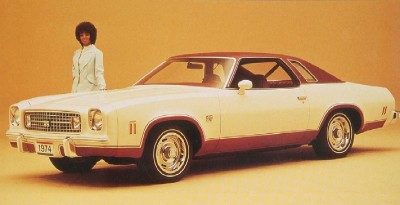
The End of an Era: 1974 Chevelle Malibu and Laguna S-3
The 1974 Chevrolet Chevelle lineup shifted gears. The Chevrolet Chevelle Super Sport badge, a nameplate that carried decades of muscle car heritage, was finally retired. It didn’t vanish entirely, though. It was replaced by a new sport/luxury coupe: the Laguna Type S-3.
The Laguna name had already appeared on the 1973 Chevelle coupe and sedan. But the stylish 1974 Chevrolet Chevelle Laguna Type S-3 arrived exclusively as a Colonnade coupe. This body style featured fixed rear side windows, giving it a sleek, pillar-less look when the rear glass was down.
Styling and Interior Details
Lagunas stood out with a “soft” urethane front end. This material was chosen because it resisted cracks, dents, and scratches better than traditional painted metal. The front bumper assembly was supported by hydraulic cylinders, allowing for a unique, cushioned look that was unusual for the era.
Inside, front occupants rode in swivel bucket seats. The driver faced a six-dial instrument cluster that looked more upscale than the standard Chevelle interior. For those who wanted extra privacy or a cleaner aesthetic, narrow opera windows could be covered with horizontal ribs for a small additional fee.
Pricing and Production Numbers
1974 Chevrolet Chevelle Laguna S-3 production totaled 15,792 cars. Prices started at $3,723. That figure was just the beginning. With the factory’s extensive options list, the bottom line easily pushed past $5,000.
“Prices started at $3,723 — but with plenty of options to send the bottom line past $5,000.”
The Rest of the Line: Malibus and Classics
Except for the Laguna, all 1974 Chevelles—coupe, sedan, and station wagon—were rebranded as Malibus. This wasn’t a downgrade in quality for everyone. A new upscale line called Malibu Classic was introduced.
The Malibu Classic was available in all three body styles. It came with classier interiors and extra body trim. A stand-up hood ornament sat above a special grille, setting it apart from the base Malibu models.
Engine Options and Performance
Under the hood, the base engine for Chevelles and Malibus was a 250-cubic-inch inline-six. However, buyers who wanted more power could choose from four V-8 options:
- 145-horsepower 350-cubic-inch V-8
- 160-horsepower 350-cubic-inch V-8 (with four-barrel carburetion)
- 180-horsepower 400-cubic-inch V-8
- 235-horsepower 454-cubic-inch big-block V-8
The Laguna Type S-3 was not offered with the six-cylinder engine. Every Laguna came with a V-8.
Chassis and Handling
To handle the extra power and luxury features, Lagunas came with firmer shocks and springs. A front stabilizer
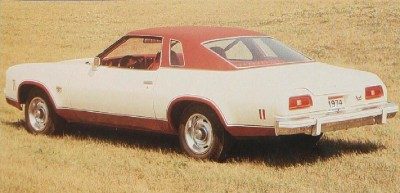
The 1974 Chevelle Laguna Type S-3: Where Luxury Met Muscle
The 1974 Chevrolet Chevelle Laguna Type S-3 wasn’t just a car. It was a statement wrapped in vinyl and chrome. While the muscle car era was winding down into a haze of emissions regulations and rising insurance costs, GM refused to let the Chevelle line disappear into irrelevance. Instead, they doubled down on a specific niche. They wanted the 1974 Chevrolet Chevelle Laguna Type S-3 to offer something the average buyer couldn’t get elsewhere. Sportiness. But packaged with the plush, noise-free comfort of a luxury sedan.
This wasn’t your grandfather’s Z28. The Type S-3 trim level dropped the aggressive, track-focused styling for a smoother, more sophisticated look. Think wider body moldings. Deeper front valences. A rear spoiler that actually did something for aerodynamics rather than just decoration. It was designed to look fast even when sitting still in a parking lot. Under the hood, the performance was still there. Just… managed. Emissions equipment had crept into the engine bays, sapping some of that raw, unbridled power that defined the early 70s. But the chassis remained rigid. The handling crisp. It was a machine that could cruise the interstate in silence and then pull into a canyon road and bite if you asked it to.
Breaking Down the Numbers
You want specifics? Here they are. Numbers don’t lie. They just sometimes need context.
The Chevelle Coupe
– Weight range: 3,573-3,951 lbs.
– Price range (new): $3,049-$3,800.
– Number built: 265,943.
That’s a massive production run for a car that was technically in its twilight years. The weight variance tells you everything about the options list. A basic V8 with manual transmissions and minimal interior trim sat at the lighter end. Add air conditioning. Power steering. An automatic transmission. And suddenly you’re pushing nearly 4,000 pounds. That $3,800 price tag was serious money in 1974. Adjusted for inflation, it’s over $25,000 today. You weren’t buying a beater. You were buying a flagship.
The Station Wagon
– Weight range: 4,191-4,315 lbs.
– Price range (new): $3,701-$4,424.
– Number built: 44,108.
Wagons were never sexy. But the Chevelle wagon was practical. Heavy. The weight jump to over 4,100 lbs. was due to the extended wheelbase and reinforced chassis needed to carry loads. These were family haulers. But even the wagon could be ordered with the powerful V8s. It was a sleeper in plain sight. A station wagon that could out-accelerate sports cars of the era if you had the right engine combo. The price ceiling hit $4,424. That’s a lot of cash for a vehicle primarily designed to carry groceries and camping gear. Yet, people bought them. In droves
The 1975 Chevelle’s Last Hurrah
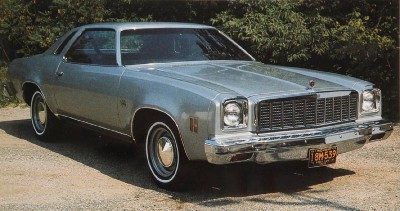
The 1975 Chevrolet Chevelle lineup consisted entirely of Chevrolet Malibu-badged models. All were marked by fresh front and rear styling.
A vertical grid-patterned grille and new bright trim around the headlights were highlights. Rectangular taillights sat flush with the body surface. They were connected by a brushed chrome panel.
Malibu Classic coupes had distinctive opera windows. Brochures said their interiors were “comfortable, but not opulent…stylish, but not gaudy.” Instrument panels were decorated in simulated wood. Landau coupes came with a vinyl roof. They also included full wheel covers. Whitewall tires were standard. Color-keyed body striping and dual sport mirrors finished the look.
“Comfortable, but not opulent…stylish, but not gaudy.”
Engines for the 1975 Chevrolet Chevelle Malibu ranged from the standard 250-cubic-inch six and 350-cubic-inch V-8. V-8 options included 400- and 454-cubic-inch size. The latter carried a 235-horsepower rating. Variable-ratio power steering was now standard with V-8 models. All 1975 Chevrolet Chevelle Malibu models rode steel-belted radial tires.
A new “Chevrolet Efficiency System” was supposed to make cars run more economically. Speedometers were calibrated in both miles per hour and kilometers per hour.
Following its debut as a 1974 model, the sporty Laguna Type S-3 left the lineup briefly. It reappeared in January 1975. This time, it wore a rakishly slanted, urethane-covered aero-style nose. Louvered opera windows were standard. Buyers could order a vinyl half-roof. An available Econominder package included a fuel economy gauge.
The Malibu Branding Shift
By 1975, the distinction between Chevelle and Malibu had all but vanished for the average buyer. General Motors made a strategic move to streamline the lineup, marketing virtually every model under the stronger Malibu badge. It wasn’t just about branding; it was about leveraging a name that had become synonymous with value and reliability. The Chevelle name didn’t disappear entirely from the factory floor, but on the window stickers, it was Malibu.
This consolidation meant fewer trim levels to confuse shoppers and a clearer hierarchy. If you wanted the sporty look, you bought a Malibu. If you needed utility, you bought a Malibu Station Wagon. The engineering beneath the sheet metal remained consistent with previous A-body generations, but the marketing pushed the Malibu moniker hard.
1975 Sales and Specs
The numbers from that final full year for the A-body platform tell a story of a market shifting toward efficiency and economy. The Malibu sedan was the volume leader.
1975 Chevrolet Chevelle and Malibu Facts
| Model | Weight range (lbs.) | Price range (new) | Number built |
|---|---|---|---|
| Malibu | 3,642-3,908 | $3,402-$4,180 | 229,939 |
| Station Wagon | 4,207-4,331 | $4,318-$4,893 | 45,582 |
The weight range for the standard Malibu sedan sat between 3,642 and 3,908 pounds. That’s heavy by modern standards, but typical for a mid-size American car with dual exhaust options and heavy insulation. The price tag reflected the stagflation era, starting at $3,402 and climbing to $4,180 for fully loaded models. Nearly 230,000 units rolled off the line.
The Station Wagon told a different story. Heavier, longer, and less popular in a market increasingly favoring fuel economy, it weighed in at over 4,200 pounds. Only 45,582 were built. At nearly $5,000, it was a niche product for families who couldn’t afford a full-size car but needed the space.
What Comes Next
The 1975 model year marked the end of an era for the traditional Chevelle/Malibu A-body. The lines were drawn. The next generation would look different, feel different, and carry a different set of expectations. But for those buying new in 1975, the badge on the trunk said it all: Malibu.
If you’re hunting for more context on how these cars fit into the broader Chevy ecosystem, there are deeper dives available. You can trace the Malibu lineage all the way to the 1997 rebirth, or dig into the muscle car years when these platforms smoked tires with ease. For those looking at the used market today, knowing the trouble spots of the 1975 models is essential. It’s not just about nostalgia; it’s about knowing what you’re buying.
The history
The Final Hurrah for the Laguna Type S-3
The 1976 Chevrolet Chevelle and Malibu lineup marked the end of the line for the Laguna Type S-3. This was its third and final season, and honestly, it was a year of barely any change. The car retained those distinct features that set it apart: the sloped nose made from body-color urethane and the louvered quarter windows.
Inside, the Laguna shared its round-gauge instrument panel with the Monte Carlo. Buyers could order up a four-spoke sport steering wheel if they wanted something different from the standard. Swivel front bucket seats and a center console were also optional, keeping the interior feeling somewhat upscale compared to the rest of the lineup.
Chevy didn’t just copy the Laguna’s dashboard across the board.
The lesser Chevelle, Malibu, and Malibu Classic models got a more conventional setup. These trims featured a linear-readout speedometer instead of the Laguna’s dials. It was a clear hierarchy. You bought the Laguna if you wanted the sophisticated look. Otherwise, you got the standard gauges.
“Tough good looks weren’t enough to lure muscle car prospects into showrooms after V-8 engines had lost their vigor.”
Aero styling had made the Laguna a favorite in NASCAR, but that didn’t translate to showroom floor enthusiasm. Regular buyers weren’t clamoring for these sophisticated coupes. The muscle car era was effectively over. The engines had lost their punch. Tough aesthetics alone couldn’t fill the gap.
Production numbers tell a small victory story.
Laguna production edged up slightly to 9,100 units. But the cost to get into one jumped. The base price leaped to $4,621. That’s a significant increase for a car that was essentially being phased out. It highlights the inflation and shifting market dynamics of 1976.
Midsize cars in general were doing well. The Chevelle was billed as “a size whose time has come.” But the Malibu split its identity.
The Malibu Classic adopted a diamond-pattern grille and stacked headlights. Regular Malibus kept a single-light setup. It was a subtle way to differentiate trims without changing the body shell.
Engine Options and the Death of Muscle
You still had three V-8 engines to choose from, but none of them were powerhouses.
- 305-cubic-inch V-8: Rated at 140 horsepower.
- 350-cubic-inch V-8: Rated at 165 horsepower.
- 400-cubic-inch V-8: Developed 175 horses.
The big blocks were gone. The 454-cubic-inch V-8 was limited to full-size cars like the Impala or Caprice. You couldn’t get it in a Chevelle.
Options like the Econominder gauge package were available. It added a layer of monitoring for the driver. But it also served as a reminder. The age of raw muscle was long gone. We were in the era of economy and efficiency. The Laguna Type S-3 was a stylish relic, riding out its final days with a unique grille and a price tag that kept most buyers at bay.
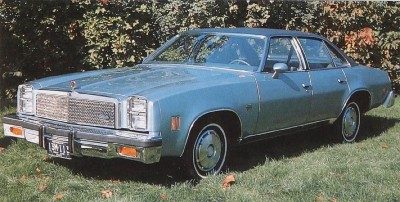
The 1976 Chevelle lineup didn’t just fade away quietly. It ended with the Malibu Classic, a variant that tried to cling to dignity in an era defined by excess. The design language was unmistakable: stacked quad headlights and a crosshatched grille gave the front end a formal, almost stately appearance. It was a final flourish of style before the inevitable shift in American automotive tastes.
1976 Chevrolet Chevelle and Malibu Facts
The numbers for that final model year tell a story of volume over variety.
Model
Malibu and Laguna
Station Wagon
Weight range (lbs.)
3,650-3,978
4,238-4,356
Price range (new)
$3,636-$4,640
$4,543-$5,114
Number built
268,522
64,721
For more picture-packed articles about Chevys and other great cars, see:
-
Muscle Cars: Look back at tire-smoking Chevys and scores of other machines from the golden age of American high performance.
-
Sports Cars: Discover the pleasure of sports motoring at its purest in these captivating articles on the best sports cars from around the world.
-
Consumer Guide Automotive: Here’s your source for news, reviews, prices, fuel-economy and safety information on today’s cars, minivans, SUVs, and pickups.
-
Consumer Guide Used Car Search: In the market for a used Chevy or virtually any other pre-owned vehicle? Check out these reports, which include safety recalls and trouble spots.
-
All Chevrolet Malibus: The Chevrolet Malibu nameplate didn’t die with the 1983 model. Get the lowdown on the new-age Malibu that launched for 1997 and continues today.
-
How Chevrolet Works: Get the inside story of one of America’s greatest automotive marques in this lavishly illustrated history of Chevrolet, beginning with its founding in 1911.
1977 Chevrolet Chevelle and Malibu
The 1977 lineup positioned the Chevelle and Malibu series as “America’s smart money car.” The pitch was simple. You got a big interior. You got a manageable footprint. You paid less.
Under the hood, choices tightened up.
Fewer engines.
More horses per unit.
Engine Specs for the 1977 Malibu
Standard Chevelles came with one of two powerplants.
- 250-cubic-inch inline-six. The base option. Reliable. Slow.
- 305-cubic-inch V-8. Rated at 145 horsepower.
If you wanted speed, you looked to the only real performance option: the four-barrel 350-cubic-inch V-8. It pushed 170 horsepower.
This big-block-style V-8 (small block, technically, but bigger displacement) was standard equipment on the Malibu Classic station wagon.
No 400-cubic-inch V-8s remained in the catalog. Gone.
Malibu Classic Trim Details
The Malibu Classic wasn’t just a badge. It had distinct styling cues.
Grille changed.
Regular Malibus kept their crosshatch pattern.
Classics switched to vertical slats.
Taillights split into six sections.
Hood ornaments stood up tall.
Headlights stayed stacked and twin.
Inside, the luxury bump was real.
– Split-bench front seat (cloth and vinyl)
– Color-keyed steering wheel
– Woodgrain accents on the instrument panel
Exterior Options and Production Numbers
Chevrolet pushed add-ons for those who wanted the base models to look sharper.
- Exterior Decor group: $46
- Tinted glass: $54
- Full wheel covers: $33
Sales numbers tell the story of preference.
Malibu Classic Landau coupes moved 37,215 units.
Regular Classic coupes shifted 73,739 units.
Base coupes trailed with 28,793.
Four-door sedans followed the same trend.
Classics outsold base models by a wide margin.
Estate Wagons and the Laguna Type S-3 vanished from the roster.
The El Camino survived.
Built on the Chevelle platform.
Car-pickup utility remained.
The 1977 model year was about trimming the fat.
Less variety.
More efficiency.
Higher margins per engine.
Did buyers care about the missing 400?
Probably not.
The 350 was enough.
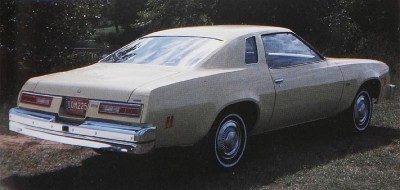
The base Chevelle Malibu coupe for 1977 was a study in conservative styling. It came with optional whitewall tires. Full wheel covers were also an add-on. The badge said Malibu. The sheet metal said Chevelle. They were effectively the same car underneath.
Here is the breakdown of what moved off the lots that year.
1977 Chevrolet Chevelle and Malibu Facts
| Model | Weight range (lbs.) | Price range (new) | Number built |
|---|---|---|---|
| Malibu | 3,551-3,824 | $3,885-$4,595 | 255,587 |
| Station Wagon | 4,139-4,263 | $4,734-$5,208 | 72,629 |
More picture-packed articles about Chevys and other great cars are available. Muscle Cars covers tire-smoking Chevys and scores of other machines from the golden age of American high performance. Sports Cars details the pleasure of sports motoring at its purest. Consumer Guide Automotive provides news, reviews, prices, fuel-economy, and safety information on today’s cars, minivans, SUVs, and pickups. Consumer Guide Used Car Search helps you find a used Chevy or virtually any other pre-owned vehicle. All Chevrolet Malibus tracks the nameplate beyond the 1983 model. How Chevrolet Works covers the history of the marque starting in 1911.
1978 Chevrolet Malibu
The Malibu name survived the Chevelle’s death. It moved to a new platform. The body was shorter. The styling was cleaner. The V8s were gone. The small-block six was standard. The big-block V8 was dead. The 350 cubic-inch V8 was optional. It made 145 horsepower. That was not a lot. But it was enough for most people. The Malibu was a family car now. It was not a muscle car. It was a commuter. It was reliable. It was affordable. It was boring.
The 1978 Malibu was a different beast. It was lighter. It was smaller. It was more efficient. The suspension was softer. The ride was smoother. The handling was… adequate. It was not meant for corner carving. It was meant for grocery runs. And school drop-offs. And church on Sunday.
The interior was vinyl. Or cloth. Or both. The dashboard was simple. The gauges were clear. The radio was AM/FM. The climate control was optional. It worked well. The seats were comfortable. The headroom was good. The legroom was tight in the back. But who sits in the back?
The engine bay was cramped. The 350 V8 fit in there. Barely. The air cleaner was large. It blocked access to the top of the engine. Changing the spark plugs was a chore. You needed a special tool. Or a lot of patience. The carburetor was a two-barrel. It was simple. It was reliable. It was not fast.
The transmission was a three-speed manual. Or a two-speed automatic. The three
The 1978 Chevrolet Malibu: Efficiency Over Mass
The era of bloated American sedans didn’t end with a bang. It ended with a spreadsheet.
By 1978, the 1978 Chevrolet Malibu was already established as the direct successor to the legendary Chevelle. Chevrolet had dropped the “Classic” nameplate for the main range, but kept it for a higher-trim variant that defined the top of the line. This wasn’t just a facelift. It was a complete architectural overhaul.
General Motors was downsizing. The midsize segment was being redefined by fuel prices and regulatory pressure. The Chevelle was gone. In its place sat a smaller, lighter vehicle that promised more interior space despite having less exterior footprint.
A Fresh Slice of Apple Pie
Chevy marketed the new platform aggressively. The slogan? “A fresh slice of apple pie.”
It sounded cliché. It was. But the engineering behind it was starkly different.
The 1978 Malibu dropped the wheelbase to exactly 108 inches. Prior Malibus and Chevelles had longer stretches between the axles. This change impacted body styles differently. Sedans and wagons lost length. The coupe remained relatively stable in proportion, though still tighter than its ancestors.
Overall length shrank by at least a foot. Weight? Down by 500 to 1,000 pounds depending on trim and options.
“Broad glass expanses improved visibility.”
Chevy claimed to have gained trunk space. They also promised better legroom and headroom. How? By flattening the body curvature. Slimmer doors. Shell-style seats that hugged rather than sprawled. The result was a cabin that felt less cavernous but more accessible.
Powertrain: The V-8 Hierarchy
Under the hood, efficiency dictated the hierarchy.
The base engine was the 200-cubic-inch (3.3-liter) V-6. It pushed 95 horsepower. Adequate for commuting. Not thrilling.
Buyers could step up to the 231-cubic-inch V-6. Output: 105 horsepower. A modest gain for a modest price hike.
The real conversation started with the 305-cubic-inch V-8. 145 horsepower. This became the default choice for anyone who cared about acceleration.
There was one exception. The station wagon. Only wagons could order the big block alternative: the 350-cubic-inch V-8. It churned out 170 horsepower. Why? Because wagons were family haulers. They carried weight. They needed torque.
Other models got the smaller V-8s. The wagon got the big one. That was the rule.
Sales Numbers and The El Camino Legacy
The strategy worked.
358,636 units rolled off the assembly line. That’s a lot of metal for one year.
The Malibu Classic four-door sedan led the charge with 102,967 sales. It was the practical choice. The reliable choice. The one that appealed to fleets and families alike.
The coupe was there. The wagon was there. But the sedan dominated.
This wasn’t just about the Malibu. It was about the
The vinyl half roof. The pinstriping. The Rally wheels.
Or Sport wheel covers if you wanted to play it safe.
This was the 1978 Chevrolet Malibu Classic Landau Coupe. It arrived with a specific aesthetic that screamed late-seventies luxury without the luxury price tag. It wasn’t just a sedan. It was a statement wrapped in steel and vinyl.
If you were buying new in 1978, you knew what you were getting.
The Numbers Don’t Lie
Here is the hard data. No fluff. Just the stats that matter when you’re trying to value a survivor or understand the scale of production.
1978 Chevrolet Malibu Stats
| Metric | Detail |
|---|---|
| Model | Malibu (Classic Landau Coupe) |
| Weight Range | 3,001 – 3,550 lbs |
| New Price Range | $4,204 – $4,904 |
| Total Built | 358,636 units |
Three hundred fifty-eight thousand cars. That is a lot of vinyl roofs on American streets.
The weight range tells a story about the era. 3,000 pounds for the lightest configuration up to 3,550 lbs for the fully loaded Landau. That’s heavy. But in 1978, weight meant presence. It meant safety, in a way. It meant the car felt substantial.
The price range of $4,200 to $4,900 adjusted for inflation is nearly double today’s nominal figures. But relative to other cars? It was accessible. It was the working stiff’s dream coupe.
Why the Landau?
The Malibu Classic wasn’t just a trim level. It was a body style.
The Landau Coupe featured that signature vinyl roof. Half roof. It covered the rear section, leaving a strip of painted metal visible. It looked expensive. It looked like a Lincoln Continental for the masses.
Pinstriping added to the illusion. Thin lines running along the body. Subtle. Elegant. Or so Chevrolet claimed.
Then there were the wheels.
Rally wheels gave it a sportier edge. Five-spoke design. Aluminum look. Or Sport wheel covers if you preferred the illusion of chrome without the maintenance.
It was all about style over substance. But that was the point.
What About the Other Models?
The Malibu wasn’t just the Coupe.
There were sedans. Two-door and four-door.
But the Landau Coupe was the flagship. The one people remembered.
The 358,636 units built includes all Malibus for 1978? No.
Wait.
Let’s check the source.
The table says “Number built: 358,636” under “Malibu”.
Does that mean all Malibus? Or just the Landau Coupe?
Context matters.
In 1978, the Malibu line included the Base, Custom, and Classic. The Classic included the Landau Coupe.
The 1979 Chevrolet Malibu: Small Tweaks, Big Sales
The 1979 Chevrolet Malibu didn’t exactly reinvent the wheel. It was the second year of the redesigned “new-size” model that debuted in 1978, so the changes were minor. Mostly cosmetic. A new divided grille. Reworked taillights. That was about it for the bodywork.
Yet sales jumped.
It’s a classic automotive paradox. You strip the excitement out of a redesign for the second year, and people buy more of it. Total production hit 412,147 units, up from 358,636 in 1978. The base sedan sold nicely. The rest of the lineup followed suit.
Engine Choices for the New-Size Era
Under the hood, things got slightly more interesting. GM finally plugged a gap in the small-block V-8 lineup. The 1979 Chevrolet Malibu gained a 267-cubic-inch (4.4-liter) V-8. It slotted right between the standard 3.3-liter V-6 and the top-tier optional 5.0-liter four-barrel V-8.
California buyers dealt with stricter emissions rules, so their options differed. They got a 3.8-liter V-6 or the 5.0-liter four-barrel.
Wagon buyers had a unique toy. The 1979 Chevrolet Malibu station wagon was the only body style offered with a 350-cubic-inch (5.7-liter) V-8. It pushed 170 horsepower.
Cost? $465 extra.
Both three- and four-speed manual transmissions were available. They featured floor shifters. Not a console shifter. A floor shifter. If you wanted to keep your hand on the stick, you looked down.
Trim Levels and Features
Chevrolet split the 1979 Chevrolet Malibu into two main lines: Malibu and Malibu Classic. You could get them as coupes, sedans, or station wagons. The Malibu Classic added a Landau coupe to the mix.
Sedans and wagons shared a ventilation quirk. Fixed rear-door windows with swing-out vents. Draft-free. Whatever that means.
The Malibu Classics got extra flair. Bright window trim. Vinyl-clad body moldings. You could add a vinyl roof. Special gauges. Wire wheel covers. Auxiliary lighting. Powered rear vent windows. A Power Skyroof.
Chevrolet literature loved to brag about structural details. Double-panel doors. Full-perimeter frame. Coil springs all around.
It worked. Sales went up. The styling was safe. The engines were adequate. It just worked.
The 1980s were coming. The Malibu held its ground for one more year before the next shake-up.
The 1979 Chevrolet Malibu didn’t reinvent the wheel, but it did tweak the face and rear. Subtle updates to the grille and taillights were the headline changes. It was a refinement of a formula that had been working for years. Not a revolution. Just a polish.
The 1979 Snapshot
If you are looking to buy a survivor or just want to know what these weighed and cost when they were new, here are the hard numbers. They matter.
| Specification | Details |
|---|---|
| Model | Chevrolet Malibu |
| Weight Range | 2,983–3,325 lbs |
| Price Range (New) | $4,812–$5,600 |
| Units Built | 412,147 |
That production number is significant. Over 400,000 units suggests the Malibu remained the volume seller it needed to be. The weight range tells you about the trim levels. Lighter models were likely the base coupes or sedans with less insulation and fewer options. Heavier ones had the V8s, air conditioning, power steering, and all the chrome.
What Changed in ’79?
The visual updates were minor but noticeable. The front grille got a new pattern. The taillights were reshaped slightly. These changes weren’t about aerodynamics or safety standards. They were about keeping the car looking fresh in a market that was getting tired of the boxy late-70s aesthetic. The fuel crisis was still a ghost at the table, but by 1979, the panic had subsided into a new normal. Efficiency mattered. Style mattered, too.
Looking Ahead: The 1980 Model Year
The 1979 model was the last of its specific generation before the next wave of changes. If you are tracking the lineage, the 1980 Chevrolet Malibu followed close behind. But that is a different story. For now, the 1979 Malibu stands as a solid example of American mid-size motoring. Reliable. Affordable. Built in huge numbers.
If you want to dig deeper into Chevy history or find other classic machines, there are resources out there. Muscle car archives show what these cars could do when pushed. Sports car sections highlight the pure driving experiences that were harder to find in family sedans. For modern context, consumer guides cover everything from fuel economy to safety ratings. And if you are hunting for a used vehicle, checking for recalls and trouble spots is non-negotiable. The Malibu name survived past 1983. It re-emerged later. But the 1979 model has its own place. It’s a piece of the puzzle.
“The Malibu nameplate didn’t die with the 1983 model.”
The history of Chevrolet is long. From 1911 to now, it’s a story of constant adaptation. The 1979 Malibu was just one chapter. A quiet one. But still important.
1980 Chevrolet Malibu: Engine Specs and Sales Context
Sales of the 1980 Chevrolet Malibu took a hit. Imports were biting hard and the new Chevrolet Citation was eating into market share. The 1980 Malibu series still included the Malibu Coupe, but the landscape had shifted.
The car started the decade with minimal changes. Engine choices were shuffled, though. The base V-6 displaced 229 cubic inches. That is up from 200 the year before. Horsepower jumped from 94 to 115. It shaved 1.5 seconds off the 0-60-mph time. The result was still leisurely. It sat around 17 seconds.
Optional again for the 1980 Chevrolet Malibu was a 267-cubic-inch V-8. It made 125 horsepower. The 305 V-8 was also optional. It produced 155 horsepower. That is down five from the previous year. The “hot rod” 350 with 170 horsepower was dropped. A “three-on-the-tree” manual transmission was standard. Most 1980 Chevrolet Malibu cars got the optional three-speed automatic.
Optional again for 1980 Chevrolet Malibu V-8 models was the F-41 sports suspension. It made the normally soft Malibu a fair-handling family car.
Once again, two-door coupes, four-door sedans, and five-door wagons were offered. They came in base and Classic trim levels. Sedans were the most popular body style. Classics outsold base models.
Prices rose about $600. That is better than 10 percent. The most popular model, the Classic sedan, hit about $6,000. Higher prices combined with the fuel crunch. Chevy’s own Citation competition played a role too. Malibu sales dropped. They went from 377,000 in 1979 to 278,000 for 1980. That still made the Malibu a strong midsize entry.
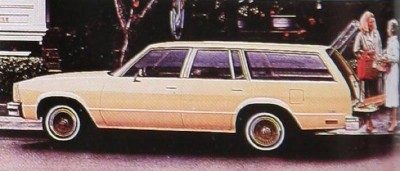
The 1980 Malibu wasn’t built to turn heads at a car show. It was built to get you to work, haul groceries, and survive the early eighties without breaking the bank. If you’re looking at the base wagon model from this year, you’re looking at a machine defined by utility rather than flair.
The numbers don’t lie about its position in the lineup. This wasn’t a luxury cruiser. It was a functional tool wrapped in sheet metal.
The 1980 Malibu By The Numbers
For the full model year, Chevrolet moved 278,350 Malibus off the line. That’s a respectable volume for a time when the market was shrinking and interest rates were climbing.
Weight range (lbs.)
2,996-3,307
Price range (new)
$5,502-$6,149
Number built
278,350
Those prices might sound low compared to today’s standards, but remember what $6,000 bought in 1980. It wasn’t a steal. It was the going rate for a mid-size sedan or wagon with a six-cylinder engine and basic trim. The weight figure tells the real story of the era’s engineering philosophy. Nearly 3,000 pounds of steel. No lightweight composites here. Just iron, glass, and rubber.
Why The 1980 Malibu Matters Now
We talk a lot about muscle cars and big-blocks. But the real story of American automotive survival in the late seventies and early eighties is the Malibu. It was the backbone of the fleet market. Taxis. Rentals. Family second cars. It had to be reliable. It had to be simple.
The base wagon version dropped the chrome. It lost the fancy hubcaps. It kept the interior stripped-down and durable. This was the car that kept America moving when fuel prices spiked and emissions standards tightened.
It’s easy to dismiss these later A-body cars as boring. But try finding a 1980 Malibu in running condition today that hasn’t been touched by rust. You’ll see why they were so common then. They were everywhere because they worked.
Looking Ahead
The Malibu nameplate didn’t die with the 1983 model. It evolved.
If you want to skip ahead to the modern era, the name returned in 1997 for a new age of fuel-efficient sedans. But the 1980 model remains a distinct chapter. It’s the last gasp of the traditional American mid-size before the landscape shifted toward compacts and imports.
For more context on how we got here, or where we’re going, check out the broader archives. We cover the golden age of muscle, the purest sports cars, and the practical realities of used car buying. The history of Chevrolet is a history of American life, and the 1980 Malibu is a small, vital piece of that puzzle.
1981 Chevrolet Malibu
The 1981 Chevrolet Malibu Styling and Specs
The 1981 Chevrolet Malibu got a face-lift that felt radical for a model that had barely changed since 1978. The big move? A squared roofline on the sedans. It gave the four-door a semi-formal rear window, looking sharper than its Buick and Oldsmobile cousins. Subtle stuff, sure. But it mattered.
Under the hood, things stayed mostly the same as 1980. The real shift was electronic. GM slapped their new Computer Command Control (CCC) emission system on everything. No more guesswork for the mechanics. Just better compliance.
Power figures took a slight hit. The base 229-cubic-inch V-6 dropped to 110 horsepower. Down from 115. California buyers got the 231-cubic-inch Buick V-6, also rated at 110 hp. Not a win, but a trade-in reality.
Then there was the 305-cubic-inch V-8. Now rated at 150 horsepower. But you could only get it in the station wagons. Sedans and coupes had to make do with the 267-cubic-inch V-8. It pushed out 115 horsepower. That was the only optional engine for those body styles.
To help with gas mileage on the highway, the three-speed automatic transmission got a lock-up torque converter. It locked up under certain conditions. Reduced slip. Saved a few penners at the pump.
Sales behavior remained predictable. Sedans ruled the roost. The Classic trim out-sold the base models. Coupes and wagons followed the same trend—people wanted the ritzier look. Even with a massive price hike.
The most popular model, the Classic sedan, jumped over $1,000. landed at $6,961. Most cars are cheaper than that today, but back then? It was a lot of cash. Sales dipped slightly. Just under 242,500 units total. Not a collapse. Just a slow slide.
The 1981 Malibu wasn’t about revolution. It was about refinement. A sharper roofline and tighter emissions controls.
Why did the 305 V-8 stay in the wagons? Probably torque needs. Wagons haul. Sedans cruised. The 267 V-8 was enough for the lighter bodies. And the lock-up converter? It was a response to the fuel crises of the late 70s bleeding into the early 80s. Efficiency was no longer a luxury. It was a requirement.
The styling update didn’t save the Malibu from the eventual shift to front-wheel drive, but it gave it a final burst of traditional character. The squared roofline stayed in the rearview mirror. But for a year, it looked good.
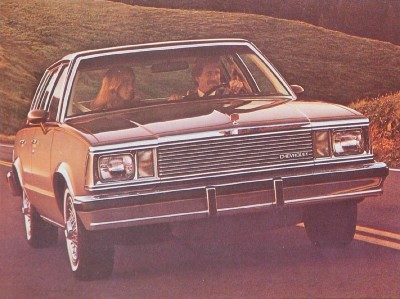
The 1981 Malibu Sport Sedan had a specific look that buyers paid for. That set of wire wheels wasn’t standard. It cost an extra $135. You either had them or you didn’t.
Here is how the 1981 Malibu stacked up in the market.
1981 Chevrolet Malibu Facts
| Model | Weight range (lbs.) | Price range (new) | Number built |
|---|---|---|---|
| Malibu | 3,028-3,390 | $6,548-$7,142 | 242,447 |
The weight spread shows the variation in options and trim levels. The price range reflects the entry-level models against those with more amenities. Nearly 250,000 of these rolled off the line.
Looking Back and Forward
For those who like the old muscle days, there are deep dives into tire-smoking Chevys from the golden age of American high performance. If sports motoring is your thing, you can find captivating articles on the best sports cars from around the world.
Need practical info? Consumer Guide Automotive covers news, reviews, prices, fuel economy, and safety for today’s cars, minivans, SUVs, and pickups. If you are hunting for a used Chevy or any other pre-owned vehicle, the Consumer Guide Used Car Search reports list safety recalls and trouble spots.
The Malibu name didn’t vanish after 1983. It returned in 1997 and continues today. You can get the lowdown on that new-age Malibu too.
Chevrolet has a long history. It began with its founding in 1911. An illustrated history of the marque covers the inside story of one of America’s greatest automotive brands.
1982 Chevrolet Malibu
The 1982 Chevrolet Malibu: A Diesel Experiment in Disguise
The 1982 Chevrolet Malibu didn’t exactly set the sales charts on fire. It was a blip. The brand-new front-wheel-drive Celebrity had just arrived to steal the spotlight and the bulk of the buyers. The Malibu was left holding the bag, essentially a legacy play for a lineup that was rapidly shrinking.
Chevy had trimmed the fat. Fourteen model choices became four. The base Malibus? Gone. All the coupe bodies? Dropped. You could only buy a Classic sedan or a wagon. That was it.
But if you looked at the nose, it looked busy. The 1982 Chevrolet Malibu got a fresh face that tried to mimic the more upscale Chevrolet Caprice.
Front End Styling and Diesel Options
The new front end featured a crosshatch grille pattern sandwiched between quad rectangular headlights. It gave the sedan a wider, more expensive stance than it probably warranted. But the real story was under the hood.
Chevy was betting big on diesel efficiency. Not one. Two diesel engines.
The 4.3-liter (262-cubic-inch) V-6 diesel made 85 horsepower. It was also available in the new Celebrity. Then there was the heavy hitter. The 105-horsepower 5.7-liter (350-cubic-inch) V-8 diesel. That same big-block diesel was being shoved into Chevy’s full-size cars like the Impala and Caprice.
Mileage was good. That was the selling point. But the cost was steep. The V-8 diesel added $825 to the sedan’s $8,137 base price. In 1982 dollars, that’s a lot for an engine that would soon be known for terrible reliability. These units would eventually amass dismal repair records. Owners paid a premium for fuel economy and got headaches instead.
Gasoline Engines and California Regulations
The gas engines didn’t change much. Except for one specific detail in the Golden State.
Chevy swapped out Buick’s 231-cubic-inch V-6 in California. They installed their own 229-cubic-inch (3.8-liter) V-6 as the standard engine for cars bound for the West Coast. It was a regulatory shuffle. But for the average buyer stuck with the 350 diesel Malibu, the dream of cheap fuel quickly turned into a nightmare of injector pumps and glow plugs.
The 1982 Chevrolet Malibu survived the year. Barely. It wore a Caprice-style grin and carried a heavy diesel heart. It didn’t matter. The Celebrity had already won the war.
The 1982 model year marked a quiet end for a specific era of the Malibu. Chevrolet stripped away the coupe body style that had defined the mid-size lineup for years. What remained was starkly simple. Only sedans and the station wagon stayed in the fold. It was a lean offering, pared down to the essentials before the platform shifted direction in subsequent years.
By the Numbers
If you were buying new in 1982, you were looking at a specific price bracket and a modest production run. The weight range sat between 3,091 and 3,240 pounds depending on whether you picked up the wagon or the sedan. Prices reflected the inflation of the era. You paid between $8,137 and $8,335 new. It wasn’t cheap for a base model commuter, but it wasn’t luxury territory either.
Chevrolet built 116,125 units of the Malibu that year. That number seems substantial until you remember how many other cars rolled off lots during the early ’80s recession. It was a survival figure. Not a dominance figure.
The 1982 Malibu was a pragmatic choice. No frills. No extra body styles. Just transportation.
Contextualizing the 1982 Offering
Why did GM cut the coupe? The market had changed. Gas prices had spiked in the ’70s and stayed volatile. Consumers wanted smaller, lighter cars. The Malibu nameplate was being squeezed between the compact Cavalier and the full-size Impala. Keeping a coupe variant didn’t make financial sense when buyers were opting for fuel-efficient subcompacts or larger family haulers.
The wagon remained because utility still mattered. Families needed cargo space. Sedans were the default for commuters. The coupe was the “fun” option, and in 1982, fun was a secondary concern to reliability and MPG.
Looking Ahead
This reduction in body styles signaled the end of the Malibu as we knew it. The next generation wouldn’t arrive until 1997. The nameplate would survive, but the traditional mid-size sedan/wagon layout would be replaced by front-wheel-drive architectures and crossover-inspired designs.
For collectors and enthusiasts, the 1982 Malibu represents a transitional artifact. It’s not a muscle car. It’s not a sports car. It’s a piece of American automotive history where the mid-size segment was being redefined. If you see one in the wild today, it’s likely a survivor. They weren’t built in massive numbers compared to the peak years of the 1960s, but they were built enough to be common.
The legacy of the 1982 model is subtle. It’s in the simplicity. No complex trim levels. No optional extras that confused buyers. Just a car to get you from point A to point B. It’s a far cry from the tech-heavy, crossover-based Malibus of today.
Related Content
- Muscle Cars: Look back at tire-smoking Chevys and scores of other machines from the golden age of American high performance.
- Sports Cars: Discover the pleasure of sports motoring at its purest in these captivating articles on the
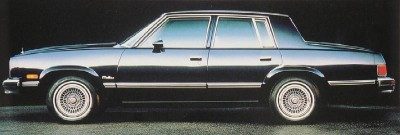
The Last RWD Malibu
Chevrolet pulled the plug on the rear-wheel-drive Malibu after the 1983 model year. That was it. The nameplate would eventually return in the late 90s, but under a completely different architecture. For enthusiasts who care about drivetrain layouts, 1983 was the end of the line for this specific lineage.
The 1983 Malibu sat in its sixth and final year of this particular design generation. Visually? Nothing changed. It still offered a sedan and a wagon. The bodywork was identical to previous years. Chevy did drop the “Classic” prefix from the nameplates, but that was cosmetic. They also stripped away some standard trim. Wheel covers were gone. Exterior moldings vanished. It was a cost-cutting move, plain and simple.
Engine Specs and Powertrains
Under the hood, the changes were more substantive. The 4.4-liter V-8 was deleted. That left the 5.0-liter V-8 as the only optional gasoline big-block in the lineup. Standard power remained Chevy’s 3.8-liter V-6. It pushed 110 horsepower. If you were in California, you got a Buick-sourced V-6 with nearly identical specs due to emissions regulations.
Without the smaller V-8 option, the 150-horsepower 5.0-liter became available across both sedans and wagons. Previously, that powertrain was wagon-exclusive. The diesel options persisted on the options list. You could still spec the 4.3-liter V-6 diesel, rated at 85 horsepower. Or the heavy-hitting 5.7-liter V-8 diesel, which made 105 horsepower.
Sales Figures and Market Context
It’s ironic that the final year saw a bump in sales. The 1983 Malibu moved just over 117,400 units. That’s higher than the 1982 numbers. It trailed the new Chevy Celebrity by about 22,000 units. It beat the struggling Citation by roughly 25,000.
The continued relevance of this older generation is almost surprising. The modern Chevrolet Celebrity had debuted in 1982. Yet, many buyers stuck with the rear-drive Malibu. They liked the simplicity. They trusted the proven engineering. The Malibu had built a solid reputation for durability.
Consumers clearly preferred the straightforward mechanics over the newer front-wheel-drive technology. The name stuck in people’s minds. That legacy allowed Chevy to revive the badge for the 1997 model. But for a certain type of driver who values that original rear-drive character, 1983 remains the definitive farewell.
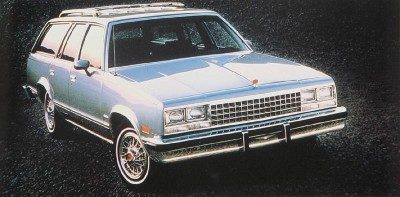
The Forgotten Wagon of 1983
Most people remember the 1983 Chevrolet Malibu as a boxy sedan. A family hauler. A sensible choice for suburban commuters who wanted something reliable without getting too fancy. But Chevrolet did more than just slap a trunk on a chassis and call it a day.
They built a wagon.
It was part of the Malibu series that year. Not a Caprice. Not a Nova. A Malibu wagon. And if you are hunting for one now, or just trying to understand what went into that specific year’s lineup, the numbers tell a slightly different story than the usual sedan dominance.
Breaking Down the Specs
The 1983 Malibu wagon wasn’t cheap. It wasn’t cheap, either. But it wasn’t the most expensive car on the lot. Here is what you were looking at if you walked into a dealership in the early eighties.
- Weight: These wagons tipped the scales between 3,199 and 3,470 pounds. That’s heavy for a compact. The extra metal for the rear cargo area and the longer wheelbase adds up. You feel that mass when you hit the brakes.
- Price: New, they rang in at $8,084 to $8,442. In today’s money, that’s a serious chunk of change. Inflation has eaten that figure whole. But back then, it was a solid mid-range purchase.
- Volume: Chevrolet built 117,426 of these Malibus total. That number includes the sedans, the coupes, and yes, the wagons. The wagon was a niche within a niche.
Why It Matters Now
You don’t see these often. The Malibu nameplate survived the 80s. It came back in 1997 as a front-wheel-drive sedan that defined a generation of mid-size cars. But the 1983 version? That was the tail end of an era. The square lines. The heavy steel. The lack of aerodynamic whistles.
If you are looking for a 1983 Chevrolet Malibu wagon, you are looking for a survivor. Most of them rotted away in rust belts. The ones that remain have character. They have history. They are not pretty in the modern sense. They are boxy. Functional. Honest.
“The Chevrolet Malibu nameplate didn’t die with the 1983 model. Get the lowdown on the new-age Malibu that launched for 1997 and continues today.”
But that wagon? It stayed in the past. And that makes it interesting.
Where to Look Next
If you want more context on these machines, or just want to appreciate the broader Chevy lineage, there are better places to dig.
- Muscle Cars: Look back at tire-smoking Chevys and scores of other machines from the golden age of American high performance. The Malibu wasn’t a muscle car in ’83, but its ancestors were.
- Sports Cars: Discover the pleasure of sports motoring at its purest in these captivating articles on the best sports cars from around the world. Sometimes you need to step away from the wagon to appreciate why people care about cars at all.
- **