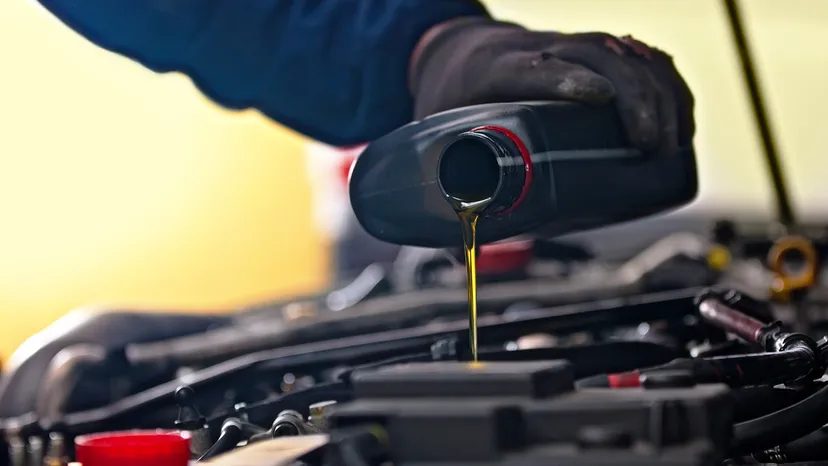
Oil changes are the bane of owning a car. They cost money, take time, and if you do it wrong, you could void your warranty. For decades, the mantra was simple: every 3,000 miles. Every three months. Do it or die.
This rule has obsolete.
Modern engines and advanced lubricants have made the old interval irrelevant to most drivers. Keeping it now is not only outdated; it’s a waste. You spend money on unnecessary oil, fill your garage with used products and pollute the planet for nothing. The standard recommendations have changed. Most modern vehicles can go significantly longer between services without compromising performance or longevity.
So how do you determine the right schedule for your specific ride? It depends on the car, the oil and your driving style.
Four recommended intervals
There is no one-size-fits-all answer, but most manufacturers and experts today use four primary benchmarks:
- Every 1,000 miles or every six months
- Every 3000 miles
- Every 5,000 to 7,500 miles
- Every 10,000-15,000 miles or every six months
A critical detail that is often overlooked? The oil filter. Even if your oil lasts 10,000 miles, your filter may not last. Some filters are designed for long intervals; others do not. Check your owner’s manual. If the filter needs to be changed every 5,000 miles, changing the oil every 10,000 miles won’t help you. You have to match the two.
If you need to change your oil every 1,000 miles
If the 3000 mile rule is too long, why would anyone recommend 1000 miles? That sounds exaggerated until you look at your driving habits.
If most of your trips are less than 10 miles, you’re probably causing more engine wear than you think. Short trips prevent the engine from reaching optimal operating temperature for sustained periods. This causes condensation to form in the crankcase. Water mixes with oil. The oil breaks down faster.
“Most of the wear and tear on a car’s engine happens when you start the car, and if you aren’t driving very far, most of your driving is of the type that puts a lot of stress on the engine.”
Short stop-and-go commutes are brutal. The engine is cold, friction is high and poor lubrication until it warms up. If you never drive long enough to stay warm, you need fresher oil more often.
Even if you drive very little, you shouldn’t skip an oil change. Oil degrades over time, not just mileage. If you’re under your mileage interval, but it’s been six months, change it anyway. Twice a year is a safe floor for low-mileage drivers.
The Middle Ground: 3000-7500 miles
Some in the industry claim that the 3,000-mile interval was a marketing invention of quick-lube shops. More visits equal more revenue. That’s true. But for older vehicles, that number still holds weight. If your owner’s manual says 3000 miles, stick with it. Older engines have wider tolerances and different sealing technologies. They don’t hold up as well to extended drain periods.
For newer cars, the sweet spot is usually 5,000 to 7,500 miles. Scientific American and most manufacturer manuals align here. This interval assumes that you drive reasonably long distances (20 minutes or more) at a steady speed. You’re not sitting in gridlock. You’re getting the engine hot and keep it there.
If you have a newer car and your driving fits this description, you are an ideal candidate to extend that interval towards the 7,500 mile mark. If your car is older, refer to the owner’s manual. Don’t guess.
Pushing to 10,000 Miles with Synthetic Oil
If the manufacturer recommends or you decide to switch to synthetic oil, you can probably extend this interval to 10,000 miles or more. Synthetic oil is chemically engineered to resist degradation, withstand higher temperatures, and flow better in cold weather. It is also more environmentally friendly than conventional oil.
However, it is expensive. Is it worth it?
Consumer Reports claimed in 2022 that you should not switch to synthetic unless the manufacturer requires it or the driving conditions require it. For the average commuter with a reliable sedan, conventional oil … is sufficient in the 5,000-7,500 mile range.
However, synthetic shine in certain situations. When towing heavy loads, the added thermal stability reduces stress on the engine. If your vehicle is known for sludge problems – blockages caused by broken down oil residue – synthetic will help keep the internals clean. It extends engine life by preventing carbon build-up that chokes in older engines.
For many drivers, it’s not just about mileage. It depends on what the oil does while driving.

Modern vehicles have made tracking maintenance less of a guessing game. Most newer models come equipped with an oil life monitoring system that tells you exactly when it’s time to head to the shop. These systems don’t just count miles. They analyze driving patterns—like hard acceleration, idling, and temperature extremes—via your car’s computer to determine fluid degradation.
When that specific light illuminates, it’s a signal to schedule service soon, but not necessarily an emergency. It is a maintenance reminder, not a distress flare. However, confusing this with the oil pressure light is a dangerous mistake.
The oil pressure light is different. It flashes when oil isn’t flowing correctly, often due to low levels, a failing oil pump, or a leak. If that red light comes on, you must stop driving immediately. Continuing to drive can destroy the engine. Learn the difference. One is a suggestion for service; the other is a command to stop.
Checking Oil Levels and Condition
Even with advanced monitors, the old-school habit of checking oil monthly remains valuable. It helps detect leaks or excessive oil consumption before they become catastrophic. If the level is low, top it off.
Good oil should be a clear, translucent amber or brown-black. The American Automobile Association (AAA) warns that color alone isn’t a perfect indicator of oil life, but it’s a good visual cue. If the oil looks murky, opaque, or worse, milky, there’s a problem. Milky oil often signals coolant leaking into the engine block, which requires immediate professional attention.
Some modern cars have eliminated the dipstick entirely in favor of digital sensors. If your vehicle falls into this category, you can’t physically check the fluid. In those cases, rely on the oil life monitoring system and your owner’s manual. If you’re unsure how often to change your oil or how to interpret the data, the manual is your best resource for ensuring long-term engine longevity.
Why Synthetic Oil is Worth the Upgrade
Synthetic oil isn’t just marketing fluff. It outperforms conventional oil because its chemical structure is more uniform, meaning it breaks down more slowly. This allows for longer intervals between changes. It also handles extremes better. In hot conditions, it resists breakdown. In freezing weather, it flows immediately upon startup, reducing wear during the critical cold-start phase.
The cost is higher, but the benefits—better performance, environmental friendliness, and extended service life—often justify the price tag.
Common Oil Change Questions
Does oil go bad if you don’t drive?
Yes. Even if you barely put miles on the car, oil degrades over time. If you drive infrequently—well below the manufacturer’s mileage interval—you should still change your oil at least twice a year. Chemical breakdown happens regardless of mileage.
Can you go 10,000 miles with synthetic oil?
Absolutely. Many synthetic blends and full synthetics are designed for intervals exceeding 10,000 miles. Some even last longer, depending on the formulation and driving conditions.
Is full synthetic oil worth it?
For most drivers, yes. While it costs more upfront, it offers superior protection, better fuel efficiency in some cases, and allows you to extend service intervals. The long-term savings on frequent changes and potential engine repairs often outweigh the initial cost.
How often should you change oil in months?
This depends on your specific situation. Factors include your driving style (stop-and-go vs. highway), annual mileage, and the type of oil used. There’s no single answer.
When should I get my next oil change?
If you drive a newer car and mostly take trips longer than 20 minutes at steady speeds, you’re a prime candidate for extended intervals. Stop-and-go traffic and short trips are harder on oil, causing faster degradation. For older vehicles, sticking to the manufacturer’s recommended schedule is usually the safer bet.
Ultimately, the dashboard is only as good as the data it receives. Stay curious. Keep reading. The engine doesn’t lie.