
Your sedan is holding up. The leather seats have molded to your shape after years of commuting. You change the oil on schedule. You run it through the wash every other weekend. It’s reliable. It’s boring.
But what if it had a pulse?
You don’t need a quarter-million-dollar exotic to feel something when you press the pedal. You just need to stop letting the factory engineering dictate your speed. We aren’t building a dedicated drag racer here. That burns cash and tires. We’re talking about tangible gains for the daily grind. Five specific modifications can shave seconds off your 0-60 time. You don’t need a second mortgage. You barely need a third of one.
5: Cold-Air Intake
Let’s start with the lungs. Your stock airbox is designed for one thing: noise reduction and filtration. It’s a plastic tomb for your engine.
A cold-air intake (CAI) changes the geometry. It moves the air filter away from the hot engine bay and into a cooler area, usually near the fender or bumper. Hot air is less dense. Cooler air is packed with more oxygen molecules. More oxygen means more efficient combustion.
It’s basic physics. But the gain isn’t just about density. It’s about flow.
Stock intakes have tight bends and restrictive materials to keep the dealer happy with noise regulations. A CAI uses smoother tubing and less restrictive filters. The engine breathes easier. You might hear a slightly deeper growl on startup, but the real benefit is throttle response. The car feels awake.
Does it add horsepower? Sometimes. Two to five horses is a realistic estimate for a modern, fuel-injected engine. It feels like more because the engine isn’t gasping for air. The mapping adjusts. The drive feels sharper.
“A cold-air intake isn’t a magic bullet for speed. It’s a tune-up for your engine’s ability to breathe.”
Is it worth the $300? For the daily driver who wants to feel connected to the machine, yes. It’s the easiest entry point into performance modification. No welding. No ECU flashing. Just swap the box. Plug in the sensor. Drive.
The engine will thank you. You’ll notice it first at low speeds. The hesitation disappears. The car responds instantly to your foot.
What’s next? The exhaust system. But that’s a different story.

5: Cold Air Intake
You hear it everywhere. Swap the stock box for a cold air intake. It’s the automotive equivalent of that gum commercial where ice swirls around a minty breath—the promise is huge, but you’re paying a premium for the privilege. The physics are simple enough. Cold air is denser. Denser air packs more oxygen molecules into the combustion chamber. More oxygen means you can burn more fuel. More fuel burned equals more power.
The math suggests a gain of five to seven horsepower in a typical naturally aspirated setup. Realistic numbers. Not magic.
But here is the catch. This trick only works if your factory airbox is choking the engine. If your car already breathes freely, swapping the filter and tube does nothing but cost you money and potentially hurt low-end torque. Check your intake temperature first. If it’s not the bottleneck, move on.
4: Cat-Back Exhaust
Forget the header-back systems that cost more than your first car. Forget the resonator deletes that will make your neighbors call the cops. We are talking about a cat-back system. The name tells you exactly what it does. It replaces everything from the rear of the catalytic converter back to the tailpipe.
Why does this matter? Stock exhausts are restrictive. They use baffles, smaller diameter pipes, and restrictive mufflers to keep noise down and backpressure up. High backpressure strangles an engine at high RPMs. It forces the pistons to work harder to push exhaust gases out.
A cat-back exhaust loosens that chokehold. You are removing restrictive components and replacing them with smoother, less restrictive piping. The result?
- Improved throttle response.
- A deeper, more aggressive exhaust note (without the drone).
- A modest power bump, usually between 5 and 15 horsepower depending on the platform.
It’s not a magic bullet for massive gains. You won’t turn a Civic into a Supra. But you will hear the difference. And feel it. Especially in the mid-range where the factory mufflers usually kill your momentum.
Is it worth the money? If you want to keep your emissions legal and your neighbors sane, yes. It’s the most cost-effective modification that actually changes how the car feels. Not just looks. Feels.
3: Cold Air Intake (The Reality Check)
Let’s revisit that cold air intake because people get it wrong. They think bigger filter equals more power. It doesn’t. It equals more airflow. And airflow is useless if your engine management system can’t adjust the fuel map to match it.
Modern ECUs are smart. They adapt. But they adapt within limits. A cold air intake places the filter further away from the hot engine bay. Hot air expands. Cold air contracts. By pulling in cooler air from outside the fender or behind the bumper, you lower the intake air temperature.
Lower temperature equals higher density. Higher density equals more oxygen. More oxygen allows the ECU to add more fuel without running lean. More fuel and air burned efficiently equals more torque.
Where do you mount it?
- Behind the bumper for maximum cool air.
- In the fender well for a balance of cooling and protection.
- Away from heat sources like the radiator or exhaust manifold.
Avoid heat shields that are poorly designed. If your intake sucks

3: High-flow Catalyst
Forget the cat jokes. Swapping out the factory exhaust restriction is less about cruelty and more about physics. Jeff Zurschmeide, who wrote The New Mini Performance Handbook, has a simple explanation for why this works.
“This will loosen up the entire system,” Zurschmeide says. “It pushes the exhaust gases out easier.”
Think about it. If you clear the path, the engine breathes better. More air and fuel mean more power. That’s basic internal combustion. But here is where it gets tricky for older cars. New catalytic converters are not the choke points they used to be. Manufacturers designed them to work with the engine, not against it. They are far less restrictive.
For a vintage ride, the stock cat might still be a bottleneck. In that case, look at tip number 3. But for modern setups, a high-flow catalyst is often the sweet spot. You get the emissions compliance without sacrificing the flow.
The logic holds up. Less restriction equals better scavenging. And better scavenging means the engine doesn’t have to work as hard to push out the exhaust. That energy goes straight to the crankshaft.
Why do people still swap cats then? Because stock converters are tuned for noise and pollution, not peak output. A high-flow unit loosens the backpressure just enough to help the turbo or naturally aspirated engine spin up faster. It’s a minor tweak. But minor tweaks add up.
Is it worth the cost? Depends on your goals. If you are chasing dyno numbers, yes. If you just want a slightly deeper exhaust note, maybe not. The difference is subtle. But measurable.
Check your local laws first. Some states have strict emissions testing. A high-flow cat might pass. It might not. Know the rules before you bolt anything on.
The goal is airflow. Clean, fast, unrestricted. That’s the mantra. Get the gases out ASAP. Let the fresh mixture in. Repeat.
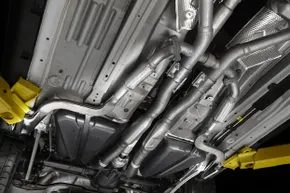
The early days of emissions regulations saw manufacturers bolt on catalytic converters with little regard for how they choked engine breathing. Sure, the air got cleaner. Your 0-60 times did not. For years, these devices were performance killers. By the 1980s and 90s, they were notorious for getting clogged with carbon buildup. Add leaded gasoline to the mix and you were barely making it up a steep grade. The solution isn’t to drive in the mud. It’s to swap that restrictive stock unit for a modern aftermarket high-flow catalytic converter. The difference at the throttle becomes immediate.
This isn’t just about dumping your emissions equipment. It is about replacing a bottleneck with a wider pipe. Zurschmeide points out that pairing this upgrade with a cat-back exhaust system delivers the highest return on investment for performance gains. You aren’t changing the engine internals. You are simply letting the exhaust gases escape faster. The result is less backpressure. The engine breathes better. Horsepower returns to where it should be.
2: Tire Tricks
Why tire choice matters more than you think
“Do not knock a hole in the converter. The fines are severe and the risk of destruction is real.”
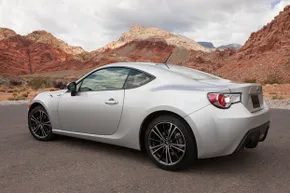
Before you touch the exhaust, look at what meets the pavement. Many enthusiasts ignore tire width and compound, focusing only on horsepower numbers. That is a mistake. A wider tire offers more contact patch. More rubber means more grip. But grip alone is not enough. You need the right sidewall stiffness and tread pattern for your driving style.
Consider the difference between an all-season tourist tire and a summer performance compound. The latter hugs the asphalt through corners. It reduces slip angle. It allows you to carry more speed through a turn. The acceleration out of that turn becomes explosive because the power is actually reaching the road, not spinning in the void.
The low-pressure myth
Some old-school racers advocate for lowering tire pressure to increase the footprint. This works on loose gravel. On pavement? It often degrades handling precision. The sidewalls flex too much. The steering feels vague. You lose feedback. Modern sticky tires are designed to run at manufacturer-specified pressures. Stick to the numbers. If you want more grip, change the tire model. Drop the pressure only if you are running a track day with a specific compound that tolerates heat buildup.
Wheel weight and rotation
Heavy wheels kill acceleration. They are unsprung mass. Every pound you remove from a wheel and tire assembly has a multiplier effect on performance. It feels like removing much more weight from the body of the car. Lighter wheels allow the suspension to react faster to bumps. They keep the tires planted. If you are upgrading your brakes or exhaust, consider swapping to a lightweight forged alloy set. The initial cost is higher. The lap time savings are real.
Alignment angles
Camber, toe, and caster. These three angles define how your car handles. A slight negative camber improves cornering grip. Too much and you wear out the inner edge of the tire prematurely. Zero toe is ideal for straight-line stability. Slight toe-out can make the car feel more responsive in turn-in. But it increases tire wear. Find a tuner who understands the balance. Don’t let them set up your car for the track
1: Reflashing
Let’s talk about the brain of the car. You can have the best tires in the world, but if the engine computer is holding back, you’re leaving seconds on the track. Reflashing the ECU is where the real magic happens. It’s not just about popping a chip and calling it a day anymore. Modern engines are complex machines that need specific adjustments to unlock their potential.
The process involves rewriting the software that controls fuel delivery, ignition timing, and air-fuel mixtures. Think of it as giving your car a new personality. The stock tune is designed for emissions compliance and longevity, not for maximum horsepower. By tweaking these parameters, you can squeeze out more power without touching a single bolt.
“Reflashing allows you to fine-tune the engine’s performance by adjusting critical parameters like ignition timing and air-fuel ratios.”
But here’s the catch. You need to be smart about it. A bad flash can cook your engine faster than you can say “check engine light.” Stick to reputable tuners or proven software packages. And don’t forget the hardware. A cold air intake or a performance exhaust can help the engine breathe better, making the flash even more effective.
Why It Works
Stock engines run rich to protect themselves. They dump extra fuel to keep temperatures down. But that extra fuel is wasted energy. A custom tune leans out the mixture slightly, allowing the engine to run more efficiently at high loads. The result? More power, better throttle response, and sometimes even better fuel economy at cruising speeds.
The Risks
Not all tunes are created equal. Some are conservative, focusing on reliability. Others push the limits, risking engine damage for a few extra horsepower. Know what you’re getting into. Ask for dyno sheets. Talk to other owners who’ve made the same mods. And always have a safety net, like a blow-off valve or a high-quality fuel pump, ready to go.
Which Cars Benefit Most?
Turbocharged and supercharged engines tend to see the biggest gains from a simple flash. Since the forced induction systems are already doing the heavy lifting, tweaking the fuel and timing curves can yield significant improvements. Naturally aspirated engines can also benefit, but the gains are usually smaller and more subtle.
Where to Start
If you’re new to flashing, start with a pre-written tune from a reputable brand. These are tested and tuned for specific vehicle models. Avoid downloading random files from forums. Your engine is not a test bed for unproven software. Invest in a quality tuning tool and take your time. Read the instructions. Understand what each parameter does. And if something feels off, pull the tune and reset to stock.
The Bottom Line
Reflashing is a low-cost, high-reward modification. It’s one of the first steps you should take when building a performance car. But respect the process. Don’t rush it. And don’t expect miracles. It’s a tool, not a magic wand. Use it wisely, and your car will thank you.
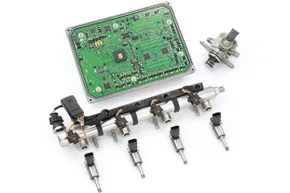
Reflash! Ah-aaaah! Savior of the universe!
It sounds like a sci-fi remedy, but reflashing your car’s computer is arguably the safest way to squeeze out extra power. You are just tweaking the programming for timing, fuel-air mixture, and other inputs that boost horsepower. The real win here is reversibility. If you need warranty work or have to pass a state environmental inspection, you can undo the change. Simple. Clean. No permanent marks on your engine’s history.
There is a catch though. This strategy really only works if your car is turbocharged or supercharged. If you have a normally aspirated engine, you are looking at an extra half a horsepower. Zurschmeide puts it bluntly: the factory programming has to be the limiting factor for this to matter. If your stock tune is already optimized, a reflash does nothing.
Swapping out the stock computer for a brand-new module could help. But as Zurschmeide notes, that has a very high price of entry. For most people, a reflash is the sweet spot between cost and gain.
Increase horsepower FAQ
What is the cheapest way to increase horsepower?
Upgrade to a cold air intake. According to CarParts.com, the cost starts at $40 and varies by manufacturer and features.
Does cold air intake make a car faster?
Yes. The logic is simple. Cold air is more dense. More air gets into the cylinders to mix with fuel. More air means more combustion. More combustion means more power.
What mods increase horsepower?
Cold air intake. Cat-back exhaust. High-flow catalyst. Tire adjustments. Reflashing. These are the standard moves.
How much horsepower do air intakes add?
You could add about five to 20 horsepower with a cold air intake.
How much horsepower does reflashing add?
Reflashing a normally aspirated engine will only get you an extra half a horsepower.