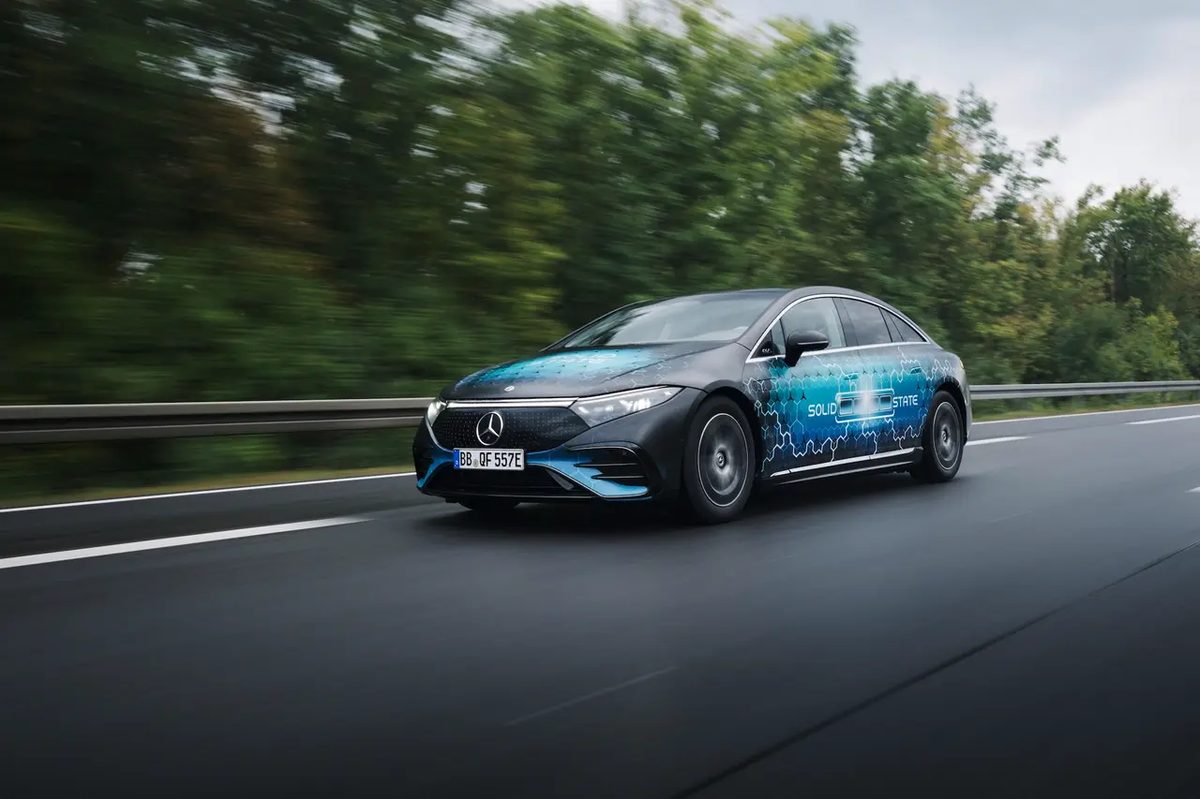
1,205 kilometers on a single charge. That is the number Mercedes just threw into the ring with a prototype EQS equipped with a next-generation solid-state battery. It is not a lab figure. It is not a track lap. It is a real-world drive that outperforms the range of many diesel sedans and shifts the conversation around electric vehicle endurance.
The car started in Stuttgart and ended in Malmö, Sweden. No stops for electricity. The journey proved that with the right hardware, an EV can match thermal engines on long hauls.
How the EQS achieved such range
The secret lies in two specific areas: storage density and drag reduction. Mercedes swapped the standard lithium-ion pack for a new generation of solid-state battery technology. This setup is denser and more efficient than conventional chemistry. Every kilowatt-hour is managed by optimized electronics that squeeze maximum utility from the stored energy.
Aerodynamics played its part too. The EQS has always been a low-drag machine, but this test highlighted how crucial that efficiency is over 1,000 miles.
“The vehicle had 132 kilometers of autonomy remaining upon arrival, suggesting a theoretical total well over 1,300 kilometers.”
Why Mercedes is pushing this narrative right now
Range anxiety is still the biggest objection buyers have. Mercedes knows this. By demonstrating that a luxury electric sedan can cross borders without plugging in, they are attacking that specific fear head-on.
The strategy is clear: stop treating range as a limiting factor. Instead, frame it as a solved engineering problem. This is not just a technical flex; it is a market position.
Where this fits against Tesla and BYD
Tesla dominates the charging network. BYD floods the market with cost-effective options. Mercedes is taking a different path. They are betting on German engineering credibility and high-end reliability. The EQS remains a premium product. It is heavy. It is expensive. The battery itself is a significant cost driver.
The question for the enthusiast is simple: will this tech trickling down?
If Mercedes can replicate this efficiency and battery density in a more affordable model, the equation for EV adoption changes. Until then, this 1,205 km run is a proof of concept. It shows the ceiling is higher than most people think.
The next step is not just building another record. It is making the technology accessible.