Hydrogen cars only work if they can be refueled and the fuel is really environmentally friendly. It’s that simple. This truck is not interested in refueling infrastructure. They value power. So far, hydrogen racing engines have been weak.
Enter AVL Racetech.
An Austrian engineering team has just built a prototype that challenges the idea of the absence of hydrogen. They talk about more than efficiency. They talk about the dynamo’s raw, measurable power.
Technical data: 205 horsepower/liter
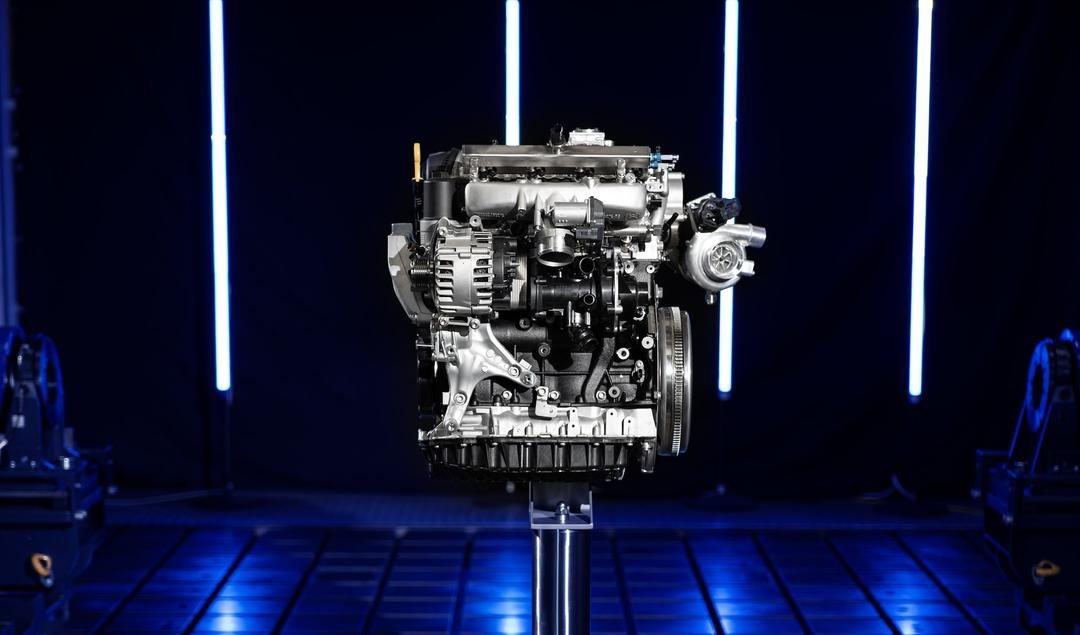
This is not a concept drawing. It runs on a 2-liter internal combustion engine. It screamed.
The factory produces 410 hp at 6500 rpm. This is 302 kW of clean combustion energy. But what really counts in a reducer is the special power. 205 horsepower per liter.
Compare this to a standard racing engine. Most naturally aspirated racing engines struggle to achieve this number without a large displacement. This 2 liter small block punches well in its weight class.
The torque curve is important
Horsepower is only the final calculation. It’s the torque that takes it off the line.
AVL Racetech claims a healthy 500Nm of torque. This is not a peak number. This is a plateau. The engine maintains a torque of 3,000 to 4,000 rpm.
Why is this important?
Racing requires mid-range torque to maintain speed through corners. You don’t just need high RPM peaks. You want a flat, wide arch. This engine does just that.
“AVL Racetech says it produces 500Nm of torque between 3000-4000rpm.”
Zero carbon goal
Industry is obsessed with zero emission obligations. Electric vehicles (EVs) have become mainstream because their batteries are easy to manage. However, burning hydrogen offers another route.
When hydrogen is produced by electrolysis with renewable energy, only water vapor is released from the exhaust pipe. No carbon dioxide. It has no particles (from the combustion process itself, but this can change with additives).
AVL Racetech does more than just build engines. They show that we don’t need to eliminate internal combustion to save the planet. All you have to do is change the fuel.
Why this matters to motorsport
The series is under pressure to be environmentally friendly. Formula E already exists. But what about traditional circuits? They still burn rubber and fuel.
Engines like these change the math.
- **Competitive. ** The 2 liter engine produces 410 horsepower and offers plenty of power. Complies with existing small volume class regulations.
- **This is familiar. ** Mechanics know how to service your ice cream. They don’t have to become high-voltage electricians overnight.
- **Fast filling speed. ** Refueling the hydrogen tank only takes a few minutes. Charging an electric car takes several hours. Time is money in competition.
Is it the future?
perhaps. However, for now this is the current solution. AVL Racetech proves the efficiency of the equipment. The problem is
Stoichiometric sweet spot
Water injection is not just for cooling purposes. It’s about control. The AVL method injects water directly into the intake airflow. This prevents pre-ignition. As a result, the mixture can be precisely controlled.
The engine works in a ratio of 1:1. This is stoichiometric combustion. This is not a lean run. Its behavior is completely balanced. This allows the system to push power without detonation.
AVL had a specific goal in mind. The torque is 500 Nm. Their goal is 300 kW power. These numbers are competitive. Meets competition requirements.
« AVL Racetech’s goal is to drive motorsport towards a sustainable future. With the development of the first racing engine bearing our name, we have taken another step towards realizing this vision. »
Ellen Lohr, Director of AVL Motorsports. Her team built the engine from scratch. Own brand included. This meant a change in their design strategy.
The tests will follow. The engine is back on track. Real-world data will follow. The goal is sustainability in racing. This method is technically accurate. The results are not yet known.