
When you drive a gas-powered car, you sit around and wait for a little electrical explosion. More specifically, we have several Ignition Coil Replacement events planned. Most modern engines do not use a single coil in the entire block. One is used for each cylinder. This is a very simple setup, but if these components fail, the car will do more than just stop. It breaks down.
The function of the ignition coil is deceptively simple. It takes the low voltage from the battery and converts it to the high voltage spark needed to ignite the fuel. It’s not just about keeping the engine running. This aims to keep fuel efficiency and reliability high. If you treat it like a disposable plastic toy, you will pay the price. If you treat it like a precision instrument, you can use it for many years.
The Voltage Math Behind Combustion
The battery provides 12V DC power. This is enough to start the starter motor. Spin the flywheel. But not enough to pop a spark plug. It takes about 40,000 volts to force a spark across that gap and ignite the mixture.
This is where the Ignition Coil comes into play. It acts as a step-up transformer. Also known as a coil pack, it converts just 12 volts into thousands of fast and furious volts. The timing has to be perfect. The spark hits the plug as the piston reaches the top of its compression stroke.
Diesel engines don’t need it. Heat and pressure are used to ignite the fuel. Gasoline engines need electric assistance.
Inside the spark plug’s black rubber casing is a bundle of copper wire tightly wound around an iron core. When an electric current flows, a magnetic field is created. The energy stored in this field is transferred to the spark plug. The entire assembly is resin sealed to prevent short circuits. This is the wonder of Faraday’s law of induction. The same physics that powers electric motors also applies to your daily commute.
From Distributors to Coil-On-Plug
Older cars are easier in some ways, but more difficult in others. Early models used a single ignition coil connected to the distributor. The distributor is a mechanical pole that supplies high voltage to each spark plug in turn. It also corresponds to timing.
Worn mechanical dispenser. Calibration may be lost. When this happens, the motor will not synchronize. Power decreases. The efficiency has decreased considerably.
In the 1980s, car manufacturers began to replace mechanical distributors with electronic sensors. This allows the use of multiple ignition coils. The result is increased power. Increase efficiency. Improves reliability.
Almost all Gasoline engines are now available in “plug-coil” configuration. At the top of each spark plug is an ignition coil. This setup is more reliable than the old distributor cap and rotor. However, you are not immune to failure.
The Cost of Ignoring a Misfire
Even in modern plug-in coil systems, one coil can fail. If that happens, you’ll get fired up. This means that one cylinder is not burning fuel properly. Or not at all. This is a dead tank.
A misfire can start with a subtle hesitation. You might not notice it right away. But it gets worse. Fast.
“When a fire is detected, it must be resolved as soon as possible.”
If left running, unburnt fuel flows into the exhaust system. This can burn the catalytic converter. That’s a $2,000 mistake for a $50 part. It is also possible for the raw fuel to rub against the cylinder wall. This dilutes the oil and increases friction. This can eventually lead to warping of the piston rods and internal corrosion of the cylinder walls. This is a costly loss.
Diagnosing the Culprit
Ignition coil life typically exceeds 100,000 miles. It is sturdy. But they are not immortal. Thermal cycling, vibration and aging can all cause damage.
If the coil fails, the engine computer detects a misfire. A fault code is generated. The check engine light comes on. This is the first warning.
At the store, the technician connects the diagnostic scanner. The scanner tells you exactly which cylinder is misfiring. Start cylinder 3 from there.
Other signs include:
– Unstable idle
– Surging at high RPMs
– Stalling at low speeds
– Decrease in fuel efficiency
– Slow acceleration
– Backfiring (a loud bang from the exhaust)
Backfiring is particularly telling. This means that the unburned fuel ignites in the exhaust pipe. This is dangerous and harmful.
Is that a coil? sometimes. Probably the spark plug. It could be the spark plug wire. The injector may be blocked. Specialist shops use voltage testing equipment to trace faults. They check the circuit. They check the nozzles. They isolate the problem before you start solving it.
The price of reliability
Replacing the ignition coil is not a cheap fix. The parts themselves are relatively cheap, but the labor is expensive. In some engines, the coil is embedded under the intake manifold or valve cover. On others, they’re right on top. Accessibility decides your final bill.
With standard coil plug systems, you only need to consider cost and labor per coil. If multiple coils fail, the cost increases exponentially. Do you ignore the first warning signs? That’s when the bill turns into a new engine.
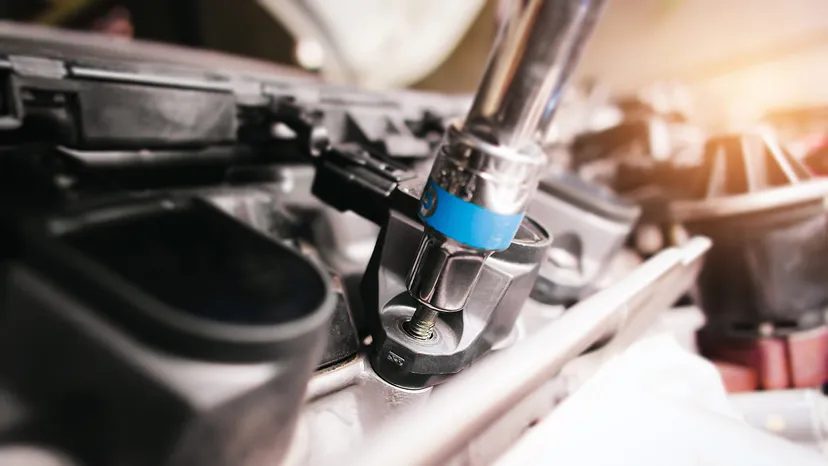
One Ignition Coil costs about $250. That’s before you touch the wrench. In most stores, employees charge an extra $50 to $100 per coil. Doing it yourself can save labor costs, but it takes a little courage.
The coil is located directly on top of the engine. Generally easy access. All you need is a basic socket wrench. But don’t jump in blindly. First disconnect the negative terminal of the battery. Safety first.
After removing the coil, also change the spark plug. A cylinder misfire usually indicates a corroded or dirty plug. Either way, it probably needs to be replaced. These plugs are even harder to come by. You need a particularly deep socket. If the thought of struggling with a combustion chamber bolt makes you sweat, call a professional.
Actual repair costs
Replacing multiple coils and plugs can quickly become expensive. Shops can charge thousands of parts and labor. Your car has been in the parking lot for several hours. Or a few days.
If your car still has a manufacturer’s powertrain warranty, use it. An authorized workshop can carry out the work. Save money. The warranty is intact. This is a wise move for new vehicles.
Replacing the ignition coil
This is not rocket science. This can be done using basic tools and mechanical common sense. This is the process.
1. Work area preparation
Park your car on a level surface. Wait until the engine has completely cooled down. Prepare the socket set and torque wrench. A flat head screwdriver is useful for clips. Disconnect the negative battery cable. Stop unexpected short circuits.
2. Find the coils
Open the hood. Locate the ignition coil attached to the top of the engine. You may need to remove the plastic engine cover to see clearly. Each coil is connected to the spark plug via an electrical connector.
3.Remove the defective coil
Disconnect the electrical connector. Press the tab or pry open the clip with a screwdriver. Remove the fixing bolt with a socket wrench. Pull the coil straight up. Don’t twist. Align it with the spark plug.
4. Install a new coil
Align the new coil. Push it firmly into the spark plug until it clicks into place. Secure it with the bolt you removed earlier. Reconnect the electrical connectors. It should snap into place.
5. Test correction
Reconnect the battery. Replace any covers you removed. Start the engine. listen. Smooth operation means you won. No misfires. No hesitation.
If the engine still stumbles, the problem may be with the spark plug. Or there is another issue entirely.
Why is it important?
It’s not a good idea to ignore a bad coil. This can damage other engine parts. It can reduce fuel efficiency. Performance decreases.
Regular inspections help to avoid catastrophic failures. Early replacement of defective coils can prevent damage to the cylinder. Your car runs more smoothly. It lasts a long time.
Do it yourself or shop? Either works. But let’s fix that now. Ignoring this can lead to expensive bills later.
A bit of history
Michael Faraday invented the transformer in 1831. He wrapped a copper wire around an electromagnet. The longer the coil, the higher the voltage. Nicholas Callan used this discovery to create a step-up transformer in 1836. It powered heavy industrial machinery. Although the technology has advanced, the principles remain the same.
Frequently asked questions about car ignition
How much does the Ignition Coil cost?
Expect to pay around $250 per coil. If you don’t do it yourself, labor costs will increase.
How do I test the ignition coil?
Buy a diagnostic scanner from an auto parts store. Or pay a mechanic to do it for you.
What is an ignition coil?
It is a high voltage transformer. It has two wire coils. The primary coil is inside. A secondary coil is wound around it.
How long does the Ignition Coil last?
It should last at least 100,000 miles. But not always.
What are the symptoms of a damaged ignition coil?
The check engine light comes on. The car surges at high RPMs. It stalls at low speeds.