


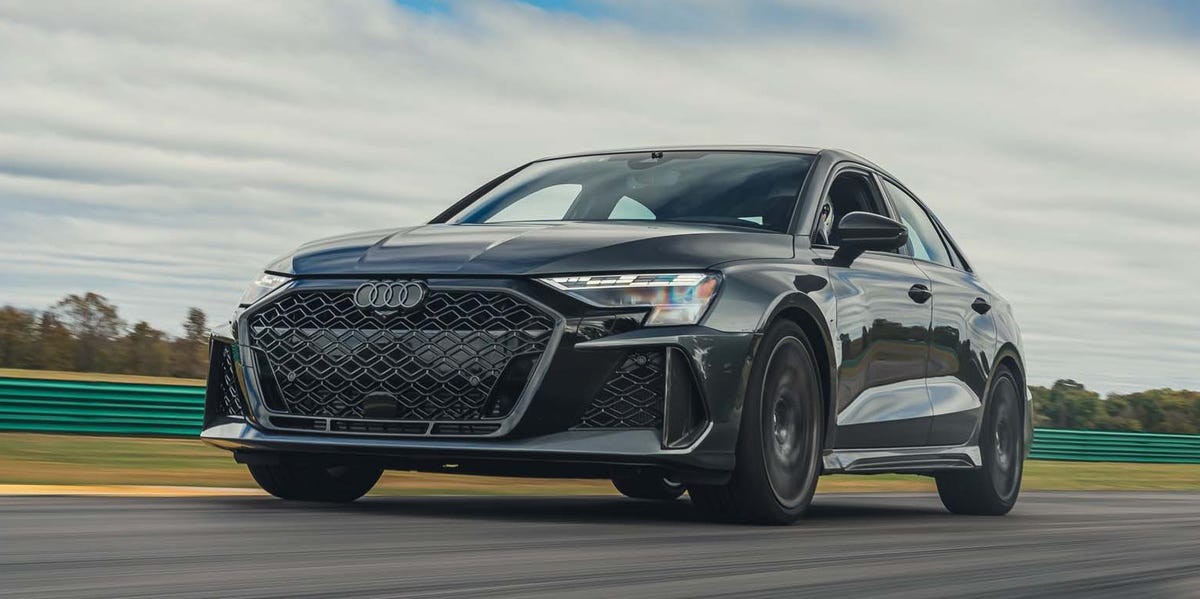
The Audi RS3, a standout in the performance compact segment, currently faces an uncertain future in Europe. Due to tightening environmental regulations, the model has been pulled from European markets, leaving enthusiasts wondering if one of the industry’s most unique engines is facing permanent extinction.
The Euro 7 Hurdle
The primary obstacle is the upcoming Euro 7 emissions standards, set to take effect this November. Audi’s signature 2.5-liter turbocharged inline-five engine—a powerhouse producing 394 horsepower—simply does not meet these new, stricter requirements.
Upgrading an engine to comply with Euro 7 is a massive engineering undertaking. To make the EA855 five-cylinder engine legal again, Audi would need to implement:
– New particulate filters
– Advanced NOx sensors
– Higher cell-density catalysts
– Completely reworked ignition mapping
The Economic Dilemma
The challenge for Audi isn’t just technical; it is financial. The inline-five engine is a niche component, currently utilized in only two primary models: the Audi RS3 and the Cupra Formentor VZ5.
In the automotive industry, the cost of developing new hardware and software is typically spread across millions of units. When an engine is used in such low volumes, the “per-unit” cost of compliance becomes prohibitively expensive. This raises a critical question for Audi: Is the emotional and brand value of the five-cylinder engine worth the massive R&D investment required to save it?
Hybridization: A Potential Lifeline?
In a recent interview with Autocar, Rolf Michl, the head of Audi Sport, suggested that the brand is not ready to give up on the configuration just yet. When asked if hybridization could bridge the gap to Euro 7 compliance, Michl stated:
“We are open to every possibility. The thoughts [on how to do that] will continue at our end. I can tell you we are still thinking in different technological possibilities.”
While the exact technical details remain under wraps, the trend is clear. Audi is already moving toward electrification in its performance lineup, recently unveiling the 2027 RS5, which pairs a 2.9-liter V-6 with an electric motor to produce 630 hp. Adding an electric motor to the RS3 could provide the necessary emissions offset to satisfy regulators while potentially boosting performance.
What This Means for Global Markets
The fate of the RS3 in Europe does not necessarily dictate its fate in the United States. Because Euro 7 regulations do not apply to the U.S. market, Audi is expected to continue selling the traditional five-cylinder engine in North America and other regions with less stringent emissions laws.
However, if Audi successfully develops a hybrid version of the five-cylinder to satisfy European regulators, it is highly likely that this more advanced, efficient powertrain will eventually make its way to U.S. showrooms as well.
Conclusion
Audi is currently weighing whether the high cost of hybridizing its unique five-cylinder engine is justified by its niche market volume. If successful, hybridization could preserve a legendary engine configuration that would otherwise be lost to environmental regulation.


