


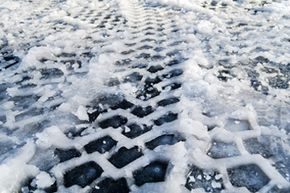
I never considered becoming a Zamboni driver a career goal. I like hockey. I appreciate figure skating. But deep down I hate driving on icy roads. Every day I have sorbet, snow and half an inch of asphalt waiting for me. You get a weird, sick feeling in your stomach when you hit the black ice and the steering wheel becomes like a dead stick. Anyone who has ever felt weightless knows the fear.
So why do people think four wheel drive is safe on ice? We believe in marketing. We believe that if we have advanced electronic devices, we can do anything. But the reality is different.
Let’s see how it works. In the traditional setup, the power is sent only to the front or rear wheels. The four-wheel drive system is even smarter. They monitor wheel speed. If one wheel slips (loses traction), the system cuts power to that wheel and redistributes torque to the wheel with traction. This is great for moving around. mud? snow? Wet road? Helps start them without digging.
But here’s the catch.
Drag is just frictional force. Imagine wearing rubber sneakers on a polished gym floor. you hold on. Rotate. Accelerate. Now imagine wearing the same shoes on a skating rink. It slides. It doesn’t matter how strong your legs are. Surfaces determine the principles of physics.
Tires are contact surfaces. All-wheel drive cannot create friction where there is no friction. It just distributes the power to the wheels that can have traction. All-wheel drive offers no advantage when stopping is required. Also zero advantage is offered when you have to bend. All you have to do is drive fast straight. It doesn’t stop any faster.
If you drive a lot on ice, you need studded tires or special winter tires. They act like anti-slip agents. Bites hard surfaces. But most of us don’t drive much on ice, and the cost and hassle of a second set of tires just doesn’t make sense.
The reality is clear. All-wheel drive helps you get started. Stopping won’t help. When an ice storm hits, the wisest thing to do is stay home. If you must drive, slow down, maintain a long following distance and avoid sudden steering wheel turns. If you can get to work safely, you may not need to apply for a Zamboni job right now.
The Limits of Traction
The difference between acceleration and braking is where drivers get hurt. All-wheel drive systems are designed with thrust in mind. They are not brake systems. Braking distance on ice is not shortened. In fact, the increased weight of powertrain components can increase braking distances on slippery surfaces compared to lighter two-wheel drive vehicles.
When tires come into contact with ice, they lose their ability to develop lateral force. If you can’t regain traction, you can’t change direction. Acceleration becomes a game where you follow the rotation of the wheels. Braking is a lottery. All-wheel drive reduces spin when accelerating. No skidding when braking or cornering.
Specialty tires use softer rubber compounds that stay flexible in cold temperatures, and their tread patterns are designed to evacuate snow and dig into ice. This is the only mechanical way to increase the coefficient of friction. The electronics can only manage what the tires can offer. If the tires have no grip, the computer will not work.
Most drivers overestimate their abilities. They relax when they see the AWD badge. This is dangerous. The car is still skidding. The car still jumps. Computers try to compensate, but physics is stubborn.
If you have to drive on ice, drive slowly. Keep your hands still. Let the car do its work. Remember that no technology can replace good judgment. Or stay off the road altogether.


